
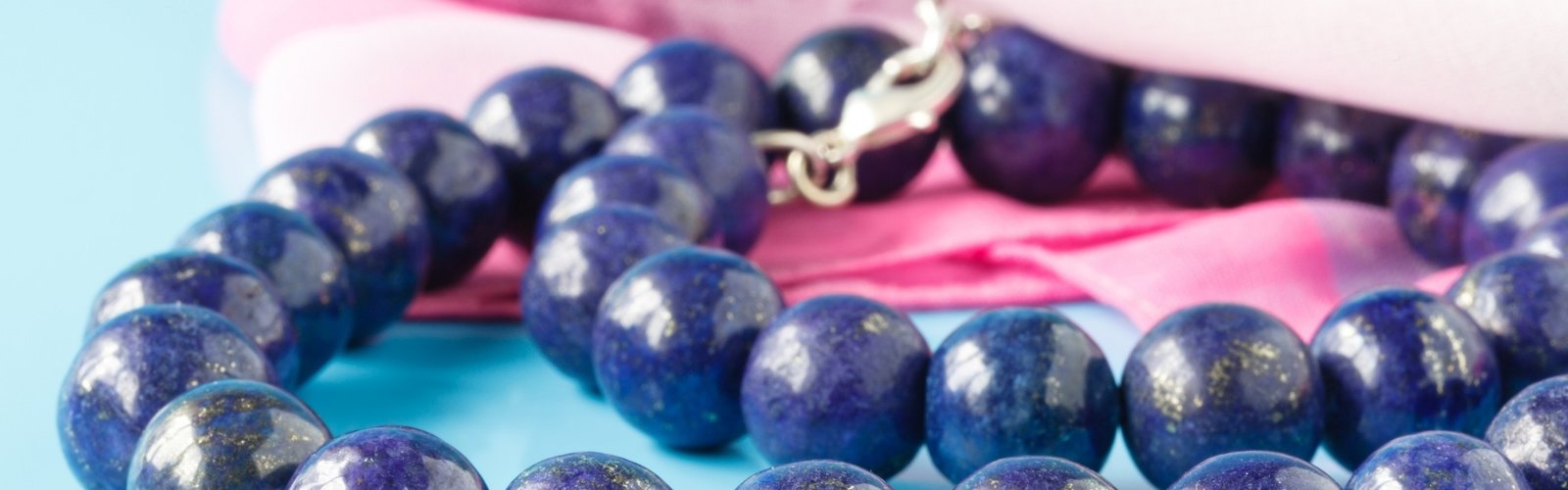
Blue Crystals: A Grounded Guide to Throat Chakra Stones
Sodalite, Blue Kyanite, Lapis Lazuli, and How to Choose the Right Blue Stone for You
A friendly guide to the most loved blue crystals in UK practice. What each one is called, what it means, and how to choose the right blue stone for you.

Blue is one of the most searched colours in UK crystal shopping, and it is not hard to see why. Blue stones are calming to look at, gentle to work with, and connected to the throat chakra, the part of the body associated with communication, honesty, and finding your voice. Whether you are buying your first crystal, choosing a gift, or adding to a collection, the blue range has something for almost every reason a person looks for a crystal in the first place.
This guide covers the eight blue crystals you are most likely to find in a UK shop, including their names, their meanings, and how to choose between them. By the end you will know which stone fits what you are looking for, whether that is calm communication, clearer thinking, deeper meditation, or simply a beautiful piece for the home.
What Blue Crystals Are Called
Before going further, it is worth knowing the names you will come across. The blue crystal family is wider than people often realise, and the same stone sometimes goes by more than one name in different shops. The eight stones below are the ones you will find most often in UK crystal shops.
- Sodalite
- Blue Kyanite
- Lapis Lazuli
- Blue Lace Agate
- Celestite (sometimes spelled Celestine)
- Blue Calcite
- Blue Apatite
- Blue Onyx
You may also see aquamarine, blue topaz, sapphire, and angelite in jewellery and gem shops, though these are less common in everyday crystal practice. The eight above are the working crystals, the ones most often used for meaning, healing, and altar work rather than for jewellery alone.
What Blue Crystals Mean
In crystal practice, colour carries meaning. Blue is the colour of the throat chakra, the energy centre at the base of the neck. The throat chakra is associated with communication, with self expression, with telling the truth, and with the kind of calm that lets you say what needs to be said. This is why blue crystals are often chosen by people going through a season of life that asks for clearer communication, whether that is a career change, a difficult conversation, or simply a desire to feel more grounded in how you speak to yourself and others.
Blue stones are also associated with calm and with easing anxiety. Pale blues like blue lace agate and blue calcite carry a soft soothing energy, useful for stress or for a quieter mind. Deep blues like lapis lazuli and sodalite carry a more grounded clarifying energy, useful when you need to think more clearly or find the right words. Every blue stone shares the general family of meaning, but each one has its own particular tone.
Why Crystals Are Blue in the First Place
The blue in most crystals comes from tiny amounts of copper and iron sitting inside the stone. These trace elements scatter light in a way that makes the crystal read blue rather than clear or white. The depth of blue varies naturally, and a paler blue is not a lower quality stone, just a different one.
Some blue stones get their colour in unusual ways. Lapis lazuli is technically a rock rather than a single mineral, made up of three things mixed together: lazurite (the deep blue), white calcite, and golden flecks of pyrite. The combination is what makes lapis instantly recognisable, with her deep blue body and golden sparkle. Sodalite gets her colour from a different source, chloride ions sitting in the mineral structure, which is why her blue reads as a deep navy rather than the royal blue of lapis.
The Eight Blue Crystals
The eight crystals below are ordered from the most familiar and accessible to the more unusual. Each one carries a different tone of blue energy.
Sodalite
Sodalite is the most accessible blue crystal in UK shopping. Deep navy blue with thin white veins running through her, she is sold widely as tumbled stones, bracelets, wands, and pendulums. She is associated with intuition, with clear thinking, and with finding the right words. A good first blue crystal for anyone who works with words for a living, anyone going through a phase that asks for clearer communication, or anyone simply drawn to the calming depth of dark blue.
The Sodalite Wand is one of the most popular formats in the UK because the elongated shape feels good in the hand. The Sodalite Pendulum is a beautiful piece for anyone interested in dowsing or simple yes-and-no divination. The Sodalite Bracelet keeps her near the body through a working day, and the Sodalite Tumblestone is the simplest entry point for anyone meeting her for the first time.

Blue Kyanite
Blue kyanite looks like no other crystal. She has a flat bladed structure, almost like layers of glass stacked together, with pale to mid blue colouring that catches the light in ribbons. Most blue kyanite is sold as natural freeform pieces, where you can see the blade structure clearly. She is associated with throat chakra opening and with feeling aligned in yourself.
One quiet detail worth knowing: kyanite is one of the only crystals that does not need cleansing. The structure does not hold onto negative energy, so she can sit alongside your other crystals without needing the usual moonlight or selenite reset. The Blue Kyanite Freeform is the format she comes in most often.
Lapis Lazuli
Lapis lazuli is the royal blue of the crystal world. Deep blue with golden flecks of pyrite running through her, lapis has been treasured for over six thousand years. The ancient Egyptians used her in the burial mask of Tutankhamun. Renaissance painters ground her to make ultramarine, the most precious blue pigment in medieval Europe. She is the stone of wisdom and inner truth, and there is something quietly powerful about owning a piece of a tradition that runs so deep.
If you are buying lapis, look for visible variation in the blue and real golden specks (pyrite is metallic, not painted glitter). Uniform bright blue with no inclusions is often dyed howlite or sodalite sold as lapis. The Lapis Lazuli Tumblestone shows the natural pattern clearly, and the Lapis Lazuli Bracelet is a beautiful way to wear her every day.

Blue stones are calming to look at, gentle to work with, and connected to the throat chakra. They are stones for clearer thinking and finding your voice.
Light Blue Crystals
Within the blue family, the pale stones have a softer feel than the deeper blues. If you are drawn to lighter shades, or if you find the deeper navy blues a bit too intense, these are the three to look at.
Blue Lace Agate
Blue lace agate is the gentlest blue crystal. Pale sky blue with delicate white banding running in soft waves through each piece, she is associated with calm communication and with easing anxiety. Where sodalite is sharp and clarifying, blue lace agate is soft and soothing. A lovely choice for anyone whose throat tightens before difficult conversations, anyone going through a stressful period, or anyone simply drawn to the prettiest of the blue stones.
The Blue Lace Agate Tumbles come in approximately 50g pouches, so you get a small handful of pieces in one purchase, perfect for sharing or for placing around the home.
Celestite
Celestite (sometimes spelled Celestine) is pale sky blue, formed in clusters of tiny crystal points that catch the light like frost. She is associated with peace, with meditation, and with a sense of calm that settles into a room when she is present. A favourite among people who meditate regularly, and a beautiful piece for anyone who wants a more delicate blue stone for the bedroom or altar.
One thing to know: celestite is fragile and sensitive to sunlight. Direct light fades her colour over time, so keep her in a shaded spot rather than a sunny windowsill. The Celestite Cluster is the form she comes in most often.
Blue Calcite
Blue calcite is softer than the other blues, often translucent, with a pale watery colour like a piece of frozen sea. She is associated with mental clarity and with recovery from stress, particularly the kind of mental tiredness that comes from too much screen time or too many demands. The Blue Calcite Egg is a lovely piece for a desk or workspace, and the egg shape sits well in the hand.
The Bolder Blues
Blue Apatite
Blue apatite is the brightest of the blue family. Vibrant teal blue, sometimes with hints of green, she is associated with motivation, with focus, and with the kind of energy that helps you finish what you started. Less common in the UK than sodalite or lapis, which makes the sphere a striking piece for anyone collecting the rarer blues. The Blue Apatite Sphere is a real statement piece.
Blue Onyx
Blue onyx is deep blue, often reading almost black, with subtle banding through each piece. She is associated with grounding and stability, the rare blue stone that combines throat energy with a more rooted, settled feel. Useful for anyone who wants to feel both clearer in how they speak and more steady in themselves. The Blue Onyx Sphere is a beautiful altar piece, and the Blue Onyx Rune Set is a distinctive divination tool for anyone interested in the old Norse runes.
Raw Blue Crystals or Polished?
A question that comes up often when shopping for blue crystals is whether to choose raw natural pieces or polished smooth ones. There is no wrong answer, just a difference in feel.
Raw crystals are pieces that have not been shaped or polished after being mined. They show the natural form of the stone, often with rough edges and visible texture. Many people prefer raw pieces because they feel more connected to the earth, and they often cost less because they need less work to prepare. The Rough Sodalite is a good example of a raw blue crystal at an accessible price.
Polished pieces have been shaped and smoothed, sometimes into specific forms like spheres, towers, or palm stones, sometimes simply tumbled smooth. They are more comfortable to hold for long periods, which is why they are popular for carrying or for jewellery. Most of the products linked in this guide are polished, with rough or raw versions available where they exist.
Start with whichever appeals to your eye. There is no advantage to one over the other in terms of meaning or energy. It is genuinely a matter of preference.
How to Choose Between Them
If you are buying a blue crystal for a specific reason, here is a simple shortcut:
- For calmer communication: sodalite or blue lace agate
- For meditation or peaceful sleep: celestite or blue calcite
- For motivation and focus: blue apatite
- For wisdom and depth: lapis lazuli
- For feeling aligned and clear: blue kyanite
- For grounded stability: blue onyx
- For a beautiful gift: any of the above, depending on the person
If you are buying without a specific reason, choose the one you keep coming back to in the photos. The right stone tends to be the one you notice. Trust that.
Three Ways to Work With Blue Crystals at Home
Blue crystals do not need a complicated practice to be useful. These three approaches are the most common and the easiest to fit into ordinary life.
Keep One With You
Slip a small tumble into a pocket or handbag in the morning. Hold it for a few breaths during quiet moments through the day, especially before a difficult conversation or after a stressful one. Many people find that simply knowing the stone is there has a calming effect.
Place One Near Your Desk
A blue crystal on the desk or near the screen helps with the kind of mental clutter that builds up during long work days. Blue calcite and blue apatite are particularly suited to this, but any of the blue stones will do the work. Notice the shift in how the space feels after a week.
Use One in a Calm Corner
Build a small calm corner with a blue crystal, a candle, and something living like a small plant or a flower. Place it somewhere you pass naturally, the windowsill above the kitchen sink, the corner of a desk, the top of a chest of drawers. The point is not to do anything elaborate, just to have a small spot in the home that quietly belongs to peace.
Pairing Blue Crystals With Other Colours
Blue crystals look and feel beautiful alongside other colours, and a few combinations work particularly well together.
Blue with white is the cleanest pairing. Sodalite with selenite, or blue kyanite with clear quartz, gives you the calm of blue with the brightness of white. The white stones cleanse and amplify whatever sits beside them.
Blue with pink is the bridge from throat to heart. Blue lace agate with rose quartz supports emotional honesty, particularly when you want to say something kind but truthful. Read more in our guide to pink crystals.
Blue with gold or yellow is a powerful combination. Lapis lazuli already does this within a single stone, with her natural golden pyrite balancing the deep blue. For a more visible version, pair sodalite with citrine.
Looking After Your Blue Crystals
Most blue crystals are easy to look after. Sodalite, blue lace agate, blue calcite, blue apatite, and blue onyx can all be rinsed briefly under running water and patted dry. Lapis lazuli and blue kyanite are better cleaned with a dry cloth, because the iron in lapis can oxidise in water and the layered structure of kyanite can absorb moisture. Celestite should never go in water, and she should be kept out of direct sunlight to protect her colour.
For energetic clearing, place your blue crystals on a selenite plate overnight, or leave them on a windowsill in the moonlight. Both methods are gentle and effective. Blue kyanite is the exception, as mentioned above, and does not need clearing at all.
Every blue crystal at Mystic Grove is hand selected before she leaves the bench, dispatched in protective packaging from Mystic Grove HQ.
Explore the complete crystal collection for everything you need to deepen your blue crystal practice.
Continue Your Journey: Read about heart energy stones in our guide to pink crystals, or explore seasonal ritual in How to Build a Beltane Altar 2026.
Leave a Reply