Part one of three on where our correspondences actually come from
Open any crystal book and you will find bloodstone filed under Mars. Nobody ever explains why. The answer is not vague and it is not lost, it is written down, and it is almost five hundred years old.
The question underneath the table
Crystal correspondences are usually handed over as a finished list. Carnelian, Mars. Moonstone, Moon. Citrine, Sun. The list is presented the way a train timetable is presented, as a thing to consult rather than a thing to question.
But somebody decided. At some point a person looked at a stone and placed it under a planet, and other people agreed, and it got copied forward until it arrived in a book on your shelf. Knowing how that decision was made changes how you use the list, and it is more interesting than the list itself.
This is the first of three pieces on that question. This one is about the planets. The second will be about the chakras, which are a very different story. The third will be about Reiki, which is the most recent and the most revealing of the three.
Agrippa, 1533
The system most crystal books still run on was set down by Heinrich Cornelius Agrippa in Three Books of Occult Philosophy, published in 1533. He was gathering rather than inventing, pulling together Greek, Arabic and medieval material that had been circulating for centuries, but his is the version that stuck.
Book One works through the planets in order and asks, for each one, what belongs to it. The chapter titles are plain. What things are Solary. What things are Lunary. What things are under the power of Mars, and are called Martial. Then Venereal, Mercurial, Jovial, Saturnine. Each chapter lists the plants, animals, metals and stones that fall under that planet.
What those words mean
The terms look forbidding and they are not. Each one simply means belonging to that planet, in the English of 1651 when the book was first translated.
- Solary, of the Sun.
- Lunary, of the Moon.
- Martial, of Mars. Not military in the modern sense, although the word reached us that way.
- Venereal, of Venus. The modern medical meaning came much later and travelled through Venus as goddess of love. In Agrippa it means nothing beyond the planet.
- Mercurial, of Mercury.
- Jovial, of Jupiter, from Jove.
- Saturnine, of Saturn.
Read that list again and you will notice something. Four of those words are still in ordinary English and they still carry the character of their planet. A jovial person is warm and expansive, like Jupiter. A saturnine one is cold and heavy, like Saturn. Mercurial means quick and changeable. Martial means fighting. Even lunatic comes from the Moon.
That is how deep this system ran. It did not stay in the grimoires, it went into the language, and we are all still using it every day without noticing. When you describe a friend as mercurial you are using a correspondence table from the sixteenth century.
What makes it useful is that he does not simply list. He explains how the sorting was done.
How you tell which planet a thing belongs to
Agrippa opens the question by admitting it is difficult. Now it is very hard to know, what Star, or Signe every thing is under
, he writes, which is a more honest beginning than most modern crystal books manage.
Then he gives the method. A thing is known by its resemblance to the planet, through what he calls the imitation of their rayes, or motion, or figure
. It is known by its colour. It is known by its smell. And it is known by what it does, by the effects that answer to that particular star.
That is the whole logic, and it is worth sitting with, because it is not mystical in the way people assume. It is observational. A thing belongs to Mars if it behaves like Mars.
The correspondence was never a claim about chemistry. It was a claim about resemblance.
Why a red stone is Martial
Agrippa says Martial things are the ones that are fiery, red or sulphureous, and the ones that are sharp, burnt or poisonous through excess of heat.
Take that and the rest follows without any mystery at all. Mars in the sky is red. Mars the god is war, iron, blood, heat. So a stone that is red, or sharp edged, or associated with iron, or that draws blood, sorts naturally into the same pile. Bloodstone is called bloodstone. The loadstone pulls iron. The diamond cuts.
The Sun gets the same treatment from the other direction. Agrippa’s Solary stones are the ones that hold light: carbuncle, which he says shines at night, chrysolite, which shows a golden star when you hold it up to the Sun, iris, which gathers the Sun’s rays, and aetites with its golden sparkles.
Nobody was measuring anything. They were looking carefully and sorting by likeness, which is the principle usually called the doctrine of signatures, and it ran through European medicine and magic alike for centuries. The thing announces its use through its appearance.
Where it stops being tidy
Here is the part that gets left out, and it is the part that makes the whole system more believable rather than less.
Agrippa lists bloodstone, the heliotropion, under the Sun. He also lists bloodstone under Mars. The same stone, two planets, a few pages apart. He was working from several older sources that did not agree with each other, and rather than forcing them into line he let the disagreement stand.
He also files amethyst as Martial. Not Jupiter, not the crown of anything. Mars, alongside the diamond and the loadstone. Pick up almost any modern crystal book and you will find amethyst somewhere else entirely, usually soft, usually spiritual, usually nowhere near a war god.
So the assignments moved. They were not handed down intact from antiquity to the shelf in your kitchen. They were argued over, copied, misread, reassigned and quietly updated, for five hundred years and counting.
What Scott Cunningham inherited
This is the line that runs into the book most people actually own. Cunningham’s Encyclopedia of Crystal, Gem and Metal Magic, published in 1988, heads every stone with its energy, its planets, its element, its deities and its powers, and then gives a long passage of magical uses.
Those are Agrippa’s categories, four and a half centuries later, cleaned up and alphabetised. Projective and receptive energy in place of the older active and passive. Planets and elements still doing the structural work. It is the same building with new plumbing.
Which also explains an absence people notice and rarely question. There is no chakra column in Cunningham. Not because he overlooked it, but because the crystal and chakra pairing was not yet part of this tradition in 1988. That is the subject of the second piece in this series, and the answer is genuinely surprising.
This is not an argument that the correspondences are empty. A system can be humanly assembled and still be worth working with. Most of the things people live by are.
But there is a difference between a practice that says here is a tradition, built by people, carried forward and changed along the way, and one that says this is ancient knowledge and therefore beyond question. The first can be learned from. The second can only be obeyed.
So why does it still work
Because resemblance is how people think, and a correspondence table is a memory system before it is anything else.
If you hold a red stone and you have learned that red is Mars and Mars is courage, you are not consulting a database. You are being reminded, through your eyes and your hand, of the thing you are trying to summon in yourself. The stone is a prompt with a very long history attached, and the history is part of why it works on you.
Knowing that the prompt was assembled by a sixteenth century scholar from older and messier sources does not weaken it. If anything it puts you in better company. You are doing what Agrippa did, which is looking at a thing carefully and deciding what it is like.
Next in this series
Part two, the chakras. Old, Indian, and not what most crystal books think they are. The seven colour rainbow everyone uses turns out to be Western, and a great deal younger than the planets. We will look at what the source texts actually say and how the colours got attached.
Part three, Reiki. The most recent case and the most instructive, because the record survives on both sides. We will look at how the story told in the West and the story carved on the memorial stone in Japan were each shaped by who was listening.
Where to check this
- Agrippa’s Three Books of Occult Philosophy, Book One, chapters twenty two to twenty nine, is online in the 1651 English translation at the Esoteric Archives. The Solary and Martial stone lists quoted here are in chapters twenty three and twenty seven.
- Scott Cunningham’s Encyclopedia of Crystal, Gem and Metal Magic, Llewellyn, 1988, is catalogued at Open Library.
The stones in this piece
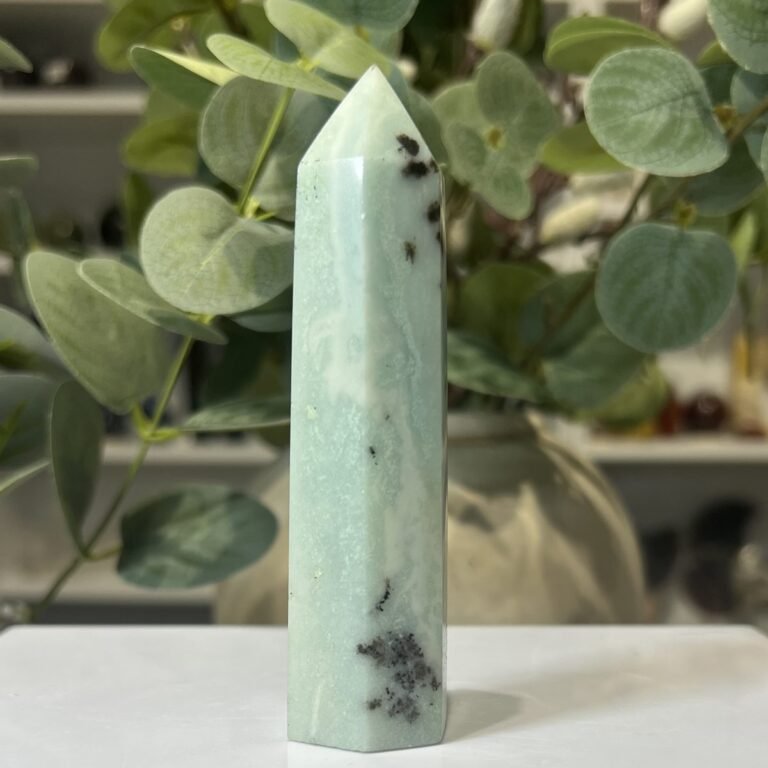
Bloodstone, carnelian, amethyst, citrine and the rest of the Martial and Solary stones, each listed with its own weight and its own photograph.



Leave a Reply