Description
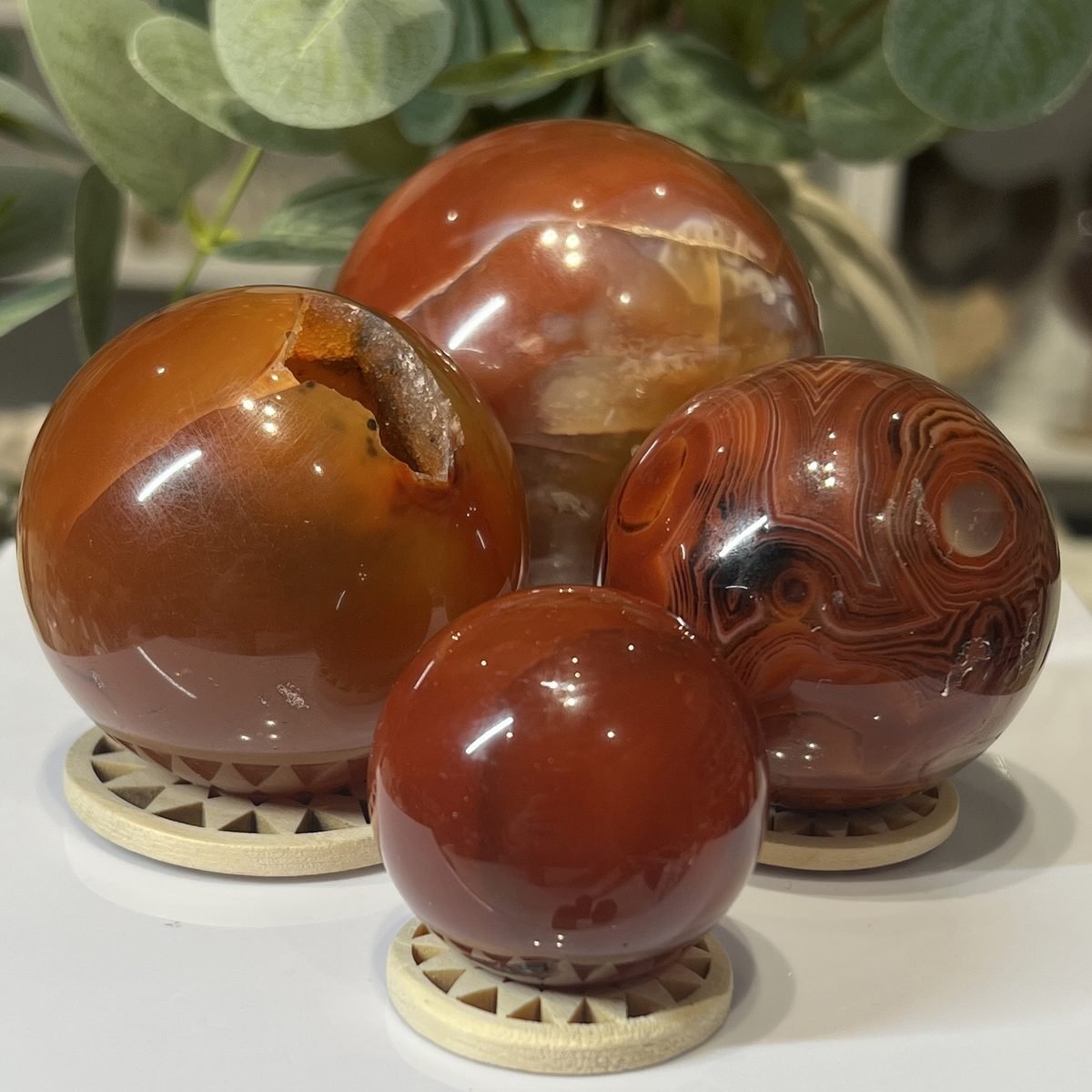
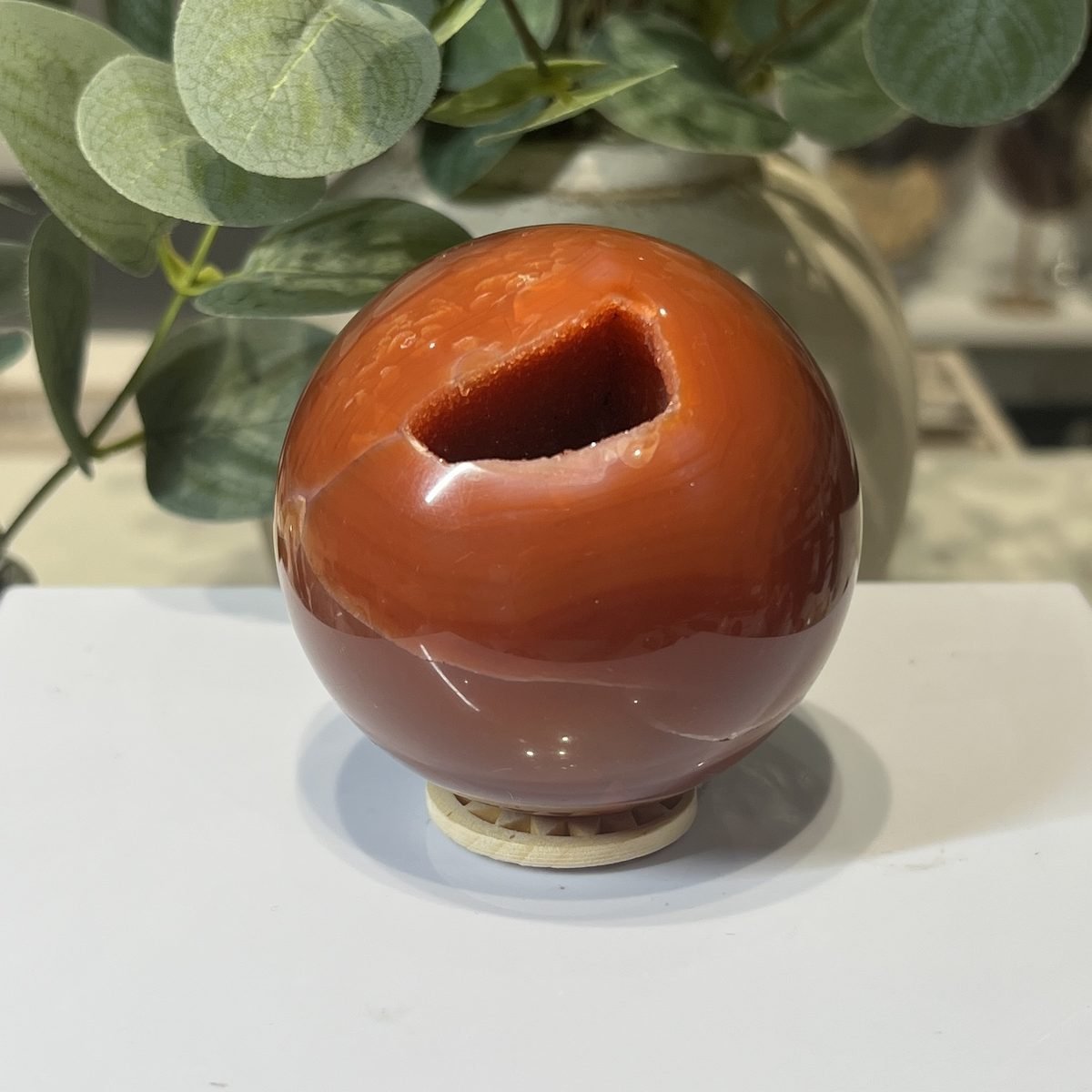
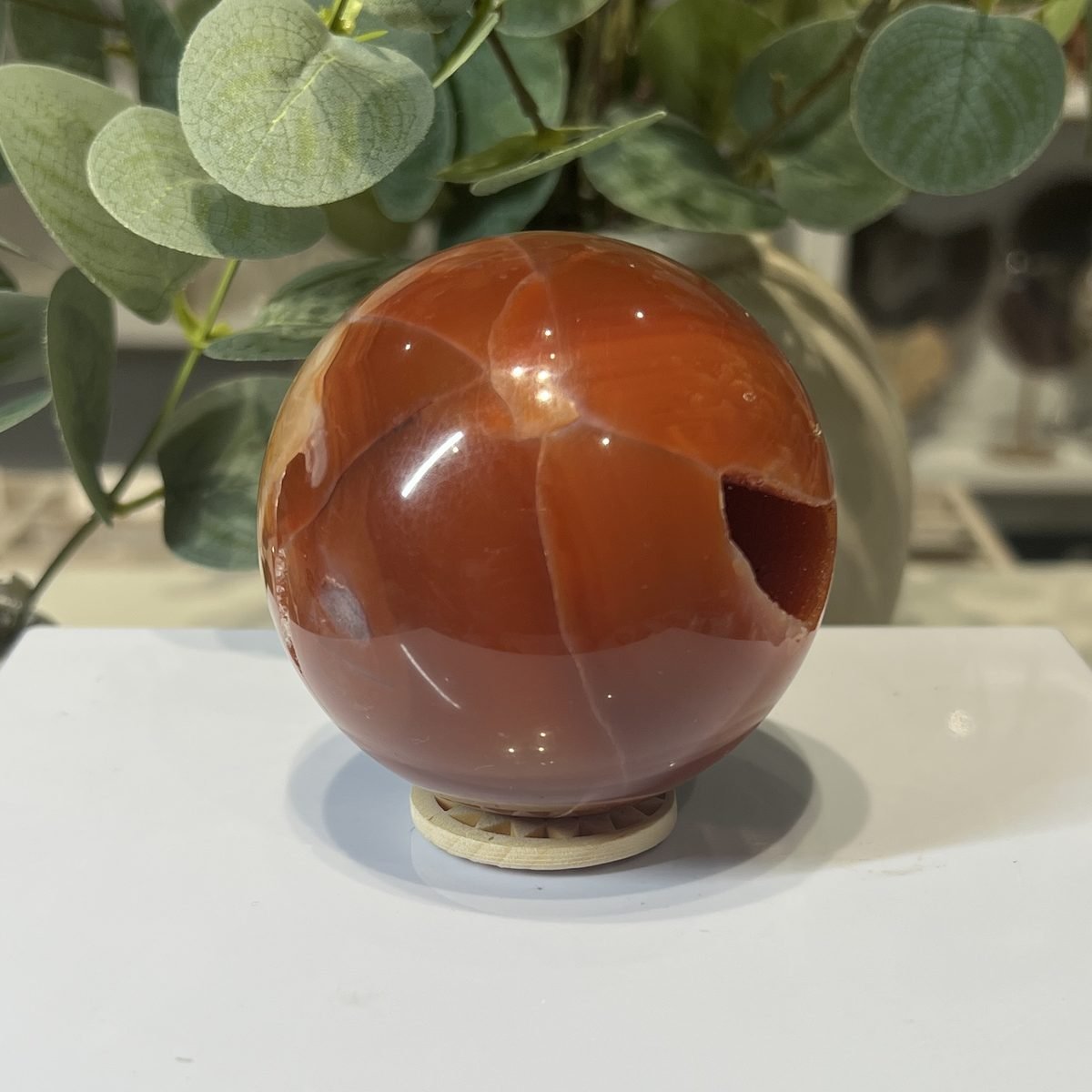
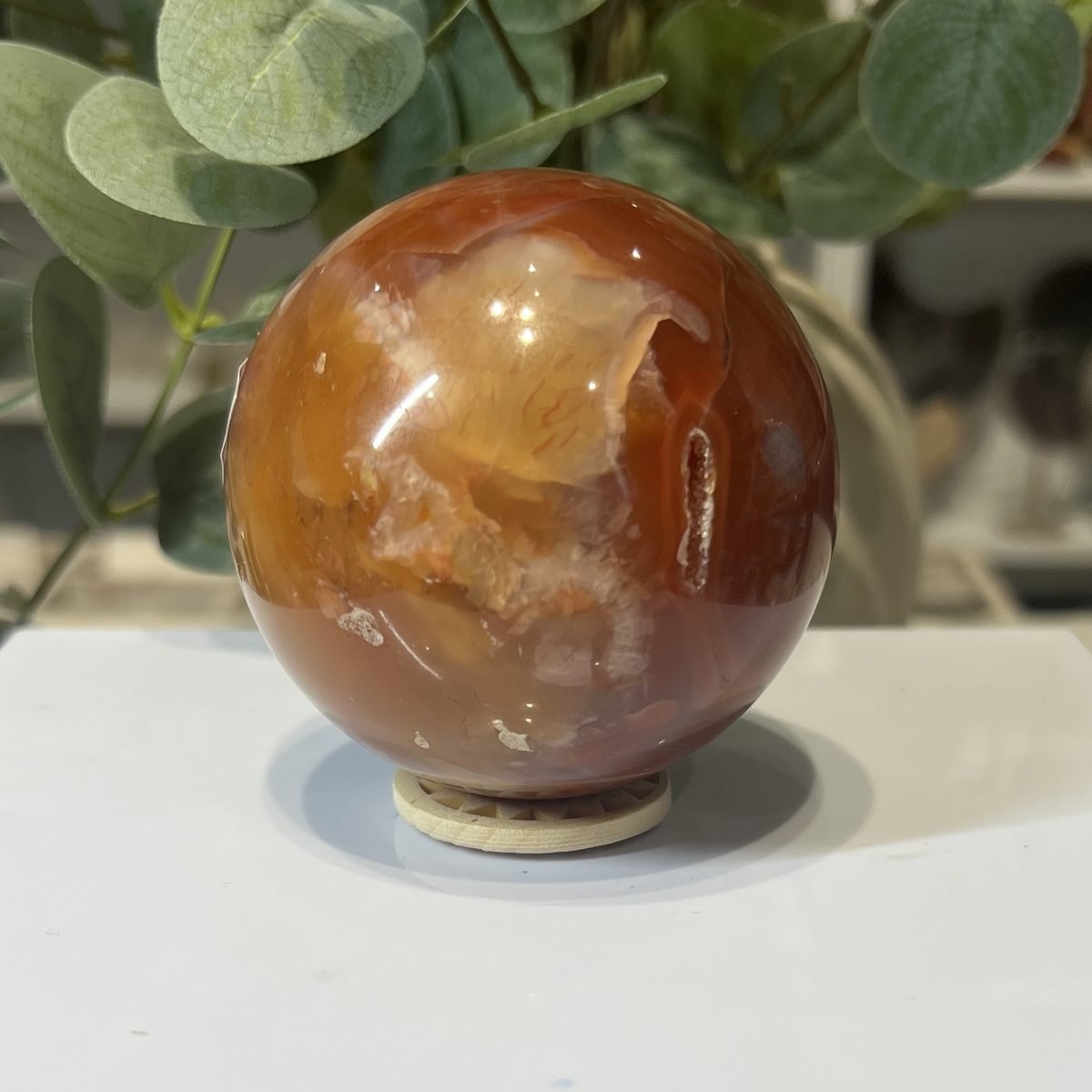
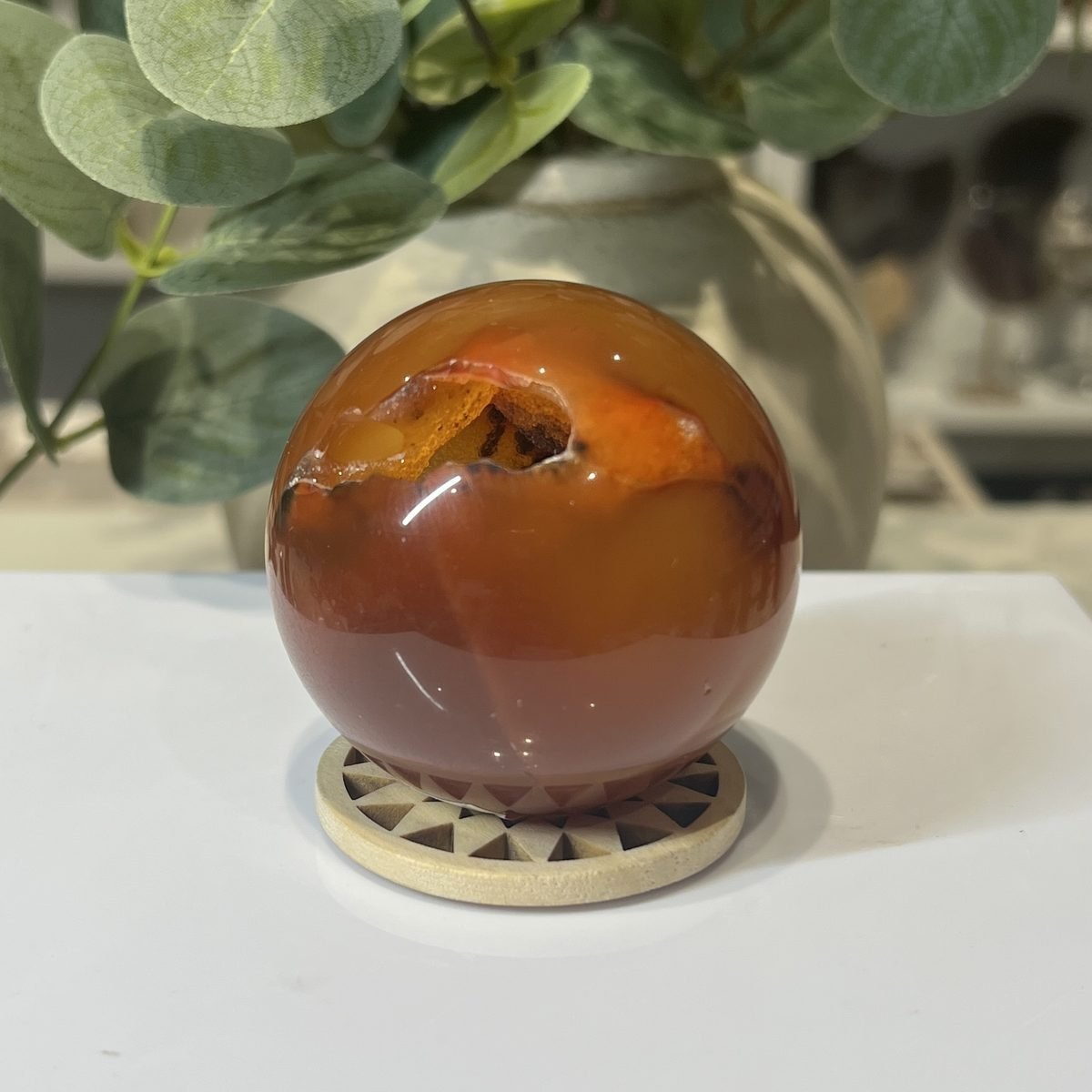
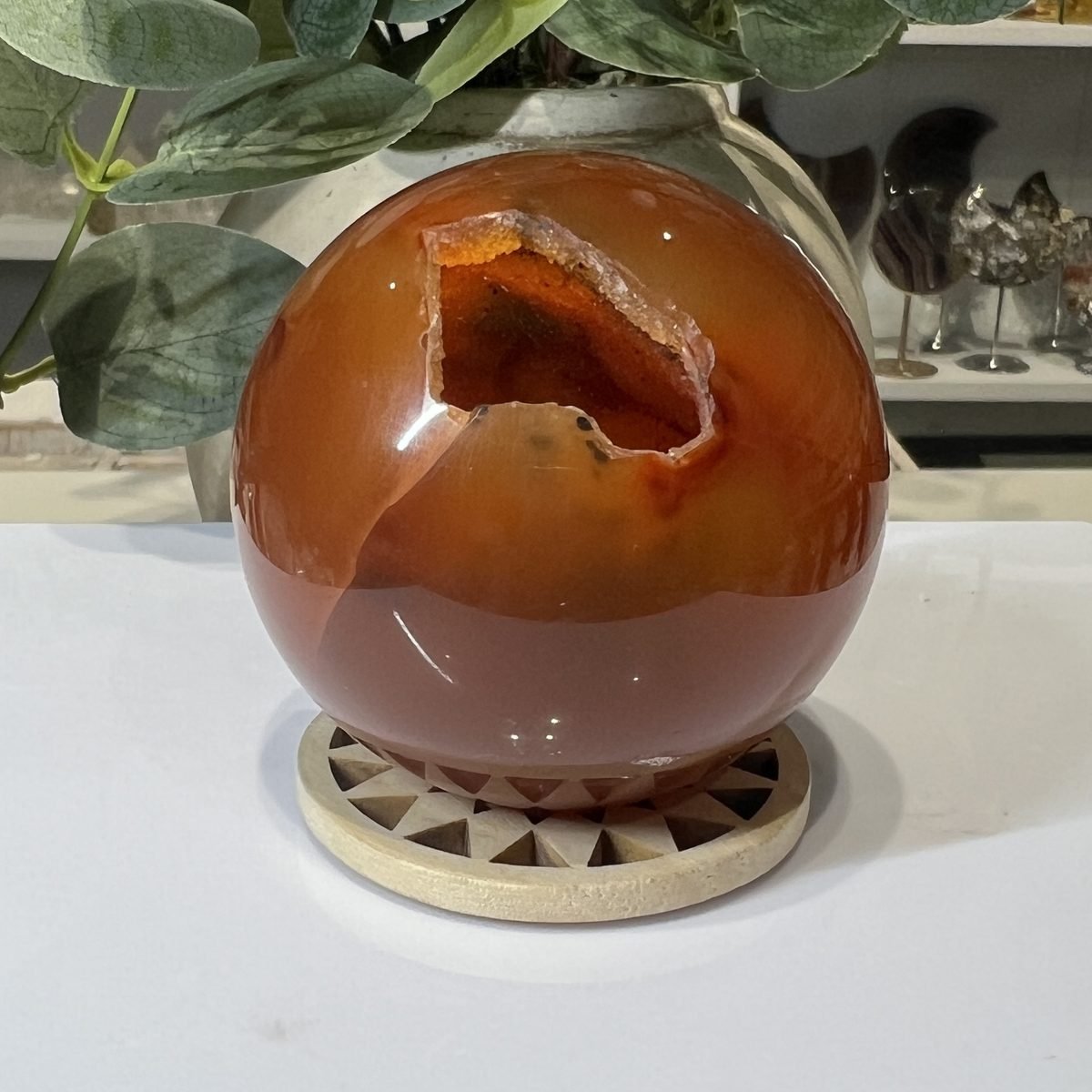
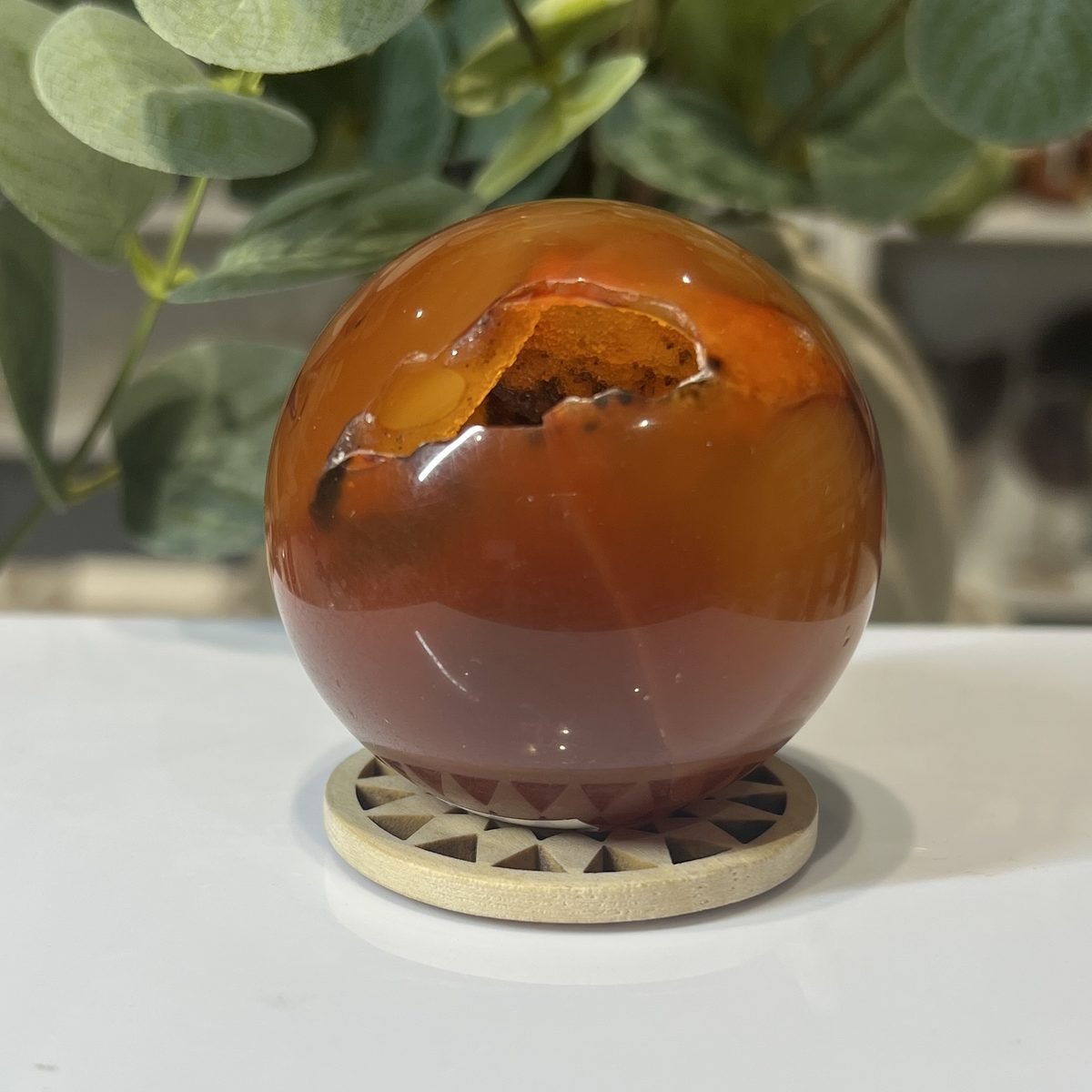
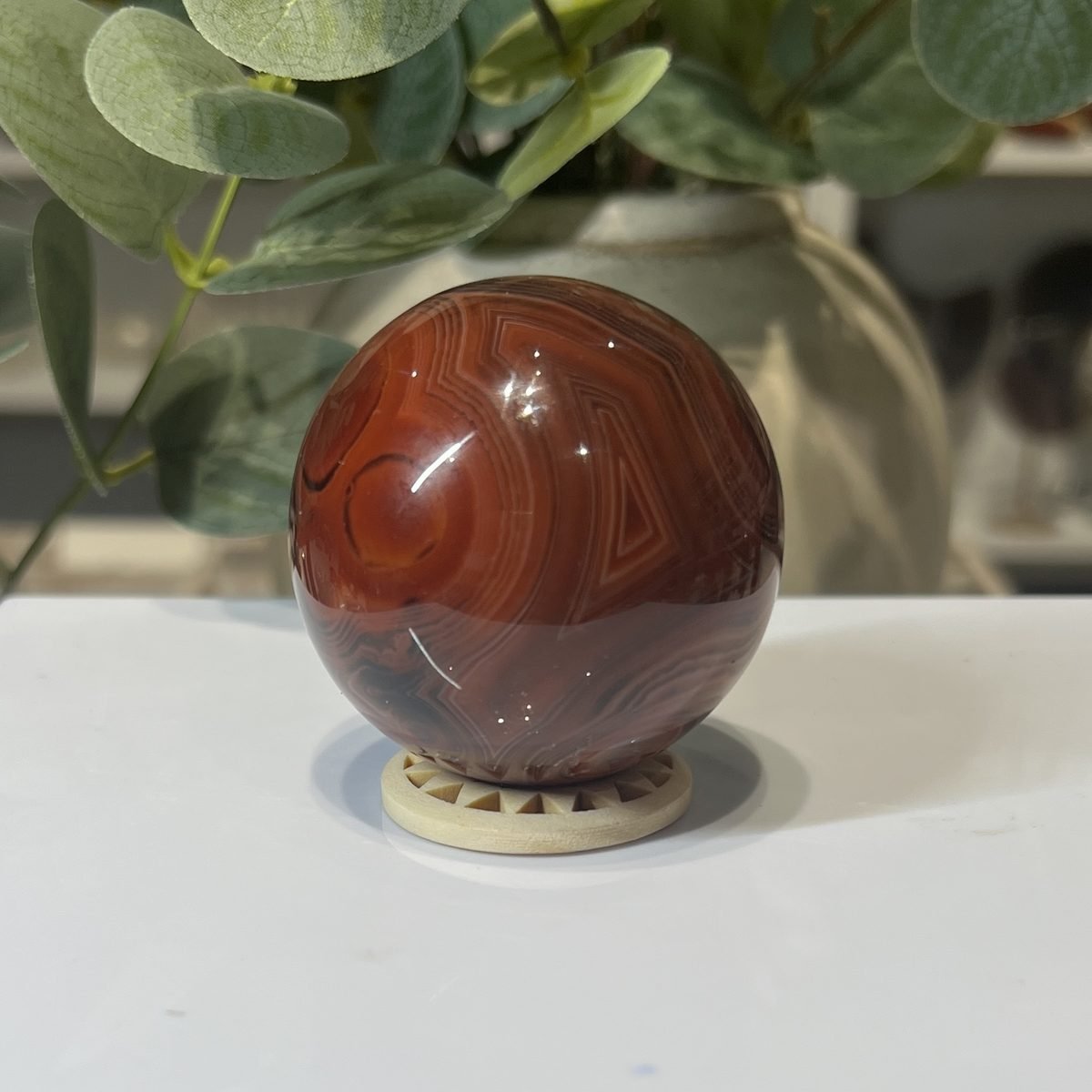
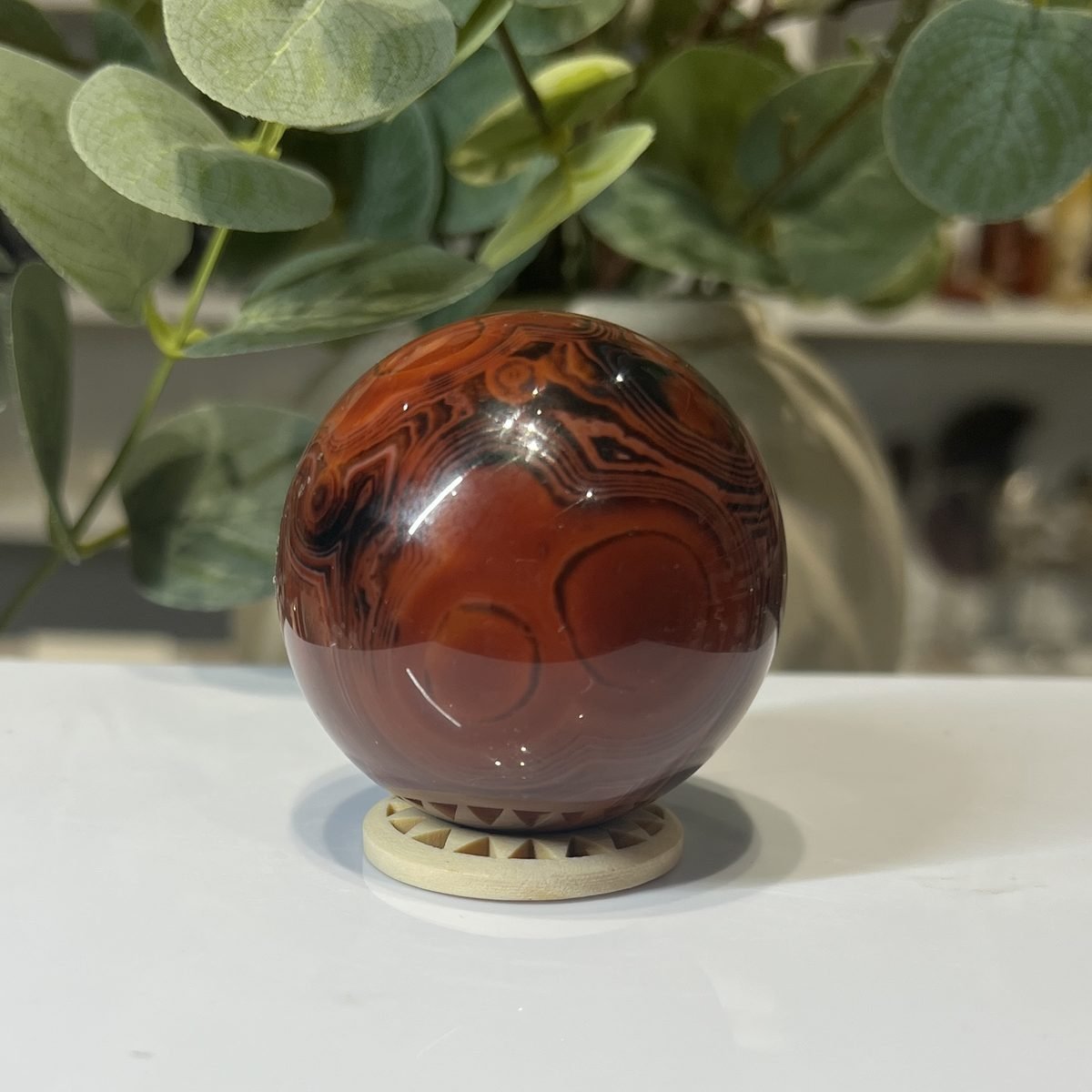
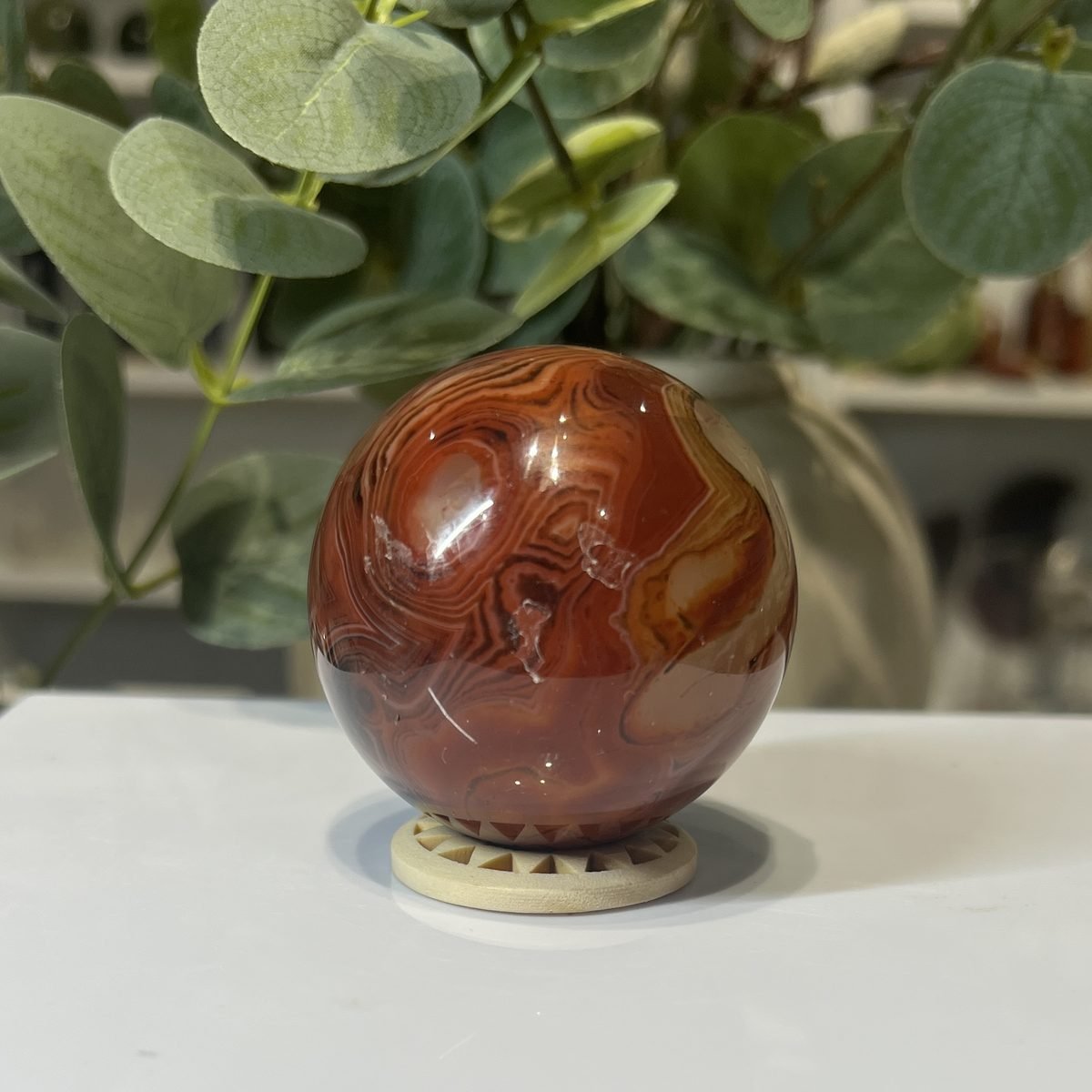
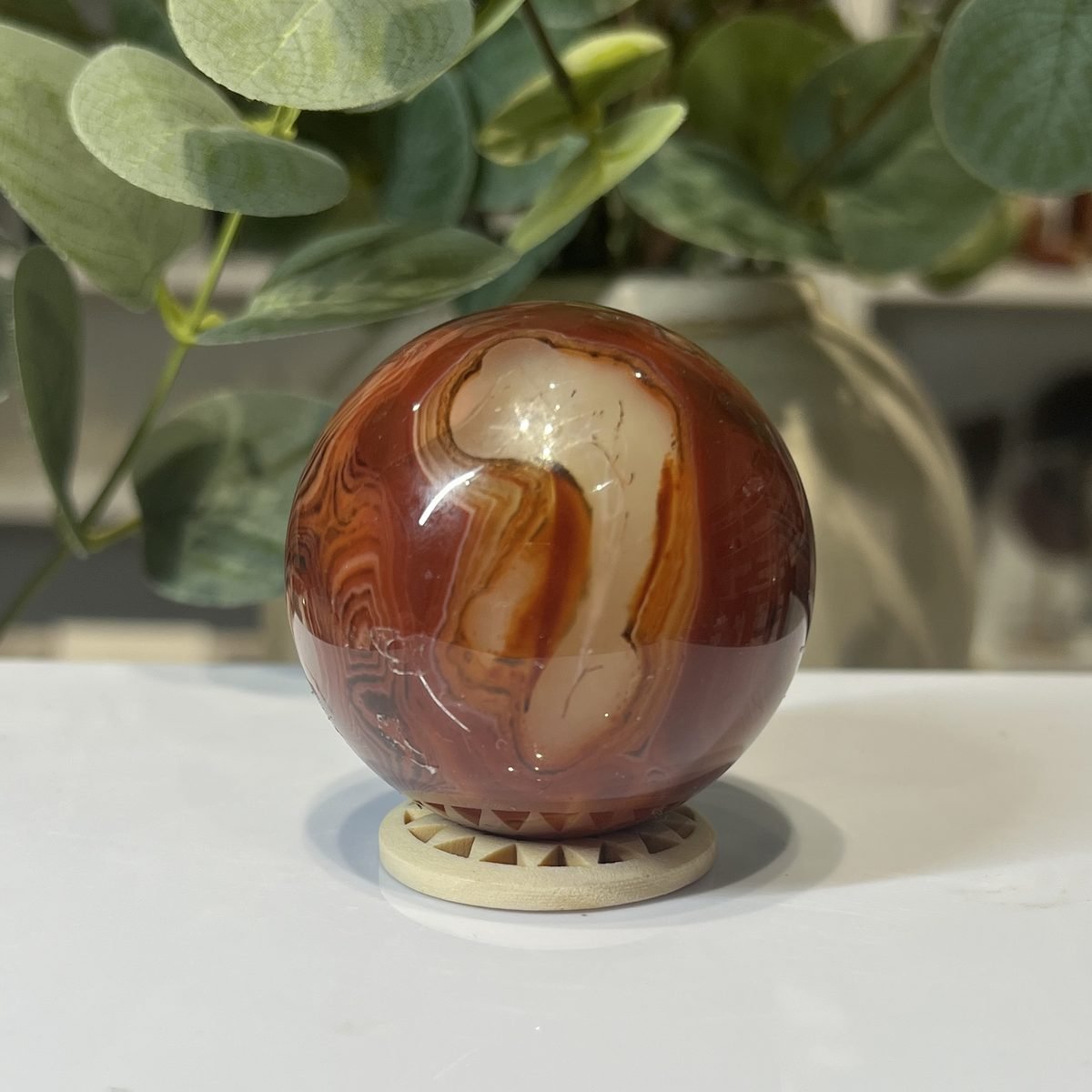
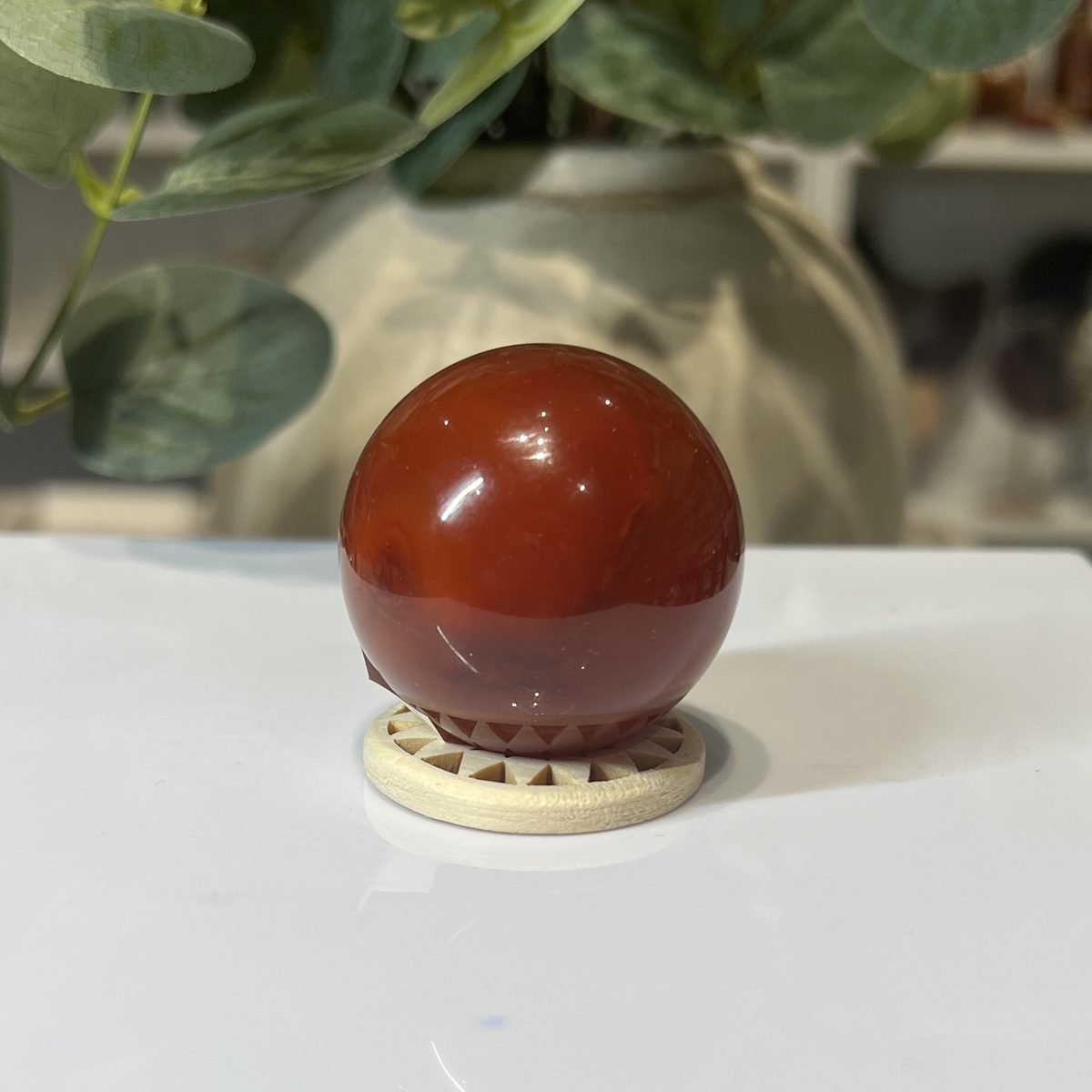
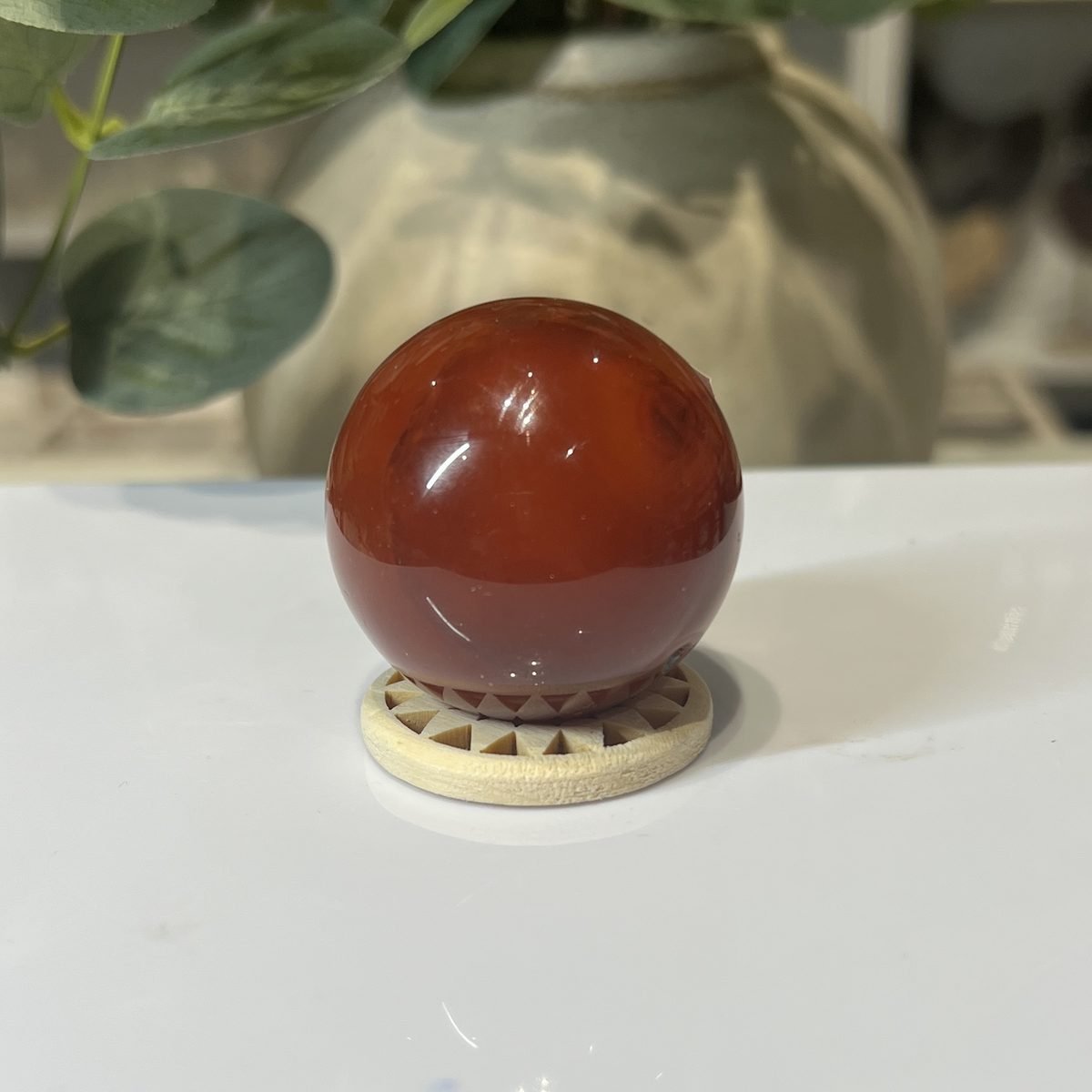
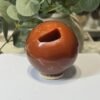
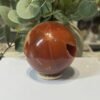
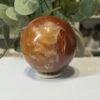
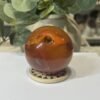
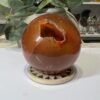
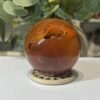
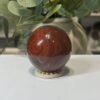
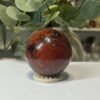
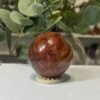
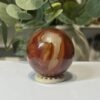
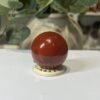
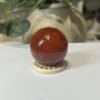
A carnelian sphere, cut and polished from natural carnelian and sent with a stand. There are four to choose from, between 40mm and 70mm, in glowing shades of orange and red, some with sparkling druzy pockets.
Choose your carnelian sphere
- A, 70mm, 461g, £52. The largest, deep orange red with a sparkling druzy pocket opening on one side.
- B, 58mm, 197g, £35. Rich orange red with an open druzy cavity and soft banding.
- C, 52mm, 200g, £44. Deep red and dark banding swirling around the sphere, with cream and amber patches.
- D, 40mm, 85g, £15. A small, glossy sphere in warm orange red. A lovely size to hold.
Every piece is photographed on its own, and the letter in the dropdown matches the photos, so the carnelian sphere you see is the one you receive.
What carnelian is
Carnelian is a translucent form of chalcedony, coloured orange and red by iron. Held up to the light, it glows like an ember. Some pieces open into small cavities lined with tiny sparkling quartz crystals, known as druzy.
It has been carved and worn for thousands of years, prized in the ancient world for seals, rings and amulets.
Traditional correspondences
Carnelian is traditionally linked with the sacral chakra and with courage, motivation and creative fire. It is often kept close when starting something new, or placed on the altar for Samhain and the turning of the year, when its warm glow feels especially welcome.
Correspondences are traditional and are offered as part of a practice, not as a substitute for medical or professional advice.
Caring for your carnelian sphere
Carnelian is around 7 on the Mohs scale and hard wearing, but the edges of a druzy pocket can chip, so keep your sphere on its stand. Long spells in strong sunlight can soften the colour over time. A soft dry brush keeps the druzy bright. To cleanse, use sound, breath or moonlight.
What you receive
One carnelian sphere, the piece you choose from the dropdown, with a stand, wrapped for the post and sent by Royal Mail Tracked.
Browse the rest of the crystal spheres, or see everything in carnelian.
For the mineralogy behind the stone, see chalcedony on Mindat.