
Crystal Shop UK · Rooted in intention, curated with care

Tag: Lughnasadh

  • Crystals and a Grid for the Full Moon Before Lughnasadh

    Crystals and a Grid for the Full Moon Before Lughnasadh

    A grounded guide to the 29 July full moon, the crystals for it, a grid circuit to build, and how it all sits three days out from Lughnasadh

    There is a full moon on the twenty ninth of July, and then, three days later, the first harvest. In these islands those two things have always belonged together. One shows you the field. The other asks you to walk into it.
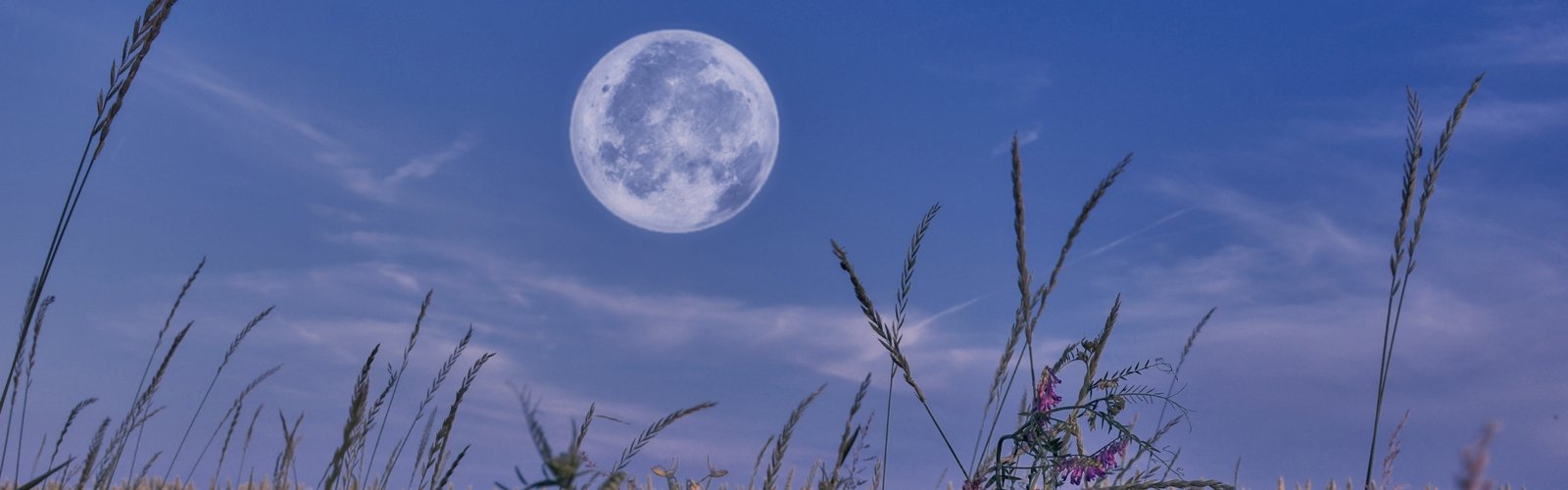
    The full moon of 29 July 2026, the last full moon before Lughnasadh

    The Full Moon on 29 July 2026

    The Moon comes to full on Wednesday the twenty ninth of July at thirty six minutes past three in the afternoon UK time, standing at six degrees of Aquarius directly opposite the Sun at six degrees of Leo. It will look full on the nights either side, so an exact moment landing in the middle of a Wednesday afternoon costs you nothing at all.

    You will see this one called the Buck Moon almost everywhere, and it is worth knowing where that name comes from. It is North American, taken from the season when young deer are growing new antlers, and it reached common British usage fairly recently through almanacs and then the internet. The Royal Observatory says as much on its own moon calendar. There is no harm in using it. But if you want the frame that actually belongs to these islands, it is simpler and a great deal older than any list of names. This is the last full moon before the harvest begins.

    How the Celts Counted Time

    We know less about Celtic ritual than most books suggest, and a good deal of what circulates online was written in the twentieth century rather than found in the ground. The pretty tree calendar moon names you will see all over Pinterest come from Robert Graves in 1948, not from anything ancient. But some things are genuinely attested, and those are worth having.

    The Coligny calendar is the best surviving evidence. A bronze plate found in France, dating to around the second century, lunisolar, tracking the Moon against the solar year with each month divided into two halves. Whoever made it was watching the Moon closely and building a working system around what they saw. Not vague nature worship. Arithmetic.

    Caesar recorded something else that has stayed with me. The Gauls, he wrote, measured time by nights rather than days, so a date began at sunset and the night came before the morning it belonged to. It is why we still say fortnight, and why Hallowe’en and Christmas Eve carry the weight they do. If you are marking this moon, mark it on the night. The dark is the beginning of the day, not the end of it.

    What a full moon shows you was already true. All that has changed is that you can no longer pretend not to see it.

    Three Days to Lughnasadh

    On Saturday the first of August the wheel turns to Lughnasadh. In Irish it is Lúnasa, which is simply the modern word for the month of August, the festival having given its name to the whole thing. In Wales it is Calan Awst or Gŵyl Awst, the calends and the feast of August. In Scots Gaelic, Lùnastal. The English Lammas is a different word with a different root, from the Old English for loaf mass, the blessing of the first bread. Two traditions, the same fortnight, the same old anxiety about whether the grain would come in.

    What we know of the Irish festival is largely thanks to Máire MacNeill, who gathered hundreds of local accounts and found the same pattern repeating across the country. People went up. Hilltops, high pastures, holy wells, lake shores. They gathered bilberries, which is why the Sundays of late July and early August carried names like Bilberry Sunday in so many places. There were games, contests, matchmaking. In myth the festival belongs to Lugh, said to have founded it as funeral games for Tailtiu, his foster mother, who cleared the plains of Ireland for planting and died of the effort. The Welsh keep a cognate figure in Lleu Llaw Gyffes in the Fourth Branch of the Mabinogi.

    Hold that story next to this moon for a moment. A festival of first fruits, founded in memory of someone who worked the ground until it killed her. Lughnasadh is not really a festival about plenty. It is about the cost of what you are about to gather.

    What This Moon Lights Up

    Every full moon sits on an axis, one sign lit and the opposite holding the light. Here it is Leo and Aquarius. Leo is the individual, the particular warmth only one person carries. Aquarius is the group, the wider circle, the belonging that is larger than any one of us. On this axis the question is simple and slightly uncomfortable. Where are you making yourself smaller to keep the peace, and where have you gone so far out in front that you have lost the people you meant to bring with you?

    Two things make this moon louder than most. Jupiter sits with the Sun in Leo at almost exactly the same degree, magnifying everything the Sun is doing. And the Moon sits close to Pluto, which has a way of bringing up what was underneath. Bright lighting, and not always on material you would have chosen.

    Which, again, is the point of the week. You cannot harvest what you refuse to look at.

    What the Cancer New Moon Planted

    A fortnight ago the new moon in Cancer asked for something quiet and true to be planted in private. This is the far end of that arc. Cancer plants inwardly. Aquarius brings things out, toward other people, toward the circle. If you wrote an intention down on the fourteenth, go back and read it this week. Something in it will have moved.

    A Number for the Day

    The twenty ninth of July 2026 reduces to one, the number of beginnings and of standing on your own feet. There is something quietly funny about a beginning number landing on a full moon, which is supposed to be a completion. But that is how harvest works too. You cut the field and, in the same motion, you save the seed. The twenty nine itself reduces to eleven, associated with insight and with seeing rather more than you had bargained for.

    Six Crystals for This Moon

    Chosen for the revealing, releasing mood of the lunation and for the pull between being seen and belonging. You do not need all six. Read through and notice which one you keep returning to.

    Clear Quartz

    Start here, because clear quartz has the deepest roots in these islands of anything on this list. White quartz was carried considerable distances and placed at some of the most significant Neolithic sites in Ireland and Scotland, including large quantities at the entrance to Newgrange, and quartz pebbles turn up on graves across both countries for thousands of years afterwards. What exactly it meant is not recorded. That people wanted bright stone at the threshold between one state and another is not in any doubt. Clear quartz amplifies whatever intention it is given, which is what a full moon is doing anyway.

    Labradorite

    The stone of things only visible from the right angle. Grey until the light catches, then blue and gold. Labradorite is the one to work with when something is surfacing and you want to look at it steadily rather than flinch away.

    Black Obsidian

    The honest mirror. Obsidian is volcanic glass with a long reputation for showing what is there rather than what is comfortable. With the Moon close to Pluto, this is the stone for the part of the week that goes down rather than across. Steady, and best paired with something warmer.

    Citrine

    The warm one, and the harvest one. Sun and Jupiter fused in Leo make this an unusually generous chart, and citrine meets it. Golden, solar, associated with confidence and with abundance that gets enjoyed rather than stored away out of fear. Good balance for the obsidian, and the right colour to carry into the first of August.

    Amethyst

    Calm at the top of the head. Amethyst is long associated with Aquarius and with the kind of clarity that does not come from thinking harder. Useful on a bright full moon when the mind wants to race, and useful again the morning after, when you have to decide what to do about what you saw.

    Moonstone

    The cycle itself. Moonstone carries a soft internal shimmer that shifts as you turn it, which is about as good a physical description of a lunar month as any stone manages. Work with moonstone when you want to move with the turning rather than brace against it.

    The Harvest Light Circuit

    A crystal grid is a circuit rather than an arrangement. The stones are conductors, the geometry is the wiring, and the intention is the current running through it. This one is built for the moon on the twenty ninth and then extended into Lughnasadh on the first, so it carries you across both.

    The base is the moon phases octagram, eight positions around a centre. Eight is the number of rhythm and regeneration, which suits a lunation about what completes and what begins again in the same breath.

    THE HARVEST LIGHT CIRCUIT Moon phases octagram | twenty one stones O A O A O A O A M L M L C T Tiger’s eye or amber, added at the top on 1 August C Focus Stone Citrine or pyrite, or tiger’s eye | the power source M Way Stone Moonstone x2 connector | carries the lunar half of the axis L Way Stone Labradorite x2 connector | carries the seeing, steadies it O Desire Stone Black obsidian x4 for the Moon and Pluto contact A Desire Stone Amethyst x4 for Aquarius, the clarity counterweight Amplifiers Clear quartz points x8 tips facing outward, broadcasting the circuit The Way Stones carry the current outward. Nothing receives from the centre directly. THE HARVEST LIGHT CIRCUIT Moon phases octagram | twenty one stones O A O A O A O A M L M L C T Tiger’s eye or amber, added at the top on 1 August C Focus Stone Citrine or pyrite, or tiger’s eye | the power source M Way Stone Moonstone x2 connector | carries the lunar half of the axis L Way Stone Labradorite x2 connector | carries the seeing, steadies it O Desire Stone Black obsidian x4 for the Moon and Pluto contact A Desire Stone Amethyst x4 for Aquarius, the clarity counterweight Amplifiers Clear quartz points x8 tips facing outward, broadcasting the circuit
    The Harvest Light Circuit. Solid lines run from the centre to the Way Stones. Dashed lines carry on outward from there.

    The Focus Stone

    The centre holds the current for the whole circuit, so it needs to carry the loudest note in the chart. Here that is the Sun fused with Jupiter in Leo. Three options, and they are not interchangeable.

    Citrine

    Warm, solar, golden, long associated with confidence and with abundance that gets spent rather than hoarded. The closest match to a Sun and Jupiter conjunction in Leo, and gold is the Lughnasadh colour too, so one stone covers both halves of the week. This is the first choice.

    Pyrite

    The same solar note with more weight behind it. Metallic, dense, associated with practical courage and with turning intention into something material. Choose pyrite over citrine if what you are gathering this year is concrete rather than emotional. It broadcasts harder, and carries softer feeling less well.

    Tiger’s Eye

    Golden banded, grounding, associated with steady self belief. It carries the same Leo colour with a protective quality the other two lack, which suits anyone who finds a bright full moon exposing rather than generous.

    A point or tower shape if you have one, since a terminated centre sends the current up and outward rather than pooling it in place.

    The Way Stones

    These four are the connectors. They sit between the Focus Stone and the outer ring, and their job is to carry the solar current outward without it reaching the harder outer stones raw. Nothing in the outer ring receives directly from the centre. Everything passes through this layer first, and what it is carrying is the warmth of the centre, softened into something the outer stones can hold.

    Moonstone, two of them. Soft internal shimmer that shifts as you turn it, long associated with lunar rhythm and with moving in cycle rather than against it. This is the lunar half of a solar and lunar opposition, so moonstone is what allows the circuit to hold both ends of the Leo and Aquarius axis at once instead of choosing a side.

    Labradorite, two of them. Grey until the light catches, then blue and gold. Associated with seeing what is only visible from the right angle. Placed here because the outer ring is going to surface material, and labradorite is what lets you look at it steadily on the way through.

    Alternate the two pairs so no two of the same stone sit side by side, or the current runs unevenly around the ring.

    The Desire Stones

    Black obsidian, four. Volcanic glass, sharp, associated with honest reflection and with what has been sitting underneath. Chosen for the Moon and Pluto contact, which is the part of this week that goes down rather than across.

    Amethyst, four. Cool, calming at the crown, long associated with Aquarius and with clarity that does not come from thinking harder. Chosen as the counterweight, so that what the obsidian surfaces does not tip over into reaction. Alternate them around the ring.

    The Amplifiers

    Eight clear quartz points between the outer stones, tips facing outward. Quartz amplifies whatever it is given and broadcasts the completed circuit rather than holding it in. It is also the stone doing the historical work earlier in this guide, so the grid and the ground agree with each other.

    Activation

    After dark on the twenty ninth, keeping the night before the day. Trace from the centre outward with a quartz point or your index finger, connecting stone to stone in sequence and speaking the intention aloud as each line closes. Ring a bell or strike a bowl once at the end and wait for the sound to go completely before you leave it.

    The Lughnasadh Addition

    On the first of August, add one tiger’s eye at the top position, or amber if tiger’s eye is already your centre. That takes the circuit from twenty one stones to twenty two, the builder, which is the same number that ran through the Cancer new moon two weeks earlier. The arc closes on itself.

    Substitutions

    • Citrine to pyrite or tiger’s eye
    • Moonstone to selenite or howlite
    • Labradorite to black moonstone
    • Black obsidian to black tourmaline or smoky quartz
    • Amethyst to fluorite
    • Clear quartz covers any gap, with the intention said aloud as you place it

    Your Lughnasadh Altar

    The altar does not need to be large or permanent. A shelf, a windowsill, a tray you can move. What matters is that the things on it mean something to you rather than looking correct.

    • An altar cloth in gold, cream or green. The field the circuit sits on.
    • A bell or singing bowl. Doing real work here rather than decoration, since the practice below opens and closes with sound.
    • Candles in gold or green, and a Leo zodiac candle for the Sun side of the axis.
    • An offering bowl or small cauldron. This is the genuinely old part. First fruits went into something. Berries, a handful of grain, a torn piece of bread.
    • Incense and an ash catcher. Something resinous or earthy rather than floral.
    • An essential oil blend for dressing the candle before you light it.
    • A clear quartz point or wand for the activation trace.
    • A ritual notebook for the journal prompts at the end of this guide.
    • Runes or a pendulum if you want a divination beat at the turning.

    And four things that cost nothing and are closer to the original festival than anything on that list. A loaf you baked or bought and shared. Berries picked outdoors. Something carried down from high ground. The name of one person who helped you this year, said out loud.

    A Simple Practice for the Night

    This follows the old way of marking a full moon: a candle, a few words and something to give thanks for. Take ten minutes on the night of the twenty ninth or the thirtieth, after dark, in keeping with the older habit of letting the night begin the day.

    Clear the space with sound. Ring a bell, strike a bowl, or hum one low note and let it fade out completely. Wait for the silence afterwards. That silence is the beginning of the practice, not the pause before it.

    Then take your stone in both hands and breathe five slow breaths, letting each one land a little lower in the body. When you feel settled, say aloud the thing this moon has made obvious. Not the tidy version. The true one. Then name what you are putting down because of it. Notice where each sentence registers, the throat, the chest, the belly, and leave it as it is without smoothing it over.

    Finish by setting the stone somewhere it will catch the light of the moon, or simply somewhere you will pass it in the morning. Then stop. This moon does not want a long ceremony. It wants one honest sentence said out loud.

    Carrying It Into Lughnasadh

    If you want to keep the thread going to the first of August, the old shape of the festival gives you plenty to work with and none of it is complicated. Go somewhere high, even if high only means the top of your road. Pick something and eat it outdoors. Bake or buy a loaf and share it. Say out loud what you are glad to have brought in this year, and name honestly what it cost you and who helped.

    The full moon three days earlier does the seeing. Lughnasadh does the gathering. Between them you get a fairly honest account of your year so far, which is more than most weeks offer.

    Making the Most of the Window

    The strongest nights are the twenty ninth and the thirtieth, with the Moon still visibly full on the thirty first. After that it begins to wane, and the fortnight that follows is the natural time for the letting go rather than the seeing. Lughnasadh sits right at the start of that stretch, which makes the first week of August unusually good for finishing things rather than beginning them.

    Journal Prompts

    Shaped for the Leo and Aquarius pull of this moon and the harvest sitting just behind it. Answer only the ones that catch.

    • What has this moon made obvious that I already half knew?
    • What have I actually brought in this year, and what did it cost me?
    • Who helped, and have I told them?
    • Where am I making myself smaller to keep the peace?
    • Where am I standing apart when I could simply be part of something?
    • What did I plant at the Cancer new moon, and what has grown?
    • Which version of me are other people still expecting, and do I still want to be it?
    • Going into Lughnasadh, what is genuinely ready to be cut, and what needs longer in the ground?

    Build Your Harvest Light Circuit

    Every crystal in this guide is in the Grove now, along with the altar cloths, candles, offering bowls and quartz points to build the circuit around them, ready for the twenty ninth and the first of August.
    Shop the Full Moon Stones

  • Wheel of the Year Crystal Grid: Anchoring Lammas Harvest

    Wheel of the Year Crystal Grid: Anchoring Lammas Harvest

    A Lammas crystal grid for the first harvest, gratitude and the fruits of the year

    A Journey into Golden Gratitude and Absolute Abundance

    Welcome to Your Sacred Space

    Welcome back to the Grove. If you are joining us for the first time you are stepping into a profound journey of discovery. Together we are exploring how to use the ancient wisdom of the stars and the quiet power of the earth to create a life of deep spiritual stability. Today we are looking at a moment of golden gratitude on the calendar. We call it Lammas or Lughnasadh the festival of the first harvest.

    Lammas marks the moment when the wild explosive growth of summer begins to mature into physical sustenance. The long days are still hot and radiant but a subtle shift has occurred in the light. The earth is offering up her very first rewards for the seeds we planted in the spring. In ancient traditions Lammas is the festival of the grain. It celebrates the profound connection between the hard work of the sun and the rich bounty of the soil. It is a time for immense gratitude deep satisfaction and the gathering of our spiritual rewards. But navigating this busy period of harvesting and gathering can sometimes leave us feeling scattered or energetically depleted. To stay steady and spiritually focused during this golden peak we use a Wheel of the Year crystal grid. This is not just a beautiful late summer tribute for your home. It is a highly functional circuit of energy that captures the Lammas abundance and anchors your spirit in pure sustainable gratitude.

    The Cosmic Architecture of the First Harvest

    We view the turning of the seasons not merely as a change in the weather but as a series of predictable energetic peaks and troughs. Lammas is a moment of profound physical manifestation. It is a point where our energetic intentions finally take physical form. The external environment shifts into a state of heavy golden abundance providing the perfect carrier wave for us to reap the rewards of our projects our relationships and our deepest desires.

    Have you ever noticed how you feel a sudden urge to secure your finances or assess your life goals as August arrives? Perhaps you feel a deep desire to bake to cook and to gather your loved ones around a shared table. This happens because our bioelectric field is highly sensitive to the huge atmospheric changes happening in the world outside. We are absorbing the frequency of the ripening earth. To prevent our own energy from becoming overwhelmed by the work of the harvest we need a physical anchor of balance. We need to ground the radiant energy so we can enjoy the fruits of our labour in total peace.

    The Science of Entrainment

    This is where the beautiful science of entrainment becomes essential. To understand why we build a geometric circuit for Lammas we must look at the molecular level of the stones we use. A crystal is defined by its crystalline lattice. This is a perfectly ordered repeating molecular structure. Because of this flawless internal geometry a crystal possesses a vibration that is incredibly stable and unchanging. It does not get swept away by the busy energy of the harvest. It does not lose its centre in the late summer heat.

    There is a law of physics called the Principle of Entrainment. It dictates that when two frequencies meet the weaker or more chaotic frequency will naturally begin to mirror the stronger more stable one. By building a geometric circuit on your altar you are effectively creating a tuning fork of vital grounded abundance for your home. You are installing a sophisticated piece of natural technology that resonates with the stable frequency of absolute balance and joyful reward. When your personal energy field encounters this stable lattice your nervous system begins to entrain to that steady rhythm. You match the quiet strength of the stone allowing you to gather your harvest beautifully without losing your foundation.

    Mapping Your Grid: The Twelve Astrological Houses

    To build a truly powerful circuit we must look to the sky. We function as the cosmic architect of our own lives. Lammas is deeply connected to the warm generous energy of Leo and the practical earthly wisdom of Virgo. To tune your grid perfectly you need to map this radiant harvesting energy to the specific Astrological House it activates for your Rising Sign. By knowing your active house you can direct the energy of your geometric circuit with clinical precision.

    Here is how the Lammas harvest will manifest across all twelve houses:

    • First House: The house of self and identity. If the first harvest lands here your grid will anchor a beautiful explosive reward of personal confidence and unstoppable physical magnetism.
    • Second House: The house of values and finances. Building your circuit here feeds the vital seeds of your material abundance and cultivates an unshakeable deep self worth.
    • Third House: The house of communication and the mind. Your grid will ignite your words with bright clarity allowing you to share your ideas with sudden brilliant charisma.
    • Fourth House: The house of home and roots. Your circuit will become a literal hearth fire bringing deep domestic warmth and vibrant fresh harmony to your family dynamics.
    • Fifth House: The house of joy and creativity. Here the grid anchors a wild rapid flow of inspiration transforming your creative hobbies into highly successful passionate pursuits.
    • Sixth House: The house of daily routines and wellness. Your geometric circuit will help you honour your physical body and establish a brilliant highly energized new wellness routine.
    • Seventh House: The house of partnerships. Your grid will broadcast a frequency of deep romance sacred union and renewed commitment into your marriage or close business contracts.
    • Eighth House: The house of deep transformation. Here the grid provides a safe grounded anchor while you step fully into your personal power and embrace a brilliant spiritual intimacy.
    • Ninth House: The house of higher learning and philosophy. Your circuit will act as a guiding star expanding your mind and bringing sudden passionate focus to your spiritual studies.
    • Tenth House: The house of career and legacy. Building your grid here anchors a powerful magnetic ambition preparing you to step boldly into true public authority and reap professional rewards.
    • Eleventh House: The house of community and hopes. Your grid will attract vibrant supportive friendships that elevate your goals and bring your community visions to life.
    • Twelfth House: The house of the subconscious and retreat. Here the circuit acts as a beautiful gentle light for your soul allowing you to process hidden desires and step out of the shadows safely.
    “Before you begin light a deep orange or gold spell candle. Let the living flame represent the fierce radiant light of the golden grain bringing absolute harvest success to your space.”

    Building Your Circuit

    In this exploration we use the numerology of the number seven. Seven is the ultimate number of the spiritual seeker deep inner wisdom and the bridge between the physical and the divine. We build our grid using a heptagon or seven pointed star formation. The geometry of the heptagon is the perfect energetic blueprint for Lammas. It tells the universe that we are ready to receive our physical harvest while maintaining our deep spiritual connection. We are building a dynamic circuit so powerful that the fierce new solar energy can take root and accelerate our manifestation safely.

    The Toolkit and Shopping List

    To create a high frequency circuit we always recommend using raw stones. They are exactly as nature made them full of life and power. Because the energetic weather of each festival is entirely unique we vary our stones to match the specific frequency of the First Harvest.

    • 💎 The Conductive Wiring: Rough Clear Quartz (£2.50). You will need seven of these points. They act like the wires in an electrical circuit carrying the energy between your stones and ensuring your grid pulses with clear bright light.
    • 🪐 The Anchor: Rough Black Tourmaline. This stone sits at the very centre to keep your energy grounded absorb the high intensity of the busy harvest and protect your physical body from burnout while you reap the rewards.
    • ✨ The Modifiers: Rough Citrine. These stones add a frequency of infinite abundance deep joy and incredible solar manifestation to your grid ensuring your personal sanctuary remains a place of absolute radiant wealth.
    • 🕯️ The Illumination: Spell Candles. Lighting a gold or orange spell candle directly beside your grid acts as the ultimate catalyst drawing the energy of manifestation down into your sanctuary.
    • 🌿 The Atmosphere: Just Chill Roll on Essential Oil Blend. Apply to your pulse points to help your physical body surrender any scattered anxiety and embrace the joyful grounded energy of the season.

    The Protocol for Harvest Abundance

    Now we begin the building process. First we create the Inward Intake. Place your Rough Black Tourmaline directly in the centre of your table. This is your starting point. It draws the deep vital energy of the golden harvest down into the room safely. As you set it down feel your own roots pushing deep into the floor. You are grounded. You are safe.

    Next we create the Tangent Stillness. Place your seven Rough Citrine stones around the centre forming a heptagon. These are your modifiers. They are incubating the energy tuning the frequency of the room to a vibration of abundant joy and infinite momentum.

    Finally we initiate the Outward Broadcast. Take your seven Rough Clear Quartz points. These are your conductive wiring. Place them outside the Citrine so they point away from the centre completing the seven pointed geometric star. By facing the points outward you are sending a beacon of radiant gratitude out into your whole house calling the energy of the harvest directly to your door. Finish by lighting your spell candle safely beside your grid.

    Once your grid is set it works for you day and night. It is a brilliant golden anchor in the corner of the room constantly reminding your nervous system that it is safe to accept your rewards. This is the path we walk together. We do not fear our own success we build the energetic structures that hold the light so we can flourish completely. As you step fully into the harvest you can walk boldly knowing your frequency is anchored in absolute abundance.

    Ready to complete the turning of the wheel?
    Explore our guide to the Autumn Equinox: Wheel of the Year Crystal Grid: Anchoring Mabon Balance.

  • Lughnasadh Meaning: The Celtic Harvest Festival of Lugh on 1 August

    Lughnasadh Meaning: The Celtic Harvest Festival of Lugh on 1 August

    What Lughnasadh means, how to say it, the story of Lugh and his foster mother Tailtiu, how it relates to Lammas, and a simple bread and gratitude ritual for 1 August

    By the start of August the fields have turned gold. The first grain is ready, the hedgerows are heavy with fruit, and the long evenings are just beginning to draw in. In Ireland this turning was marked with Lughnasadh, the festival of the god Lugh, with games, gatherings on the hills and the first bread of the new harvest. In England the same day became Lammas, the loaf mass. Here is what Lughnasadh means, where its customs come from, and a gentle way to give thanks at home.

    Lughnasadh at a Glance

    • What: the Celtic festival of the first harvest, one of the four fire festivals of the old Irish year
    • When: 1 August, beginning on the evening of 31 July
    • How to say it: LOO·nah·sah. The gh and dh are silent. Modern Irish spells it Lúnasa, which is also the Irish name for August
    • Meaning: “the assembly of Lugh”
    • Who it honours: Lugh, the many skilled god of light and craft, and his foster mother Tailtiu
    • Other names: Lammas in England, Gŵyl Awst in Wales
    • Symbols: the first loaf, the last sheaf, grain, bilberries, hilltops, games and fairs, Lugh’s spear
    • Season: the sun in Leo, at the height of late summer

    What Does Lughnasadh Mean?

    Lughnasadh is usually explained as “the assembly of Lugh” or “the gathering of Lugh”. It names the great fairs and games held in his honour at the start of the harvest. In the old Irish calendar it was one of four great festivals, along with Samhain, Imbolc and Beltane, and it opened the harvest season.

    This was a farming festival, a celebration of crops and grain rather than of herds. August days are still warm, but they are noticeably shorter than at midsummer. People knew the harvest ahead would decide whether the winter was comfortable or hungry, so Lughnasadh carried both joy and a quiet seriousness. It was a time to give thanks for what the land had given, and to ask that the rest of the harvest would come in safely.

    How to pronounce Lughnasadh

    Say LOO·nah·sah, with the stress on the first syllable. The letters gh and dh are silent in Irish, which is why the spelling looks so different from the sound. You may also see Lúnasa, the modern Irish spelling, and Lughnasa, used by the playwright Brian Friel in Dancing at Lughnasa.

    Who Is Lugh?

    Lugh is one of the most celebrated figures in Irish mythology. He is a bright, young god of light, skill and kingship, known as Lugh Lámhfhada, Lugh of the Long Arm, and Lugh Samildánach, Lugh of the many skills. His father was Cian of the Tuatha Dé Danann and his mother was Ethniu, sometimes described as a goddess and sometimes as a Fomorian princess. He was raised in fosterage, a common custom in early Ireland, and the stories give him more than one foster parent. The sea god Manannán mac Lir taught him many of his skills.

    The god of every skill

    The best known story about Lugh tells of his arrival at Tara, the royal seat of the gods. The doorkeeper would only let in someone who brought a skill the court did not already have. Lugh said he was a smith. They had a smith. A warrior? They had a warrior. A harper, a poet, a healer, a craftsman? They had all of these. Then Lugh asked whether anyone at the court had every one of those skills at once. No one did, and Lugh was welcomed in.

    He went on to lead the Tuatha Dé Danann against the Fomorians at the second battle of Mag Tuired, with his famous spear and his gift for strategy. He is also linked with kingship, justice and the fertility of the land. His name is shared with the Welsh Lleu and the Gaulish Lugus, and in some seasonal calendars he is honoured as the sun god of high summer, from midsummer into the harvest.

    Tailtiu and the Funeral Games

    At the heart of Lughnasadh is a story about love and loss. Lugh’s foster mother was Tailtiu. In the old telling she cleared the great plains of Ireland of forest so that they could be farmed, and the work was so hard that it cost her life. As she was dying she asked that games be held every year in her memory.

    Lugh honoured her wish. He established funeral games at the place named for her, Tailtiu, now Teltown in County Meath, and they became one of the great gatherings of early Ireland, with races, contests of skill, music, trading and matchmaking. So Lughnasadh is a festival of the first harvest and also a remembering. The food on the table rests on the labour of someone who gave everything to the land.

    The memory of those games was strong enough that Ireland revived them as the Tailteann Games in 1924, with further games in 1928 and 1932.

    Lammas: The Loaf Mass

    In England, 1 August was Lammas, from the Old English hlāfmæsse, the loaf mass. Bread baked from the first wheat of the harvest was taken to church to be blessed, and in some places the blessed loaf was then broken and its crumbs scattered in the corners of the barn to protect the grain stored there. Some English towns still have Lammas lands, fields once opened for common grazing after the hay had been gathered on Lammas Day.

    Lammas and Lughnasadh come from different traditions, one Christian and English, one Irish and older, but they mark the same moment and share the same heart: the first bread of the new harvest. In the modern Wheel of the Year the two names are often used for the same festival, and it is kept by people of many paths.

    In Wales the time is Gŵyl Awst, the August festival. Welsh harvest custom included the cutting of the last sheaf, plaited into a harvest mare, which the reaper would try to carry into the farmhouse without being caught and soaked with water by the household.

    Lughnasadh Traditions

    Climbing the hills

    One of the strongest Lughnasadh customs in Ireland was the gathering on hilltops on a Sunday at the end of July or the start of August. Families climbed together, picked bilberries, shared food, danced, held races and courted. The day had many local names, among them Garland Sunday, Bilberry Sunday and Fraughan Sunday, after fraochán, the Irish word for the bilberry. The folklorist Máire MacNeill gathered memories of these gatherings from all over Ireland in her book The Festival of Lughnasa, published in 1962.

    The best known hill climb today is the pilgrimage up Croagh Patrick in County Mayo on Reek Sunday, the last Sunday in July. Thousands still climb it each year. It is a Christian pilgrimage, and many historians see in it the older pattern of gathering on the heights at harvest time.

    Puck Fair

    Every August the town of Killorglin in County Kerry holds Puck Fair, one of the oldest fairs in Ireland. A wild mountain goat is brought down from the hills and crowned King Puck, and for three days the town fills with music, horse trading and celebration. Its exact origins are unknown, but many see it as one of the last great Lughnasadh fairs still running.

    The first bread

    Bread is the true symbol of Lughnasadh. The first grain of the harvest was ground and baked into a special loaf, which was shared by the household and the community. It stood for the gifts of the land and the turning of life and death in the field, as the grain is cut so that people can eat.

    Games and gatherings

    Following Lugh’s funeral games for Tailtiu, Lughnasadh became a time for contests of strength and skill, races, fairs and matchmaking. It was a festival of community, of coming together after the long work of summer.

    The Honest History

    Lughnasadh is one of the genuinely old festivals. It appears among the four great feasts of the year in early Irish literature, written down in the medieval period from older tradition, and the story of Lugh and Tailtiu explains its origin. The fair at Tailtiu is recorded in the Irish annals. Much of what we know about how ordinary people kept the season, the hill climbs, bilberry picking and the harvest fairs, comes from folklore collected in the nineteenth and twentieth centuries.

    Lammas is a separate English Christian festival, with records going back to Anglo Saxon times. The eight festival Wheel of the Year that joins Lughnasadh, Lammas and the solstices and equinoxes into one cycle was shaped in the middle of the twentieth century. It is a lovely framework, and it helps to know which parts are ancient and which are new.

    Crystals for Lughnasadh

    • Tiger’s eye: gold and brown like ripe grain, a classic harvest stone
    • Black obsidian: obsidian is one of Lugh’s traditional stones, a grounding stone for the start of the darker half
    • Goldstone: made in fire and flecked with copper, a fitting stone for the god of every craft
    • Mookaite: warm earth tones for the land and its gifts

    For a full layout, see our Lammas crystal grid. If you like to work with the moon as well, our post on the full moon before Lughnasadh looks at how the two fit together.

    A Simple Bread and Gratitude Ritual

    This ritual can be done on the evening of 31 July or on 1 August. You will need a loaf of bread, homemade if you can or a good bakery loaf if not, a yellow, orange or white candle, a small plate and a pen and paper.

    1. Set the table. Place the bread on the plate in the centre, with the candle beside it. Add a few ears of wheat, late summer flowers or a handful of berries if you have them.
    2. Light the candle. As you light it, say: “Lugh of the many skills, Tailtiu who cleared the land, I give thanks for this harvest.”
    3. Breathe. Take a few slow breaths and notice the smell of the bread and the warmth of the flame.
    4. Write your harvest. List what has grown for you this year: work finished, skills learned, people who helped you, small things that went well.
    5. Speak your thanks. Read the list aloud. Add a word of thanks for anyone whose hard work stands behind what you have, as Tailtiu’s stood behind the harvest.
    6. Break the bread. Tear off the first piece and set it aside as an offering. Then share the rest with your household, or eat a piece yourself.
    7. Close. Snuff the candle. Later, crumble the first piece onto the earth, under a tree or for the birds.

    If you have a skill you have been meaning to practise, Lughnasadh is a good day to begin. Lugh honoured every craft, and many people dedicate a new piece of work to him at this time.

    Questions People Ask

    What is Lughnasadh?

    Lughnasadh is the Celtic festival of the first harvest, held on 1 August. It is named after the god Lugh and remembers the games he held for his foster mother Tailtiu. It is one of the four fire festivals of the old Irish year.

    How do you pronounce Lughnasadh?

    Say LOO·nah·sah, with the stress on the first syllable. The gh and dh are silent.

    Is Lughnasadh the same as Lammas?

    They fall on the same day and both celebrate the first harvest, but they come from different traditions. Lughnasadh is Irish and named after Lugh. Lammas, the loaf mass, is English and Christian. Today many people use the names side by side.

    What do you eat at Lughnasadh?

    Bread made from the new grain is the main food of the festival. Bilberries, blackberries, new potatoes, apples and honey are also traditional, along with anything fresh from the garden or local farms.

    Who was Tailtiu?

    Tailtiu was Lugh’s foster mother. In the old story she cleared the plains of Ireland for farming and died from the effort, and Lugh founded the games at Teltown in County Meath in her memory.

    What comes after Lughnasadh on the Wheel of the Year?

    The autumn equinox in September, often called Mabon in the modern Wheel, follows Lughnasadh as the second harvest. See our guide to how to celebrate Mabon.

    Keep reading: The Full Moon Before Lughnasadh · Wheel of the Year Crystal Grid for Lammas · Celtic Gods and Goddesses · Imbolc Meaning and Traditions