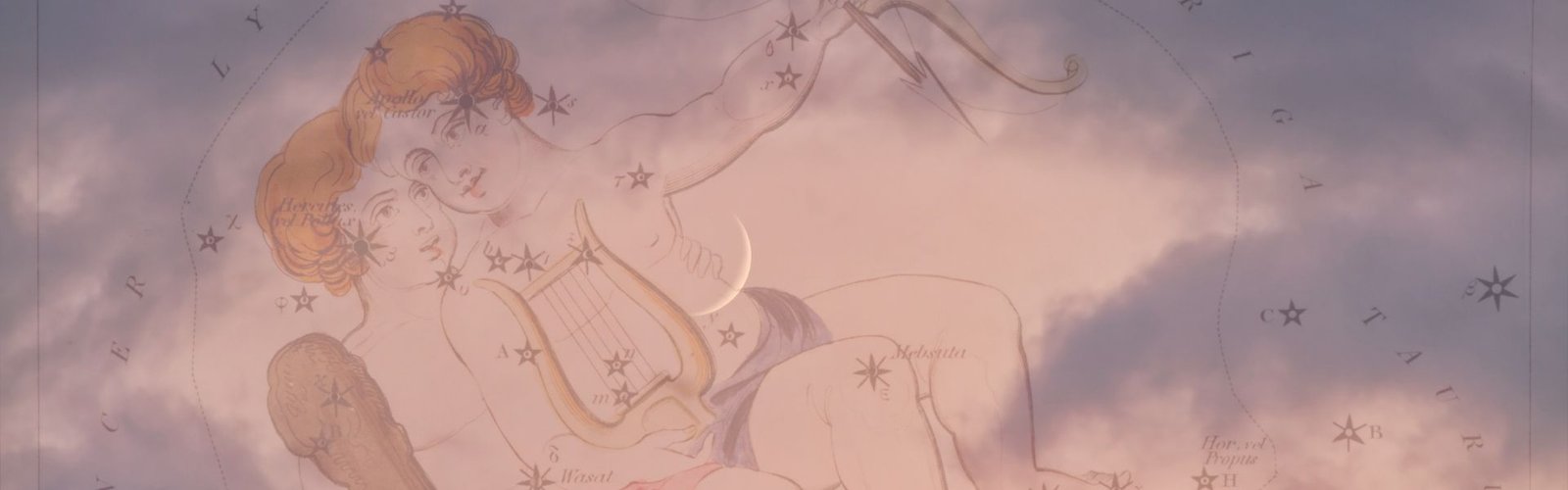
A DEEP PARTIAL LUNAR ECLIPSE · FRIDAY 28 AUGUST · 5.12AM

Crystal Shop UK · Rooted in intention, curated with care

Tag: New Moon

  • New Moon in Virgo Ritual: Candle, Journal and 7 Stones for 11 September

    New Moon in Virgo Ritual: Candle, Journal and 7 Stones for 11 September

    A gentle new moon in Virgo ritual for Friday 11 September, with seven easy stones

    The moon goes dark in the small hours of Friday morning, and for once the sky is completely calm. No eclipse. Nothing borrowed. If August knocked you about a bit, this is the soft landing. Here is a new moon in Virgo ritual you can do in twenty minutes with a candle, a notebook and a few small stones.

    The Moon at a Glance

    • New moon exact: 4.27am, Friday 11 September 2026
    • Sign: Virgo, an earth sign, the practical one
    • Eclipse: none, and none again until 2028
    • Day of the week: Friday, which has always belonged to Venus
    • Do the ritual: any time from Friday morning to Sunday evening
    • Cycle ends: the Harvest Moon, 5.49pm on Saturday 26 September

    Never Done This Before? Start Here

    If you have landed on this page because the words new moon keep appearing on your phone and you are quietly curious, welcome. This is a new moon ritual for beginners as much as for anyone who has kept the practice for years. You have not missed anything and you are not behind.

    Here is the whole idea in one paragraph. Once a month the moon disappears from our sky for a night or two. Nothing is wrong. It has moved between us and the sun, so the lit side faces away and there is nothing to catch the light. People have used that dark night as a starting line for a very long time, and over the following fortnight the moon fills back up again. Beginning something as the light returns is the oldest and simplest logic there is, and your body tends to agree with it before your head does.

    What you work with, and what each thing is for

    A new moon ritual is not decoration, and the tools are not props. Each one is doing a specific job. Once you know what those jobs are you can build a practice that belongs to you rather than copying somebody else’s.

    A candle

    The candle gives the intention somewhere to go. Fire has carried will and action in almost every tradition that uses it, and striking a match is what turns an ordinary Friday morning into a marked one. Colour matters and it is simple enough to learn. Green belongs to earth, growth and steady increase, which makes it the right choice for a Virgo moon. White stands in for anything at all, so a white candle is never wrong. A small spell candle is sized for a single working rather than a whole evening, which is exactly what you want here, and a taller ritual candle is the one to reach for if you are marking something larger.

    A journal

    This is the part most people skip and it is the part that does the work. Saying something out loud has force. Writing it down is what makes it checkable a fortnight later, and checking is the difference between a practice and a nice feeling. A journal you keep for the moon alone becomes something quite unexpected after a year, because you can look back and see which cycles you kept faith with and which you let go. Nothing else in the practice teaches you as much about yourself as your own handwriting from six months ago.

    A stone

    The stone holds the intention in the room after the flame has gone out. It is the reminder still sitting there on the dull Tuesday when the enthusiasm has worn off, which is the day that actually decides things.

    A sound

    One clear sound opens the working and one closes it, so your body knows when the practice has started and knows when it is complete. Without that ending, the mind tends to leave the working half open and carry it about all week.

    Start with a candle and a notebook. Add stones when you are ready. Both of those are real practice, and one is not a lesser version of the other.

    Why This New Moon in Virgo Ritual Is Worth Doing

    August was a lot. There were two eclipses, one on the twelfth and one on the twenty eighth, and if you tried to start anything in between you will probably have watched it wobble. That was not you being flaky. Eclipses are strange months, and starting something in one is a bit like planting seeds in ground you have not looked at yet.

    The Virgo new moon is the opposite of that. Nothing is interfering with it. It is the plainest, steadiest new moon of the whole year, and plain is exactly what you want when you are actually beginning something rather than announcing it.

    Virgo, the sign it lands in, gets described as the tidy one, which sells it short. Virgo is really about noticing. Working out what genuinely matters and what only feels urgent. It is the friend who asks the annoying, useful question about how your week is actually going.

    The sky has finally stopped shouting. This is the month to say something small and mean it.

    There is one trap, and it is worth knowing before you begin. Virgo will happily hand you a list of eleven improvements and the enthusiasm to start nine of them. By the third week you are running a small admin department instead of living differently. One change. That is the whole instruction.

    What the Sky Is Doing, in Plain Words

    You do not need to know any of this to do the ritual. It is here because it explains the mood of the fortnight, and knowing why a month feels the way it does is oddly comforting.

    This one is about choosing, not adding

    Virgo is looked after by the planet Mercury, and Mercury is currently sitting in Libra, the sign that weighs things up. So the question this month is not what should I add to my life. It is what am I choosing this over. Most routines fail because they were quietly competing with something else you also wanted, and nobody ever said so out loud.

    The sky supports things that last

    Two of the slower planets, Jupiter and Saturn, are on good terms right now. Jupiter opens things up and Saturn keeps a shape, and when those two agree it favours something that has to survive past the first exciting week. Pick something you have already half started rather than a shiny new project.

    There is a tender spot, so be kind about it

    Venus changes sign around this moon and hits a sore angle as it goes. In real life that shows up as a nagging feeling that you have to earn the right to rest, or that wanting to improve something means you were failing before. You were not. Notice that feeling and please do not build your intention on top of it, because nothing set from that place ever sticks.

    Energy comes in waves this month

    Mars, the get up and go planet, is in a soft and moody spot. Some days will be brilliant and some will not. Make the change small enough that a rough Tuesday does not end it.

    Where This Moon Sits on the Wheel of the Year

    This moon lands in the quietest stretch of the whole wheel, and it is my favourite bit of the year to explain.

    We are past Lughnasadh, or Lúnasa in Irish, the first harvest at the beginning of August, when the grain came in. We are not yet at the autumn equinox on 23 September, the second harvest, when the fruit and the late crops follow and the light tips over into the dark half of the year. So the eleventh sits in the gap between the cutting and the balancing. In old farming terms this was the counting stretch. Not sowing, not celebrating. Working out what you actually have.

    You could not ask for a better fit with a Virgo moon, and it is not a coincidence so much as the same practical instinct arriving from two directions.

    The honest bit about the Wheel of the Year

    Lughnasadh is genuinely old. It appears in early Irish literature, and Máire MacNeill spent years in the middle of the twentieth century collecting accounts of the hilltop gatherings that were still happening in Ireland within living memory. The four Irish fire festivals, Imbolc, Bealtaine, Lúnasa and Samhain, have real depth behind them.

    The eightfold wheel we all use now is younger than that. The solstices and equinoxes were folded in alongside the four fire festivals in the middle of the twentieth century, which is why the wheel feels so neat. And the name Mabon, which you will see on every autumn equinox post you read this month, was chosen by the writer Aidan Kelly in 1974. He borrowed it from Mabon ap Modron, a figure out of Welsh story whose name means something like the son of the mother.

    It is a lovely name and there is no reason to stop using it. It is simply about fifty years old rather than fifteen hundred, and you are unlikely to be told that anywhere else.

    None of this makes the practice weaker. Knowing which parts are ancient and which parts we built recently is what makes you a practitioner rather than a repeater.

    Timing a Working to the Moon Is the Genuinely Old Part

    Here is the part that always gives me a shiver, because it is the bit we are actually still doing on Friday morning.

    In 1897 a bronze tablet was dug up at Coligny in eastern France, broken into seventy three pieces. It is written in the Gaulish language using Roman letters and dates from around the end of the second century, and it is a calendar. Not a solar one. It runs on the moon, sixty two months laid out across five years, each month either twenty nine or thirty days, and each one split down the middle into two halves.

    A bright half and a dark half, marked by a word usually read as Atenoux. A whole people organising their year around the fact that a month has two different characters depending on whether the light is growing or fading. If you have ever wondered whether waxing and waning work is a modern invention, there is your answer, cast in bronze. You can read about the Coligny calendar and see photographs of the fragments.

    Julius Caesar, writing about the Gauls, noticed something similar and found it strange enough to record. They counted time in nights rather than days, so the night came first and the day followed after it. Every one of us who works a new moon in the small hours is doing something that would have looked entirely ordinary to them.

    And Pliny the Elder, describing the druids cutting mistletoe from the oak, says the rite was performed with great care on the sixth night of the moon, which he understood to be where their months and years began. Whatever else is uncertain about that account, and plenty is, one thing is not. It is a working, deliberately timed to a phase of the moon, written down by an outsider who thought it worth explaining.

    Scholars still disagree about exactly which phase the Gaulish month opened on. What nobody disputes is that it opened by the moon.

    The crystals are a modern layer. The candle is old. Choosing the right night is the oldest part of all of it.

    One note on moon names

    The full moon that closes this cycle on 26 September gets called both the Harvest Moon and the Corn Moon. Harvest Moon is properly old in these islands and describes something real, the run of evenings around the equinox when the moon rises close to sunset and gives extra working light for bringing crops in. Corn Moon arrived here fairly recently from American almanac lists. Use whichever you like. They are just not the same age.

    A New Moon in Virgo Ritual

    Twenty minutes. Nothing to hold behind your eyes, no special words, nothing you have to buy. It runs on sound, on breath, and on what your body notices, which is a far more reliable guide than most people expect.

    What you need

    A green or white candle and something safe to stand it in. Your journal. One stone in your left hand. A way of making a single sound, which can be a bell, a singing bowl, a wine glass and a fingertip, or your own humming voice.

    Do not tidy the room first. On this moon in particular, the tidying is the avoidance.

    The sequence

    • Light the candle. Do this first, before you settle, and say nothing while you do it. Lighting it is how the working starts.
    • Settle. Sit down and stop managing your breath. Let it find its own length. This takes longer than you think, so give it a couple of minutes.
    • Listen out, then in. Send your hearing as far away as it will reach, to the furthest sound you can find. Then bring it back to the nearest one. Three times, slowly. That movement from far to near is the whole sign in miniature, and it settles the mind better than being told to relax ever does.
    • Name the friction. Say out loud one thing in an ordinary week that costs you more than it should. Not a flaw. Not a resolution. Just a friction. If several turn up, say them all, then keep the one that made your jaw tighten.
    • Find it in your body. Notice where you felt that sentence as you said it. Throat, chest, stomach, shoulders. Rest your hand there for a few breaths and do not analyse it.
    • Say the one change. One sentence. Present tense. Small enough to be a bit boring.
    • Write it in your journal. Date the page. One sentence is enough, though if more wants to come out, let it. Tuck a stone on top of the open page or close the book on it.
    • Make your sound. One bell, one note, one clap. Let it ring all the way out to nothing.
    • Stay for the quiet afterwards. That silence is part of the practice, not the gap before the next bit. Virgo will want to get on with something. Let it wait.
    • Close it. Let a small candle burn down where you can see it, or snuff it and relight it on the following two mornings if you want to carry the working across the whole window. Never leave a burning candle unattended, and never blow one out at the end of a working. A snuffer or a damp fingertip keeps the intention where you put it.

    One change, not a list. This is the rule that decides whether the fortnight works. If a second thing feels genuinely urgent, it will still be urgent at the next new moon on 10 October, and you can start it then.

    Come back to it on 26 September. The Harvest Moon is the natural end of this cycle. Take the paper out, read it once, and mark it honestly as kept, changed or dropped. All three are useful. Only pretending is not.

    A Simple Crystal Grid for the Virgo Moon

    A crystal grid is just stones arranged in a pattern with a purpose, laid out where you will see them for a fortnight. It is a visible reminder more than anything mystical, and a reminder is exactly what a new habit needs.

    Seven stones here, all little tumbles and rough pieces rather than anything grand. If you have four of them, build it with four and say the missing ones aloud as you leave their spaces empty. That works. A grid made from what you already own beats one you waited to finish.

    F B H Q U S E Unakite Smoky quartz Epidote Bloodstone Hematite Clear quartz Green fluorite at the centre How the circuit runs Centre to way stone Way stone outward F Green fluorite, the sorting B Bloodstone, staying power H Hematite, follow through Q Clear quartz, the record U Unakite, slow growth S Smoky quartz, ground E Epidote, increase Nothing in the outer ring receives from the centre directly. F B H Q U S E Unakite Smoky quartz Epidote Bloodstone Hematite Clear quartz Green fluorite at the centre How the circuit runs Centre to way stone Way stone outward F Green fluorite, the sorting B Bloodstone, staying power H Hematite, follow through Q Clear quartz, the record U Unakite, slow growth. S Smoky quartz, ground. E Epidote, increase.
    Seven stones. The solid lines run from the centre out to the three middle stones. The dashed lines carry on from each of those to the stone beyond it, so nothing in the outer ring is fed by the centre directly.

    The stone in the middle

    Green fluorite, first choice

    Green fluorite takes the middle because this month is about sorting rather than wanting. Fluorite grows in neat little cubes, which is tidiness you can actually hold, and the green end of the family is the earthy one. It suits a moon that is asking you to choose.

    Or swap the centre, and here is what changes

    Rough clear quartz in the middle turns the grid into a plain amplifier. Choose this one if you already know exactly what your one change is and you just want the grid to carry it.

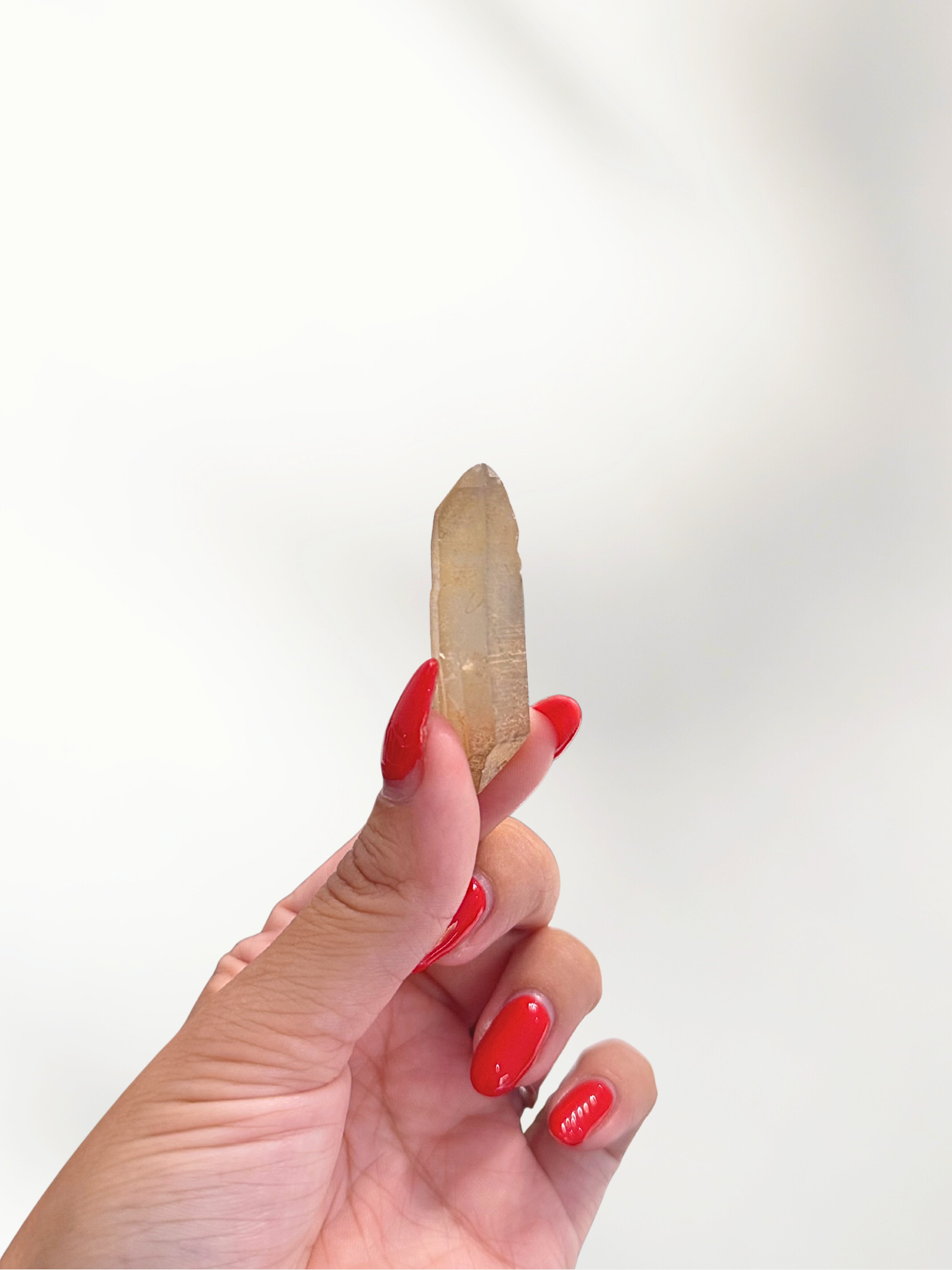
    Rough smoky quartz settles you before it sorts anything. Choose this one if August left you frazzled and the honest first job is simply coming back down.

    The three middle stones, and what they carry

    These three sit on the inner triangle and they are the connecting layer. Everything the centre holds passes through one of them before it reaches the outer ring, and each one changes it slightly on the way past. That is why the drawing has two kinds of line.

    Bloodstone, at the top

    Bloodstone jasper is the old harvest stone and it holds the top spot because it carries your decision into staying power. Anything that only lasts while you are excited about it was never really a change. This is the corner that asks about week four rather than week one. No bloodstone? Mookaite sits here beautifully and is earthier still.

    Hematite, lower left

    Hematite is surprisingly heavy for its size, which is rather the point. It carries the decision into repetition, the unglamorous business of doing the same small thing on a day you cannot be bothered. Swap in rough black tourmaline if that is what is in your pouch.

    Clear quartz, lower right

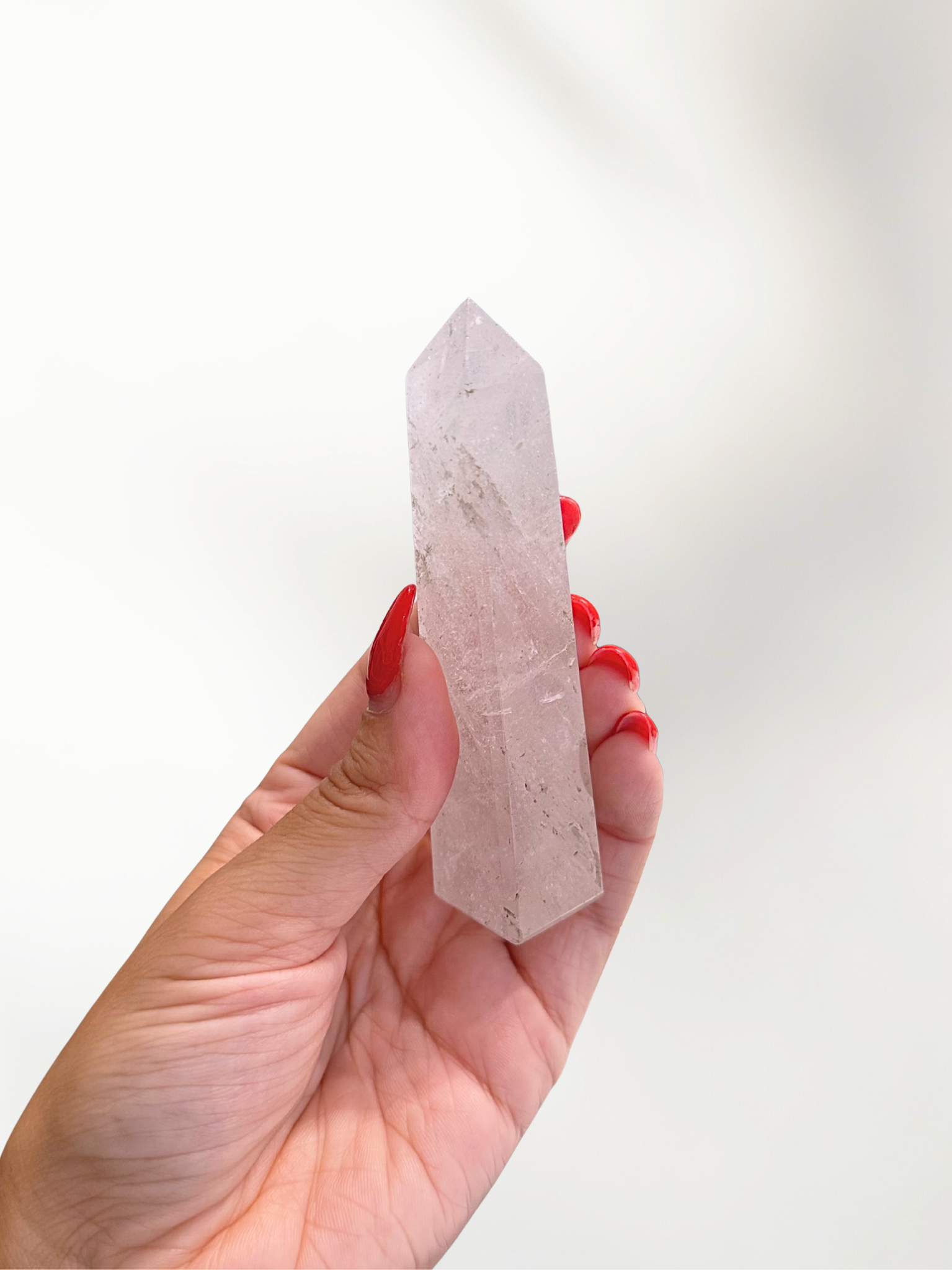
    Clear quartz keeps the record. It carries your sentence into memory, so that on the twenty sixth you are checking against what you actually said rather than what you have since decided you meant. Any quartz will do this. Say the sentence aloud once as you put it down.

    The three outer stones

    Unakite, at the top

    Unakite is a slow stone for slow growth, one step at a time, which is why it sits at the far end of the staying power line. Serpentine will stand in.

    Smoky quartz, lower left

    Smoky quartz grounds the repetition so it does not curdle into worry, which is the specific way a Virgo intention tends to go wrong. If the practice starts to feel like an inspection, this is the corner to sit with. Black obsidian or a second hematite will hold the spot.

    Epidote, lower right

    Epidote increases whatever is already there, which is a warning as much as a promise. Whichever habit you feed this fortnight is the one that grows, including the ones you would rather not mention. It sits at the end of the record line because it is the corner that shows you the result. Dragon stone stands in nicely, since epidote is part of what it is made of.

    Building up? Start with three. Fluorite in the middle, hematite as the single connecting stone, smoky quartz on the outside. Clear quartz will stand in anywhere in this grid as long as you say aloud what it is standing in for, which is a working in its own right rather than a shortcut. Add the other four next cycle. A grid you actually build and sit with beats a perfect one you are still waiting to finish.

    Two Small Extras, If You Fancy Them

    It falls on a Friday

    Friday has belonged to Venus for a very long time, and Venus is the one who deals in worth. Given where Venus is sitting this week, the Friday flavour is not the soft romantic one. It is closer to asking what something is genuinely worth to you, which suits a moon about choosing one thing and letting the rest wait.

    And the numbers

    The eleventh reduces to two, the number of choosing between things. The whole date reduces to three, the number of what actually gets made. Choose between two, produce one. Take it or leave it, but it is a fair summary of the month.

    Questions to Sit With Afterwards

    • What in an ordinary week costs me more than it should, and how long have I known?
    • What am I choosing this over? Name the other thing honestly.
    • Is this one change, or is it a whole system wearing the coat of one change?
    • Where did I feel it in my body when I said it out loud?
    • What am I already feeding without ever deciding to?

    Questions We Get Asked About the New Moon

    What time is the new moon in September 2026?

    4.27am on Friday 11 September, in UK clock time. You will see American sites giving the evening of 10 September, and they are not wrong, they are simply writing for a different time zone. We give British time on every moon post and check it against the Royal Observatory before publishing, because a ritual timed to the wrong evening is a small thing that quietly matters.

    Do I have to be awake at the exact minute?

    No, and almost nobody is. The influence of a new moon runs for roughly two days, so any time from Friday morning to Sunday evening works. If you like precision, do it as close to the Friday as you can manage.

    What colour candle should I use for a new moon?

    White is the universal choice and always correct. Beyond that, match the colour to the sign. This moon is in an earth sign, so green for growth and steady increase is the natural fit. Brown works too if you want the grounding rather than the growth.

    What crystals are best for a Virgo new moon?

    Green fluorite for sorting and clear thought, bloodstone for staying power, hematite for follow through, and smoky quartz for grounding. Those four cover most of what a Virgo new moon asks for. The full seven stone crystal grid is set out above, along with what to swap in if you are missing a stone.

    Is it too late if I miss it?

    Not at all. The next new moon is on 10 October and the cycle begins again, which is rather the point of working with the moon in the first place. Nothing about this practice punishes you for being late.

    Can I set more than one intention?

    You can, and on most moons we would say go ahead. Not this one. Virgo rewards a single clear change and quietly buries a long list, so keep the others for October.

    One Last Thing

    The moon goes dark on Friday morning whether anyone marks it or not. Lighting a candle, writing one honest sentence and putting a stone on top of it is a very old habit and a kind one, and the people who keep it month after month are the ones who end up with something to show for it. That is the whole practice. Everything else is detail.

    Everything for Friday Morning

    Green fluorite, bloodstone, hematite, clear quartz, unakite, smoky quartz and epidote for the grid. A green spell candle for the flame and a journal to keep the cycle in. All in the Grove now and posted in time for Friday if you order in the next day or so.

    Shop the Tumblestones

  • Crystals for Eclipse Season: The Old Stories, the Hills and the 12 August Eclipse

    Crystals for Eclipse Season: The Old Stories, the Hills and the 12 August Eclipse

    Old stories, a harvest festival, and choosing crystals for eclipse season

    For most of human history, a vanishing sun meant something was eating it. Here is what people did about that, what the sky is actually doing on 12 August, and how to choose crystals for eclipse season without any of the worry that tends to come attached.

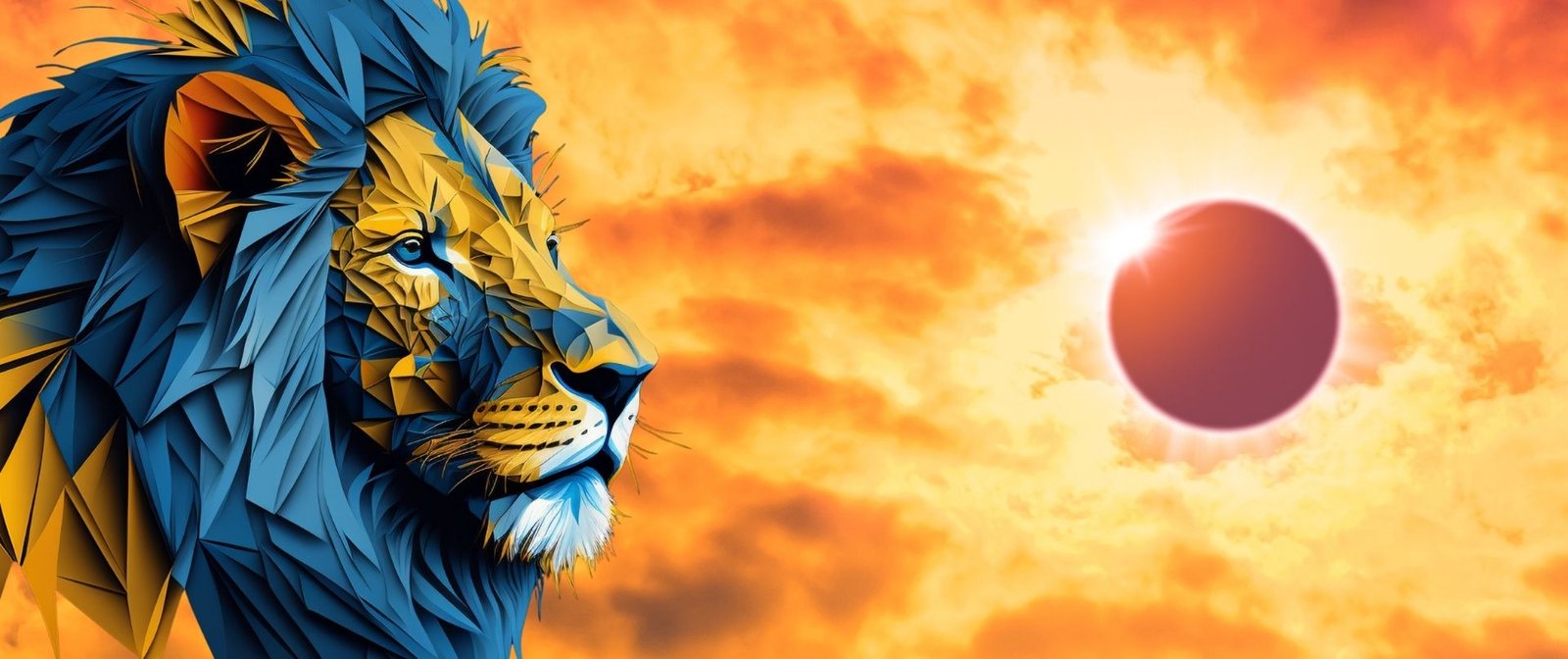
    Illustrated lion beneath an eclipsed sun, marking crystals for eclipse season

    Three Gifts in One Day

    Wednesday 12 August is a generous day, and it is worth knowing that before anything else.

    Before the sun comes up, six planets are strung out across the eastern sky. In the evening, the moon slides across the sun and takes away more than nine tenths of its light, the deepest eclipse these islands have seen since 1999. Then, once it is properly dark, the best meteor shower of the year reaches its peak with no moonlight at all to spoil it.

    Three separate things, one Wednesday. And then sixteen days later a lunar eclipse quietly closes the season. You do not have to do anything with any of it. But if you would like to, this is a lovely one to mark.

    An eclipse is not a new kind of light. It is the ordinary light of an ordinary Wednesday, briefly withdrawn, so that you notice you had been standing in it all along.

    What the Celts Actually Left Us

    Start with an honest admission, because it is more interesting than the alternative.

    There is no surviving Celtic eclipse myth. Not because our ancestors here did not watch the sky, but because they wrote almost nothing down, and what little we have about them was written by Romans who were not always paying close attention. Anyone offering you an ancient Irish or Welsh eclipse legend is offering you something modern with an old coat on.

    What we do have is better for our purposes. We have how they kept time, and they kept it by the moon.

    The Gaulish calendar that survives is lunisolar. It follows the lunations and goes to real trouble to keep moon and sun in step. Every month on it is marked as one of two kinds. Scholars still argue about exactly what those two marks meant, splitting between auspicious and inauspicious and between complete and incomplete, and that argument is not settled.

    But the part that matters to practice is not in dispute. Somebody was sorting lunar time into two kinds and writing down which was which. Not because the moon is lovely. Because the kind of time you were in decided what could usefully be done in it.

    Caesar says the Gauls counted by nights rather than days, and began months and years so that the day followed the night. Pliny says the druids took the sixth day of the moon as their beginning, choosing it because by then the moon has gathered real strength without yet being halfway through its course.

    Which is to say they did not simply note the phase. They worked to it. Timing was the working part, and that is a thread you can pick up and use on Wednesday.

    Elsewhere, Something Was Eating the Sun

    Where written records do survive, the eclipse stories are remarkably consistent, and almost all of them involve something with teeth.

    In Norse myth two wolves, Sköll and Hati, chase the sun and the moon across the sky and have done since the world began. An eclipse is the moment one of them nearly catches up, and at Ragnarök they finally succeed. The recorded response was to make as much noise as humanly possible until the wolf let go.

    In ancient China the culprit was a celestial dragon, and again the answer was drums and pots and pans. In Hindu tradition it is Rahu, beheaded for stealing the nectar of immortality, whose head lives on and swallows the sun in revenge but has no throat to keep it down. In Vietnam a giant frog. In Korea, fire dogs that always drop the sun because it burns them.

    These are stories rather than history, and they are offered here as stories.

    The One Thing Every Story Agrees On

    Set that whole collection side by side and a pattern appears that nobody arranged on purpose.

    The sun is always taken. The sun always comes back. Rahu has no throat. The wolves have not caught up, not yet. The fire dogs burn their mouths and drop what they stole. Not one of these traditions lets the light stay gone.

    What people did in the meantime was gather, make a great deal of noise together, and wait. They did not pretend it was not happening and they did not try to profit from it. They held on until it passed.

    Put that next to the Coligny tablet and you have the whole of this post in two sentences. Some time is one kind of time and some time is another. An eclipse is a withdrawal followed by a return, and the working response to it is to stay present rather than to reach.

    Should You Charge Crystals or Make Moon Water During an Eclipse?

    This comes up constantly in eclipse week, and it is usually reported badly, so let us state the concern properly.

    Nobody serious thinks an eclipse will damage a stone. Quartz does not mind. The worry is about what the stone takes on, and what it then carries into everything you use it for afterwards. Charging is receiving. The objection is to what is being received.

    And that objection is not a recent invention. It is the oldest rule in British and Irish practice, applied to an awkward case.

    The Rule Underneath It

    Go through the Schools’ Collection, the folklore gathered from Irish schoolchildren and their families in the late 1930s, and the moon is everywhere in it. Not as poetry. As instruction.

    Corn was set with the growth of the moon, so that it would swell as the moon swelled. Hair was cut on a growing moon when you wanted it back thicker, and left alone when you did not. You did not look at the new moon for the first time through glass or through trees, and when you did see it properly you turned the money over in your pocket so that it would double before the year was out.

    Look at what that assumes. Not that the moon makes a thing work. That the condition of the moon decides what the working does. The same seed, the same hands, the same scissors, on two different nights, and the tradition expects two different outcomes.

    Every witch reading this already knows the rule in its modern form. Waxing to increase, waning to decrease. New moon to begin, full moon to bring to fullness, dark moon to banish. It is the first thing anybody learns about timing a working, and it is not a twentieth century invention dressed up. It is the farmer and the seed, carried forward.

    So when someone says do not charge under an eclipse, they are not repeating something from a video. They are applying the single oldest principle in the craft: match the working to the state of the moon.

    Why an Eclipse Is the Awkward Case

    Here is why the tradition has no tidy slot for it.

    Every other lunar condition tells you plainly what it is for. An eclipse does not. A lunar eclipse happens at full moon, so by the ordinary rule it should be the peak, the fullest and most receptive night of the month. But the light is being cut off as it peaks, and what reaches the moon has been bent through the whole of Earth’s atmosphere and comes back red. It is a full moon behaving like a dark moon, in public, for about an hour.

    That is genuinely ambiguous, and the craft response to ambiguity has always been caution rather than enthusiasm. Not fear. Caution. You do not set corn on a night you cannot read.

    The usual objection to eclipse charging follows from exactly this. Eclipse energy is held to be erratic and weighted toward endings, the opposite of the steady light people charge under deliberately. And an obstructed luminary cannot give cleanly even if you ask it to. Set a stone or a jar out under that and you have not charged it with nothing. You have charged it with something you did not choose, and you will meet that again in six months when you put the stone into a grid for something hopeful.

    Worth Knowing: This Is Not Only a British Instinct

    The same reasoning turns up in traditions with no connection to ours, which is usually a sign that people arrived at it independently by watching.

    Hindu practice keeps a window around eclipses called sutak, tied to Rahu and Ketu. Before it opens, tulsi leaves or kusha grass are placed into all stored water, milk, curd and ghee, then taken out and discarded once the eclipse ends. Food cooked during the window is not eaten afterwards.

    Read that with moon water in mind. Stored water, left exposed through an eclipse, held to take on something you would not want, with a named remedy attached and centuries of observance behind it. Different vocabulary entirely, same logic. That is a living religious practice rather than folklore, noted here because it shows where the instinct sits in the world, not as something to borrow.

    And in that tradition the eclipse hours are considered among the most spiritually charged of the year. Excellent for recitation, for giving things away, for washing. Poor for taking anything in. Which is the same distinction the craft makes between banishing work and drawing work, arrived at from a completely different direction.

    What That Means for These Two Dates

    The two eclipses this month sit very differently, and hardly anybody says so plainly.

    12 August, the solar eclipse

    The question barely arises. A solar eclipse only ever happens at new moon, because that is what an eclipse of the sun is. There is no moonlight that night at all, so moon water in the ordinary sense is not on the table and neither is charging anything under the moon. Nothing to decide.

    28 August, the lunar eclipse

    This is the one that matters. A lunar eclipse can only fall at full moon, so 28 August is precisely the night you would normally set the jar out and put stones on the sill. The shadow arrives at 3.33am and the moon is deepest in it at 5.12am.

    If you keep the traditional view, that is a night to bring things in, or cover them, and wait. The next full moon carrying no shadow at all is 26 September. If a month feels too long, the common compromise is to leave a day or two either side and charge then.

    If You Have Already Done It

    Plenty of people read this sort of thing the morning after. Nothing is ruined and there is no need for alarm.

    Cleanse rather than discard. Any method you already trust will do, and the intention matters more than the method. Then charge again on a clean moon when one comes round.

    Or keep it and be honest about what it is. This is the option worth considering, because it treats you as perfectly capable of deciding. If eclipse energy suits release, then water and stones set out during one are release tools. They are simply not drawing tools. Label the jar with the date, use it for cutting ties and clearing rather than for calling things in, and the problem becomes a correctly labelled shelf.

    That is the craft answer rather than the rule answer. Nothing is wasted. Things are matched to their proper work. The only version that goes wrong is charging something under an eclipse, forgetting, and reaching for it six months later expecting sunshine.

    A Harvest Festival You Are Already Standing In

    Here is the part that makes this eclipse feel less like an interruption and more like it belongs.

    Twelve August falls in the opening stretch of the harvest, the season the Irish called Lughnasa and the English called Lammas. The folklorist Máire MacNeill spent years collecting what people actually did at this turn of the year, publishing it in 1962, and what she found was not solemn. It was a day out.

    The chief custom, she recorded, was communities going up to certain heights or out to the water side to spend the day in festivity, sport and bilberry picking. The same habit turns up in the Isle of Man, in Cornwall, in Wales and in the north of England. She counted over eighty different local names for it. Bilberry Sunday. Garland Sunday. Mountain Sunday. Harvest Sunday. People climbed a hill, ate the first of the new fruit, and came back down again.

    Now consider what this eclipse asks of you. It happens low in the west as the sun is going down, so the one thing you genuinely need is height and a clear horizon. You need to go up a hill.

    Nobody planned that. The eclipse does not know what month it is. But the instruction that falls out of the astronomy is the same instruction the harvest season has been giving people in these islands for as long as anyone has written it down. Go up somewhere high. Take something to eat. Bring people with you.

    If you do only one thing with this eclipse, do that one. Find a hill, a headland, an upstairs window facing the sunset, anywhere with an open western horizon. Take somebody with you and take something to eat.

    It is the oldest recorded way of marking this season in Britain and Ireland, it is free, and it happens to be exactly what the sky requires this year.

    When to Look

    From here this is a deep partial eclipse rather than a total one. The path of totality runs across parts of Greenland, the western tip of Iceland and northern Spain. From Britain and Ireland the sun is never quite covered, but a great deal of it goes.

    Roughly 90 per cent disappears in London and the east, rising to about 95 per cent in Cornwall and 94 in Pembrokeshire. The far south west of Ireland does best of all at close to 97 per cent. The further south and west you stand, the more you get. These timings are the Royal Observatory Greenwich figures, which are worth trusting over some of what is circulating, since more than one write up has quietly muddled the clock by an hour.

    WhereStartsDeepestEnds
    Edinburgh and Glasgow6.08pm7.05pm8pm
    Galway and Dublin6.12pm7.10pm8.05pm
    Manchester and Liverpool6.13pm7.10pm8.03pm
    Norwich and Birmingham6.15pm7.11pm8.04pm
    London, Bristol and Cardiff6.17pm7.12pm8.06pm
    Truro, Cornwall6.18pm7.16pm8.10pm

    All times are BST. If your town is not listed, find the nearest one and you will be within a couple of minutes.

    The sky will not go dark. Light levels drop and the air cools noticeably, but it reads more like heavy cloud than like night. That cooling is the part people remember years later, and it is the part you can work with.

    Please do not look at the sun directly, at any point. A partial eclipse is no safer than an ordinary afternoon, because the sun is never fully covered from here. Sunglasses are not enough.

    Use eclipse glasses marked ISO 12312-2, and replace any old pair that is creased or scratched. Cameras, binoculars and telescopes all need a proper solar filter fitted to the front. The simplest safe method needs nothing at all: make a small hole in a piece of card, hold it up, and let the crescent sun fall onto paper behind it. The gaps between leaves do this by themselves, and a colander does it dozens of times over.

    What the Sky Is Doing Behind the Scenes

    The exact new moon lands at 6.37pm on 12 August, at twenty degrees of Leo. A solar eclipse is always a new moon with the volume turned up, and this one sits at the South Node, the releasing end of the lunar axis. That is the difference between this and an ordinary new moon. It asks you to name what is finished rather than to wish for what is next.

    Behind it sits something genuinely unusual. Venus in Libra, Uranus in Gemini and Pluto in Aquarius form a grand trine in the air signs, and it is very nearly exact. Grand trines are common. Grand trines this tight are not.

    Air is the element of thought and talking. So the eclipse takes something away in Leo, the sign of being seen, while a smooth and rather chatty pattern hums along underneath it. In practice that tends to feel like an ending you can talk your way through, rather than one that leaves you speechless. Which is, again, the old advice. Gather. Make some noise. Wait for the light.

    Crystals for Eclipse Season, and a Grid to Hold Them

    This is a nine stone circuit built for the whole season rather than for one evening. Set it before Wednesday, leave it until the lunar eclipse on 28 August, then take it apart. Nine is a number of completion and endings, which suits a releasing eclipse. The count is on purpose.

    SHUVPWWWFThe circuitFFocus Stone, black obsidianWWay Stones, selenite, threeUBlue lace agate, Uranus in GeminiVRose quartz, Venus in LibraPAmethyst, Pluto in AquariusSCarnelian, the eclipsed Sun in LeoHHematite, the Aquarius poleSolid, centre feeds the Way StonesDashed, Way Stones carry it outwardSHUVPWWWFThe circuitFFocus Stone, black obsidianWWay Stones, selenite, threeUBlue lace agate, Uranus in GeminiVRose quartz, Venus in LibraPAmethyst, Pluto in AquariusSCarnelian, the eclipsed Sun in LeoHHematite, the Aquarius poleSolid, centre feeds the Way StonesDashed, Way Stones carry it outward
    The eclipse season circuit. Solid lines run from the centre out to the three Way Stones. Dashed lines carry it onward from there, which is why the two triangles interlock rather than one simply sitting inside the other.

    The Focus Stone, and Three Ways to Fill It

    Never take just one option for the centre. These three do different jobs, and which you choose changes what the grid is for.

    Black obsidian, the first choice

    Black obsidian is volcanic glass, cooled too fast to ever form a crystal structure. It holds the centre here because this eclipse is about release, and obsidian is the stone of the honest look. A centre that reflects rather than radiates suits a circuit built around something being taken away and given back.

    Smoky quartz, if you would rather it were gentler

    Rough smoky quartz does the same work with less of an edge. Choose it if eclipse weeks tend to leave you rattled, or if the grid is going somewhere everyone walks past, like a kitchen table. It settles rather than confronts, and it carries a long season more comfortably.

    Black tourmaline, if the season feels loud

    Rough black tourmaline is the one to reach for when what you are letting go of involves other people, a household or a workplace. Its natural striations run the length of the stone, and it is the most boundaried of the three.

    If you happen to own a piece of labradorite, it makes a beautiful bonus centre for this particular grid. A flash hidden inside a dull grey stone until the light strikes it correctly is an eclipse in miniature. It is named last deliberately. The grid works perfectly well without it.

    The Way Stones, and What They Carry

    The three selenite sticks forming the inner triangle are Way Stones, and this is the layer most grid diagrams leave out. Nothing in the outer triangle receives anything from the centre directly. It all passes through selenite first.

    What they carry is the release named at the centre. What they change about it on the way through is the pace. Selenite is a soft gypsum, one of the softest things on the shelf, and it conducts gently. That is the whole point. An eclipse release delivered straight to the outer ring lands hard. Delivered through selenite it arrives at a speed you can live alongside for sixteen days.

    The Outer Triangle

    These three sit where the sky sits, each holding one corner of that very tight air trine.

    Blue lace agate, for Uranus in Gemini

    Blue lace agate takes the Gemini corner. Its banding is a record of interruption, layer after layer laid down in slightly different conditions, which is a fair likeness of what Uranus does to a settled routine. It holds this position because Gemini is the noisiest corner and this is the calmest blue in the shop.

    Rose quartz, for Venus in Libra

    Rose quartz takes the Libra corner, because Venus rules Libra and returned there on 6 August. This is the softest point in the circuit and it sits deliberately opposite the noise, holding relationship steady while the Leo end of the chart loses its light.

    Amethyst, for Pluto in Aquarius

    Chevron amethyst takes the Aquarius corner at the base of the triangle, furthest from the eclipse. Pluto in Aquarius is the slow structural end of this pattern, the part that will outlast the season by years, so it holds the position that carries the most weight and moves the least.

    The Eclipse Axis

    Carnelian sits on the left for the eclipsed sun in Leo. Warm and orange, it stands for the light that is briefly taken, and it sits outside the triangles because that is exactly where the sun is on this day. Outside the pattern that is holding everything else together.

    Hematite sits opposite as the counterweight. Iron rich and satisfyingly heavy in the hand, its job is to stop the axis tipping entirely into the Leo end, which is what an eclipse in Leo will do to anyone already inclined to take things personally.

    Short of stones? Build the stripped back version. One dark stone in the middle and three clear quartz points around it will hold this circuit perfectly well.

    Clear quartz substitutes into any position in any grid, as long as you name the position aloud as you place it. Say what the stone is standing in for. The naming does the work the correspondence would otherwise do.

    A Word About the Lion’s Gate

    Since it comes round every August and sits four days before this eclipse, it is worth being straight about, and being straight about it takes nothing away.

    Sirius genuinely mattered in ancient Egypt. Its heliacal rising, the first morning it becomes visible just before dawn after a spell lost in the sun’s glare, was tied to the flooding of the Nile and marked the Egyptian new year. The star was Sopdet. All of that is well documented and lovely on its own.

    What is not documented is any ancient observance of 8 August as a gateway. The 8:8 framing is modern, put together in the late twentieth century out of Egyptian star symbolism, Western astrology and numerology. It also leans on a calendar that did not exist until 1582. And the heliacal rising has no single global date anyway, since it shifts with latitude, with how clear the air is, and slowly with precession.

    None of which makes a modern practice worthless. New rituals get built out of old symbols all the time, and that is exactly how tradition has always worked. It is only the claim of unbroken ancient descent that does not stand up. Call it modern and it stands up beautifully.

    The Tears of St Lawrence

    Stay out after dark and you get the third gift, which comes with the loveliest piece of folklore of the lot.

    The Perseid meteor shower peaks the same night, and 2026 is an exceptional year for it, because the eclipse means a new moon and there is no moonlight at all to wash the sky out. The next time the peak falls on a new moon night is 2045.

    The feast day of St Lawrence falls on 10 August. He was a deacon in Rome, martyred in 258, and by tradition he was roasted on a gridiron, where he is said to have remarked that he was done on one side and they might care to turn him over. This made him the patron saint of cooks and of comedians, which is the sort of detail that makes a story worth keeping.

    Long before anyone worked out what meteors were, country people across Europe had noticed that the sky filled with falling fire around his feast, and named them his tears. In the 1830s, when the shower was first properly described, the astronomer Edward Herrick had to acknowledge that the peasants of Franconia and Saxony had known about the August meteors for ages already. Mediterranean folklore even held that you could find the cooled embers of those tears as lumps of coal under the plants next morning.

    So: get away from town lights, give your eyes twenty minutes to adjust, look up rather than at any particular spot, and know that people have been lying in this same field on this same night for a very long time.

    The Eclipse That Closes the Season

    On Friday 28 August a partial lunar eclipse brings eclipse season to an end. It begins at 3.33am and reaches its deepest at 5.12am, with roughly 90 per cent of the moon inside Earth’s shadow. The moon sits very low, so a clear western horizon matters all over again.

    At its deepest the moon takes on a red cast, because the only light reaching it has passed through Earth’s atmosphere first. That is where the phrase blood moon comes from, and it is a good deal less ominous than it sounds. You are watching every sunrise and sunset on Earth at once, projected onto the moon.

    A Practice for the Moment the Light Goes

    This runs on sound and on what your skin notices. It needs nothing except being outside at the right time.

    Go out about fifteen minutes before the deepest point, checking the table above for your area. Take the Focus Stone from your grid and hold it in your left hand.

    • Stand still and let your breathing settle. Do not lengthen it on purpose, simply stop managing it.
    • Listen outward, as far as your hearing reaches, then let it come back to the nearest sound. Three times.
    • As the eclipse deepens, the birds go quiet and the air cools on the backs of your hands and forearms. That is your marker. Nothing else needs to happen.
    • When you notice the cool, say aloud one thing that is finished. Not a wish. Something already over that you have been carrying as though it were not.
    • Stay for the quiet afterwards. The quiet is the practice, not the gap before the next bit.
    • Put the stone back in the centre of the grid on your way in, and leave it there until 28 August.

    If you would like to bring the old response in properly, make a noise at the deepest point. A bell, a bowl, a hummed note, a clap. Every tradition in this post agrees on that part, and the silence that follows a sound is a far better anchor than silence on its own.

    To Sit With Afterwards

    • What did I actually notice, before I decided what it meant?
    • What have I been performing that nobody ever asked me to perform?
    • Where am I owed a conversation that this fortnight would make easier than usual?
    • What ended a while ago that I have never said aloud had ended?

    Build Your Eclipse Season Circuit

    Every stone in this grid is in the Grove now, and the whole nine stone circuit comes to less than the price of a takeaway. Obsidian, selenite, blue lace agate, rose quartz, amethyst, carnelian and hematite, ready to post before Wednesday.

    Shop the Eclipse Stones

  • Gemini New Moon June 2026: A Fresh Page for the Mind

    Gemini New Moon June 2026: A Fresh Page for the Mind

    Gemini New Moon June 2026: A Fresh Page for the Mind

    Gemini New Moon June 2026: A Fresh Page for the Mind

    A New Moon for clear thinking, honest words, and the quiet decision underneath the noise

    The Gemini New Moon arrives at 3.54am BST on Monday 15 June 2026, the dark Moon peaking in the early hours after the night of Sunday 14 June. She is the New Moon of the thinking mind, ruled by Mercury, and her invitation is to clear the mental clutter, find the honest words, and choose one direction from the many.

    This guide walks you through the astrology of the lunation, the crystals that match her energy, and a simple body led practice you can do on the evening she begins.

    When is the Gemini New Moon in 2026

    The Gemini New Moon reaches her exact peak at 3.54am BST on Monday 15 June 2026. Because that is the small hours of the morning, the natural time to work with her is the evening of Sunday 14 June, when the sky is already dark and the Moon is new in all but the final hours. Most people will mark this lunation on the Sunday night, and that is exactly right. The New Moon is invisible either way, her face turned fully from us, so the practice follows the dark sky rather than the clock.

    She sits in the middle degrees of Gemini, the mutable air sign of the Twins. This places her firmly in Gemini’s home territory, the realm of the mind, and gives the lunation a clear, quick, curious quality. After the heat and truth telling of the Sagittarius Blue Moon two weeks earlier, this New Moon feels like fresh air through an open window.

    Where This Moon Sits in the Cycle

    This New Moon is the seed that follows the Blue Moon’s revelation. The Sagittarius Blue Moon on 31 May asked the big question, where are you going and what are you leaving. The Gemini New Moon is where you begin to answer it, not with a grand declaration, but with information, conversation, and the small honest words that move a life forward.

    She also sits just days before Litha, the Summer Solstice on Sunday 21 June, the longest day and the peak of the solar year. The timing is lovely. The Gemini New Moon plants a quick growing seed, and within a week the Solstice floods it with the longest light of the year. Whatever you begin on this Moon gets an immediate surge of solar energy behind it.

    The Astrology of the Gemini New Moon 2026

    Gemini is the third sign of the zodiac, a mutable air sign ruled by Mercury, the planet of mind, message, and movement. Her domain is communication, learning, curiosity, the local world, siblings and neighbours, short journeys, and the endless human business of gathering and sharing information. A New Moon here is a reset for the mind.

    Mercury, her ruling planet, colours this lunation strongly. Where Mercury sits in your own chart is where this New Moon will ask you to bring clarity. The themes are mental rather than emotional. What do you need to say. What do you need to learn. What decision have you been avoiding because the noise of too many options has drowned out the quiet knowing underneath. Gemini, at her best, is not scattered at all. She is quick, clear, and precise. That is the energy on offer.

    The shadow side of Gemini is the scattered mind, the open browser tabs of the soul. This New Moon offers the chance to close some of them. Not all, Gemini would never allow that, but enough to think clearly again.

    What the Gemini New Moon Seeds

    Gemini rules the third house in the natural zodiac, the house of communication, learning, and the immediate world around you. A New Moon here invites intentions in any of these areas. The prompts that work best are clear and practical, because Gemini does not respond to vague longing. She responds to specifics.

    What conversation have you been putting off, and what would it free up to finally have it. What do you want to learn this season, a skill, a subject, a language, a craft. Where has your thinking become cluttered, and what would one clear decision do for your peace. What do you want to say, in writing or out loud, that you have not yet said.

    These are not heavy questions, and they are not meant to be. Gemini is air, light and quick. The work of this Moon is to lighten the mental load, not to add to it. Choose one thing. Gemini will always want to choose ten, so the discipline of this lunation is the choosing of one.

    Crystals for the Gemini New Moon

    Crystal work for this lunation centres on the throat and the third eye, the communication and clarity centres that Mercury and Gemini govern. The selection below supports clear thinking, honest words, and the focus that turns a scattered mind into a precise one. Each crystal is in stock at Mystic Grove and ready to come home.

    Blue Lace Agate tumble stones from Mystic Grove

    Blue Lace Agate

    She comes first because she is the communication stone, and communication is the heart of Gemini. Blue Lace Agate is the soft blue banded stone of clear, calm speech, working directly on the throat. She helps the words come, and she helps them come gently, without the rush or the sharpness that a busy Gemini mind can put behind them. She is the stone for the conversation you have been putting off, the one that needs to be had calmly. Hold her at the throat during your practice, or keep her with you on the day you mean to speak.

    Clear Quartz tower from Mystic Grove

    Clear Quartz

    Clear Quartz is the master of clarity, and clarity is the whole work of this Moon. She is the most versatile stone in any collection, sometimes called the master healer, and her gift is amplification and focus. She takes a scattered intention and sharpens it to a point. On a Gemini New Moon she is the stone to hold while you decide which of the ten things actually matters. Sit with her in the receiving hand and let the mind quieten around a single clear thought.

    Natural Citrine point from Mystic Grove

    Citrine

    Citrine carries the bright, optimistic side of Gemini, the curiosity and lightness that make this sign such good company. Her warm yellow energy lifts heavy thinking and brings a sense of possibility to the decisions this Moon asks you to make. Where Clear Quartz sharpens, Citrine warms. She is the stone for the part of the Gemini reset that is genuinely joyful, the fresh page, the new idea, the door that opens. Keep her on your desk or wherever you think and write.

    Rainbow Moonstone tower from Mystic Grove

    Moonstone

    Moonstone belongs on every New Moon altar, and on a Gemini Moon she plays a particular role. Her gentle shimmer mirrors the light of the Moon herself, and her energy is intuition and new beginnings. Where the rest of this selection works the thinking mind, Moonstone holds the quieter knowing underneath the thoughts, the felt sense that often has the answer before the mind catches up. On a sign that lives so much in the head, she is the reminder that the body and the intuition know things too. Hold her when you ask what you truly want, beneath what you think you should want.

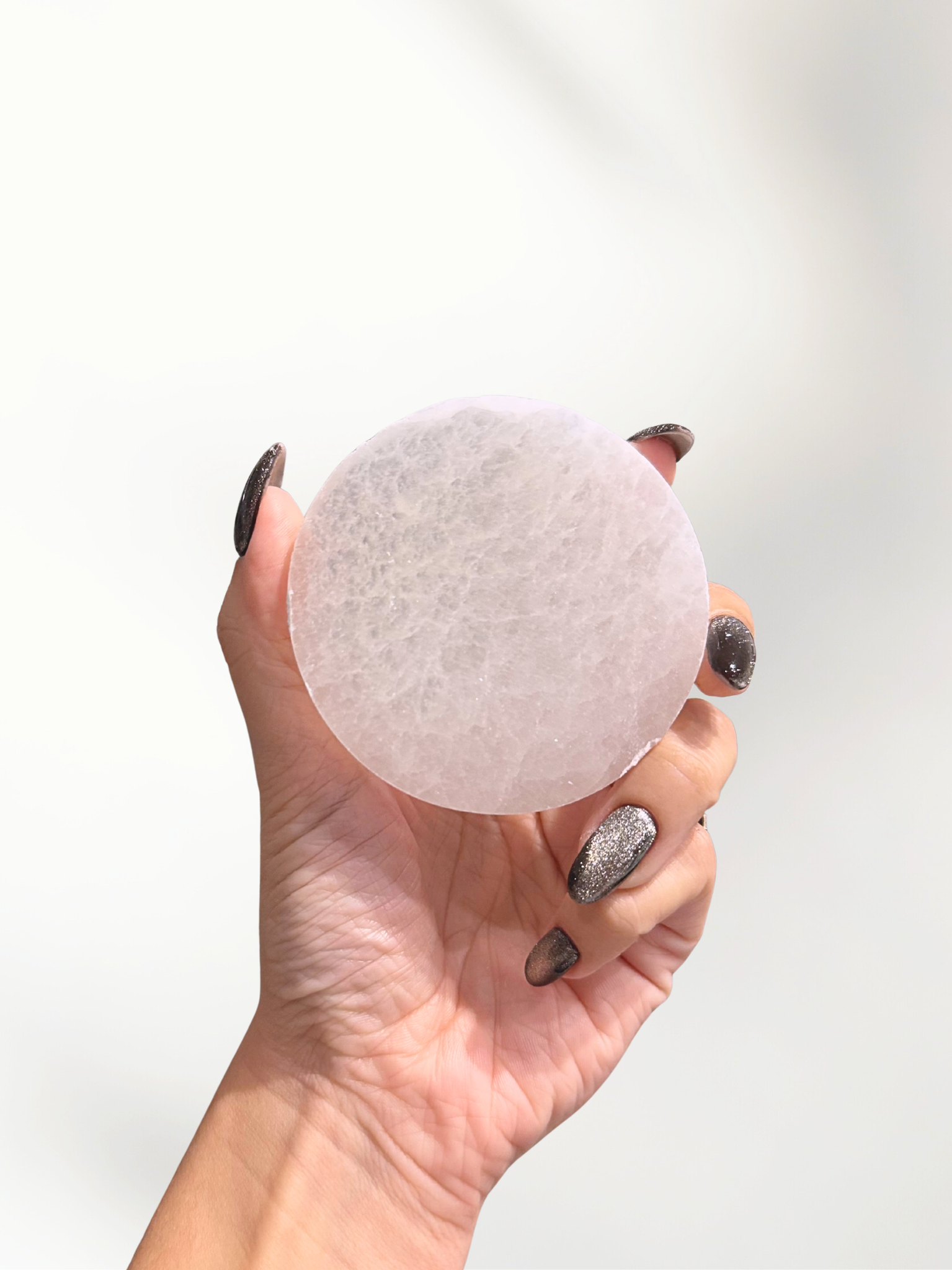
    Round Selenite charging plate from Mystic Grove

    Selenite

    Selenite is the stone of clearing, and a New Moon is a clearing kind of time. Her pure white sheen carries a calm, high vibration that lifts stagnant energy and quietens a busy mind. On a Gemini Moon, where the mental noise can run high, she is the one who creates the silence in which a clear decision can finally be heard. She also cleanses the other crystals on your altar, which makes her the natural keeper of the space. Place her at the centre of your New Moon setup and let her hold the calm.

    Tiger's Eye tumble stones from Mystic Grove

    Tiger’s Eye

    Tiger’s Eye is the ground beneath the air. Gemini’s gift is quickness, and her challenge is staying with one thing long enough to see it through. Tiger’s Eye steadies the scattered mind and turns a good idea into a followed through plan. She works the solar plexus, the seat of will and focus, and she is the stone for the moment after the decision is made, when the doing begins. If your Gemini New Moon intention needs staying power, she is the one to carry.

    A Simple Practice for Sunday 14 June

    This practice is built for the body and the breath rather than the visualising mind. Work it on the evening of Sunday 14 June, once the sky is dark. Read it through once first so you can move through it without checking the page.

    Choose your crystal or your small selection. If you are working with one stone, choose Clear Quartz. If you are working with more, set them where you can reach them, and let Selenite sit at the centre.

    Find a quiet place, light a candle if you wish, and sit somewhere your body feels supported. Take three long breaths in through the nose, longer out through the mouth. Gemini lives in the head, so this practice begins by coming down out of the head and into the breath. With each out breath, feel the shoulders drop and the jaw soften.

    Now do something a little different, suited to this air sign. Notice the sounds around you. The hum of the house, the wind outside, the small noises of the evening. Let your attention rest on hearing rather than thinking for a full minute. This is the Gemini mind settling, moving from generating noise to simply receiving it.

    Pick up your crystal and hold her at the throat or in the receiving hand. Notice her weight, her temperature, the way her presence changes the energy of the chest and the head. Stay with the sensation until the mind has quietened a little more.

    When you are ready, ask the body, not the racing mind, what one thing wants your attention this cycle. Wait. Gemini will offer ten answers. Let them come and let them go, and keep waiting for the one that has a little more weight than the others, the one that settles rather than sparkles. Trust that one.

    Write it down in a single clear sentence. One line. Then ask, what is the first small step. Write that beneath it. Gemini works in steps, not leaps.

    Speak both lines aloud, once. Then place the crystal where you will see her every day until the next New Moon. Close the candle. The page is fresh, the seed is planted, and the longest day of the year arrives within the week to light it.

    Working With This Moon Toward Litha

    The Gemini New Moon plants a quick growing seed, and the timing toward Litha is part of her gift. The Summer Solstice on Sunday 21 June, just six days later, brings the longest day and the peak of the solar year. Whatever you set in motion on this New Moon receives an almost immediate surge of light and energy.

    Watch the days between the New Moon and the Solstice. Gemini works quickly, and the answers she brings tend to arrive as conversations, messages, chance pieces of information, a book that falls open at the right page, a remark from a friend that lands harder than they meant it to. Stay open to the small signals. They are how this Moon speaks.

    The Strawberry Moon, a Full Moon in Capricorn, follows on Monday 29 June. She will bring the first harvest of what this New Moon planted, asking you to look at the structures and commitments your fresh thinking now needs. The cycle moves from the quick idea of Gemini to the grounded building of Capricorn in a single fortnight.

    This lunation is light on the surface and clear underneath. Honour the lightness. Trust the one thing that settles. Choose it, speak it, and let the longest day of the year carry it forward.

    Bring This New Moon Into Your Home

    Every crystal on this page is in stock at Mystic Grove, chosen with care for her resonance, her quality, and her readiness to work. Whether you are setting your first New Moon altar or adding to an established practice, the stones that match this lunation are waiting for you.

    Continue your journey with the Mystic Grove crystal collection.

  • Taurus New Moon May 2026: A Quiet Pause Before the Blue Moon

    Taurus New Moon May 2026: A Quiet Pause Before the Blue Moon

    Taurus New Moon May 2026: A Quiet Pause Before the Blue Moon | Mystic Grove

    Taurus New Moon May 2026: A Quiet Pause Before the Blue Moon

    A grounded guide to the May New Moon, her astrology, crystals, and a simple seasonal practice

    The Taurus New Moon arrives at 9.01pm BST on Saturday 16 May 2026, sitting at 25 degrees of Taurus, the sign of the Bull. She is the May New Moon for 2026, the pause in the middle of an otherwise full month, and her invitation is to slow down, root in, and choose carefully where to plant.

    This guide walks you through the astrology of the lunation, the crystals that match her energy, and a simple body led practice you can do on the evening she peaks.

    When is the Moon in Taurus in 2026

    The Moon moves into Taurus several times across 2026 in her usual two to three day visits, but two of those visits matter more than the rest because they coincide with the major lunar events of the year. The New Moon in Taurus falls on Saturday 16 May 2026 at 9.01pm BST. The Full Moon in Taurus follows on Sunday 25 October 2026, completing the cycle that the May New Moon began. The May lunation is the seed. The October lunation is the harvest.

    This New Moon sits at 25 degrees of Taurus, in the late degrees of the sign. Late degrees carry an additional weight in astrology, a sense of completion that runs alongside the fresh start. Whatever you plant here is not new in the sense of unprecedented. It is the next step in something that has been quietly preparing in you for some time.

    Where this Moon sits in May 2026

    May holds three significant lunar events, and the Taurus New Moon is the quiet middle. The Scorpio Flower Moon, a Full Moon, opens the month at 7.23pm BST on Friday 1 May. The Taurus New Moon settles in mid month on Saturday 16 May. The rare Blue Moon in Sagittarius, the second Full Moon of the calendar month and the first Blue Moon since August 2024, closes the month at 9.45am BST on Sunday 31 May.

    That positioning matters. The Scorpio Full Moon is intense, emotional, and revealing. The Sagittarius Blue Moon is wide, restless, and seeking. The Taurus New Moon, sat between them, is the steady ground. She is the breath between two heavy events, and she rewards anyone willing to slow down for her.

    The Astrology of the May New Moon 2026

    This New Moon does not move alone. The Sun, the Moon, and Mercury all sit together in Taurus, drawing the mind into earth element thinking. There is a clarity available here that comes from the body rather than the head, a knowing that arrives through the senses rather than through analysis. Conversations may carry more weight than usual. Words spoken on this Moon tend to settle and stay.

    Uranus, newly in Gemini after a seven year stay in Taurus, sits close by. The shift is fresh. Uranus in Gemini opens the mind, awakens perception, and brings restless new ideas. Taurus grounds while Uranus opens. The two energies feel contradictory at first glance, yet on this lunation they form an unusual partnership. The mind is wide open and the body asks you to root. Hold both. The downloads, intuitive flashes, and sudden insights this Moon offers want to be brought into the body, not left floating as ideas.

    There is also a fixed star in play. The Taurus New Moon aligns with Algol, a star carrying a long reputation in astrology for confronting what lies beneath. Algol is not an easy presence, and there is no need to soften that. She asks what you have been afraid to look at, and what strength might be waiting on the other side of that fear. The pairing of Algol with Taurus earth is interesting. The fixed star brings the shadow into view, and the sign offers steady ground to stand on while you meet it.

    What Taurus Seeds

    Taurus rules the second house in the natural zodiac, the house of values, money, possessions, self worth, and the body. A New Moon here invites work in any of these areas. The classic prompts are useful and worth returning to, particularly under this lunation where the 25 degree placement carries that additional weight of completion and initiation.

    What do you genuinely value, beneath the values you have inherited or absorbed. What does abundance feel like in your body, rather than what it looks like on paper. Where are you undercharging, undervaluing, or quietly settling for less than your worth. Where are you rushing what wants to grow slowly.

    These are not surface questions. Taurus does not respond well to a quick journal session and a list of affirmations. She wants you to sit with the question for the full lunar cycle, until the answer arrives through the body. The seeds planted now will not bloom by the next New Moon. They will grow at the pace of an oak. Trust that pace.

    Taurus does not respond well to a quick journal session and a list of affirmations. She wants you to sit with the question for the full lunar cycle, until the answer arrives through the body.

    Crystals for the Taurus New Moon

    Crystal work for this lunation centres on the heart and the root, the two energy centres Taurus presides over. The heart through her Venus rulership, the root through her earth element nature. The selection below reflects the dual emphasis on self worth, abundance, and grounded presence. Each crystal is in stock at Mystic Grove and ready to come home.

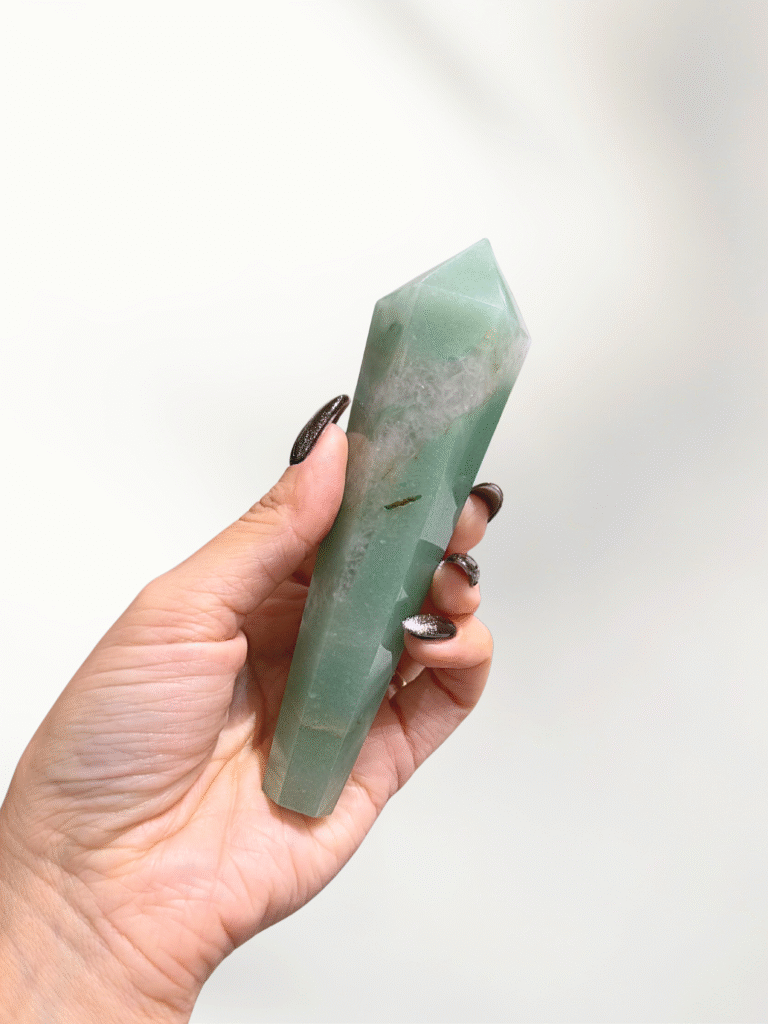
    Green aventurine wand from Mystic Grove

    Green Aventurine

    She comes first because she anchors every other intention in the body. Green Aventurine is the most versatile of all the Taurus stones, sometimes called the Stone of Opportunity. She opens the heart to receive, settles the nervous system, and creates the felt sense of permission that real abundance work asks for. Sit with her at the heart space during your New Moon practice. Notice the slight weight of her on the chest, the cool of her against the skin, the way her presence quietens the part of you that grasps.

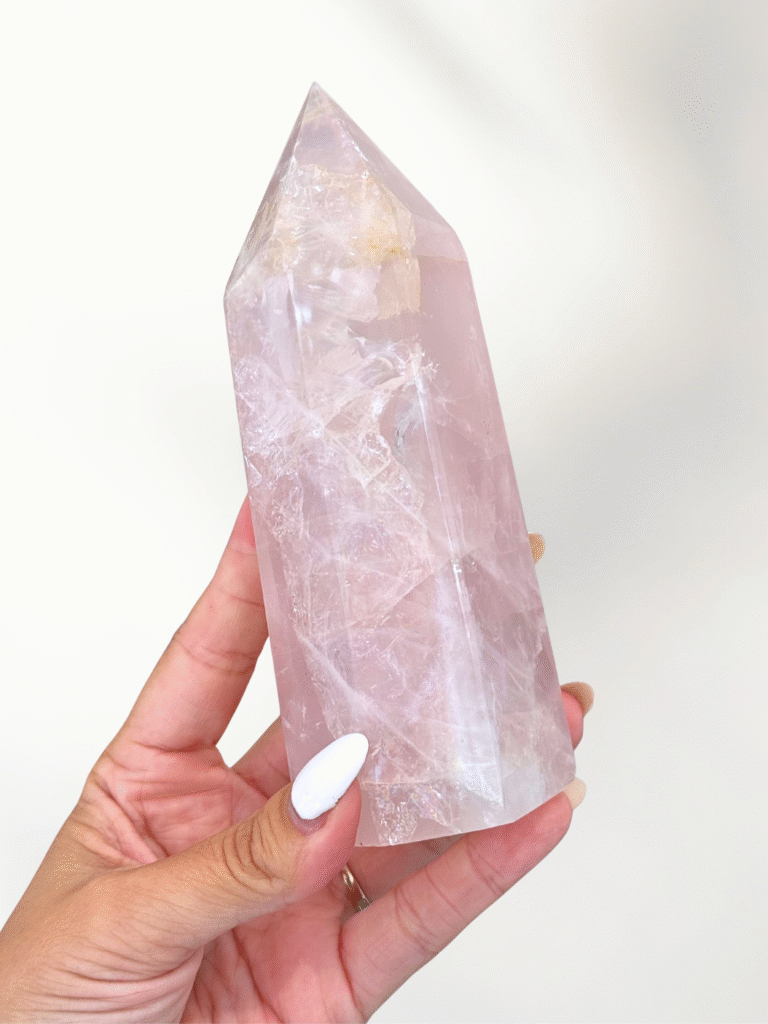
    Rose Quartz tower from Mystic Grove

    Rose Quartz

    Rose Quartz is the classic Venus stone, and on a Taurus Moon her energy is essential. Where Green Aventurine opens the receiving channel, Rose Quartz opens the channel back to the self. She holds the work of self love, self worth, and the soft, steady recognition that you are worth the life you are trying to build. Hold her in the palm of the receiving hand, usually the left, and let her warmth move into the chest.

    Rough Jade tumble stones from Mystic Grove

    Jade

    Jade is the long held symbol of abundance, harmony, and lasting wellbeing, and she belongs at the centre of any Taurus altar. Her soft green energy encourages stability and calm confidence, holding the steady note while the rest of your selection moves around her. Where Green Aventurine handles the receiving channel and Pyrite handles the practical flow, Jade simply holds the field. She is the patient one. Place her at the centre of your grid or wherever the family of your intention sits.

    Pyrite sphere from Mystic Grove

    Pyrite

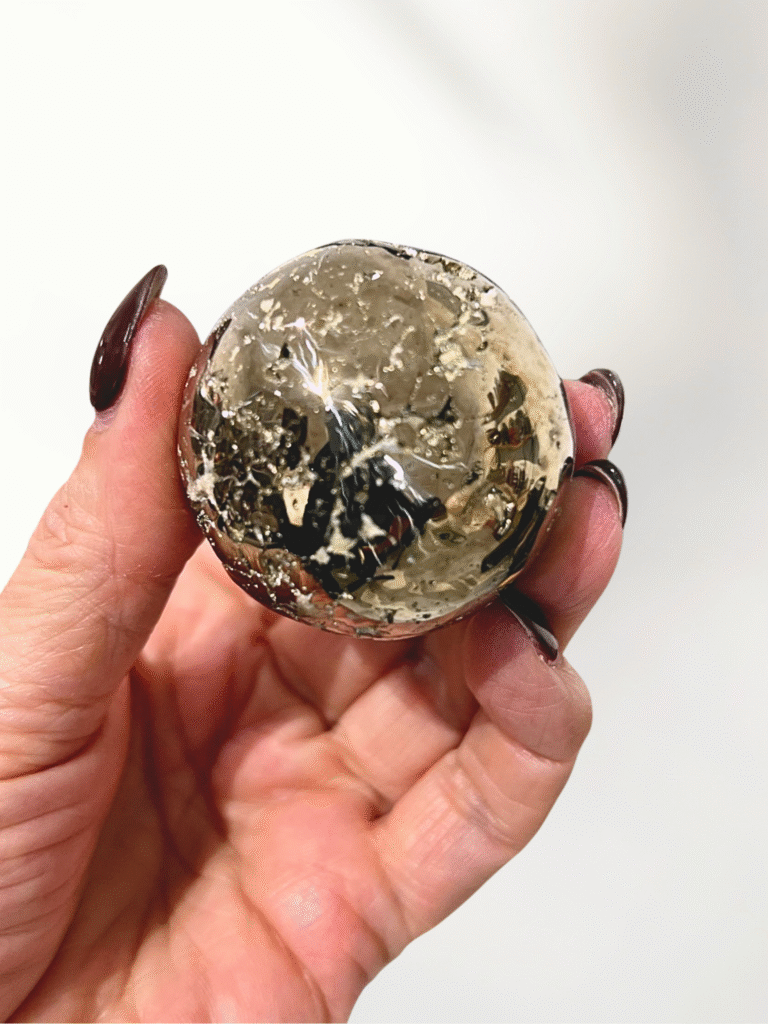
    Pyrite, sometimes called fool’s gold, is the abundance stone with the brightest commercial reputation, and she earns it. She works on the second house Taurus territory of money and material flow, and she has a particular gift for the practical confidence that financial decisions need. Place her where you handle money, the desk, the purse, the place where the bills come in.

    Tiger's Eye tumble stones from Mystic Grove

    Tiger’s Eye

    Tiger’s Eye carries the practical, follow through side of Taurus that the other stones do not quite cover. She is both grounding and energising at once, working at the solar plexus and the root together, and her job is the daily showing up that turns an intention into something real. If your New Moon work is heavy on dreaming and light on doing, she will rebalance you.

    Carnelian tower from Mystic Grove

    Carnelian

    Carnelian deserves a particular mention on this lunation. She wakes the sacral chakra and supports new beginnings, and on a Taurus New Moon her courage element pairs well with the steadier stones. She is the spark Algol asks for, the willingness to meet fear with a grounded, confident step forward.

    A Simple Practice for Saturday 16 May

    This practice is built for the body rather than the mind. There is no visualisation involved. Read it through once before you begin so you can move slowly through each step without checking the page.

    Choose your crystal or your small selection. If you are working with one stone, choose Green Aventurine. If you are working with more, set them where you can reach them comfortably.

    Find a quiet place, light a candle if you wish, and sit somewhere your body feels supported. The ground, a cushion, a low chair. Taurus does not need the spine soldier straight. She needs the body comfortable.

    Take three long breaths in through the nose, longer out through the mouth. On each out breath, let the weight of your body sink a little more into the surface beneath you. Feel the contact. The press of your sit bones, the weight in your hands, the place where your feet meet the floor.

    Pick up your crystal and bring her to your heart. Hold her there. Notice her weight, her temperature, the small shifts in how she feels against the body as the seconds pass. Stay with the sensation for at least a minute. There is no need to think.

    When you are ready, ask the body, not the mind, what wants to be planted on this Moon. Wait. The answer will arrive as a felt sense, a soft knowing, a phrase that surfaces, sometimes a single word. Trust the first one that lands.

    Speak the intention out loud once. Speak it again. Speak it a third time. Taurus likes three. Then place the crystal where you will see her every day for the rest of the lunar cycle, until the Blue Moon on 31 May.

    Close by thanking the body, the breath, the Moon, and the stone. Blow out the candle. The seed is planted.

    Working With This Lunation Across the Cycle

    A Taurus New Moon plants for the long term, and the immediate days after the New Moon are quiet by design. You may not see movement for two or three weeks. The Sagittarius Blue Moon on 31 May will likely shake some of what you planted, asking you to widen your view and to question the shape of your truth. That is part of the cycle. The intentions that survive Sagittarius will be the ones genuinely rooted in your values, not in inherited expectations.

    Litha, the Summer Solstice, follows on Sunday 21 June, the longest day of the year and the peak of the solar wheel. Whatever Taurus seeded on 16 May will be moving toward its first visible shoot by the Solstice. Watch for it. The body will tell you before the mind does.

    The full cycle closes with the Taurus Full Moon on Sunday 25 October 2026. That is the harvest of what you plant now. Six months of slow, earth paced growth between the seed and the bloom. Trust her timing.

    This lunation is gentle on the surface and serious underneath. Honour the slowness. Trust the body. Plant what truly matters, and let the earth do the rest.

    Bring This New Moon Into Your Home

    Every crystal on this page is in stock at Mystic Grove, chosen with care for her resonance, her quality, and her readiness to work. Whether you are building your first New Moon grid or adding to an established practice, the stones that match this lunation are waiting for you.

    Continue your journey with the Mystic Grove crystal collection.