Description
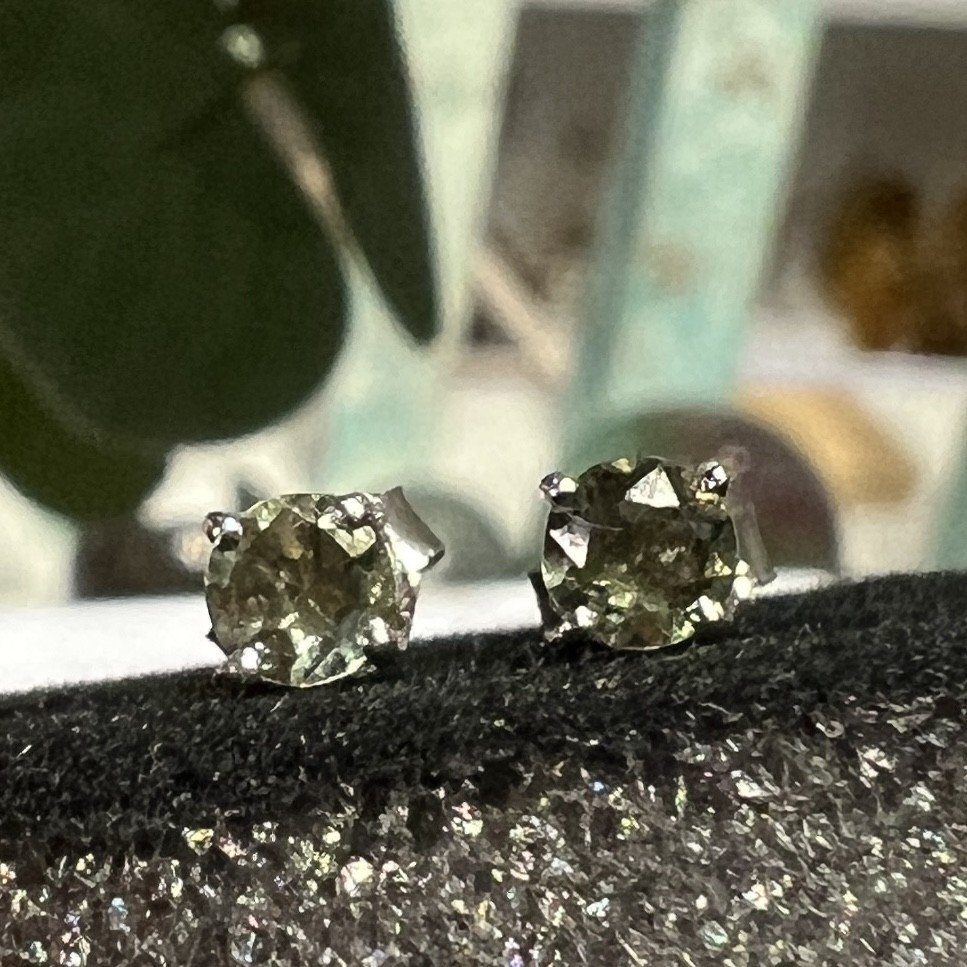
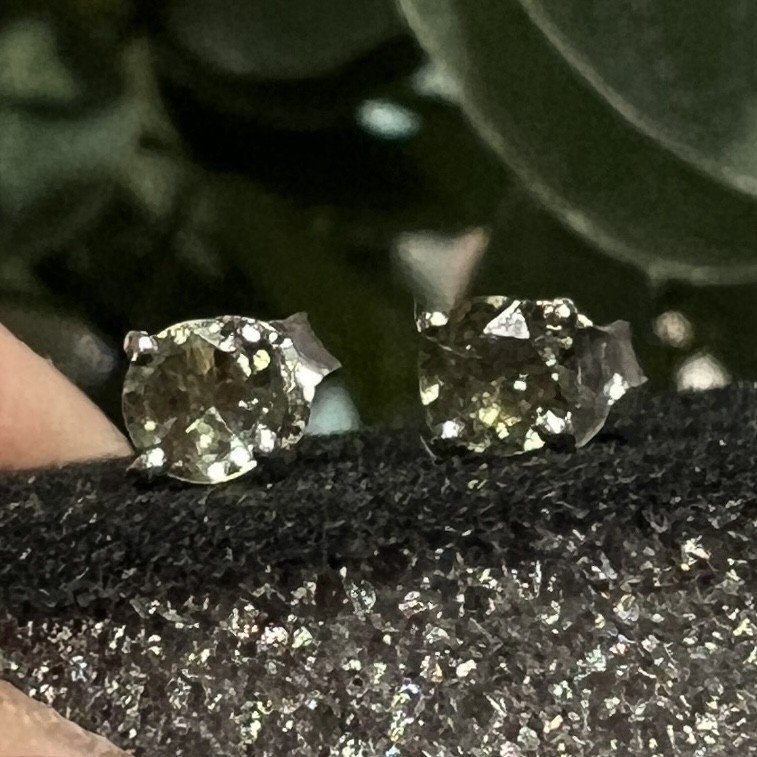
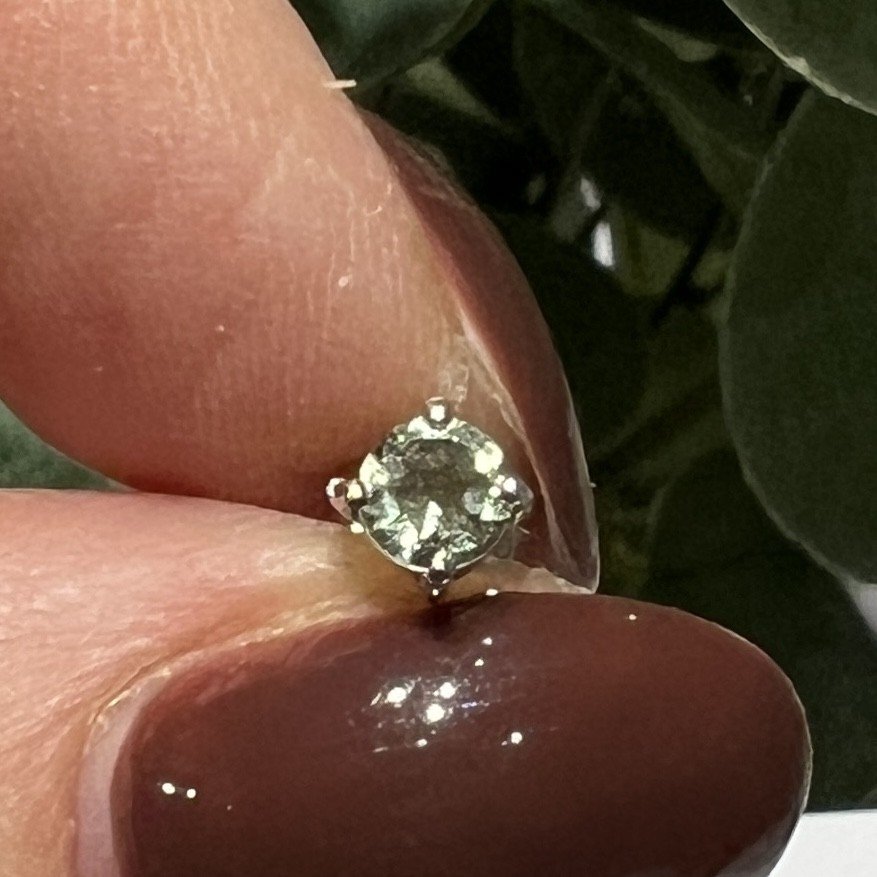
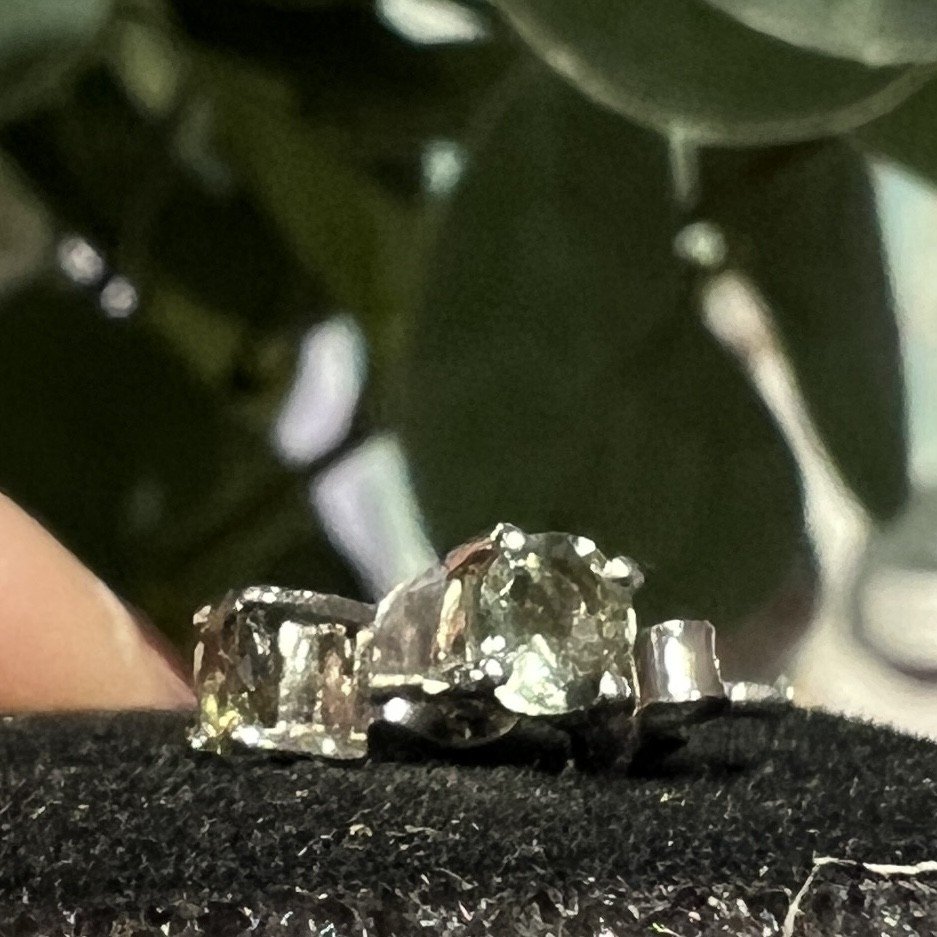
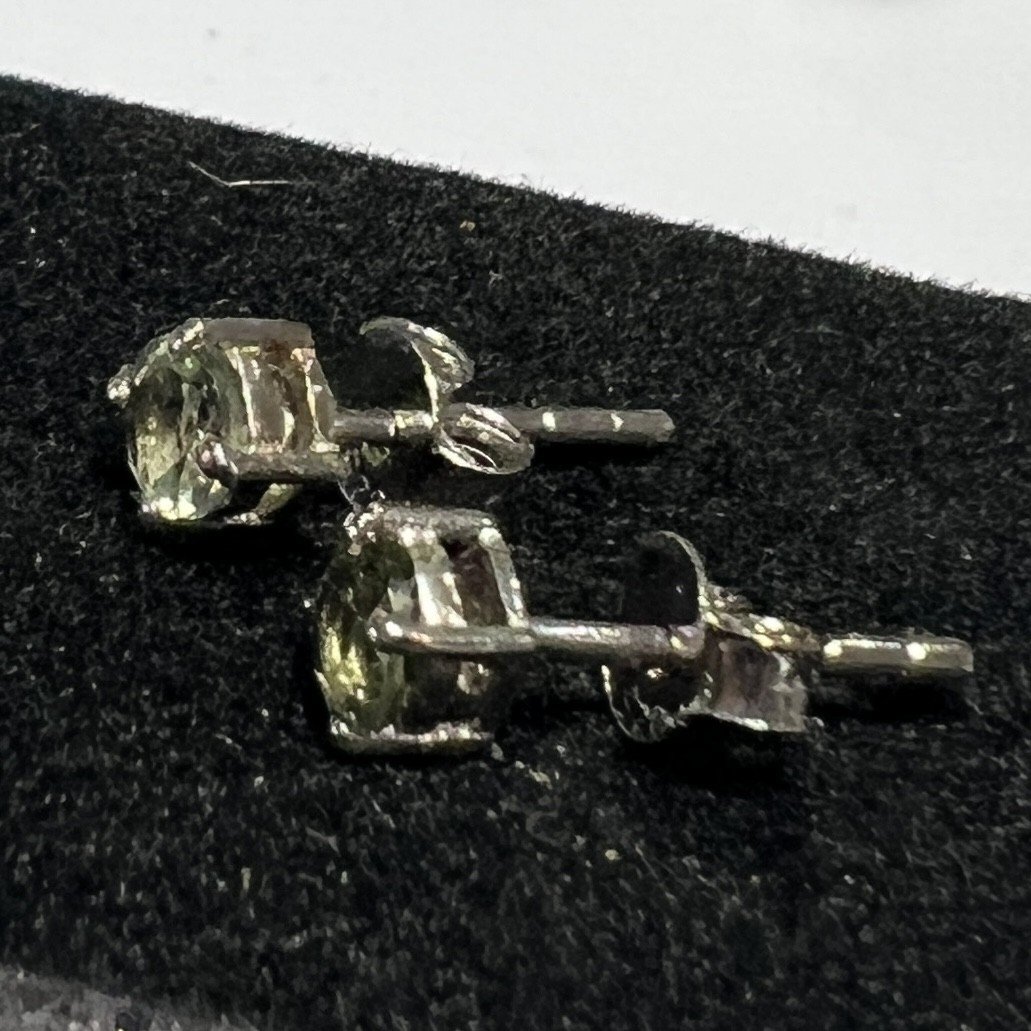
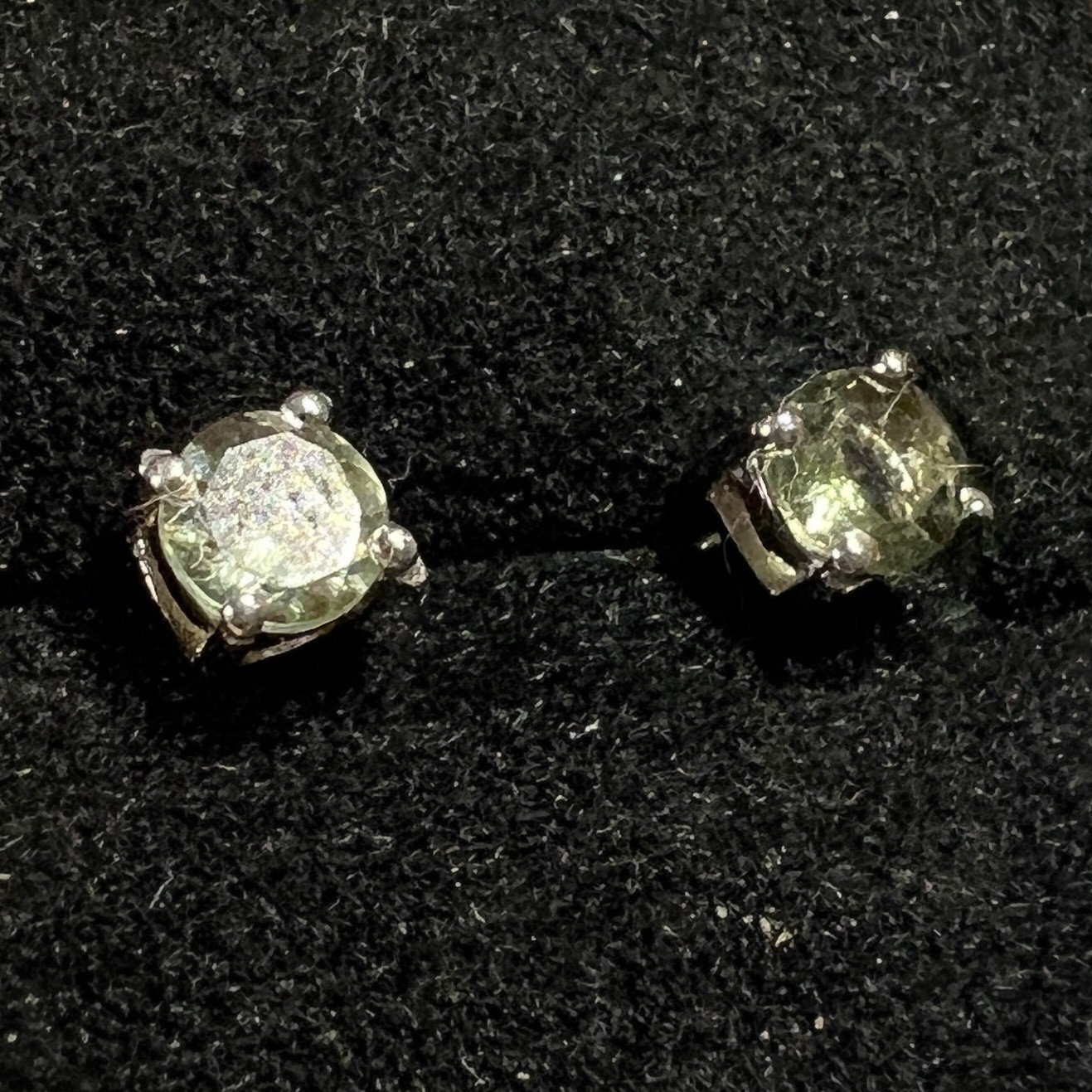
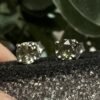
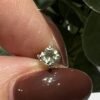
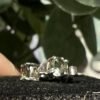
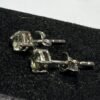
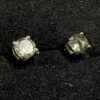
These moldavite earrings are a pair of 5mm faceted studs set in 925 sterling silver, each stone held in a neat four claw setting with butterfly backs. Cut moldavite shows its colour in a way raw pieces rarely do: a soft bottle green that lights up olive and gold when it catches the light.
About these moldavite earrings
The moldavite comes from the Chlum sand mine in South Bohemia, one of the best known moldavite fields in the Czech Republic. Each stone has been faceted and polished into a small round, then set in sterling silver so it sits close to the ear.
At 5mm they are subtle enough to wear every day and still show a flash of green each time you move. The price is for one pair.
What is moldavite?
Moldavite is a tektite, a natural green glass formed around fifteen million years ago when a meteorite struck what is now southern Germany. Molten material was thrown across the land and cooled into glass, coming to rest in parts of Bohemia and Moravia. You can read more about moldavite on Mindat.
Moldavite in traditional practice
In crystal traditions moldavite is a stone of transformation and new beginnings, linked with the heart and third eye chakras. Many people prefer to wear it rather than keep it on a shelf, so it stays with them through the day. Our guide to what moldavite does explores this further.
Caring for your moldavite earrings
Moldavite is glass and sits at around five and a half on the Mohs scale, so it can chip if knocked. Take your earrings out for sleep, sport and washing up, and store them away from harder stones. A soft cloth keeps the silver bright.
Browse more moldavite our crystal jewellery, or pair them with a Libyan desert glass pendant.
Crystal correspondences are shared as part of traditional practice. They are not a substitute for medical or professional advice.