Wedding anniversary stones by year, where the list really comes from, and how to choose one that means something
Most people know silver for 25 years and gold for 50. Fewer know there are wedding anniversary stones for almost every year in between. Here is the full list, the honest story of who wrote it, and the stones worth giving.
Wedding anniversary stones by year: the full list
This is the gemstone list most jewellers work from today. It names a stone or a metal for each of the first 25 years, then for every fifth year up to 60.
| Year | Stone or metal |
|---|---|
| 1st | Gold |
| 2nd | Garnet |
| 3rd | Pearl |
| 4th | Blue topaz |
| 5th | Sapphire |
| 6th | Amethyst |
| 7th | Onyx |
| 8th | Tourmaline |
| 9th | Lapis lazuli |
| 10th | Diamond |
| 11th | Turquoise |
| 12th | Jade |
| 13th | Citrine |
| 14th | Opal |
| 15th | Ruby |
| 16th | Peridot |
| 17th | Watches |
| 18th | Cat’s eye |
| 19th | Aquamarine |
| 20th | Emerald |
| 21st | Iolite |
| 22nd | Spinel |
| 23rd | Imperial topaz |
| 24th | Tanzanite |
| 25th | Silver |
| 30th | Pearl |
| 35th | Emerald |
| 40th | Ruby |
| 45th | Sapphire |
| 50th | Gold |
| 55th | Alexandrite |
| 60th | Diamond |
The list above follows the one published by Jewelers of America. Other versions swap a stone here and there, which tells you something useful about the list itself.
Where the list really comes from
It is tempting to say these pairings are ancient. They are not, and the real story is more interesting.
The oldest part is the silver and the gold. The custom appears to come from the German speaking lands of central Europe, where a husband gave his wife a silver wreath after 25 years of marriage and a gold one after 50. Everything else was added much later.
By 1859 an American almanac was already listing a paper wedding at one year, wood at five, tin at ten, silver at 25 and gold at 50. In 1922 the etiquette writer Emily Post set out what she called the “eight anniversaries known to all”, and admitted that the paper, wood and tin gifts were mostly given as a joke. TIME has traced the history if you would like to read more.
That same year, an American jewellers’ trade body began talking about filling in the gaps. In 1937 it published a much longer list, with a gift for every year up to the 20th. The stone for every year came later still, and it came from the jewellery trade.
Nobody handed this list down. Jewellers wrote it, and people kept it because it gave them a reason to mark the year.
There is no single official version. As the International Gem Society points out, anniversary stones were never fixed by one authority in the way birthstones were. One clue sits in the list itself. Tanzanite, the stone for the 24th year, was only discovered in 1967.
None of this makes the tradition less worth keeping. A custom does not need to be old to be meaningful. It only needs people who choose to keep it.
The UK does it slightly differently
If you grew up in Britain you may have learned cotton for the first year and paper for the second. American lists have them the other way round. Neither is wrong. They are two versions of the same young tradition, and you are free to follow whichever one your family knows.
The anniversary stones you can hold in your hand
Many of the stones on the list are cut gems set in jewellery, which is a jeweller’s work. But eight of the years belong to stones that are just as lovely as a tumblestone in the pocket, a tower on a shelf or a carved piece on the bedside table.
2nd year: garnet
Garnet is a deep red stone long linked with constancy and lasting affection. It suits a second anniversary well, when the first excitement has settled into something steadier. See our garnet pieces.
6th year: amethyst
Amethyst has been prized since ancient Greece, where its name meant “not drunk” and it was carried for a clear head. Traditionally it is a stone of calm, which most couples welcome six years in. Browse our amethyst.
7th year: onyx
Black onyx is associated with steadiness and staying power. It is a quiet, grounded choice for the year people joke about, and a good one for someone who prefers dark stones to bright ones.
8th year: tourmaline
Tourmaline comes in more colours than almost any other stone. Jewellers usually reach for pink or green. Black tourmaline is the one most often kept at home, traditionally placed by the door as a stone of protection. Ours is in the tourmaline collection.
9th year: lapis lazuli
Lapis lazuli is a deep blue stone flecked with golden pyrite, valued in ancient Egypt and Mesopotamia. It is traditionally linked with honesty and truthful speech, which is a fine thing to honour after nine years. Here is our lapis lazuli.
12th year: jade
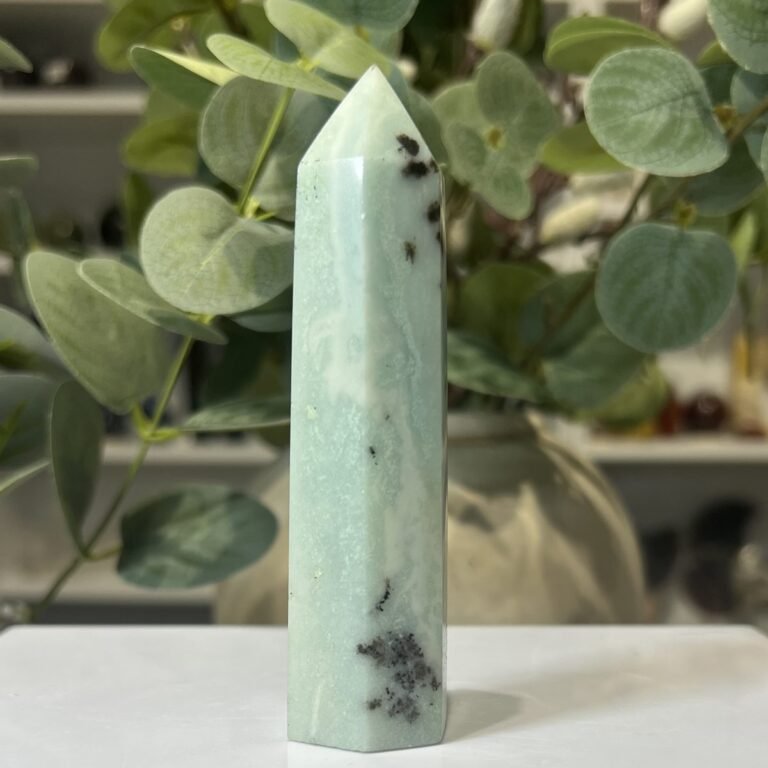
Jade has been held dear in China for thousands of years as a stone of harmony and good fortune. It is smooth, cool and pleasant to hold, and it wears well. Find it in our jade collection.
13th year: citrine
Citrine is the golden yellow member of the quartz family, traditionally associated with warmth, optimism and abundance. It is a cheerful answer to anyone who thinks thirteen is unlucky. See our citrine.
18th year: cat’s eye and tiger’s eye
The cat’s eye on the list is a gem called chrysoberyl, which shows a single bright band of light across its surface. Tiger’s eye is a different stone, a golden brown quartz, but it carries the same moving band of light and costs far less. Many people choose it for the 18th year for that reason. Ours is in the tiger’s eye collection.
Stones that are not on the list but suit an anniversary anyway
Because the list is a modern one, there is no rule against choosing by meaning instead of by year.
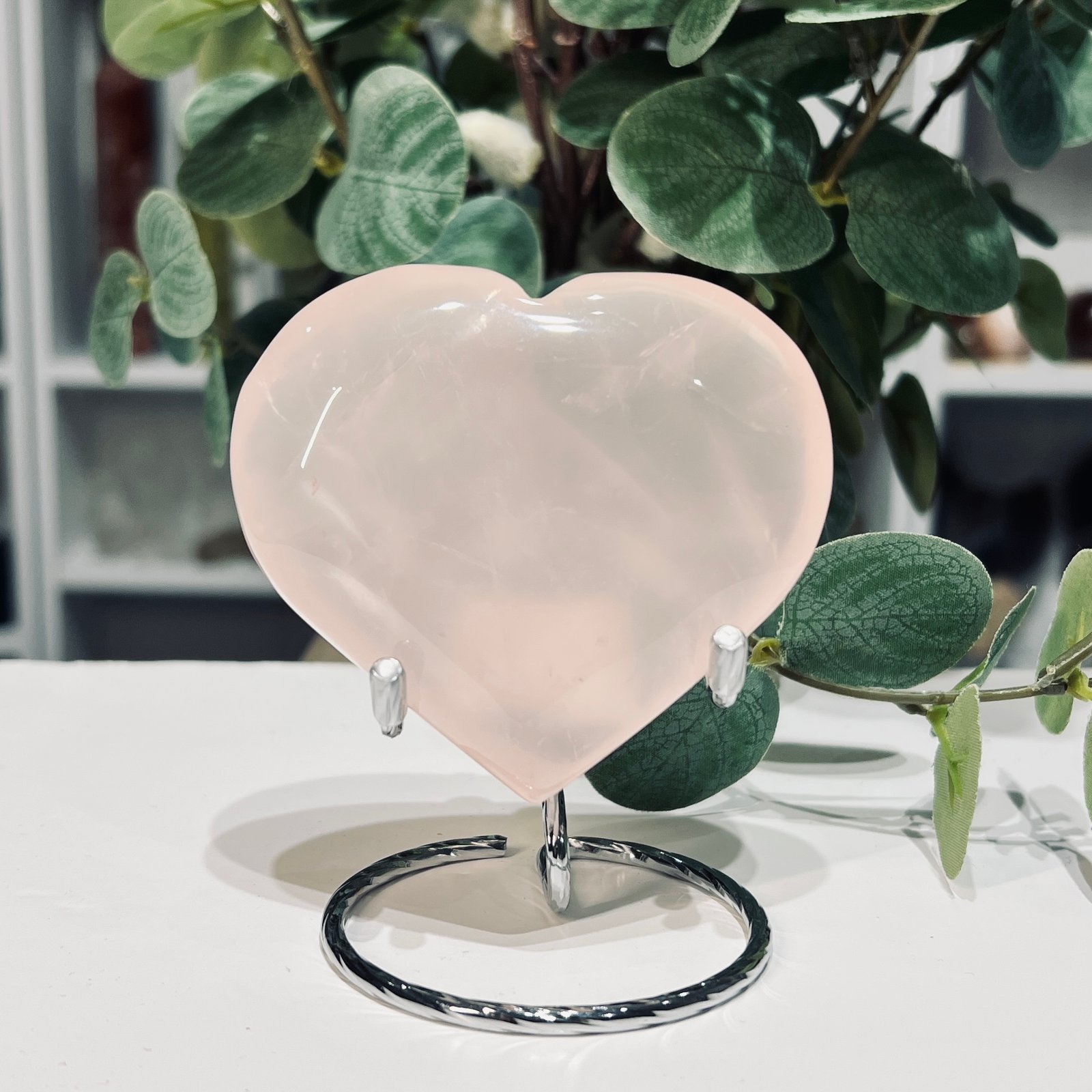
- Rose quartz is the stone most widely linked with love. It suits any anniversary, and a rose quartz heart needs no explaining. Our guide to pink crystals has more.
- Moonstone shares the month of June with pearl as a birthstone. That makes it a thoughtful companion for the pearl years, the 3rd and the 30th. See our moonstone.
- Carnelian is a warm orange stone traditionally tied to passion and courage. It is a good choice for a couple who have come through a hard year together. Here is our carnelian.
For the metal and fine gem years, such as gold, silver, pearl and diamond, a jeweller is the right place to go. A small stone alongside the main gift still adds something personal.
How to choose and give an anniversary stone
- Start with the year. If the stone for that year appeals, the choice is made.
- Or start with the person. Their favourite colour, their birthstone or the month you married can all point to a stone.
- Pick a form they will use. A tumblestone travels in a pocket. A tower or a heart sits where it will be seen every day.
- Say why you chose it. A line on a card, such as “lapis for nine years of honest conversations”, turns a stone into a keepsake.
- Choose your moment. Friday is traditionally the day of Venus, long associated with love, if you like a little old custom with your gift.
Keep rose quartz and amethyst out of direct sunlight. Both fade with long exposure, so a windowsill is the one place not to display them. A soft dry cloth is all they need for cleaning, and our guide to cleansing crystals covers the rest.
The meanings given here are traditional associations and part of a personal practice. They are not a substitute for medical or professional advice.
A gift for any anniversary
Our Wedding and Anniversary Crystal Gift Box holds six tumblestones chosen for love and partnership. Each stone comes with its own card explaining why it is there, and there is a tag for your own message.


Leave a Reply