Arianrhod, the Welsh goddess of the silver wheel: her story in the Mabinogi, Caer Arianrhod, the stars and the moon
Arianrhod is the Welsh goddess whose name is usually translated as silver wheel, and who is linked today with the moon, the stars and a castle beneath the sea. In the old tales she is proud, wronged and fiercely her own. Here is the story of Arianrhod, what is old and what is new about her, and how people honour her now.
Arianrhod at a glance
Say it: ar YAN rod, with a soft breath on the rh.
Name usually means: silver wheel.
Tradition: Welsh, from the Fourth Branch of the Mabinogi and the Welsh Triads.
Family: daughter of Dôn, sister of Gwydion, mother of Dylan and Lleu.
Places: Caer Arianrhod, a reef off Dinas Dinlle on the coast of Gwynedd.
Linked today with: the moon, the stars, the Northern Crown, the sea and the turning wheel of the year.
Who Is Arianrhod?
Arianrhod is one of the children of Dôn, the great family of magicians in the Fourth Branch of the Mabinogi. Her brother is Gwydion, the most famous enchanter in Welsh story. Her uncle is Math, the magician king of Gwynedd. She lives apart from them all in her own fortress by the sea, Caer Arianrhod, and she answers to no one.
Today Arianrhod is one of the best loved goddesses in modern paganism. Her name and her fortress tie her to silver light, the night sky and the tides, and many people honour her as a goddess of the moon and the stars, of fate and the turning of time, and of a woman’s right to say no.
The Story of Arianrhod
The test at Math’s court
Math, king of Gwynedd, could only live while his feet rested in the lap of a maiden, except when he was at war. When his footholder was lost to him, Gwydion suggested his own sister, Arianrhod. Math tested her by asking her to step over his magic wand. As she did, she gave birth to a fine boy with yellow hair, and as she ran for the door, something small fell from her. Gwydion caught it up, wrapped it in silk and hid it in a chest at the foot of his bed.
The first boy, Dylan, made straight for the sea. As soon as he reached it he took on its nature and swam as well as any fish, and was called Dylan Eil Ton, Dylan son of the wave. The second child grew up in Gwydion’s care.
She was publicly shamed at her uncle’s court. Everything she does afterwards makes more sense once you remember that.
Three destinies
When Gwydion brought the boy to Caer Arianrhod, she was furious to be reminded of her shame. She swore three destinies on him. He would have no name unless she gave him one. He would bear no arms unless she armed him. And he would never have a wife of any race now on the earth.
Gwydion answered each of them with trickery. First he and the boy came to her fortress in a boat disguised as shoemakers. When the boy struck a wren with a single deft shot, Arianrhod laughed and said the fair one had hit it with a skilful hand, and so, without meaning to, she named him Lleu Llaw Gyffes, the fair one of the skilful hand.
Later the two returned disguised as bards. In the night Gwydion conjured the sound and sight of a hostile fleet, and in the panic Arianrhod armed the young man herself. The third destiny could not be tricked, so Math and Gwydion made Lleu a wife from flowers. You can read where that led in our guide to Blodeuwedd.
The woman who said no
Arianrhod is hard to love on a first reading. She curses her own child. Yet look again at what happened to her. She was tested in public, shamed in front of the court, and then her brother kept bringing the evidence to her door. Some readers think Gwydion himself was the father, which the tale hints at but never says. Seen that way, her three destinies are a refusal, a woman declining to play the part others had written for her.
That is why so many people today honour her as a goddess of sovereignty and self possession. She keeps her own fortress, she says no, and she cannot simply be pushed into line.
Caer Arianrhod, the Castle in the Sea
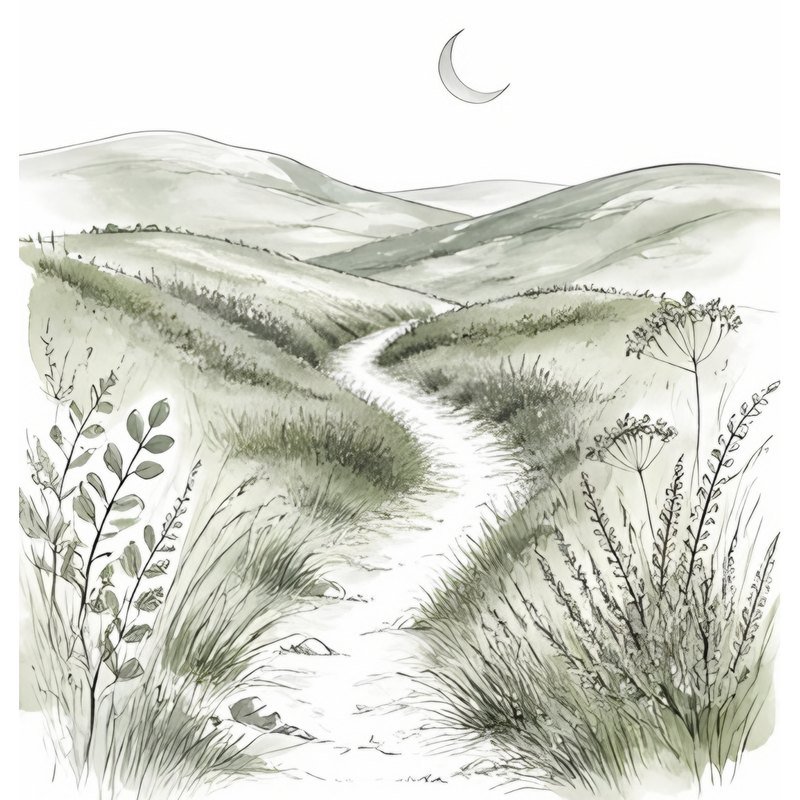
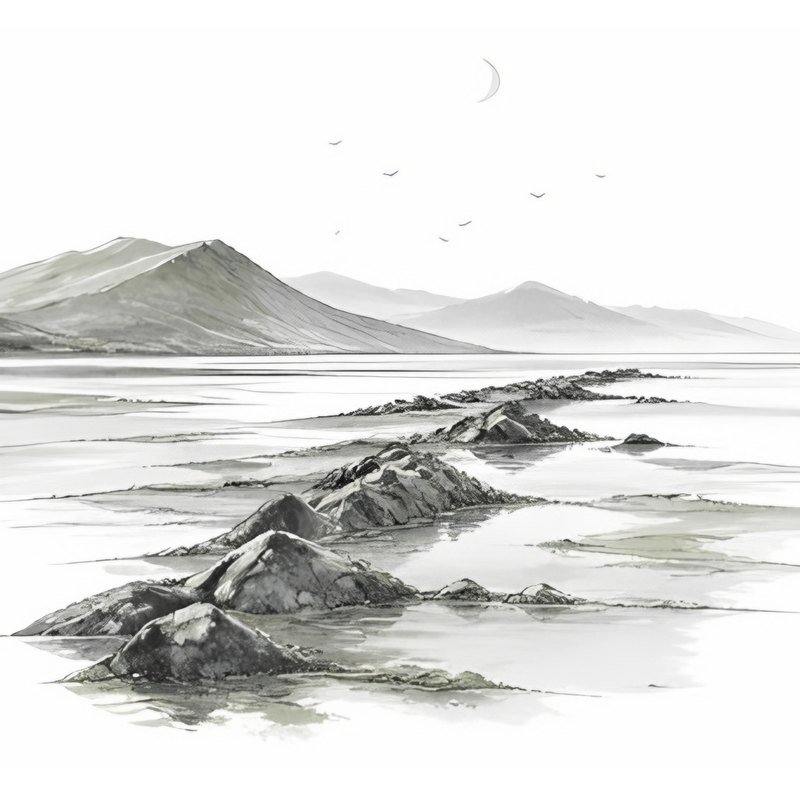
Off the coast of Gwynedd, near the Iron Age hillfort of Dinas Dinlle, a reef of rocks rises from the sea at the lowest tides. It is called Caer Arianrhod, Arianrhod’s fortress. Local tradition says her court once stood there and was swallowed by the waves, and fishermen used to tell of walls glimpsed under the water.
The Royal Commission on the Ancient and Historical Monuments of Wales surveyed the reef from the air in 2010 and found no convincing sign of anything built by people. It is a natural reef, about 900 metres out, its top showing only at the lowest spring tides. Even so, standing at Dinas Dinlle at low water and watching the line of rocks appear is a moving thing to do. The hillfort itself, partly lost to the sea, is cared for by the National Trust, and you can read about it on Coflein.
Arianrhod, the Stars and the Moon
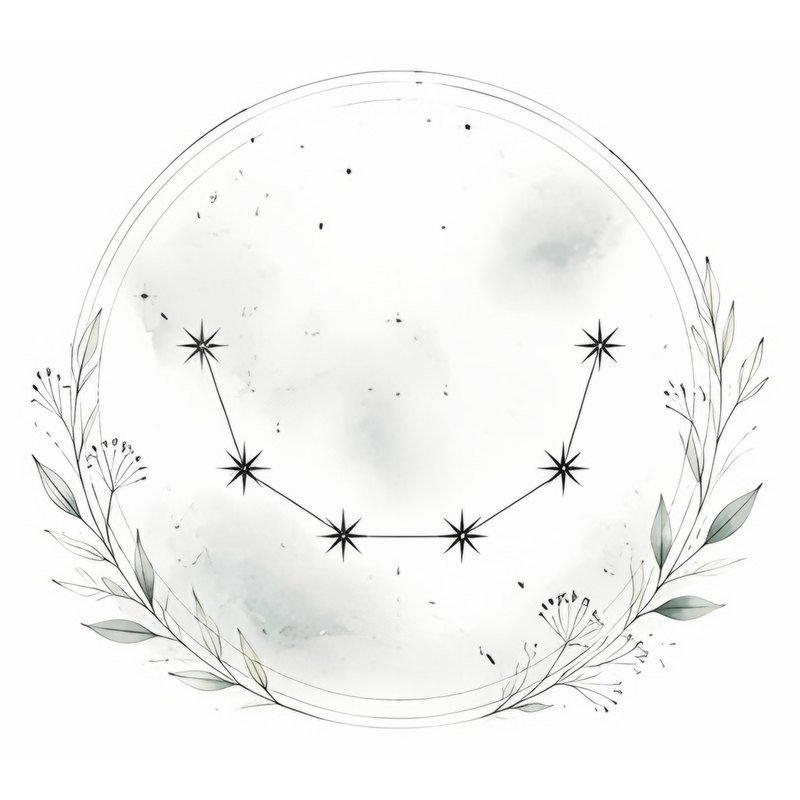
In Welsh star lore, the constellation Corona Borealis, the Northern Crown, is called Caer Arianrhod, and the Milky Way is Caer Gwydion, her brother’s fortress. It is a beautiful idea: brother and sister set side by side in the night sky. The Northern Crown is a small, curved ring of stars, easy to find on spring and summer evenings between the bright stars Arcturus and Vega.
Her link with the moon comes from her name. A silver wheel turning through the dark is an easy image of the moon, and in the twentieth century Arianrhod came to be honoured as a moon goddess. Many people today work with her at the full moon, when the silver wheel is at its brightest, and at the new moon, when she withdraws into her fortress.
If moon goddesses are your path, our guide to moon goddesses from around the world is a good next read.
The Honest History of Arianrhod
Her story is medieval. Arianrhod appears in the Fourth Branch of the Mabinogi, preserved in the White Book of Rhydderch of the mid fourteenth century and the Red Book of Hergest from around 1400. You can read Lady Charlotte Guest’s translation on sacred texts. She also appears in the Welsh Triads, where she is named as a daughter of Beli, and in a poem in the Book of Taliesin that calls her Arianrhod of fine appearance, dawn of serene weather.
Silver wheel may not be what her name first meant. The oldest spellings are Aranrhod or Aranrot. The second part, rhod, does mean wheel or circle, but the first part may not be arian, silver, at all. Some scholars think it meant huge or round, which would make the silver wheel a later and very attractive reading. Mary Jones’s Celtic Literature Collective gathers the evidence.
The star name is not ancient. Caer Arianrhod as the name of the Northern Crown is first recorded in the nineteenth century, in a collection drawn from the papers of Iolo Morganwg, a brilliant Welsh scholar who is also known to have invented a good deal of his material. It may record genuine folk tradition, but it cannot be traced further back.
The moon goddess is modern. Historian Ronald Hutton notes in his lecture Finding Lost Gods in Wales that Arianrhod has been seen as a star goddess only since the twentieth century, and Robert Graves folded her into his White Goddess in 1948. The Mabinogi itself never calls her a goddess.
None of this makes the modern Arianrhod any less meaningful. A goddess of the silver wheel who keeps her own fortress by the sea has spoken to a great many people. Knowing which parts are medieval simply lets you hold both: the proud, wronged woman of the old tale, and the moon and star goddess she has grown into.
Crystals for Arianrhod
No medieval source links Arianrhod with crystals. The stones below are modern correspondences for her silver wheel, her moonlight and her stars. All are stocked at Mystic Grove.
Moonstone, for the silver wheel
Moonstone glows with a soft blue white sheen, the closest a stone comes to moonlight. It is the first choice for Arianrhod and a gentle companion for intuition and cycles. See our moonstone spheres or choose a moonstone tumblestone.
Rainbow moonstone, for the turning sky
Rainbow moonstone flashes with blue and violet as it turns, like light moving across the night sky. A rainbow moonstone tower makes a lovely focus for full moon work.
Selenite, for clear silver light
Selenite is named after Selene, the Greek moon goddess, and has a soft, silky shine. Many people use it to cleanse their space and other crystals. Our selenite moon bowls are perfect for charging stones under the full moon. Keep selenite dry, as water damages it.
Clear quartz, for the crown of stars
Clear quartz catches light like a star. Seven small pieces laid in a curve make a simple table version of the Northern Crown. Try our clear quartz palm stones or tumblestones.
Labradorite, for the tides and the hidden fortress
Labradorite looks grey until it flashes blue, like a reef appearing out of the sea. It suits Arianrhod’s castle that shows itself only at the lowest tide. See our labradorite towers.
Lapis lazuli, for the night sky
Deep blue lapis flecked with gold has been likened to a starry sky for thousands of years. It is a fine stone for working with Arianrhod as a star goddess. Try a lapis lazuli sphere.
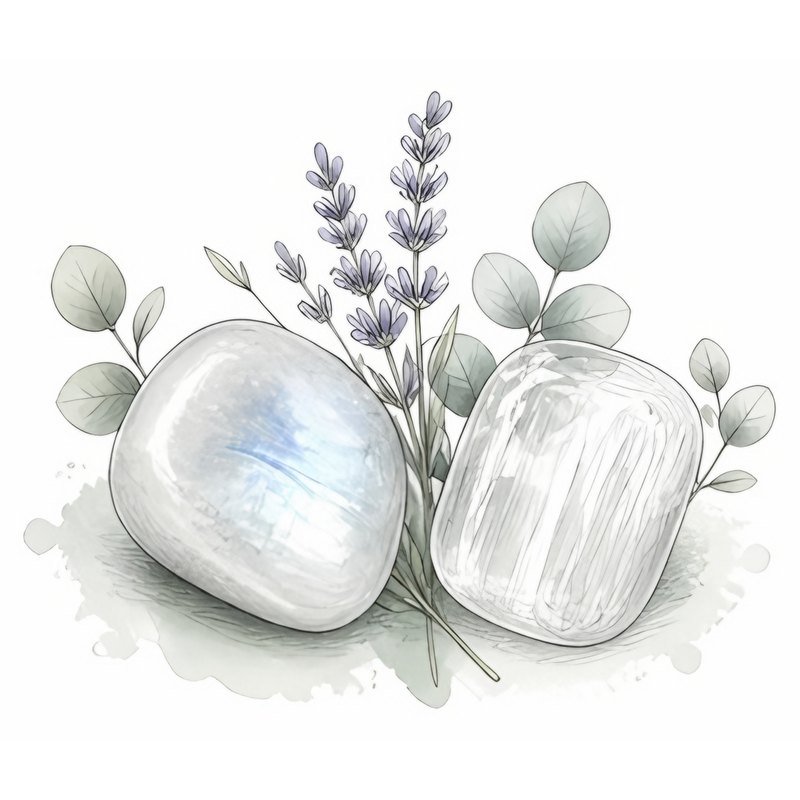
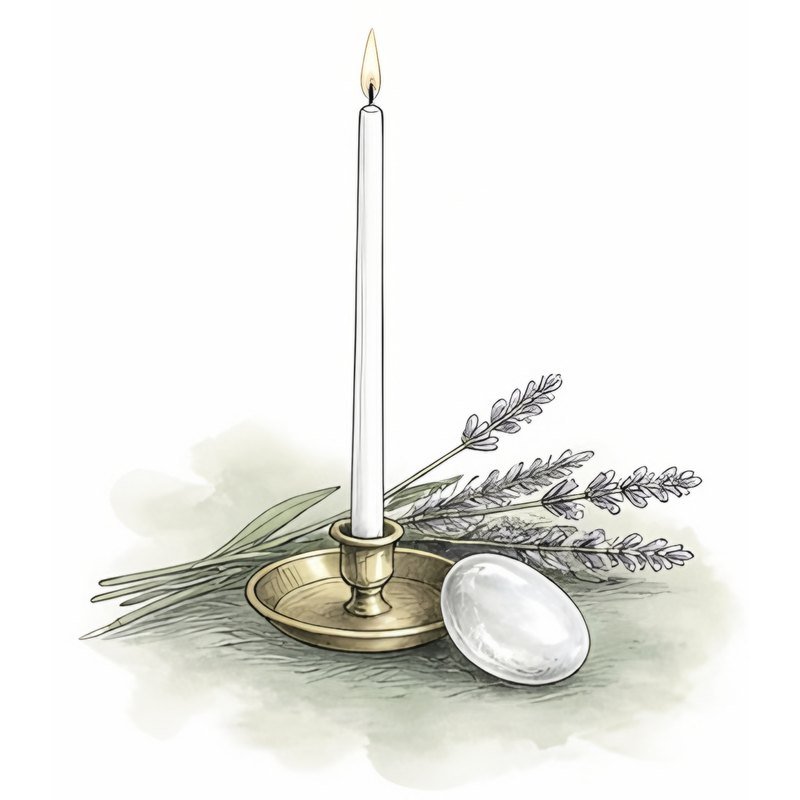
A simple Northern Crown. Lay seven small clear quartz or moonstone tumblestones in a gentle curve, like a crown open at the top. Place a candle in the open space. It is a quiet way to bring Arianrhod’s stars onto your altar without needing anything rare.
A Simple Full Moon Practice for Arianrhod
This practice is for the full moon, or any night when you want to honour your own choices. You need a white chime candle, a moonstone and somewhere you can see the sky, even through a window.
- Set your space. Place the candle on a white plate or cloth with the moonstone beside it. If you like, lay the seven stone crown described above.
- Look for the moon. If the sky is clear, take a moment to find it. If it is cloudy, that is fine. The wheel still turns.
- Light the candle and say her name three times. Arianrhod, Arianrhod, Arianrhod.
- Hold the moonstone and name one thing that is yours to choose. A boundary you want to keep, a yes or a no that belongs to you, a direction for the next month.
- Rest for a few minutes. Breathe slowly, feel the weight and coolness of the stone in your hand, and let the room fall quiet.
- Close. Thank Arianrhod, put out the candle, and leave the moonstone on a windowsill overnight if you wish.
Signs Arianrhod May Be Calling You
- You feel pulled toward the moon, the stars and the night sky.
- Silver jewellery, wheels, spirals or circles keep catching your eye.
- You are learning to say no and to keep your own boundaries.
- The sea, tides and coastlines feel like home.
- You feel drawn to Wales, especially to Gwynedd and the coast near Caernarfon.
Not sure yet? Our guide to which goddess is calling you has gentle ways to find out.
Light a candle for Arianrhod
Our Manifest Magic chime candles come in ten colours. Protection White carries her silver moonlight, and Crown Violet suits her starry sky.
Questions People Ask About Arianrhod
What is Arianrhod the goddess of?
Today Arianrhod is honoured as a Welsh goddess of the moon, the stars, fate, the sea and women’s sovereignty. In the Mabinogi she is a powerful enchantress who keeps her own fortress by the sea.
How do you pronounce Arianrhod?
Say ar YAN rod. The Welsh rh is a breathy r, as if you breathe out as you say it.
What does Arianrhod mean?
The name is usually translated as silver wheel, from arian, silver, and rhod, wheel. The oldest spellings suggest the first part may originally have meant something else, so silver wheel may be a later reading.
Is Arianrhod a moon goddess?
Not in the medieval sources, but she has been honoured as one since the twentieth century, and she is now one of the best known moon goddesses of the Celtic world.
Where is Caer Arianrhod?
Caer Arianrhod is a reef off the coast of Gwynedd near Dinas Dinlle, south west of Caernarfon. Its top is only uncovered at the lowest spring tides. The same name is used in Welsh star lore for the constellation Corona Borealis.
Who are Arianrhod’s children?
Dylan Eil Ton, who went to the sea, and Lleu Llaw Gyffes, raised by her brother Gwydion. A Welsh Triad also names two other sons, Gwenwynwyn and Gwanar.
Leave a Reply