Crystal Shop UK · Rooted in intention, curated with care

Tag: Welsh mythology

  • Arianrhod: Welsh Goddess of the Silver Wheel, the Moon and the Stars

    Arianrhod: Welsh Goddess of the Silver Wheel, the Moon and the Stars

    Arianrhod, the Welsh goddess of the silver wheel: her story in the Mabinogi, Caer Arianrhod, the stars and the moon

    Arianrhod is the Welsh goddess whose name is usually translated as silver wheel, and who is linked today with the moon, the stars and a castle beneath the sea. In the old tales she is proud, wronged and fiercely her own. Here is the story of Arianrhod, what is old and what is new about her, and how people honour her now.

    Arianrhod at a glance

    Say it: ar YAN rod, with a soft breath on the rh.

    Name usually means: silver wheel.

    Tradition: Welsh, from the Fourth Branch of the Mabinogi and the Welsh Triads.

    Family: daughter of Dôn, sister of Gwydion, mother of Dylan and Lleu.

    Places: Caer Arianrhod, a reef off Dinas Dinlle on the coast of Gwynedd.

    Linked today with: the moon, the stars, the Northern Crown, the sea and the turning wheel of the year.

    Who Is Arianrhod?

    Arianrhod is one of the children of Dôn, the great family of magicians in the Fourth Branch of the Mabinogi. Her brother is Gwydion, the most famous enchanter in Welsh story. Her uncle is Math, the magician king of Gwynedd. She lives apart from them all in her own fortress by the sea, Caer Arianrhod, and she answers to no one.

    Today Arianrhod is one of the best loved goddesses in modern paganism. Her name and her fortress tie her to silver light, the night sky and the tides, and many people honour her as a goddess of the moon and the stars, of fate and the turning of time, and of a woman’s right to say no.
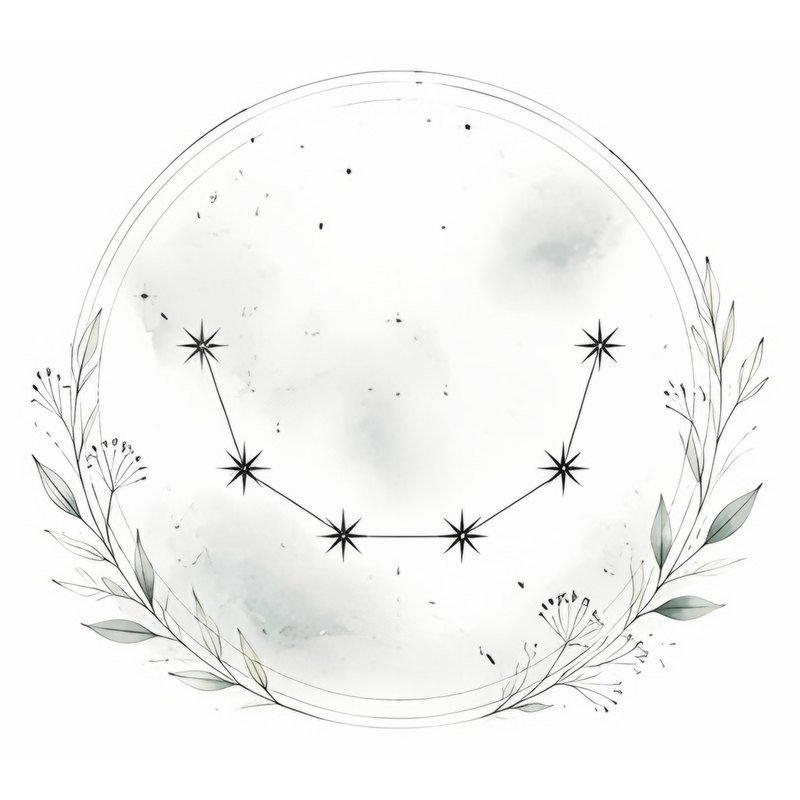
    Sketch of the Northern Crown constellation, known in Welsh as Caer Arianrhod, inside a silver circle of leaves

    The Story of Arianrhod

    The test at Math’s court

    Math, king of Gwynedd, could only live while his feet rested in the lap of a maiden, except when he was at war. When his footholder was lost to him, Gwydion suggested his own sister, Arianrhod. Math tested her by asking her to step over his magic wand. As she did, she gave birth to a fine boy with yellow hair, and as she ran for the door, something small fell from her. Gwydion caught it up, wrapped it in silk and hid it in a chest at the foot of his bed.

    The first boy, Dylan, made straight for the sea. As soon as he reached it he took on its nature and swam as well as any fish, and was called Dylan Eil Ton, Dylan son of the wave. The second child grew up in Gwydion’s care.

    She was publicly shamed at her uncle’s court. Everything she does afterwards makes more sense once you remember that.

    Three destinies

    When Gwydion brought the boy to Caer Arianrhod, she was furious to be reminded of her shame. She swore three destinies on him. He would have no name unless she gave him one. He would bear no arms unless she armed him. And he would never have a wife of any race now on the earth.

    Gwydion answered each of them with trickery. First he and the boy came to her fortress in a boat disguised as shoemakers. When the boy struck a wren with a single deft shot, Arianrhod laughed and said the fair one had hit it with a skilful hand, and so, without meaning to, she named him Lleu Llaw Gyffes, the fair one of the skilful hand.

    Later the two returned disguised as bards. In the night Gwydion conjured the sound and sight of a hostile fleet, and in the panic Arianrhod armed the young man herself. The third destiny could not be tricked, so Math and Gwydion made Lleu a wife from flowers. You can read where that led in our guide to Blodeuwedd.

    THREE DESTINIESwhat Arianrhod swore, and how Gwydion answeredArianrhod swearsGwydion answersNo nameunless she names himA wren and a shotshe names him Lleu1No armsunless she arms himA fleet of illusionshe arms him herself2No wifeof any race on earthA bride of flowersBlodeuwedd is made3 THREE DESTINIESwhat Arianrhod swore, and how Gwydion answeredArianrhod swearsGwydion answersNo nameunless she names himA wren and a shotshe names him LleuNo armsunless she arms himA fleet of illusionshe arms him herselfNo wifeof any race on earthA bride of flowersBlodeuwedd is made
    The three destinies Arianrhod swears on her son, and how Gwydion answers each one. Read each column, or each row on a phone, from her oath to his answer.

    The woman who said no

    Arianrhod is hard to love on a first reading. She curses her own child. Yet look again at what happened to her. She was tested in public, shamed in front of the court, and then her brother kept bringing the evidence to her door. Some readers think Gwydion himself was the father, which the tale hints at but never says. Seen that way, her three destinies are a refusal, a woman declining to play the part others had written for her.

    That is why so many people today honour her as a goddess of sovereignty and self possession. She keeps her own fortress, she says no, and she cannot simply be pushed into line.
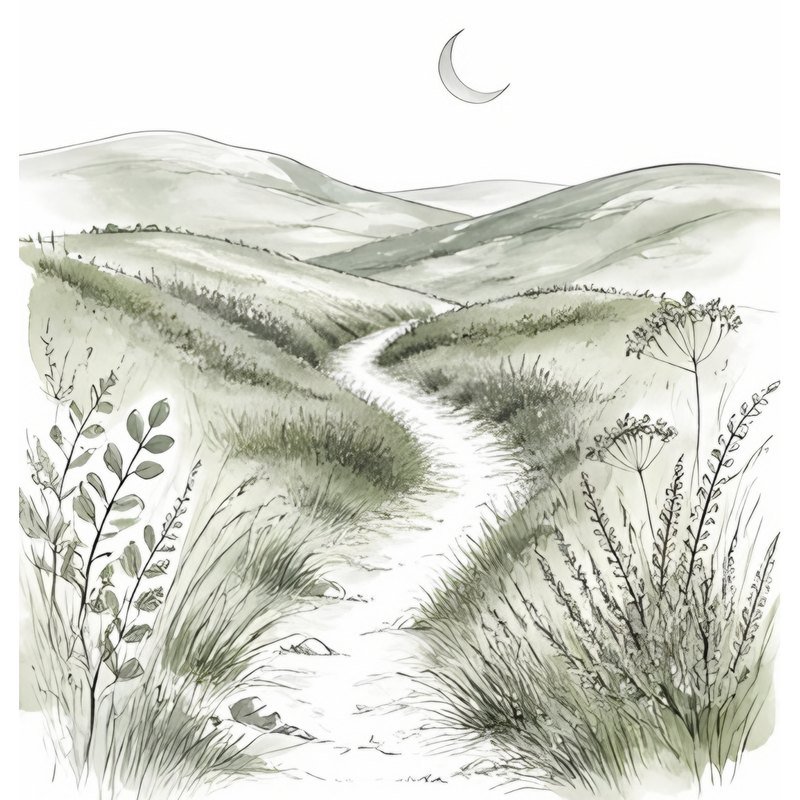
    Sketch of a winding path through rolling green hills with wildflowers and a crescent moon above

    Caer Arianrhod, the Castle in the Sea

    Off the coast of Gwynedd, near the Iron Age hillfort of Dinas Dinlle, a reef of rocks rises from the sea at the lowest tides. It is called Caer Arianrhod, Arianrhod’s fortress. Local tradition says her court once stood there and was swallowed by the waves, and fishermen used to tell of walls glimpsed under the water.

    The Royal Commission on the Ancient and Historical Monuments of Wales surveyed the reef from the air in 2010 and found no convincing sign of anything built by people. It is a natural reef, about 900 metres out, its top showing only at the lowest spring tides. Even so, standing at Dinas Dinlle at low water and watching the line of rocks appear is a moving thing to do. The hillfort itself, partly lost to the sea, is cared for by the National Trust, and you can read about it on Coflein.
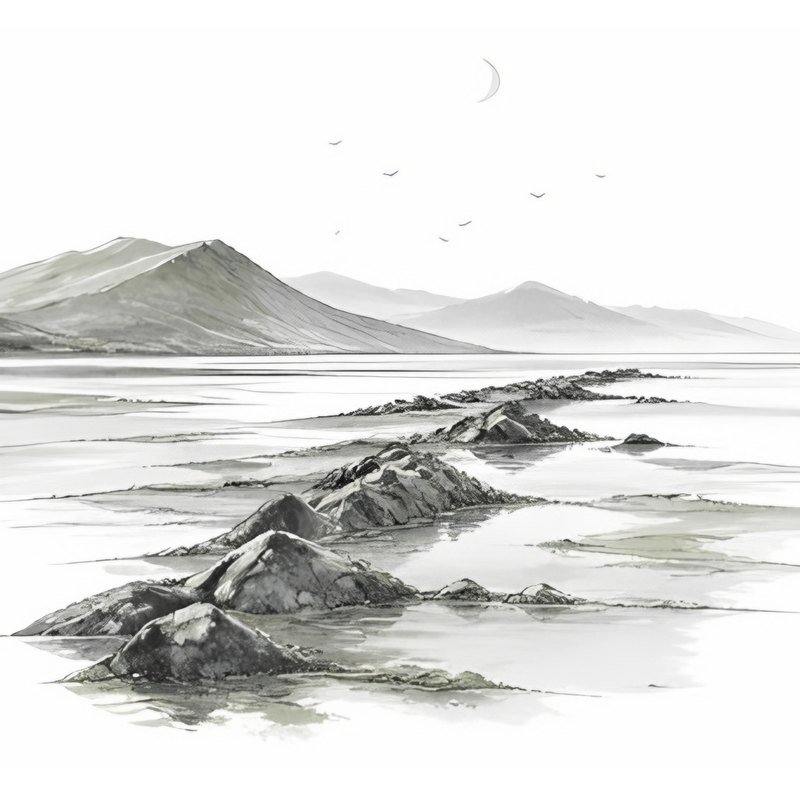
    Pencil sketch of a line of rocks emerging from the sea below Welsh hills, the reef called Caer Arianrhod

    Arianrhod, the Stars and the Moon

    In Welsh star lore, the constellation Corona Borealis, the Northern Crown, is called Caer Arianrhod, and the Milky Way is Caer Gwydion, her brother’s fortress. It is a beautiful idea: brother and sister set side by side in the night sky. The Northern Crown is a small, curved ring of stars, easy to find on spring and summer evenings between the bright stars Arcturus and Vega.

    Her link with the moon comes from her name. A silver wheel turning through the dark is an easy image of the moon, and in the twentieth century Arianrhod came to be honoured as a moon goddess. Many people today work with her at the full moon, when the silver wheel is at its brightest, and at the new moon, when she withdraws into her fortress.

    If moon goddesses are your path, our guide to moon goddesses from around the world is a good next read.

    The Honest History of Arianrhod

    Her story is medieval. Arianrhod appears in the Fourth Branch of the Mabinogi, preserved in the White Book of Rhydderch of the mid fourteenth century and the Red Book of Hergest from around 1400. You can read Lady Charlotte Guest’s translation on sacred texts. She also appears in the Welsh Triads, where she is named as a daughter of Beli, and in a poem in the Book of Taliesin that calls her Arianrhod of fine appearance, dawn of serene weather.

    Silver wheel may not be what her name first meant. The oldest spellings are Aranrhod or Aranrot. The second part, rhod, does mean wheel or circle, but the first part may not be arian, silver, at all. Some scholars think it meant huge or round, which would make the silver wheel a later and very attractive reading. Mary Jones’s Celtic Literature Collective gathers the evidence.

    The star name is not ancient. Caer Arianrhod as the name of the Northern Crown is first recorded in the nineteenth century, in a collection drawn from the papers of Iolo Morganwg, a brilliant Welsh scholar who is also known to have invented a good deal of his material. It may record genuine folk tradition, but it cannot be traced further back.

    The moon goddess is modern. Historian Ronald Hutton notes in his lecture Finding Lost Gods in Wales that Arianrhod has been seen as a star goddess only since the twentieth century, and Robert Graves folded her into his White Goddess in 1948. The Mabinogi itself never calls her a goddess.

    None of this makes the modern Arianrhod any less meaningful. A goddess of the silver wheel who keeps her own fortress by the sea has spoken to a great many people. Knowing which parts are medieval simply lets you hold both: the proud, wronged woman of the old tale, and the moon and star goddess she has grown into.

    Crystals for Arianrhod

    No medieval source links Arianrhod with crystals. The stones below are modern correspondences for her silver wheel, her moonlight and her stars. All are stocked at Mystic Grove.

    Moonstone, for the silver wheel

    Moonstone glows with a soft blue white sheen, the closest a stone comes to moonlight. It is the first choice for Arianrhod and a gentle companion for intuition and cycles. See our moonstone spheres or choose a moonstone tumblestone.

    Rainbow moonstone, for the turning sky

    Rainbow moonstone flashes with blue and violet as it turns, like light moving across the night sky. A rainbow moonstone tower makes a lovely focus for full moon work.

    Selenite, for clear silver light

    Selenite is named after Selene, the Greek moon goddess, and has a soft, silky shine. Many people use it to cleanse their space and other crystals. Our selenite moon bowls are perfect for charging stones under the full moon. Keep selenite dry, as water damages it.

    Clear quartz, for the crown of stars

    Clear quartz catches light like a star. Seven small pieces laid in a curve make a simple table version of the Northern Crown. Try our clear quartz palm stones or tumblestones.

    Labradorite, for the tides and the hidden fortress

    Labradorite looks grey until it flashes blue, like a reef appearing out of the sea. It suits Arianrhod’s castle that shows itself only at the lowest tide. See our labradorite towers.

    Lapis lazuli, for the night sky

    Deep blue lapis flecked with gold has been likened to a starry sky for thousands of years. It is a fine stone for working with Arianrhod as a star goddess. Try a lapis lazuli sphere.
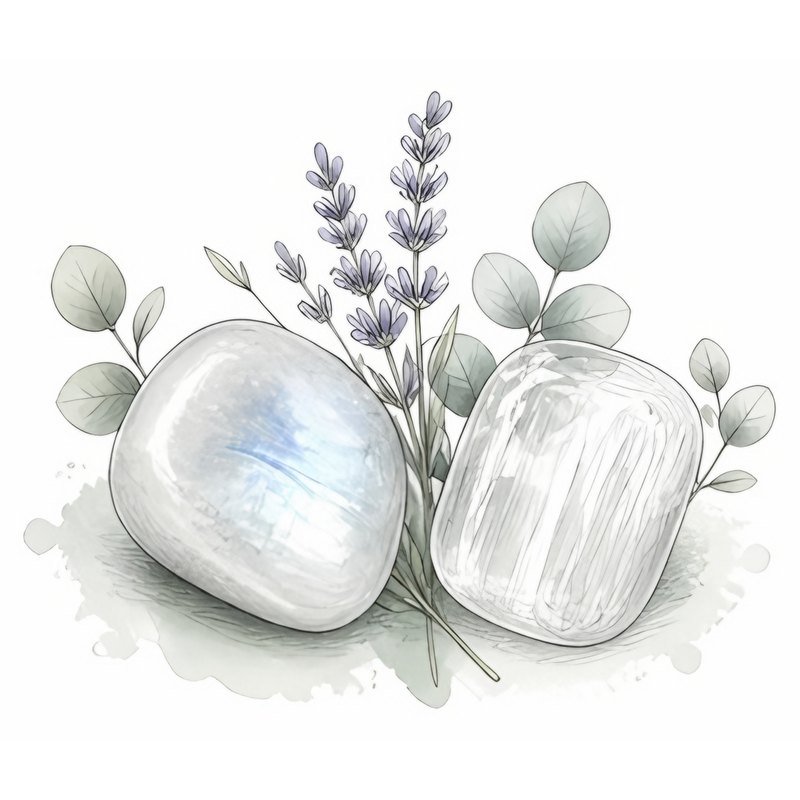
    Sketch of a moonstone and a selenite tumblestone with sprigs of lavender and eucalyptus

    A simple Northern Crown. Lay seven small clear quartz or moonstone tumblestones in a gentle curve, like a crown open at the top. Place a candle in the open space. It is a quiet way to bring Arianrhod’s stars onto your altar without needing anything rare.

    A Simple Full Moon Practice for Arianrhod

    This practice is for the full moon, or any night when you want to honour your own choices. You need a white chime candle, a moonstone and somewhere you can see the sky, even through a window.

    • Set your space. Place the candle on a white plate or cloth with the moonstone beside it. If you like, lay the seven stone crown described above.
    • Look for the moon. If the sky is clear, take a moment to find it. If it is cloudy, that is fine. The wheel still turns.
    • Light the candle and say her name three times. Arianrhod, Arianrhod, Arianrhod.
    • Hold the moonstone and name one thing that is yours to choose. A boundary you want to keep, a yes or a no that belongs to you, a direction for the next month.
    • Rest for a few minutes. Breathe slowly, feel the weight and coolness of the stone in your hand, and let the room fall quiet.
    • Close. Thank Arianrhod, put out the candle, and leave the moonstone on a windowsill overnight if you wish.
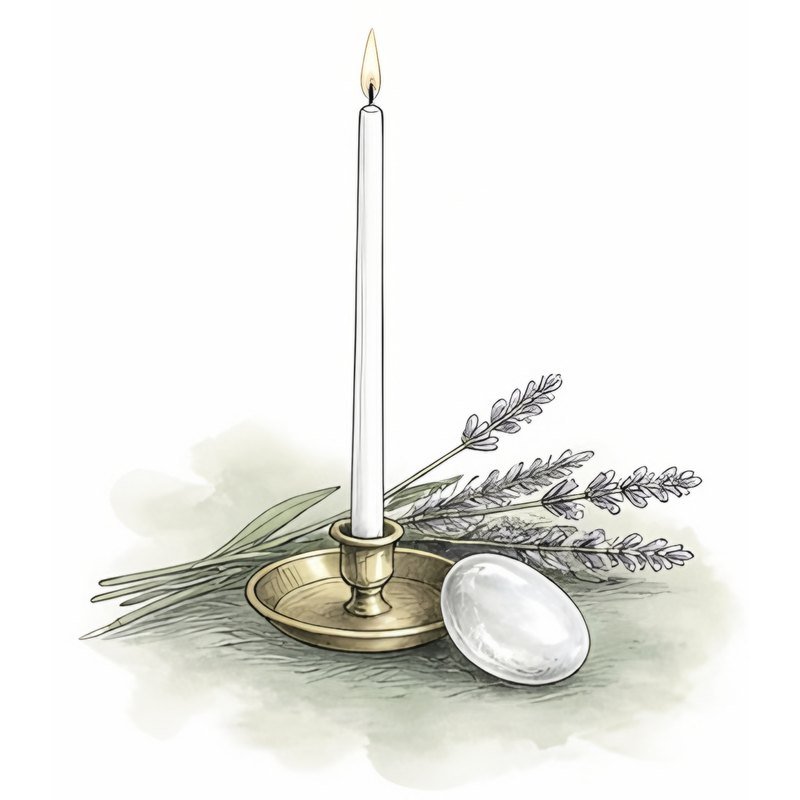
    Sketch of a slim white chime candle in a brass holder beside a moonstone and a sprig of lavender

    Signs Arianrhod May Be Calling You

    • You feel pulled toward the moon, the stars and the night sky.
    • Silver jewellery, wheels, spirals or circles keep catching your eye.
    • You are learning to say no and to keep your own boundaries.
    • The sea, tides and coastlines feel like home.
    • You feel drawn to Wales, especially to Gwynedd and the coast near Caernarfon.

    Not sure yet? Our guide to which goddess is calling you has gentle ways to find out.

    Light a candle for Arianrhod

    Our Manifest Magic chime candles come in ten colours. Protection White carries her silver moonlight, and Crown Violet suits her starry sky.

    Choose your colour

    Questions People Ask About Arianrhod

    What is Arianrhod the goddess of?

    Today Arianrhod is honoured as a Welsh goddess of the moon, the stars, fate, the sea and women’s sovereignty. In the Mabinogi she is a powerful enchantress who keeps her own fortress by the sea.

    How do you pronounce Arianrhod?

    Say ar YAN rod. The Welsh rh is a breathy r, as if you breathe out as you say it.

    What does Arianrhod mean?

    The name is usually translated as silver wheel, from arian, silver, and rhod, wheel. The oldest spellings suggest the first part may originally have meant something else, so silver wheel may be a later reading.

    Is Arianrhod a moon goddess?

    Not in the medieval sources, but she has been honoured as one since the twentieth century, and she is now one of the best known moon goddesses of the Celtic world.

    Where is Caer Arianrhod?

    Caer Arianrhod is a reef off the coast of Gwynedd near Dinas Dinlle, south west of Caernarfon. Its top is only uncovered at the lowest spring tides. The same name is used in Welsh star lore for the constellation Corona Borealis.

    Who are Arianrhod’s children?

    Dylan Eil Ton, who went to the sea, and Lleu Llaw Gyffes, raised by her brother Gwydion. A Welsh Triad also names two other sons, Gwenwynwyn and Gwanar.

    Bring Arianrhod home

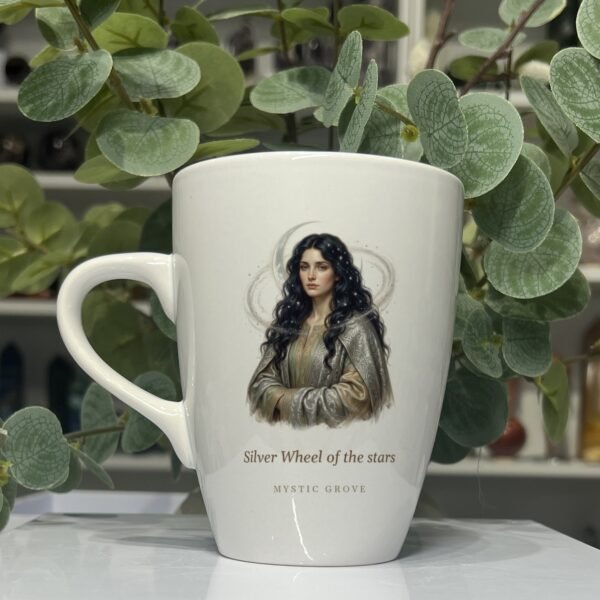
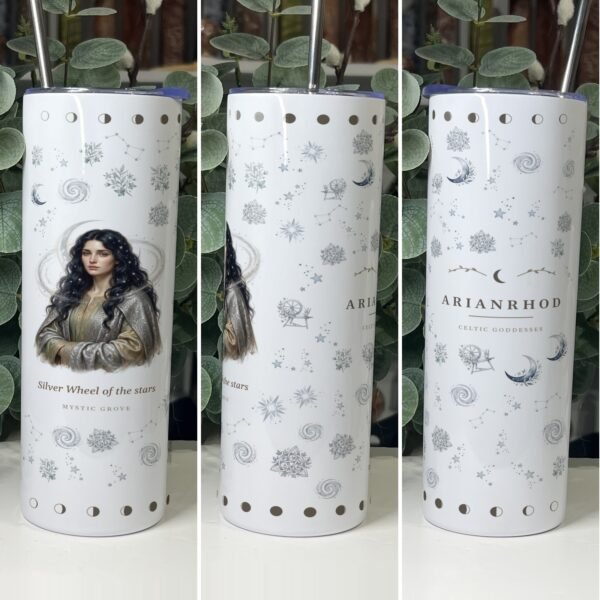
    The Arianrhod artwork from this series now comes on a 13oz white ceramic mug and a 20oz skinny tumbler wrapped all the way round in silver stars and spinning wheels. Each one comes with a printed card telling her story, so it is ready to keep or to give.
    See all the goddess tumblers

  • Blodeuwedd: the Woman Made of Flowers Who Became an Owl

    Blodeuwedd: the Woman Made of Flowers Who Became an Owl

    Blodeuwedd, the woman made of flowers who became an owl: her story from the Mabinogi, what her name means, and why she still matters

    Blodeuwedd was made from the blossoms of oak, broom and meadowsweet, married without being asked, and turned into an owl for choosing her own love. The Blodeuwedd story is one of the most haunting in Welsh myth, and people have argued about whether she was wronged or free for centuries. Here is her tale, its real history, and the crystals and practices people use with her today.

    Blodeuwedd at a glance

    Say it: blod EYE weth. The dd sounds like the th in the.

    Name means: flower face.

    Tradition: Welsh, from the Fourth Branch of the Mabinogi.

    Made from: the flowers of oak, broom and meadowsweet.

    Becomes: an owl.

    Places: Ardudwy and Ffestiniog in north Wales, around Tomen y Mur and the River Cynfal.

    Season today: Beltane for her flowers, and the long autumn nights for her owl.

    Who Is Blodeuwedd?

    Blodeuwedd is a woman created by magic in the Fourth Branch of the Mabinogi, the great collection of medieval Welsh tales. She was made by two magicians, Math and Gwydion, as a wife for the young hero Lleu Llaw Gyffes, because his mother Arianrhod had sworn he would never marry a woman of any race on earth.

    She is beautiful, she is new to the world, and she has no say in any of it. What she does next, and what is done to her in return, has made her one of the most discussed figures in all of Celtic myth. Today many people honour her as a goddess of flowers, of spring and of the owl, and as a symbol of a woman who chose for herself.

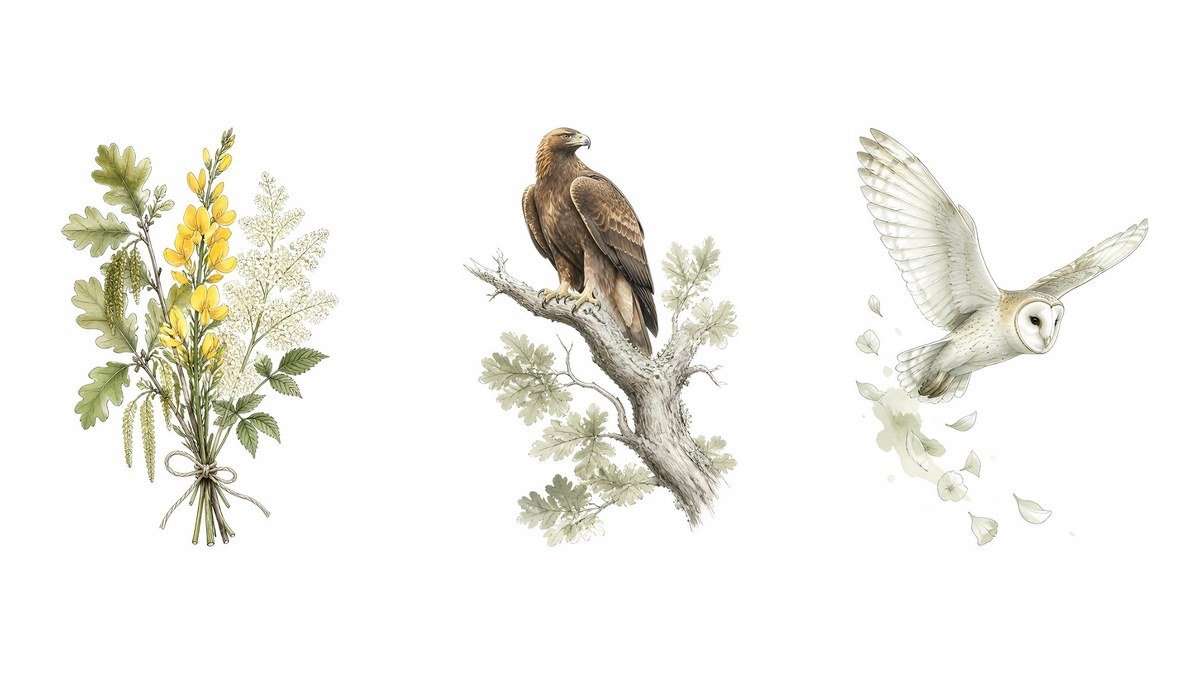
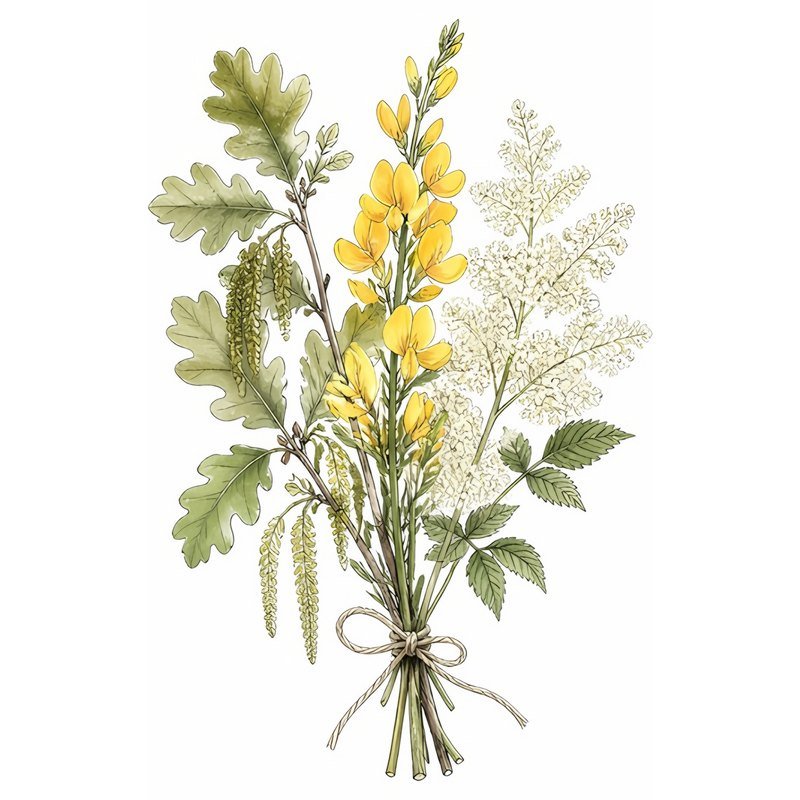
    Botanical sketch of oak leaves and catkins, yellow broom flowers and creamy meadowsweet tied with twine, the three flowers Blodeuwedd was made from

    The Blodeuwedd Story

    Made from flowers

    Arianrhod had laid three destinies on her son Lleu: he would have no name unless she gave it, no weapons unless she armed him, and no wife of any race now on the earth. Gwydion found tricks to get around the first two. For the third, he went to his uncle Math, the great magician king of Gwynedd. Together they gathered the flowers of the oak, the flowers of the broom and the flowers of the meadowsweet, and from them they conjured the most beautiful maiden anyone had ever seen. They named her Blodeuwedd, flower face, and gave her to Lleu as his wife.

    Math gave the couple land in Ardudwy, and they made their home at a court called Mur Castell, which tradition places at Tomen y Mur near Trawsfynydd, where a Norman mound still sits inside the remains of a Roman fort.

    A choice of her own

    One day, while Lleu was away, a hunting party passed by. It belonged to Gronw Pebr, the lord of Penllyn. Blodeuwedd invited him in for courtesy, and the moment they looked at each other they fell in love. It was the first thing in her life that she had chosen for herself.

    Lleu could not easily be killed. So Blodeuwedd, pretending to worry for his safety, gently drew out of him the strange conditions under which he could die. He could not be killed indoors or outdoors, on horseback or on foot. Only a spear worked on for a whole year, only on Sundays during mass, could do it, and only if he stood with one foot on the edge of a bath beneath a thatched roof by a riverbank and the other on the back of a goat.

    She was asked to love on command. The one time she chose for herself, the whole story turned against her.

    The eagle in the oak

    A year later, Blodeuwedd persuaded Lleu to show her exactly how he would stand. As he did, Gronw threw the spear from a hill beside the River Cynfal. Lleu gave a terrible cry and flew up into the air as an eagle, and was gone.

    Gwydion searched all of Wales for him. At last he followed a sow to a valley called Nant y Llew, where an eagle sat wasting in the top of an oak. Gwydion sang three verses, and with each one the eagle came lower, until it landed on his knee. He touched it with his wand and Lleu was a man again, thin and close to death, but alive.

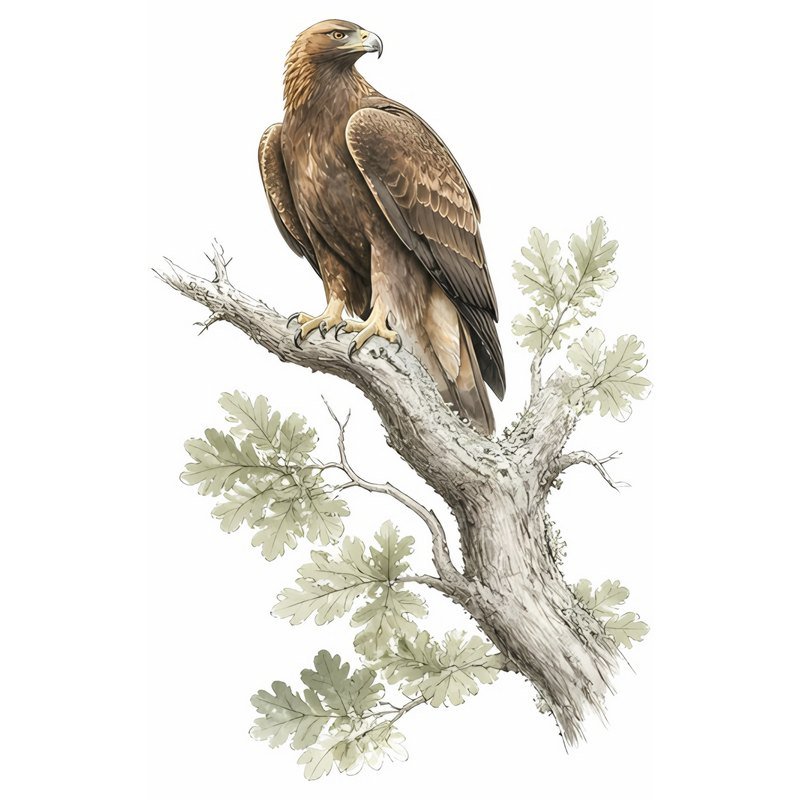
    Sketch of a golden eagle perched on the branch of an oak tree, the form Lleu takes in the Blodeuwedd story

    Turned into an owl

    When Gwydion came for Blodeuwedd, she fled with her maidens toward the mountains. In their terror the maidens looked back, fell into a lake and drowned. Local tradition names it Llyn Morwynion, the lake of the maidens, above Ffestiniog. Blodeuwedd alone was caught.

    Gwydion did not kill her. He said he would do something worse. He turned her into a bird and told her she would never again dare to show her face in the light of day, that all other birds would hate her and attack her wherever they found her, and that she would keep her name forever. The tale ends by saying that Blodeuwedd is a word for owl in the language of its own time.

    Gronw, for his part, was made to stand where Lleu had stood and take a spear in return. He asked to hold a stone slab between himself and the blow. The spear passed straight through the stone and through him, and the holed stone was called Llech Gronw ever after.

    FROM FLOWERS TO OWLthe shape of the Blodeuwedd storyFlowersoak, broom andmeadowsweetA bridemade for Lleu,never askedA choiceshe loves Gronwof PenllynAn eagleLleu is struckand fliesAn owlshe is changedby Gwydion FROM FLOWERS TO OWLthe shape of the Blodeuwedd storyFlowersoak, broom andmeadowsweetA bridemade for Lleu,never askedA choiceshe loves Gronwof PenllynAn eagleLleu is struckand fliesAn owlshe is changedby Gwydion
    The Blodeuwedd story in five steps, read from left to right on a wide screen or from top to bottom on a phone.
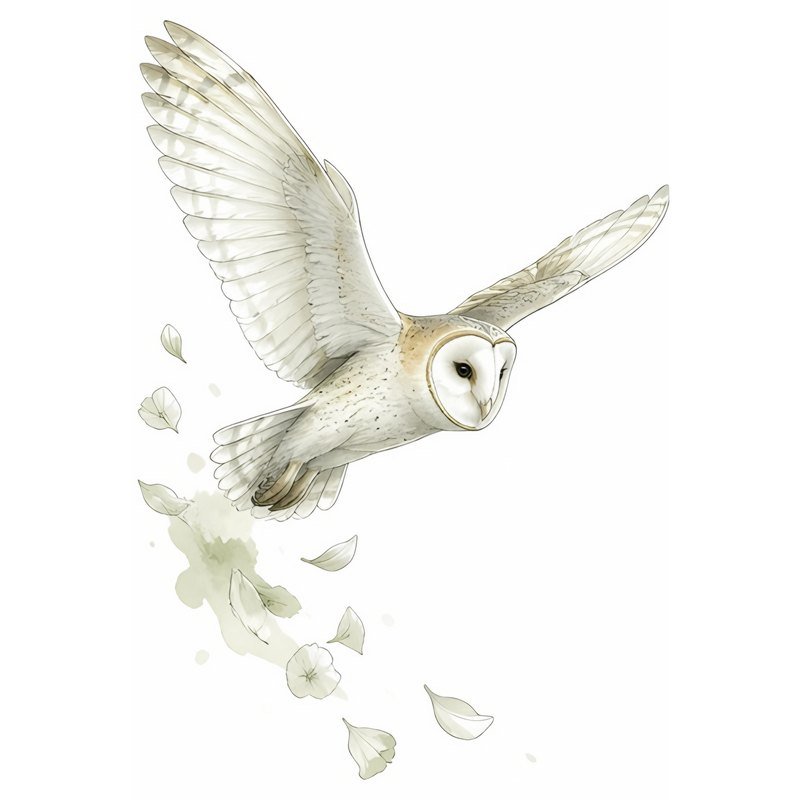
    Sketch of a pale barn owl in silent flight with flower petals drifting behind it, the owl Blodeuwedd becomes

    Was Blodeuwedd Wronged, or Was She Free?

    This is the question that keeps her alive. For centuries the story was read as a warning about a faithless wife. Many modern readers see it very differently.

    Blodeuwedd was made for someone else’s purpose, without a childhood, a family or a choice. She was married the day she was made. When she finally wanted something for herself, she was hunted down and transformed. Read that way, she is one of the most wronged women in the Mabinogi, and the owl that refuses the daylight becomes a symbol of a woman who would rather live wild than be made into someone else’s idea of a wife.

    Others point out that she did plot a murder, and that the tale does not ask us to admire her. Both readings are honest. Perhaps the reason the story lasts is that it does not settle the question for us. It leaves us sitting with it, the way the best old stories do.

    Blodeuwedd, Flowers and the Owl

    Because she was made from blossoms, Blodeuwedd is often honoured at Beltane, the May festival of flowers, when the broom and hawthorn are out and meadowsweet is not far behind. Oak, broom and meadowsweet are all native British plants, which makes her one of the most local of goddesses. You can find all three within a few miles of most homes in Wales and England.

    Her other season is the long night. The owl is a creature of autumn and winter dark, heard more than seen, and many people who work with Blodeuwedd feel closest to her when the nights draw in. The tawny owl’s call is a familiar October sound across Britain, as the young owls look for territories of their own.

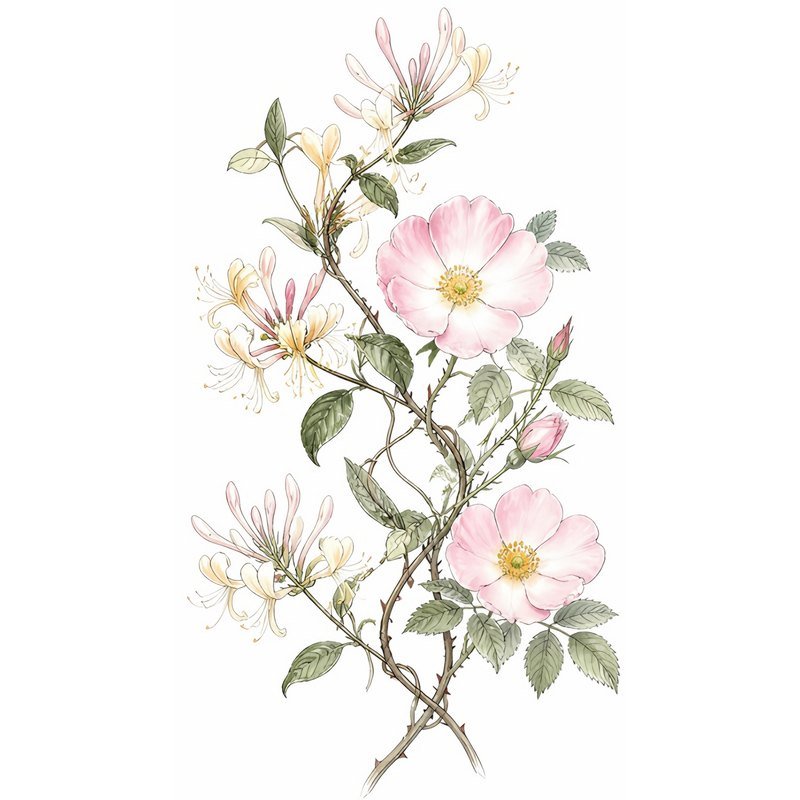
    Botanical sketch of wild honeysuckle and wild rose branches twisting around each other

    The Honest History of Blodeuwedd

    Her story is medieval and Welsh. The Four Branches of the Mabinogi survive in two great manuscripts, the White Book of Rhydderch from the middle of the fourteenth century and the Red Book of Hergest from around 1400, both described by the National Library of Wales. The tales themselves were probably shaped in the eleventh or twelfth century from much older storytelling. You can read Lady Charlotte Guest’s nineteenth century translation of the Fourth Branch on sacred texts.

    She is not called a goddess in the old text. The Mabinogi does not describe its characters as gods at all. Historian Ronald Hutton makes this point in his lecture Finding Lost Gods in Wales. Seeing Blodeuwedd as a goddess of flowers and spring is a modern reading, and a lovely one, but it is a modern one.

    The places are real. Tomen y Mur, the Afon Cynfal and Ffestiniog are all there to visit, and the Royal Commission’s record of Tomen y Mur describes the medieval mound and Roman fort. A holed stone thought to be Llech Gronw has been found more than once by the river, though no one can be sure which, if any, is the original. The Eryri National Park has a short retelling of her story tied to the landscape.

    Her modern life is rich. The Welsh dramatist Saunders Lewis wrote a celebrated play called Blodeuwedd. Alan Garner’s novel The Owl Service, published in 1967 and later made for television, retold the story through three teenagers in a Welsh valley, and many readers first met her there. Feminist retellings since have made her one of the most popular figures in modern Celtic spirituality.

    Crystals for Blodeuwedd

    No medieval text links Blodeuwedd with crystals. The stones below are modern correspondences chosen for her flowers, her heart and her owl. All are stocked at Mystic Grove.

    Flower agate, for the woman made of blossoms

    Flower agate holds tiny bloom like patterns inside soft pink and cream stone. Of every stone we carry, it is the closest match for a woman made from flowers. Ours is a flower agate sphere with druzy pockets, a lovely altar centrepiece for Blodeuwedd.

    Rose quartz, for love that is freely chosen

    Rose quartz is the classic stone of love, and with Blodeuwedd it speaks of the love she chose for herself. Many people use it for self love and self worth. Try a rose quartz palm stone or a rose quartz heart.

    Rhodonite, for a heart that has been hurt

    Pink rhodonite with its black veins is often described as a stone for emotional healing and forgiveness, love with its wounds showing. It suits a story with so much hurt in it. See our rhodonite towers.

    Moonstone, for the night

    Moonstone glows softly like moonlight, the only light the owl is said to keep. It is a gentle stone for intuition and for working at night. Our moonstone spheres and tumblestones both suit her.

    Labradorite, for transformation

    Labradorite flashes with hidden colour, the right stone for a woman who changed shape. It is also one of the stones in our 5cm crystal owl carvings, alongside green aventurine, bloodstone, clear quartz and red jasper.

    Green aventurine, for spring growth

    Green aventurine carries the fresh green of new leaves, the season Blodeuwedd was born in. It is a hopeful stone for new beginnings. Find it as a green aventurine tower or tumblestone.

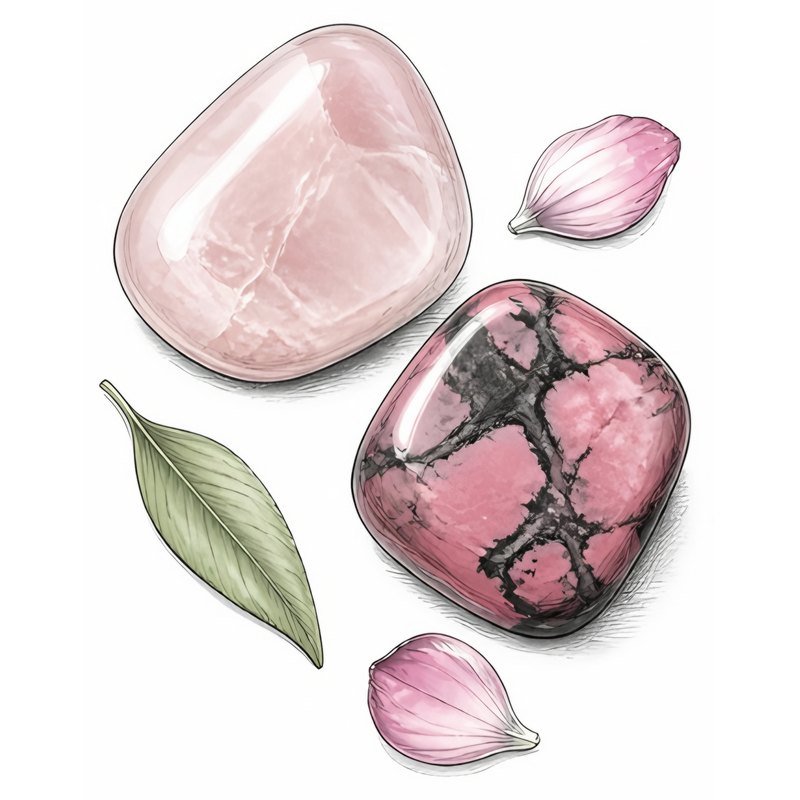
    Sketch of a pale pink rose quartz tumblestone and a deep pink rhodonite with black veins, with pink petals and a leaf

    An owl on the altar. If you would like a single focus for Blodeuwedd, a small crystal owl says more than a pile of stones. Choose the stone that matches what you are asking for: rose tones for love, labradorite for change, clear quartz for a fresh start.

    A Simple Flower Offering to Blodeuwedd

    This practice honours Blodeuwedd and the part of you that wants to choose for yourself. It can be done at any time of year, with whatever flowers or leaves are in season.

    • Gather three flowers or sprigs. In spring and summer, look for oak, broom and meadowsweet. In autumn and winter, use any three flowers, leaves or dried herbs you have.
    • Set them on a white plate or cloth with a pink chime candle and a piece of rose quartz.
    • Light the candle and say her name. Blodeuwedd, flower face.
    • Name one thing you love about yourself. Say it aloud. Then name one choice in your life that you want to make for yourself, not for anyone else.
    • Sit quietly for a few minutes. Hold the rose quartz and notice your breath, or listen for any owl calls if you are near an open window at night.
    • Close. Put out the candle and return the flowers to the earth or the compost.
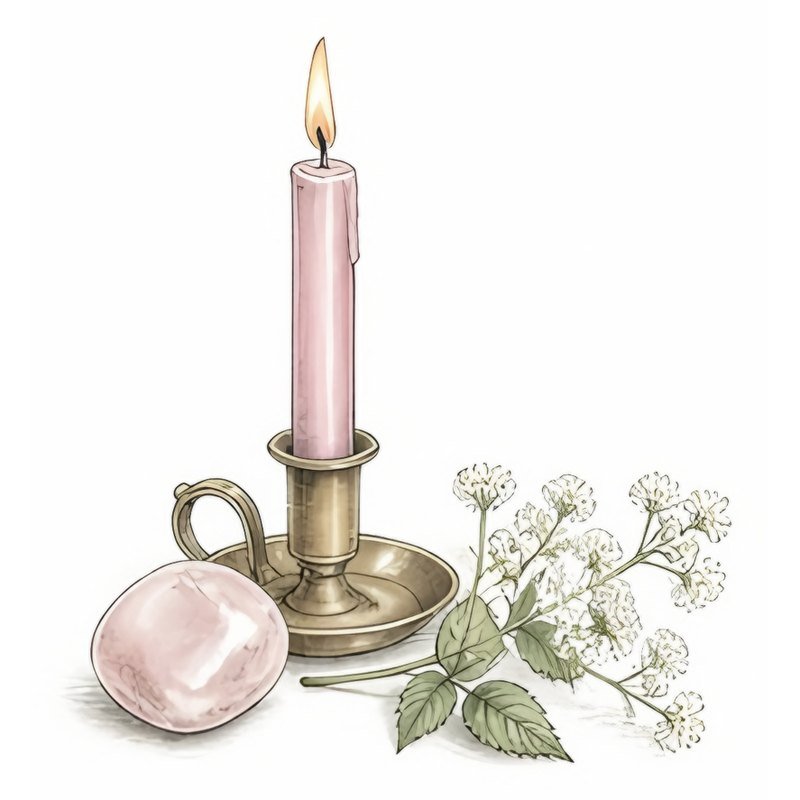
    Sketch of a small pink chime candle in a brass holder beside a rose quartz tumblestone and a sprig of meadowsweet

    Signs Blodeuwedd May Be Calling You

    • Owls keep appearing, in your garden, your dreams or your social feed.
    • You feel shaped by other people’s expectations and long to choose for yourself.
    • Wildflowers, hedgerows and May blossom move you more than you can explain.
    • You are going through a transformation that feels both painful and freeing.
    • You find yourself defending women in old stories who were cast as the villain.

    If you are unsure, our guide to which goddess is calling you may help.

    Light a candle for Blodeuwedd

    Our Manifest Magic chime candles come in ten colours. Goddess Pink is made for self love, which makes it a natural choice for Blodeuwedd, and Protection White suits her moonlit owl.

    Choose your colour

    Questions People Ask About Blodeuwedd

    What does Blodeuwedd mean?

    Blodeuwedd means flower face, from the Welsh blodau, flowers, and gwedd, face or appearance.

    How do you pronounce Blodeuwedd?

    Say blod EYE weth. The final dd is said like the th in the.

    What flowers was Blodeuwedd made from?

    In the Mabinogi she is made from the flowers of the oak, the broom and the meadowsweet. Some modern versions add more flowers, often based on a medieval poem called The Battle of the Trees, but the Mabinogi names those three.

    Why was Blodeuwedd turned into an owl?

    Gwydion turned her into an owl as punishment for plotting with Gronw to kill Lleu. He said she would never again show her face in the light of day.

    Is Blodeuwedd a goddess?

    The Mabinogi does not call her one. Today many people honour her as a goddess of flowers, spring, owls and self determination, and that modern devotion is very much alive.

    What is the Welsh word for owl?

    The everyday Welsh words are tylluan and gwdihŵ. The Mabinogi says that in its own time Blodeuwedd was also a word for owl.

    Bring Blodeuwedd home

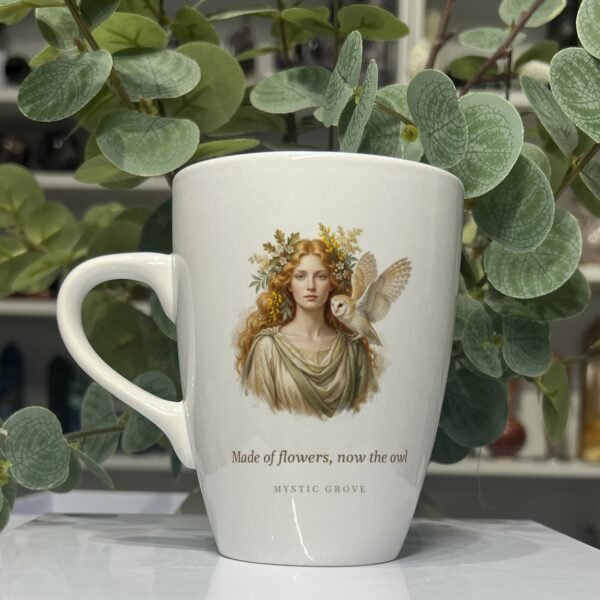
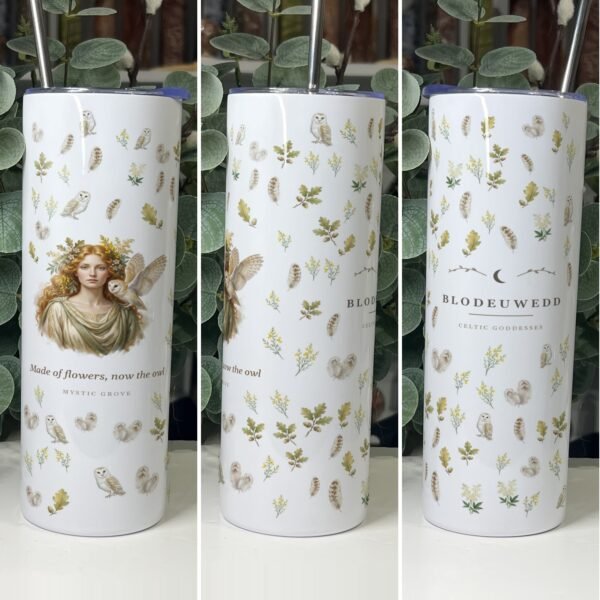
    The Blodeuwedd artwork from this series now comes on a 13oz white ceramic mug and a 20oz skinny tumbler wrapped all the way round in owls, broom and meadowsweet. Each one comes with a printed card telling her story, so it is ready to keep or to give.
    See all the goddess tumblers

  • Cerridwen: Welsh Goddess of the Cauldron, the Awen and Rebirth

    Cerridwen: Welsh Goddess of the Cauldron, the Awen and Rebirth

    Cerridwen, the Welsh goddess of the cauldron: her story, the awen, the three drops, the chase and the birth of Taliesin

    Cerridwen is the keeper of the cauldron of inspiration in Welsh tradition, the one who brews for a year and a day and does not give her gift easily. Here is who the Cerridwen goddess is, where her story really comes from, what her cauldron means, and the crystals and quiet practices people use to work with her today.

    Cerridwen at a glance

    Say it: ke RID wen. The older Welsh spelling is Ceridwen, with one r.

    Tradition: Welsh, from the Tale of Taliesin and the poems of the Welsh bards.

    Known for: the cauldron of inspiration, the awen, shapeshifting, and giving birth to the poet Taliesin.

    Home: Llyn Tegid, the lake at Bala in north Wales.

    Symbols: the cauldron, three drops, the hen, the grain of wheat, the leather bag on the water.

    Season: many modern pagans honour her at Samhain, the dark turn of the year.

    Who Is the Cerridwen Goddess?

    Cerridwen is a figure from Welsh legend who owns a great cauldron. In it she brews a mixture that, once ready, gives whoever tastes it the awen: the Welsh word for poetic inspiration, the flowing spirit that the old bards believed came to them from outside themselves.

    She is not one of the gods of the Mabinogi. She belongs to a separate tale, the story of how the greatest Welsh poet, Taliesin, came to be born. In that tale she is a powerful wise woman, a mother, a brewer of herbs and a shapeshifter. Over the centuries poets called her cauldron the source of their art, and in the last two hundred years she has grown into one of the best loved goddesses of modern witchcraft.

    People come to Cerridwen for three things above all: inspiration, transformation and the courage to begin again. Her story is the old pattern of an initiation, where the self that went in does not come out the same.

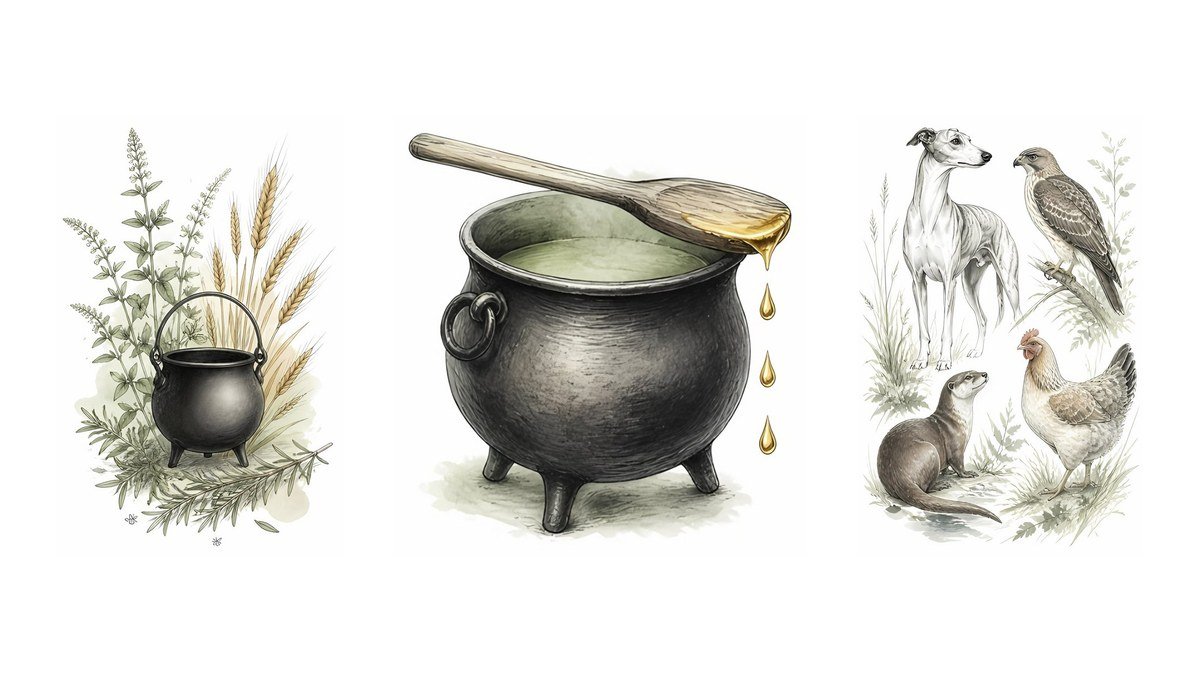
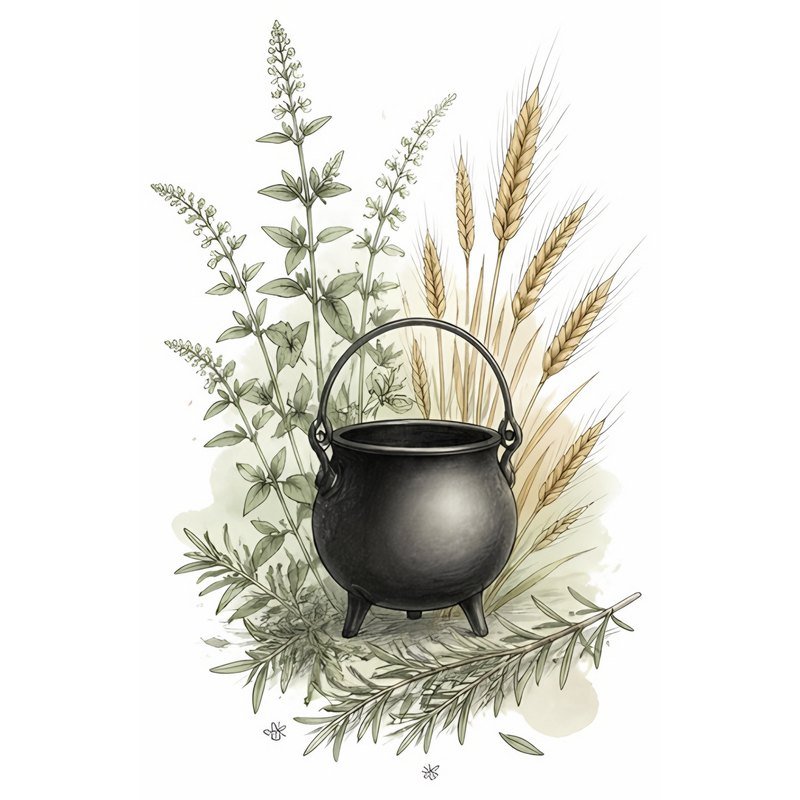
    Pencil and watercolour sketch of a small black cauldron surrounded by herbs and ears of wheat

    The Story of Cerridwen and Gwion Bach

    A cauldron for her son

    Cerridwen lived with her husband, Tegid Foel, at Llyn Tegid, the lake now known as Bala Lake. They had a daughter, Creirwy, said to be the most beautiful girl in the world, and a son, Morfran, also called Afagddu, said to be the most unfortunate looking. To make up for her son’s looks, Cerridwen decided to give him something better: wisdom and inspiration so great that no one would ever think less of him.

    She gathered herbs at their proper times and set her cauldron to boil. The brew had to simmer without stopping for a year and a day. An old blind man named Morda kept the fire, and a village boy, Gwion Bach, was set to stir.

    Three drops

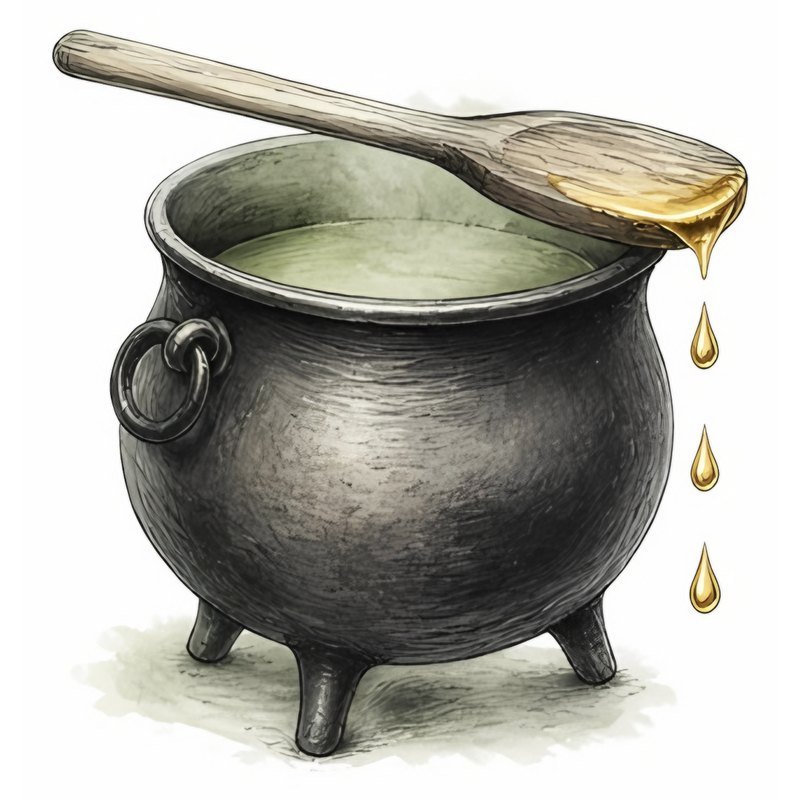
    At the very end of the year, as the brew finished, three drops leapt out of the cauldron and landed on Gwion’s finger. They burned, and he put his finger in his mouth. In that moment all the wisdom meant for Morfran passed to him. The rest of the brew became poison, the cauldron cracked, and the poison ran away into a stream.

    Sketch of a black cauldron with a wooden paddle across its rim and three golden drops falling

    The gift was never meant for Gwion. It found him anyway, and he spent the rest of the story running from what it cost.

    The chase

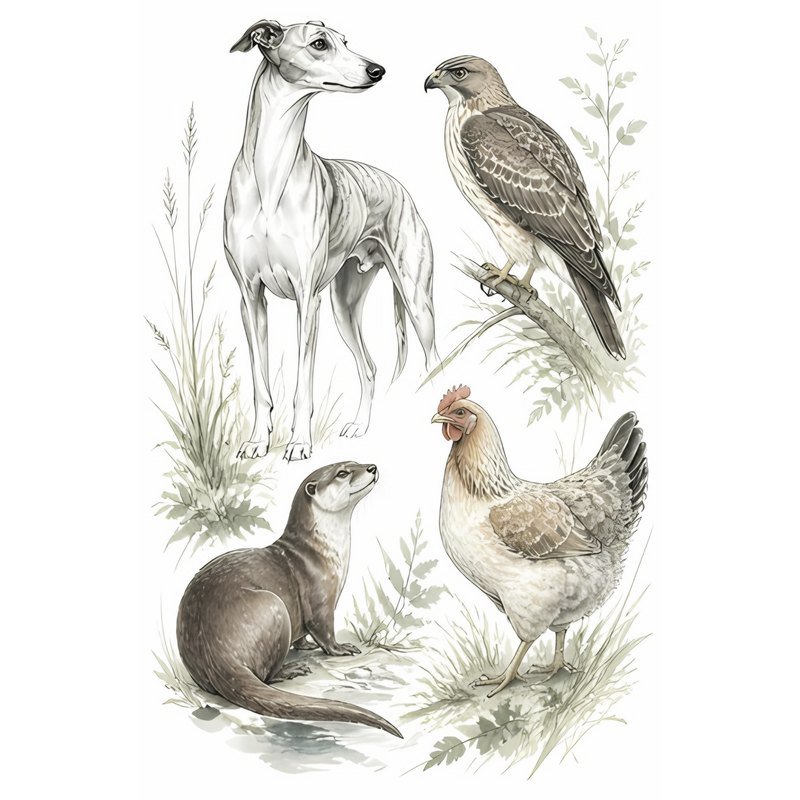
    Gwion knew at once that Cerridwen would come for him, so he ran. What follows is one of the great chases of Celtic myth. Each time he changed shape, she changed into the creature that hunts it.

    THE CHASEfour shapes, four answersGwion BachCerridwena harehe runsa greyhoundshe hunts1a fishhe divesan ottershe swims after2a birdhe fliesa hawkshe stoops3a grainof wheat on the floora black henshe swallows him4 THE CHASEfour shapes, four answersGwion BachCerridwena harehe runsa greyhoundshe huntsa fishhe divesan ottershe swims aftera birdhe fliesa hawkshe stoopsa grainof wheat on the floora black henshe swallows him
    The chase from the Tale of Taliesin. Read each column from top to bottom: Gwion’s shape, then the shape Cerridwen takes to follow him.

    At last Gwion fell into a barn as a single grain of wheat among thousands. Cerridwen became a black hen, scratched through the floor and swallowed him.

    Natural history sketch of a greyhound, an otter, a hawk and a hen, the four shapes Cerridwen takes in the chase

    The child in the leather bag

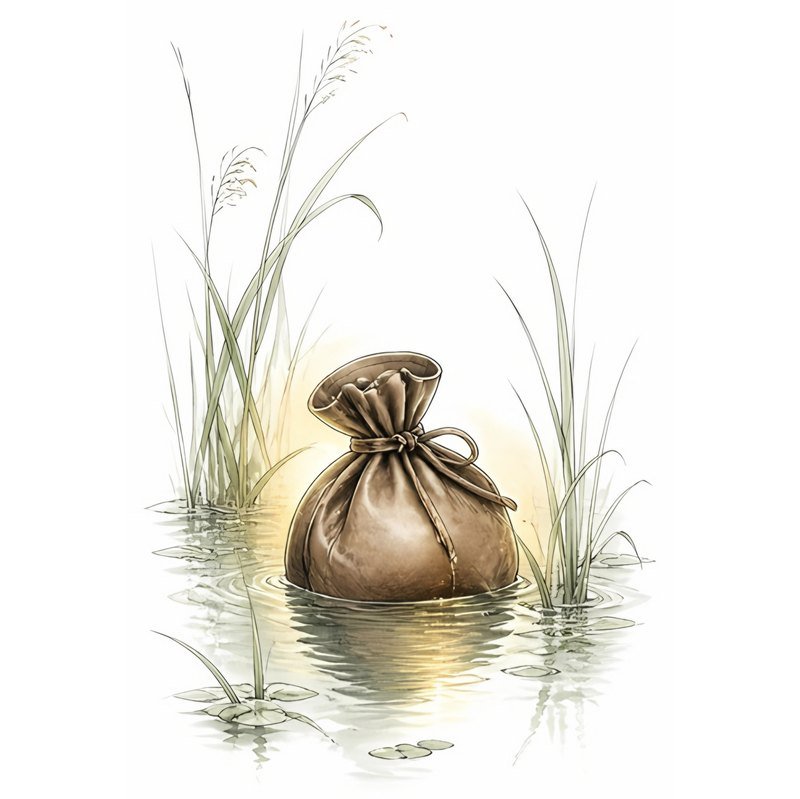
    Nine months later Cerridwen gave birth to a baby boy. He was so beautiful that she could not bring herself to harm him, so she wrapped him in a leather bag and set him adrift on the water. The bag was caught in a salmon weir, where a young man named Elffin found it. When he opened it and saw the child’s shining forehead, he called him Taliesin, which means radiant brow. Even as a baby, Taliesin spoke in verse.

    Sketch of a tied leather bag floating among river reeds with a soft golden glow

    What the Cerridwen Story Means

    Read slowly, the tale follows the shape of an initiation. Gwion takes something he was never offered. He is hunted through every form he can think of. He is swallowed, carried in the dark, and born again with a new name. Gwion Bach ends and Taliesin begins.

    That is why Cerridwen is so often called the demanding one. She is not a gentle fairy godmother who hands out talent. Her inspiration is boiled for a year and a day, it burns, and it changes the person who receives it. For anyone who writes, sings, makes or teaches, her story is a reminder that real creative work asks something of you.

    The cauldron in Welsh tradition

    Cauldrons appear again and again in Welsh story. There is the cauldron of rebirth in the Second Branch of the Mabinogi, which brings dead warriors back to life, and the cauldron of the Head of Annwn in the old poem The Spoils of Annwn, which will not boil food for a coward. Cerridwen’s cauldron sits in this company as the cauldron of knowledge and poetry. Many people today simply say there is one cauldron with many stories.

    The awen

    Awen is a Welsh word that is still used today. It means inspiration, the creative spark a poet waits for. In modern Druidry it is often chanted as three long sounds, AH, OO, EN, and drawn as three rays of light. The three rays are a modern symbol, created in the eighteenth century revival of Druidry, but the word itself and its link to Cerridwen’s cauldron are genuinely old.

    Cerridwen, Samhain and the Moon

    No medieval source gives Cerridwen a festival. Today, though, many witches and pagans honour her at Samhain, at the end of October, when the year tips into its dark half. The cauldron is one of the great symbols of Samhain, a place where old things are broken down so that new life can form, and her story of death and rebirth sits naturally in that season. Some versions of the tale place Taliesin’s discovery at the start of May or at Samhain itself, which may have helped the link along.

    In modern moon work Cerridwen is usually honoured at the waning and dark moon, the nights for letting go, brewing ideas in private and waiting before you act. A year and a day is also a figure that still lives on in magical practice. Many traditions use it as the length of study before an initiation, which owes something to her slow brewing.

    If you would like to read more about the season she belongs to, our guide to Samhain covers its history and traditions.

    The Honest History of Cerridwen

    Cerridwen is much loved, so it helps to know which parts of her story are old and which are recent.

    What the old sources say

    The earliest mentions of Cerridwen are in the work of Welsh court poets of the twelfth and thirteenth centuries, who name her as the source of their inspiration, much as a classical poet might call on the Muse. Two of these poems survive in the Black Book of Carmarthen, written down around 1250. She also appears in poems in the Book of Taliesin, a manuscript of the early fourteenth century.

    The full story of the cauldron, the chase and the leather bag is later still on paper. The earliest surviving copy was written in the sixteenth century by Elis Gruffydd, a Welsh soldier based at Calais, in a vast chronicle of world history. Scholars think the tale itself is centuries older, since the poets clearly knew it, but the version most people read today is a nineteenth century English retelling. You can read an older translation on Mary Jones’s Celtic Literature Collective, and the Eryri National Park has a lovely short retelling tied to the real places around Bala.

    What is modern

    The idea of Cerridwen as the great goddess of ancient Britain began with the Welsh antiquarian Edward Davies in 1809. In 1948 Robert Graves made her a dark moon and crone goddess in his book The White Goddess, and modern witchcraft took much of its idea of her from there. Historian Ronald Hutton, in his Gresham College lecture Finding Lost Gods in Wales, explains how figures like Cerridwen were built up into deities in modern times.

    None of that makes her less real to the people who work with her today. A living tradition grows, and Cerridwen has grown a great deal. It simply means you can enjoy the medieval tale for what it is, and know that the crone of the dark moon is a newer and still meaningful layer.

    Her name is also debated. The ending probably comes from an old Welsh word for woman. One scholar read the whole name as crooked woman, another suggested a link with words meaning fierce or to be believed in. No one knows for certain.

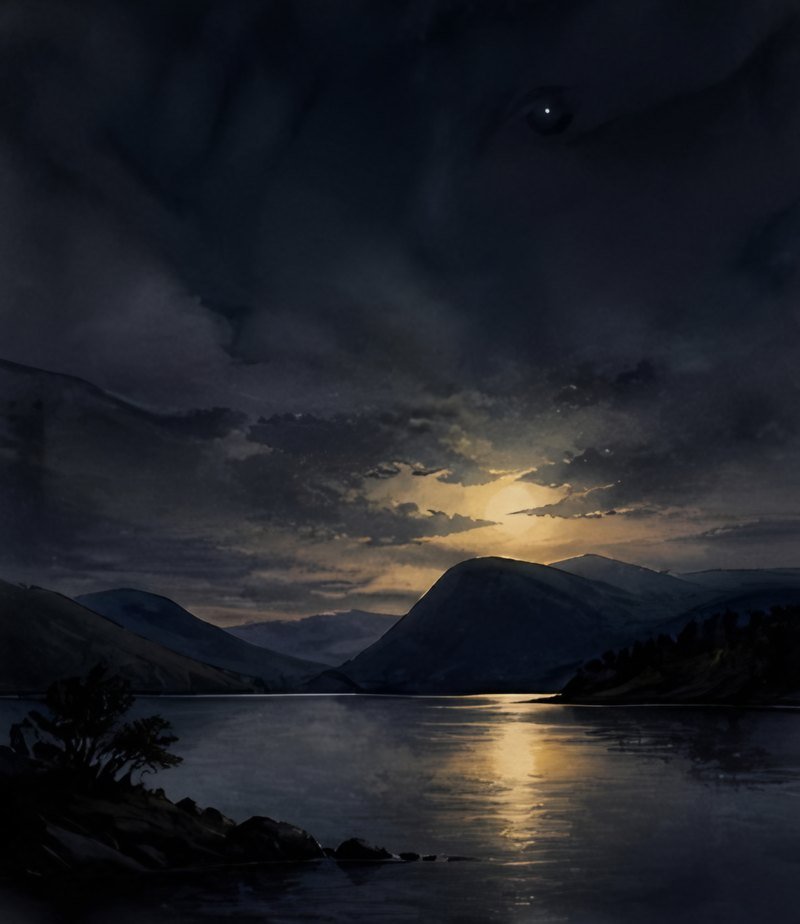
    Dark watercolour of a mountain lake at night with a golden glow on the water, in the spirit of Llyn Tegid at Bala

    Crystals for Cerridwen

    No medieval text links Cerridwen with any crystal. The stones below are modern correspondences, chosen for what her story is about: the dark cauldron, the long brew, the change of shape and the spark of inspiration. Each is one we stock, so you can find it in the shop.

    Labradorite, for shapeshifting and change

    Labradorite looks grey and plain until the light catches it and blue and gold flash across its surface. It is the stone people most often reach for with Cerridwen, because it mirrors the chase: one thing becoming another. Hold a labradorite tumblestone while you journal about a change you are in the middle of, or keep a labradorite tower on your writing desk.

    Black obsidian, for the dark of the cauldron

    Obsidian is volcanic glass, formed when molten rock cools too quickly to crystallise. That fits a goddess whose cauldron melts things down. It is a traditional Samhain stone and a good companion for the waning moon, when you are clearing out what no longer serves. See our obsidian collection.

    Amethyst, for wisdom

    Amethyst has been linked with a clear and sober mind since the ancient Greeks. With Cerridwen it stands for the wisdom in the brew, the knowledge that came to Gwion in a single taste. A piece of amethyst by the bed suits dream journalling.

    Citrine, for the spark

    Golden citrine carries the colour of the three drops. Use it when you want ideas to come, for a writing project, a new course or a creative business. Our natural citrine points and tumblestones both work well.

    Smoky quartz, for letting the old self go

    Smoky quartz is clear quartz darkened deep in the earth. It is a grounding stone, often used when an ending feels heavy. With Cerridwen it speaks to the part of the story where Gwion has to stop running. Try a smoky quartz tower.

    Fluorite, for study

    Fluorite is sometimes called the student’s stone. Cerridwen gathered every herb at its proper hour and watched her brew for a whole year, which is about as dedicated as study gets. A rainbow fluorite tower makes a quiet desk companion for anyone learning a craft.

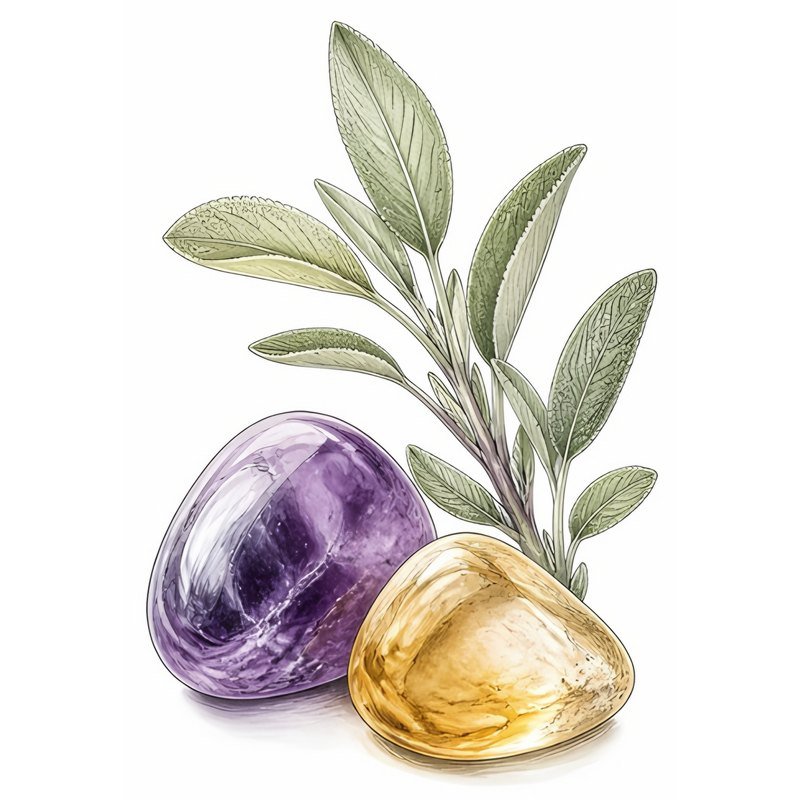
    Sketch of a purple amethyst tumblestone and a golden citrine tumblestone beside a sprig of sage

    If you only have one stone, choose clear quartz and tell it plainly what you are asking for. Many people find a single stone held with a clear intention says more than a full set left in a drawer.

    A Simple Cauldron Practice for Cerridwen

    This is a gentle practice for the waning or dark moon, or for any evening when you want to call in fresh ideas. You need a small cauldron or heatproof bowl, a yellow chime candle, a pen and paper, and one of the stones above.

    • Set your space. Place the cauldron in front of you with the candle beside it and the stone in your hand.
    • Light the candle. Say her name aloud three times: Cerridwen, Cerridwen, Cerridwen.
    • Write what you are ready to leave behind. A habit, a fear, an old way of seeing yourself. Fold the paper and place it in the cauldron. If it is safe to do so, burn it there. If not, tear it up and leave it in the bowl.
    • Write what you are stirring. One idea, one project or one question you would like inspiration for. Keep this paper.
    • Sit with the brew. Rest your hands on the warm sides of the bowl, or simply breathe slowly. Some people like to hum or chant the three sounds of the awen, AH, OO, EN, on the out breath. Others sit in silence. Either is fine.
    • Close. Thank Cerridwen, put out the candle, and keep the second paper somewhere you will see it for the next month.
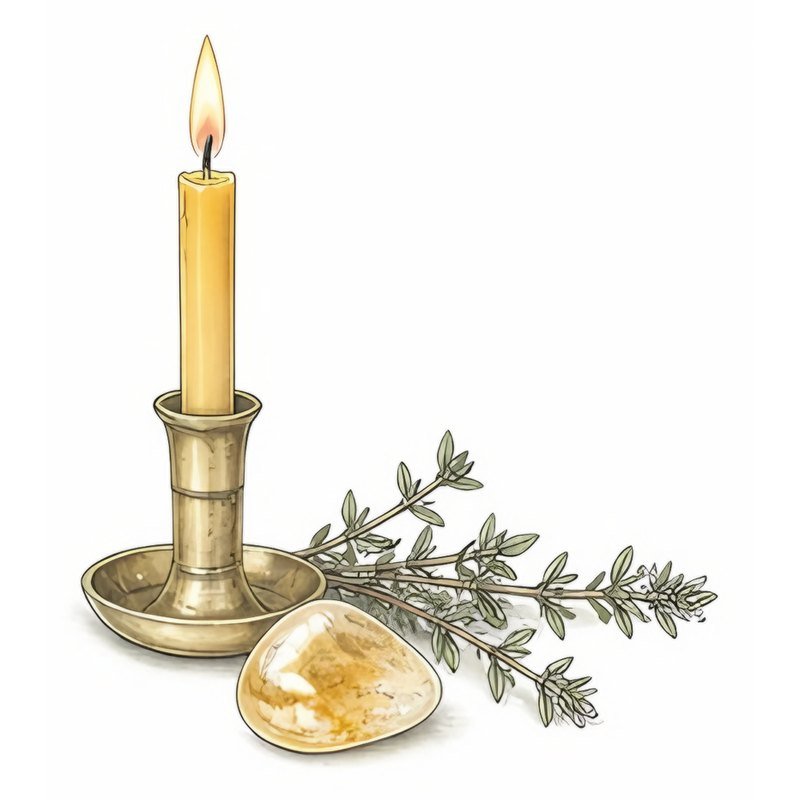
    Sketch of a small yellow chime candle in a brass holder beside a citrine tumblestone and a sprig of herbs

    Signs Cerridwen May Be Calling You

    • You keep returning to cauldrons, brewing, herbs or kitchen witchcraft.
    • You are in a season of big change, where the old version of you no longer fits.
    • A creative project will not leave you alone, even when you try to set it down.
    • Hens, hares, otters or hawks keep appearing in your days or dreams.
    • You feel drawn to Wales, to Welsh poetry or to the Welsh language.

    If you are not sure which goddess is reaching for you, our guide to which goddess is calling you has some simple ways to find out.

    Light a candle for Cerridwen

    Our Manifest Magic chime candles come in ten colours. Yellow is the colour of the three drops and the spark of inspiration, and black suits the dark of the cauldron and Samhain.

    Choose your colour

    Questions People Ask About Cerridwen

    What is Cerridwen the goddess of?

    Cerridwen is the Welsh goddess of the cauldron of inspiration, known for wisdom, poetry, transformation and rebirth. In modern witchcraft she is also honoured as a goddess of herbs, magic and the dark moon.

    How do you pronounce Cerridwen?

    Say ke RID wen, with the stress on the middle syllable. The c is hard, like a k.

    Is Cerridwen a moon goddess?

    Not in the medieval sources. The link with the moon, and especially the dark moon, comes from the twentieth century, largely through Robert Graves. Many people today still honour her at the waning and dark moon, and that modern practice is perfectly valid.

    Is Cerridwen a crone goddess?

    In modern witchcraft she is often seen as a crone, the wise elder of the triple goddess. In the old tale she is a mother of grown children, a wife and a skilled brewer, with no mention of great age.

    Who is Cerridwen’s son?

    Her first son is Morfran, also called Afagddu. Her second, through the swallowed grain, is the poet Taliesin.

    What are Cerridwen’s symbols?

    The cauldron above all, together with the three drops, the hen, the grain of wheat, the greyhound, the otter, the hawk and the leather bag on the water.

    Bring Cerridwen home

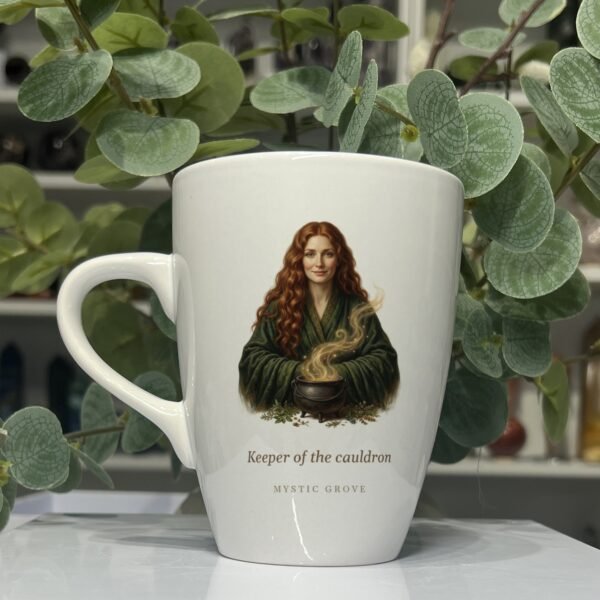
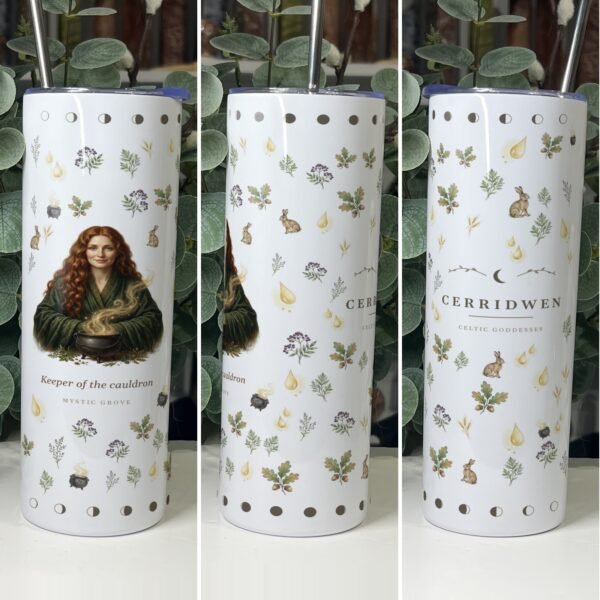
    The Cerridwen artwork from this series now comes on a 13oz white ceramic mug and a 20oz skinny tumbler wrapped all the way round in cauldrons, hares and herbs. Each one comes with a printed card telling her story, so it is ready to keep or to give.
    See all the goddess tumblers