
Smudging, white sage and the older smoke traditions of Britain and Ireland
Smudging with a bundle of white sage has become the image most people picture when they think of cleansing a home with smoke. It is worth knowing where that practice comes from, why some people now choose to leave white sage aside, and how long these islands have kept smoke traditions of their own.
This guide looks at all three with honesty and without judgement. You will find the history, the questions worth asking before you buy, and a simple house blessing drawn from the old Scottish custom of saining, using herbs and resins that have been burned here for well over a thousand years.
What smudging means, and where the word comes from
In everyday English, a smudge was a smoky fire, the kind lit on a damp evening to keep midges and mosquitoes away from people and animals. The word was later applied by English speakers to the smoke ceremonies of many Indigenous peoples of North America, in which plants such as sage, sweetgrass, cedar or tobacco are burned for prayer and purification.
Those ceremonies are not one single practice. They differ from nation to nation, they are led by people who have been taught them, and they carry prayers, songs and protocols that belong to those communities. That is why you will often hear smudging described as a closed practice. It is not a technique for anyone to pick up, so much as a living ceremony within particular cultures.
What has spread across shops and social media since the 1990s is something looser: lighting a bundle of white sage, wafting the smoke around a room and calling it smudging. For a lot of people that is a gentle and sincere ritual. It is also the reason the subject now needs a little care.
Why white sage smudging is a sensitive subject
White sage, Salvia apiana, grows wild in a small area of southern California and northern Mexico. It is sacred to several Native American peoples of that region, who have gathered it for ceremony for generations.
Two concerns come up again and again, and both are worth understanding rather than skipping past.
The ceremony itself
Native American ceremonies were restricted for long stretches of the twentieth century, and it was only in 1978 that the American Indian Religious Freedom Act set out protection for them in law. Many Indigenous voices have since spoken about how it feels to see their sacred practice sold as a lifestyle trend. In the early 1990s several tribes objected publicly to what they called the cultural strip mining of their traditions, as the religious studies scholar Sarah Pike has recorded.
The plant
Demand for white sage has grown far faster than the wild plant can. Reporting from the United States describes wild stands being stripped, sometimes illegally, and Native people finding it harder to gather enough for their own ceremonies. The Honolulu Civil Beat gives a clear summary of the concern.
Choosing a smoke that belongs to your own landscape is not a lesser practice. On these islands it is the older one.
None of this means anyone who has burned sage has done something terrible. It does mean there is a good reason to think about what you burn, why, and what you call it. Many practitioners in the UK now keep the word smudging for the Indigenous ceremony and use smoke cleansing, or the Scots word saining, for their own practice.
If you do choose to burn sage
- Ask where it was grown. Cultivated white sage takes pressure off wild plants.
- Use a little, with intention, rather than burning a whole bundle as room scent.
- Call what you are doing by an honest name. “Burning sage” or “smoke cleansing” describes it without borrowing a ceremony.
- Learn about the peoples the plant is sacred to, and listen to how they speak about it.
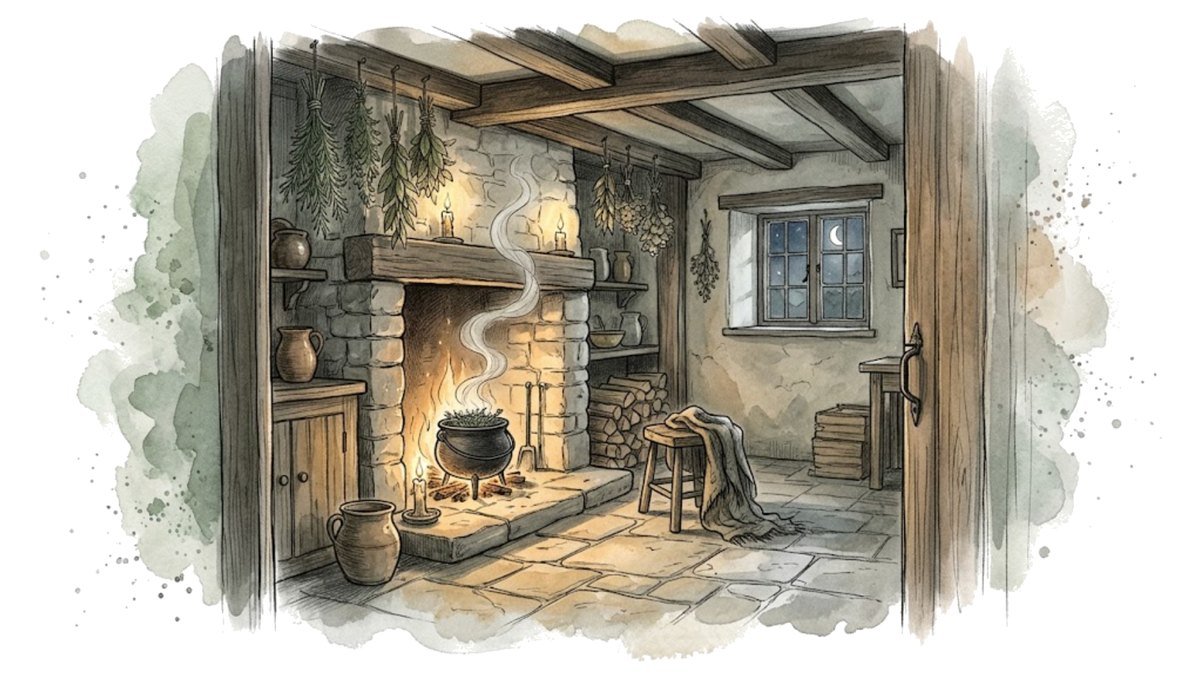
Smoke cleansing has deep roots in Britain and Ireland
Here is the part that often surprises people. You do not need to look across the Atlantic for a tradition of sacred smoke. Britain and Ireland have their own, written down across more than a thousand years, and it uses plants that grow in our hedgerows and gardens.
Incense in the early church
Frankincense reached these islands with Christianity and stayed. When the scholar Bede lay dying at the monastery of Jarrow in 735, a letter from his pupil Cuthbert records that he asked for a small box to be opened and shared its contents with the priests of the house: some pepper, some cloths and some incense. Incense was precious enough to be a parting gift, and it was already part of worship in Northumbria. You can read more about the letter on the page for Bede’s Death Song.
Beltane fires
The earliest written mention of Beltane comes from Cormac’s Glossary, linked to Cormac, bishop and king of Munster, who died in 908. It describes cattle being driven between two fires at the start of summer to protect them before they went out to pasture. Britannica notes that the custom was still carried out in Ireland in the nineteenth century. Smoke here is a threshold, something to pass through before a new season.
Juniper and rosemary in the Tudor home
In 1545 Thomas Moulton’s household handbook, The Myrrour or Glasse of Helth, advised burning juniper wood in the house when sickness was about, with ash wood if juniper could not be found. Royal orders issued in 1578 listed dried rosemary, bay and frankincense among the things to burn in homes. Thomas Cogan, writing in 1605, suggested rosemary for families who could not afford incense. The Royal College of Surgeons library has a fascinating account of these remedies.
People at the time believed that bad air carried illness, so this was medicine as much as ritual. We now know smoke does not protect anyone from disease, and nothing here should be read that way. What it shows is how ordinary it once was for an English household to burn rosemary, bay and juniper to make a room feel safe again.
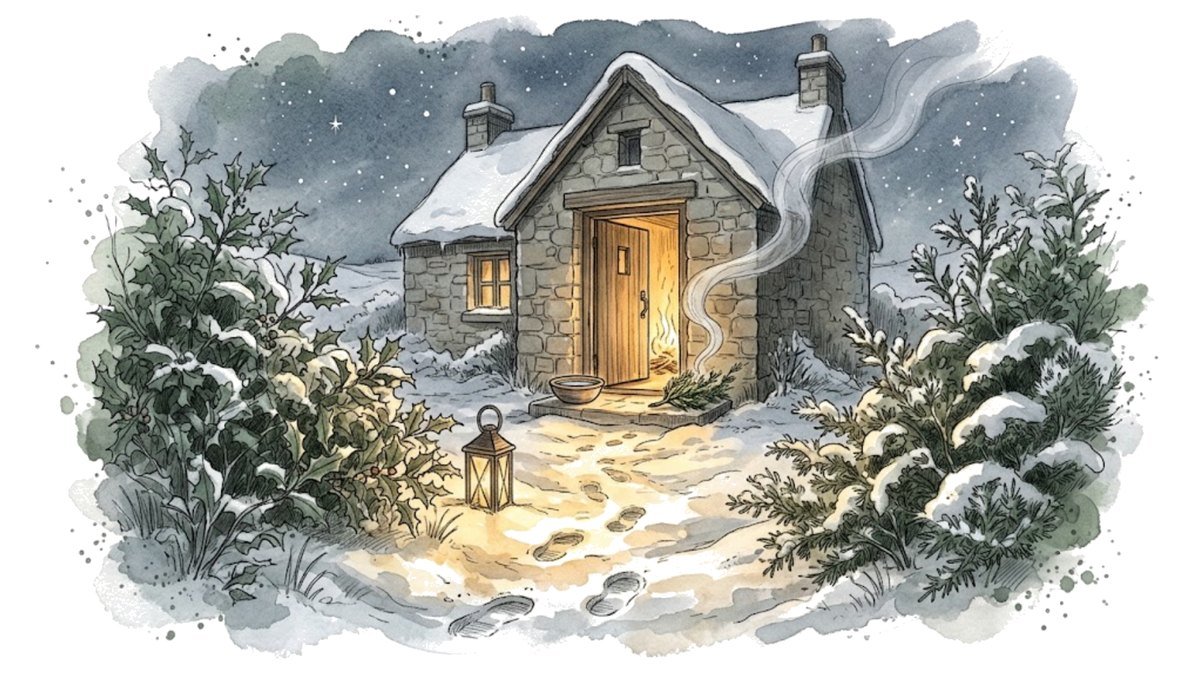
Saining: the Scottish blessing of smoke and water
Sain is a Scots word meaning to bless or protect, related to the Gaelic seun and sian, a protective charm. Saining used both water and smoke, along with spoken blessings. Alexander Carmichael gathered many of those Highland blessings in Carmina Gadelica, published from 1900.
The best known saining took place at Hogmanay. F. Marian McNeill’s The Silver Bough describes the household being sprinkled with water drawn from a ford that both the living and the dead had crossed. The doors and windows were then closed, and branches of juniper were lit and carried through the house and the byre where the animals slept. When everyone was coughing and sneezing, the doors and windows were thrown open to let the old year out, and the household sat down to its New Year breakfast.
Juniper, Juniperus communis, is native to Scotland, England and Wales. Saining is a practice of this land, using a plant of this land.
Never fill a closed room with smoke. The old saining custom of sealing the house was dangerous, and the practice faded in the late nineteenth century after a child died when a house filled with juniper smoke.
Keep a window open from the start, burn a small amount in a heatproof dish, and never leave smoke unattended. Take extra care around babies, pets, birds and anyone with asthma or a chest condition, and choose a sound or water blessing instead if smoke is not right for your home.
Burning sage and other herbs: what smoke actually does in a ritual
Search for burning sage benefits and you will find bold claims about bacteria and negative ions. We do not make those claims, because the evidence does not support them and smoke is not good for your lungs.
What smoke does in ritual is simpler and still meaningful. It marks a moment. It changes how a room smells and feels. It gives you something to watch and follow from corner to corner, so your attention stays on the intention rather than drifting to the washing up. That is true of rosemary, juniper or frankincense just as much as sage.
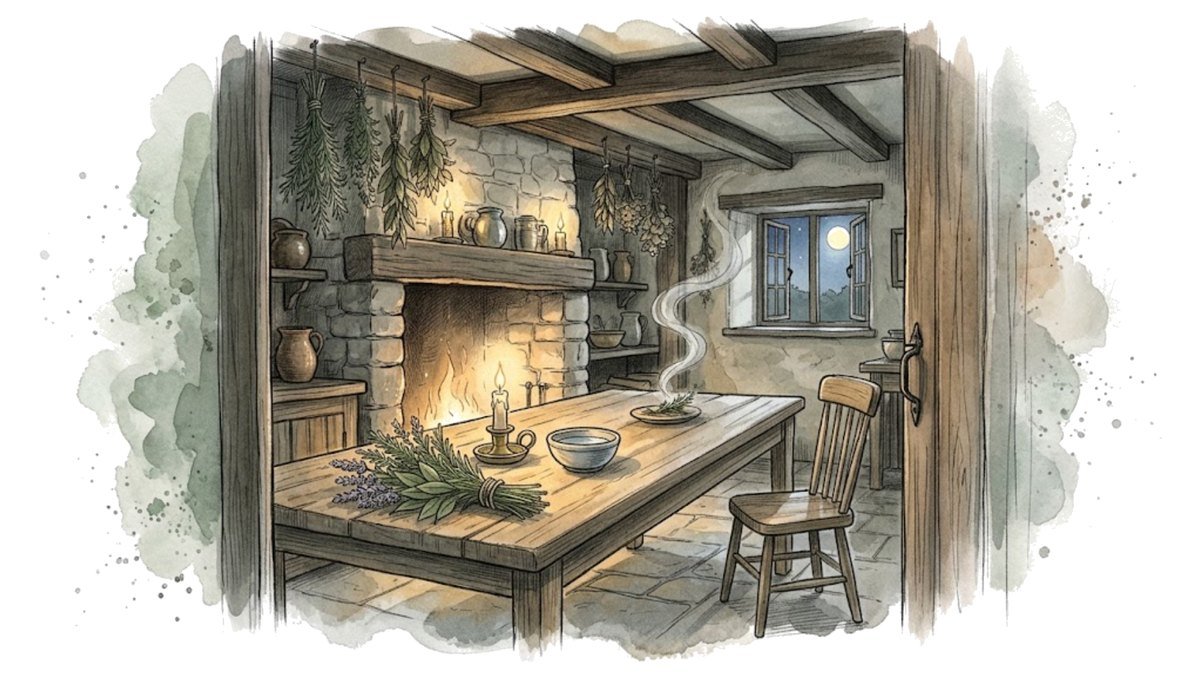
How to cleanse your house with smoke, the British way
This is a simple house blessing inspired by saining. It suits a new home, the turn of the year, the days after an argument or illness, or any time a room feels heavy. It follows the shape of the Hogmanay custom, water first and then smoke, without the risky part of shutting everything up.
What you will need
- A small bowl of water. Rain, spring or tap water all work. Many people add a pinch of salt.
- Your smoke: a rosemary or frankincense incense stick, or a small sprig of dried rosemary or bay from the kitchen.
- A heatproof dish, cauldron or bowl to catch ash.
- A window you can open in each room.
The blessing
1. Open the house
Open a window in each room you will visit. In saining the house was opened at the end. Here it stays open throughout, which is safer and lets the old air go as you work.
2. Water at the threshold
Stand at your front door and sprinkle a few drops of water across the step with your fingers. Say what you are doing in plain words. For example: “I bless this door, and everyone who comes through it.”
3. Light the smoke
Light your incense or herb, let it catch, then blow out the flame so it smoulders. Hold the dish beneath it.
4. Walk sunwise
Move through each room in a clockwise direction, the way the sun travels. Gaelic tradition called this deiseal and used it for blessings. Let the smoke drift into corners, behind doors and along window sills. Some people like to speak a line in each room. Others hum, ring a bell, or simply breathe slowly and keep the intention in mind.
5. Close with water
Finish where you began. Sprinkle a last few drops of water at the door, thank the house, and let the incense burn down safely in its dish.
Choosing your smoke
Every one of these has a long history of use in Britain, Ireland or the wider European tradition.
Rosemary
Burned in Tudor homes in times of sickness and carried at funerals, and traditionally linked with memory, protection, purification and clear thinking. It is also one of the plants of Yule. A good first choice for house blessings. Our Satya incense range now includes rosemary.
Juniper
The plant of saining itself. Traditionally linked with protection and fresh starts, which is why it belonged to Hogmanay. Burn only a very small amount and keep the room well aired.
Frankincense
The incense of churches and cathedrals across these islands for well over a thousand years, linked with blessing, purification and spiritual connection, and traditionally burned at Yule. Our Satya Frankincense and Myrrh incense sticks bring both into an easy, everyday form.
Bay
Named in the royal orders of 1578, and traditionally linked with protection and success. A dried leaf from the kitchen cupboard works perfectly.
Garden sage
The common sage of British kitchen gardens, Salvia officinalis, is traditionally linked with purification, protection and wisdom, and with Samhain and Yule. A few dried leaves from your own garden make a simple, local alternative to white sage.
Lavender
Grown in English gardens for centuries and linked with calm and peaceful sleep. Gentle for a bedroom blessing. Our Amethyst Crystal Scents pack pairs lavender incense with an amethyst chip.
Blue sage
Often sold as a softer alternative to white sage. It is a different plant, but it is also North American, so the same questions about sourcing and naming apply. Our Satya blue sage incense sticks give the scent without a loose bundle.
Smoke for a winter house blessing
The weeks between the winter solstice and Hogmanay are the traditional time for saining. Choose rosemary, frankincense or lavender, with a heatproof cauldron or bowl to hold the ash.



Leave a Reply