Crystal Shop UK · Rooted in intention, curated with care

Tag: Celtic Mythology

  • Arianrhod: Welsh Goddess of the Silver Wheel, the Moon and the Stars

    Arianrhod: Welsh Goddess of the Silver Wheel, the Moon and the Stars

    Arianrhod, the Welsh goddess of the silver wheel: her story in the Mabinogi, Caer Arianrhod, the stars and the moon

    Arianrhod is the Welsh goddess whose name is usually translated as silver wheel, and who is linked today with the moon, the stars and a castle beneath the sea. In the old tales she is proud, wronged and fiercely her own. Here is the story of Arianrhod, what is old and what is new about her, and how people honour her now.

    Arianrhod at a glance

    Say it: ar YAN rod, with a soft breath on the rh.

    Name usually means: silver wheel.

    Tradition: Welsh, from the Fourth Branch of the Mabinogi and the Welsh Triads.

    Family: daughter of Dôn, sister of Gwydion, mother of Dylan and Lleu.

    Places: Caer Arianrhod, a reef off Dinas Dinlle on the coast of Gwynedd.

    Linked today with: the moon, the stars, the Northern Crown, the sea and the turning wheel of the year.

    Who Is Arianrhod?

    Arianrhod is one of the children of Dôn, the great family of magicians in the Fourth Branch of the Mabinogi. Her brother is Gwydion, the most famous enchanter in Welsh story. Her uncle is Math, the magician king of Gwynedd. She lives apart from them all in her own fortress by the sea, Caer Arianrhod, and she answers to no one.

    Today Arianrhod is one of the best loved goddesses in modern paganism. Her name and her fortress tie her to silver light, the night sky and the tides, and many people honour her as a goddess of the moon and the stars, of fate and the turning of time, and of a woman’s right to say no.
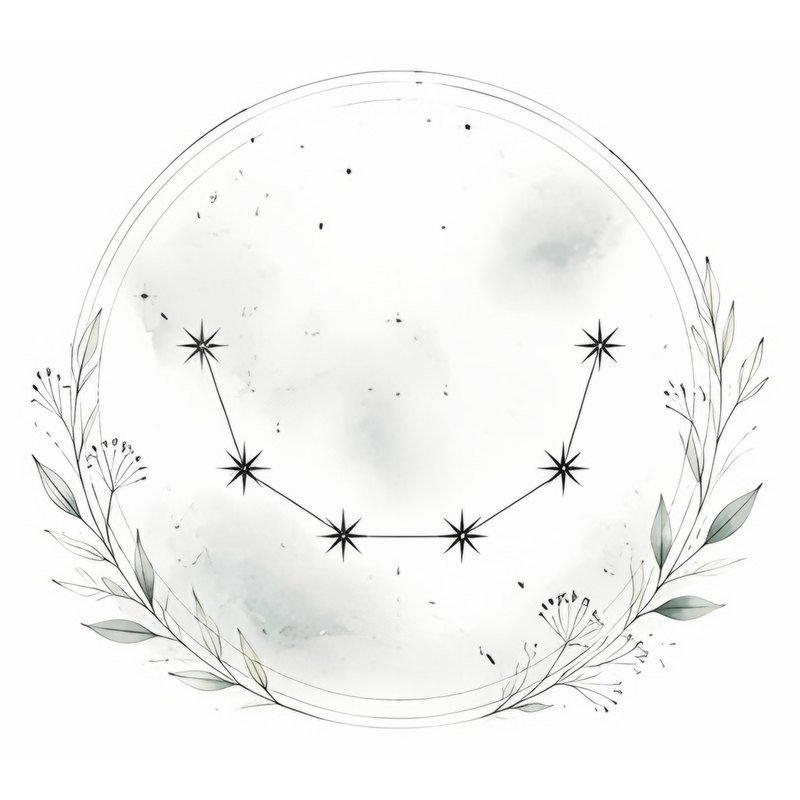
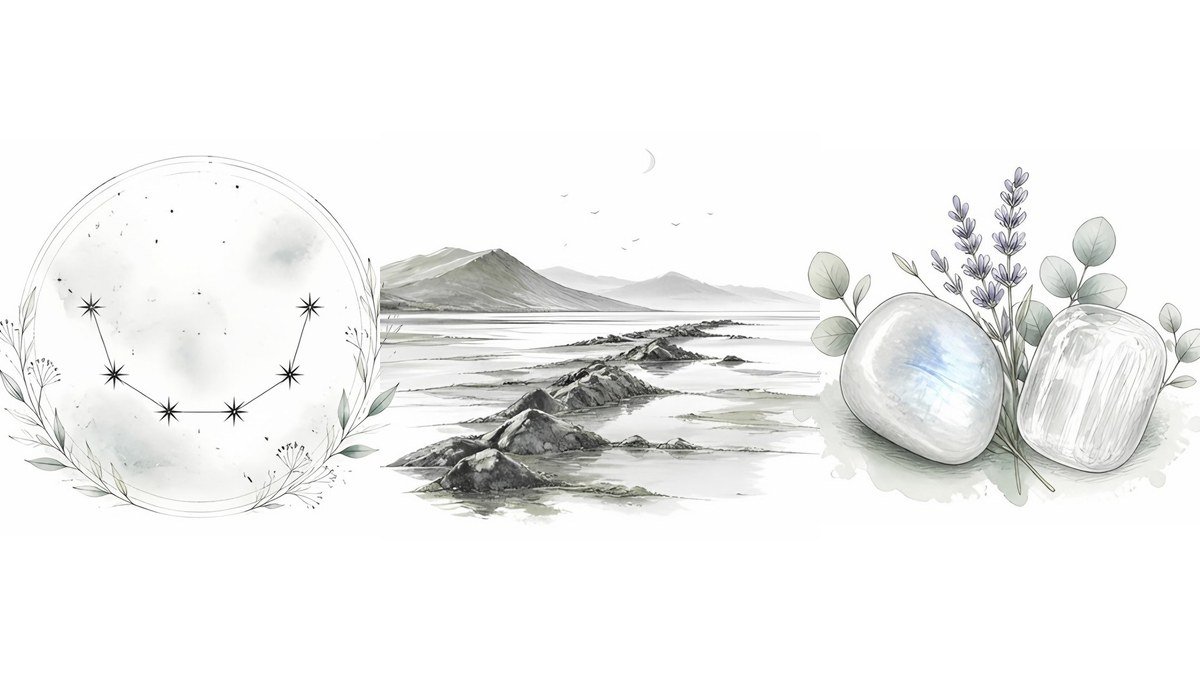
    Sketch of the Northern Crown constellation, known in Welsh as Caer Arianrhod, inside a silver circle of leaves

    The Story of Arianrhod

    The test at Math’s court

    Math, king of Gwynedd, could only live while his feet rested in the lap of a maiden, except when he was at war. When his footholder was lost to him, Gwydion suggested his own sister, Arianrhod. Math tested her by asking her to step over his magic wand. As she did, she gave birth to a fine boy with yellow hair, and as she ran for the door, something small fell from her. Gwydion caught it up, wrapped it in silk and hid it in a chest at the foot of his bed.

    The first boy, Dylan, made straight for the sea. As soon as he reached it he took on its nature and swam as well as any fish, and was called Dylan Eil Ton, Dylan son of the wave. The second child grew up in Gwydion’s care.

    She was publicly shamed at her uncle’s court. Everything she does afterwards makes more sense once you remember that.

    Three destinies

    When Gwydion brought the boy to Caer Arianrhod, she was furious to be reminded of her shame. She swore three destinies on him. He would have no name unless she gave him one. He would bear no arms unless she armed him. And he would never have a wife of any race now on the earth.

    Gwydion answered each of them with trickery. First he and the boy came to her fortress in a boat disguised as shoemakers. When the boy struck a wren with a single deft shot, Arianrhod laughed and said the fair one had hit it with a skilful hand, and so, without meaning to, she named him Lleu Llaw Gyffes, the fair one of the skilful hand.

    Later the two returned disguised as bards. In the night Gwydion conjured the sound and sight of a hostile fleet, and in the panic Arianrhod armed the young man herself. The third destiny could not be tricked, so Math and Gwydion made Lleu a wife from flowers. You can read where that led in our guide to Blodeuwedd.

    THREE DESTINIESwhat Arianrhod swore, and how Gwydion answeredArianrhod swearsGwydion answersNo nameunless she names himA wren and a shotshe names him Lleu1No armsunless she arms himA fleet of illusionshe arms him herself2No wifeof any race on earthA bride of flowersBlodeuwedd is made3 THREE DESTINIESwhat Arianrhod swore, and how Gwydion answeredArianrhod swearsGwydion answersNo nameunless she names himA wren and a shotshe names him LleuNo armsunless she arms himA fleet of illusionshe arms him herselfNo wifeof any race on earthA bride of flowersBlodeuwedd is made
    The three destinies Arianrhod swears on her son, and how Gwydion answers each one. Read each column, or each row on a phone, from her oath to his answer.

    The woman who said no

    Arianrhod is hard to love on a first reading. She curses her own child. Yet look again at what happened to her. She was tested in public, shamed in front of the court, and then her brother kept bringing the evidence to her door. Some readers think Gwydion himself was the father, which the tale hints at but never says. Seen that way, her three destinies are a refusal, a woman declining to play the part others had written for her.

    That is why so many people today honour her as a goddess of sovereignty and self possession. She keeps her own fortress, she says no, and she cannot simply be pushed into line.
    Sketch of a winding path through rolling green hills with wildflowers and a crescent moon above

    Caer Arianrhod, the Castle in the Sea

    Off the coast of Gwynedd, near the Iron Age hillfort of Dinas Dinlle, a reef of rocks rises from the sea at the lowest tides. It is called Caer Arianrhod, Arianrhod’s fortress. Local tradition says her court once stood there and was swallowed by the waves, and fishermen used to tell of walls glimpsed under the water.

    The Royal Commission on the Ancient and Historical Monuments of Wales surveyed the reef from the air in 2010 and found no convincing sign of anything built by people. It is a natural reef, about 900 metres out, its top showing only at the lowest spring tides. Even so, standing at Dinas Dinlle at low water and watching the line of rocks appear is a moving thing to do. The hillfort itself, partly lost to the sea, is cared for by the National Trust, and you can read about it on Coflein.
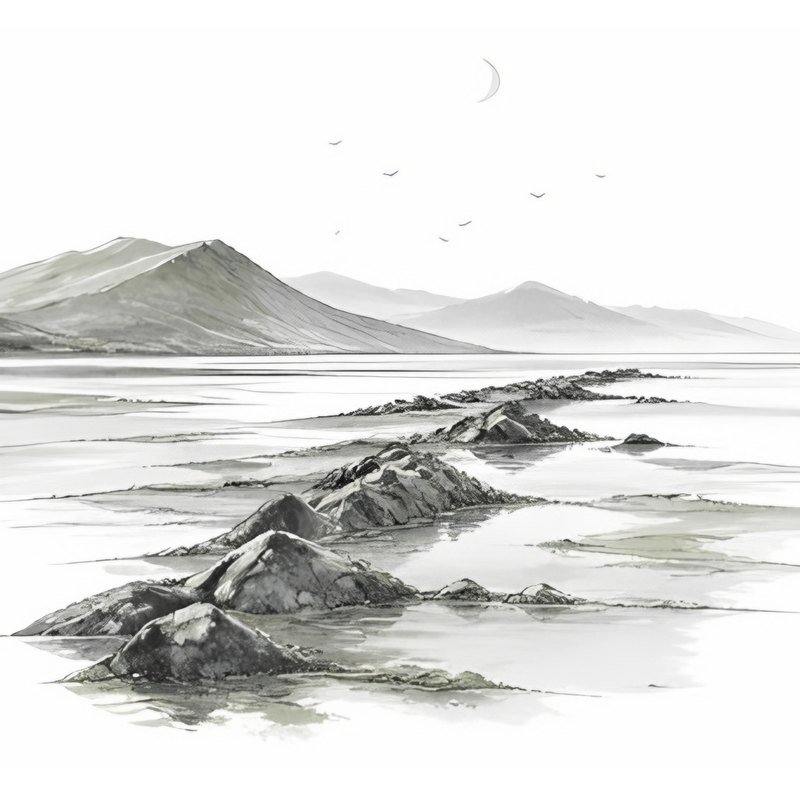
    Pencil sketch of a line of rocks emerging from the sea below Welsh hills, the reef called Caer Arianrhod

    Arianrhod, the Stars and the Moon

    In Welsh star lore, the constellation Corona Borealis, the Northern Crown, is called Caer Arianrhod, and the Milky Way is Caer Gwydion, her brother’s fortress. It is a beautiful idea: brother and sister set side by side in the night sky. The Northern Crown is a small, curved ring of stars, easy to find on spring and summer evenings between the bright stars Arcturus and Vega.

    Her link with the moon comes from her name. A silver wheel turning through the dark is an easy image of the moon, and in the twentieth century Arianrhod came to be honoured as a moon goddess. Many people today work with her at the full moon, when the silver wheel is at its brightest, and at the new moon, when she withdraws into her fortress.

    If moon goddesses are your path, our guide to moon goddesses from around the world is a good next read.

    The Honest History of Arianrhod

    Her story is medieval. Arianrhod appears in the Fourth Branch of the Mabinogi, preserved in the White Book of Rhydderch of the mid fourteenth century and the Red Book of Hergest from around 1400. You can read Lady Charlotte Guest’s translation on sacred texts. She also appears in the Welsh Triads, where she is named as a daughter of Beli, and in a poem in the Book of Taliesin that calls her Arianrhod of fine appearance, dawn of serene weather.

    Silver wheel may not be what her name first meant. The oldest spellings are Aranrhod or Aranrot. The second part, rhod, does mean wheel or circle, but the first part may not be arian, silver, at all. Some scholars think it meant huge or round, which would make the silver wheel a later and very attractive reading. Mary Jones’s Celtic Literature Collective gathers the evidence.

    The star name is not ancient. Caer Arianrhod as the name of the Northern Crown is first recorded in the nineteenth century, in a collection drawn from the papers of Iolo Morganwg, a brilliant Welsh scholar who is also known to have invented a good deal of his material. It may record genuine folk tradition, but it cannot be traced further back.

    The moon goddess is modern. Historian Ronald Hutton notes in his lecture Finding Lost Gods in Wales that Arianrhod has been seen as a star goddess only since the twentieth century, and Robert Graves folded her into his White Goddess in 1948. The Mabinogi itself never calls her a goddess.

    None of this makes the modern Arianrhod any less meaningful. A goddess of the silver wheel who keeps her own fortress by the sea has spoken to a great many people. Knowing which parts are medieval simply lets you hold both: the proud, wronged woman of the old tale, and the moon and star goddess she has grown into.

    Crystals for Arianrhod

    No medieval source links Arianrhod with crystals. The stones below are modern correspondences for her silver wheel, her moonlight and her stars. All are stocked at Mystic Grove.

    Moonstone, for the silver wheel

    Moonstone glows with a soft blue white sheen, the closest a stone comes to moonlight. It is the first choice for Arianrhod and a gentle companion for intuition and cycles. See our moonstone spheres or choose a moonstone tumblestone.

    Rainbow moonstone, for the turning sky

    Rainbow moonstone flashes with blue and violet as it turns, like light moving across the night sky. A rainbow moonstone tower makes a lovely focus for full moon work.

    Selenite, for clear silver light

    Selenite is named after Selene, the Greek moon goddess, and has a soft, silky shine. Many people use it to cleanse their space and other crystals. Our selenite moon bowls are perfect for charging stones under the full moon. Keep selenite dry, as water damages it.

    Clear quartz, for the crown of stars

    Clear quartz catches light like a star. Seven small pieces laid in a curve make a simple table version of the Northern Crown. Try our clear quartz palm stones or tumblestones.

    Labradorite, for the tides and the hidden fortress

    Labradorite looks grey until it flashes blue, like a reef appearing out of the sea. It suits Arianrhod’s castle that shows itself only at the lowest tide. See our labradorite towers.

    Lapis lazuli, for the night sky

    Deep blue lapis flecked with gold has been likened to a starry sky for thousands of years. It is a fine stone for working with Arianrhod as a star goddess. Try a lapis lazuli sphere.
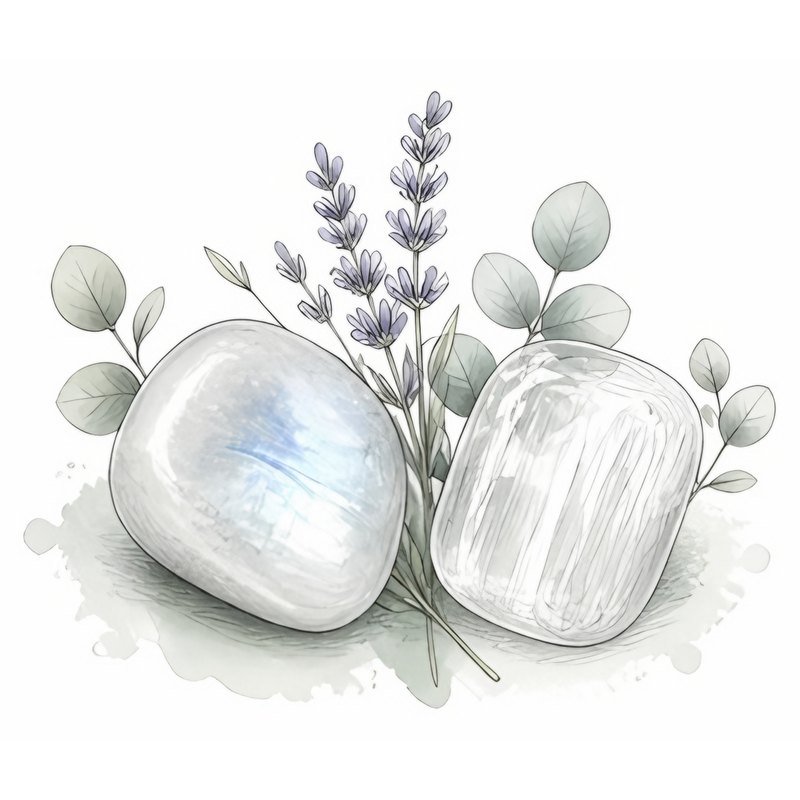
    Sketch of a moonstone and a selenite tumblestone with sprigs of lavender and eucalyptus

    A simple Northern Crown. Lay seven small clear quartz or moonstone tumblestones in a gentle curve, like a crown open at the top. Place a candle in the open space. It is a quiet way to bring Arianrhod’s stars onto your altar without needing anything rare.

    A Simple Full Moon Practice for Arianrhod

    This practice is for the full moon, or any night when you want to honour your own choices. You need a white chime candle, a moonstone and somewhere you can see the sky, even through a window.

    • Set your space. Place the candle on a white plate or cloth with the moonstone beside it. If you like, lay the seven stone crown described above.
    • Look for the moon. If the sky is clear, take a moment to find it. If it is cloudy, that is fine. The wheel still turns.
    • Light the candle and say her name three times. Arianrhod, Arianrhod, Arianrhod.
    • Hold the moonstone and name one thing that is yours to choose. A boundary you want to keep, a yes or a no that belongs to you, a direction for the next month.
    • Rest for a few minutes. Breathe slowly, feel the weight and coolness of the stone in your hand, and let the room fall quiet.
    • Close. Thank Arianrhod, put out the candle, and leave the moonstone on a windowsill overnight if you wish.
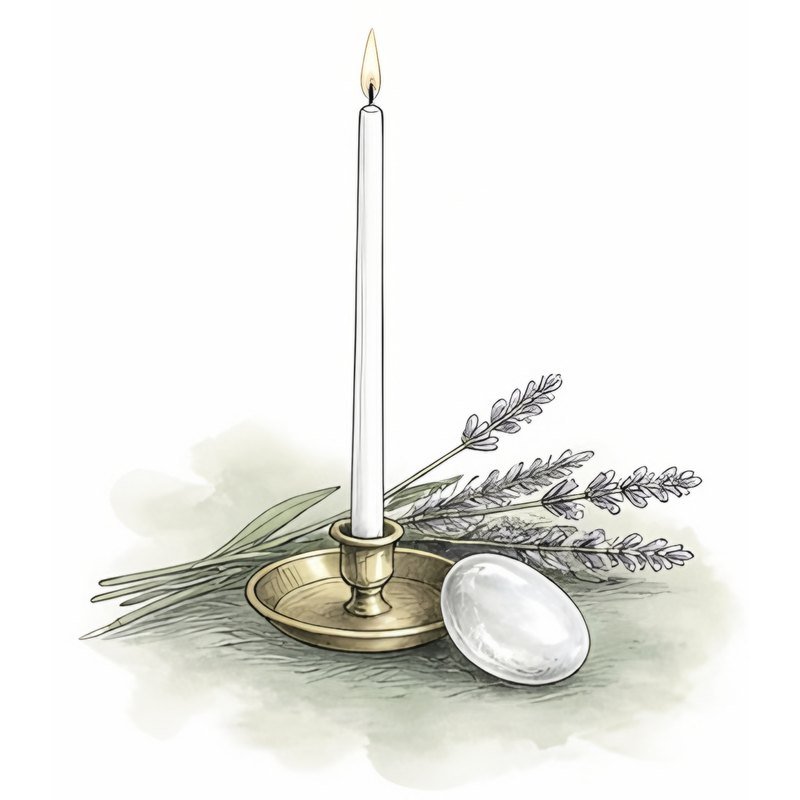
    Sketch of a slim white chime candle in a brass holder beside a moonstone and a sprig of lavender

    Signs Arianrhod May Be Calling You

    • You feel pulled toward the moon, the stars and the night sky.
    • Silver jewellery, wheels, spirals or circles keep catching your eye.
    • You are learning to say no and to keep your own boundaries.
    • The sea, tides and coastlines feel like home.
    • You feel drawn to Wales, especially to Gwynedd and the coast near Caernarfon.

    Not sure yet? Our guide to which goddess is calling you has gentle ways to find out.

    Light a candle for Arianrhod

    Our Manifest Magic chime candles come in ten colours. Protection White carries her silver moonlight, and Crown Violet suits her starry sky.

    Choose your colour

    Questions People Ask About Arianrhod

    What is Arianrhod the goddess of?

    Today Arianrhod is honoured as a Welsh goddess of the moon, the stars, fate, the sea and women’s sovereignty. In the Mabinogi she is a powerful enchantress who keeps her own fortress by the sea.

    How do you pronounce Arianrhod?

    Say ar YAN rod. The Welsh rh is a breathy r, as if you breathe out as you say it.

    What does Arianrhod mean?

    The name is usually translated as silver wheel, from arian, silver, and rhod, wheel. The oldest spellings suggest the first part may originally have meant something else, so silver wheel may be a later reading.

    Is Arianrhod a moon goddess?

    Not in the medieval sources, but she has been honoured as one since the twentieth century, and she is now one of the best known moon goddesses of the Celtic world.

    Where is Caer Arianrhod?

    Caer Arianrhod is a reef off the coast of Gwynedd near Dinas Dinlle, south west of Caernarfon. Its top is only uncovered at the lowest spring tides. The same name is used in Welsh star lore for the constellation Corona Borealis.

    Who are Arianrhod’s children?

    Dylan Eil Ton, who went to the sea, and Lleu Llaw Gyffes, raised by her brother Gwydion. A Welsh Triad also names two other sons, Gwenwynwyn and Gwanar.

    Bring Arianrhod home

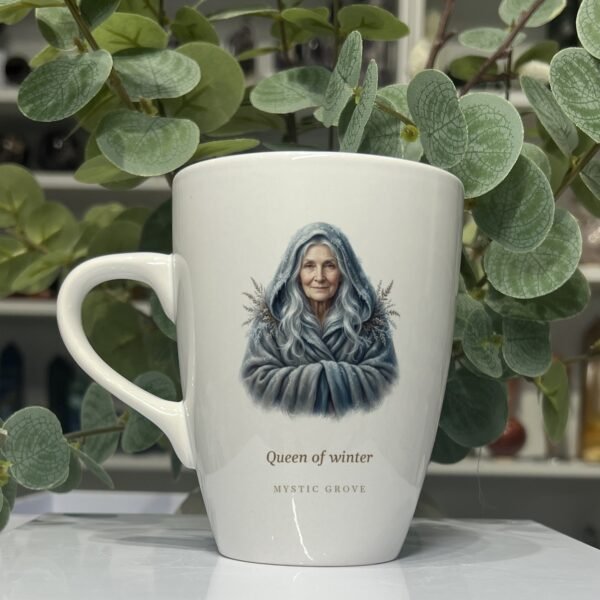
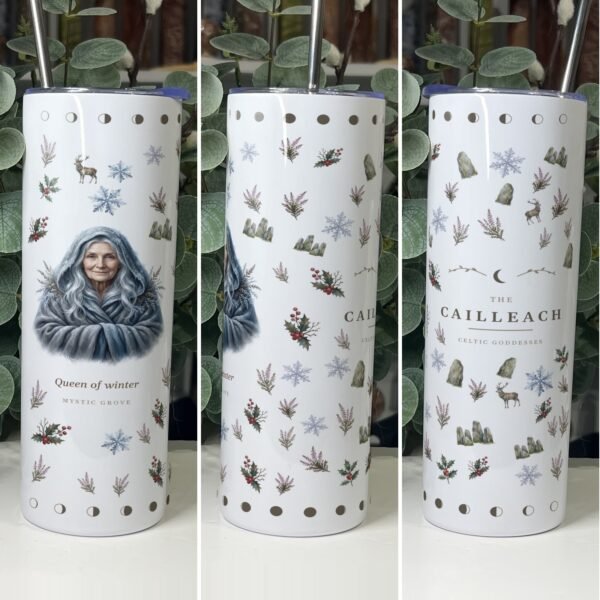
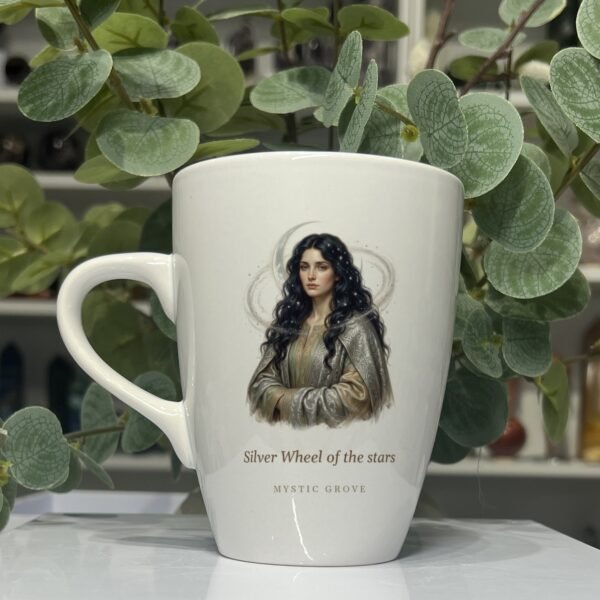
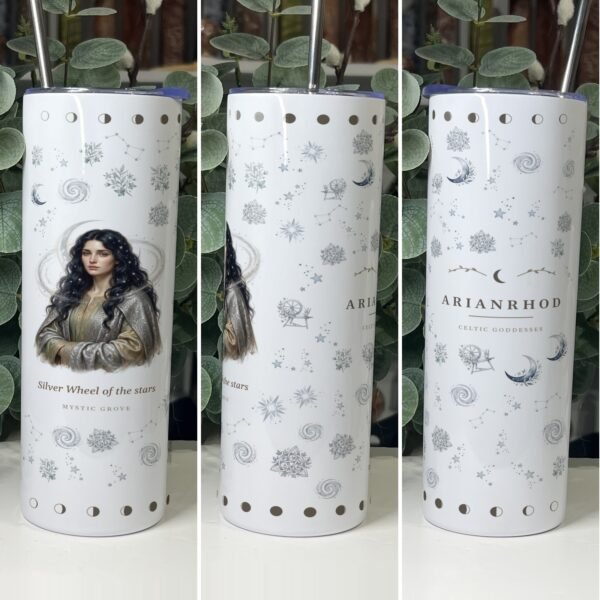
    The Arianrhod artwork from this series now comes on a 13oz white ceramic mug and a 20oz skinny tumbler wrapped all the way round in silver stars and spinning wheels. Each one comes with a printed card telling her story, so it is ready to keep or to give.
    See all the goddess tumblers

  • Blodeuwedd: the Woman Made of Flowers Who Became an Owl

    Blodeuwedd: the Woman Made of Flowers Who Became an Owl

    Blodeuwedd, the woman made of flowers who became an owl: her story from the Mabinogi, what her name means, and why she still matters

    Blodeuwedd was made from the blossoms of oak, broom and meadowsweet, married without being asked, and turned into an owl for choosing her own love. The Blodeuwedd story is one of the most haunting in Welsh myth, and people have argued about whether she was wronged or free for centuries. Here is her tale, its real history, and the crystals and practices people use with her today.

    Blodeuwedd at a glance

    Say it: blod EYE weth. The dd sounds like the th in the.

    Name means: flower face.

    Tradition: Welsh, from the Fourth Branch of the Mabinogi.

    Made from: the flowers of oak, broom and meadowsweet.

    Becomes: an owl.

    Places: Ardudwy and Ffestiniog in north Wales, around Tomen y Mur and the River Cynfal.

    Season today: Beltane for her flowers, and the long autumn nights for her owl.

    Who Is Blodeuwedd?

    Blodeuwedd is a woman created by magic in the Fourth Branch of the Mabinogi, the great collection of medieval Welsh tales. She was made by two magicians, Math and Gwydion, as a wife for the young hero Lleu Llaw Gyffes, because his mother Arianrhod had sworn he would never marry a woman of any race on earth.

    She is beautiful, she is new to the world, and she has no say in any of it. What she does next, and what is done to her in return, has made her one of the most discussed figures in all of Celtic myth. Today many people honour her as a goddess of flowers, of spring and of the owl, and as a symbol of a woman who chose for herself.

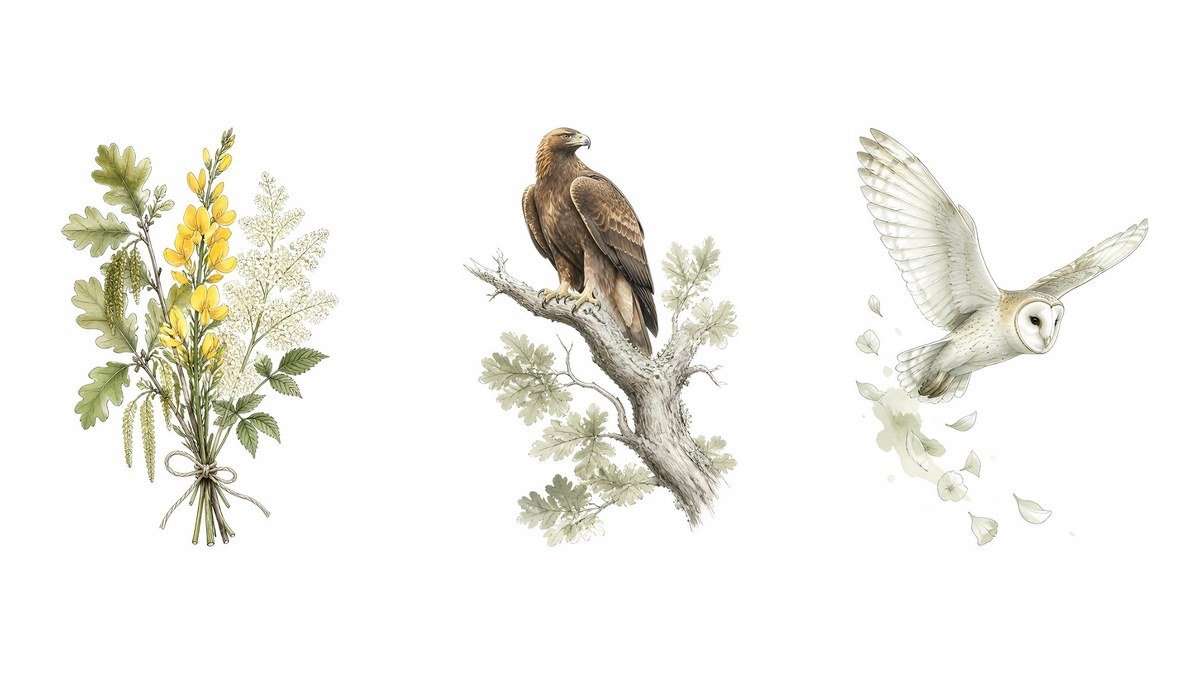
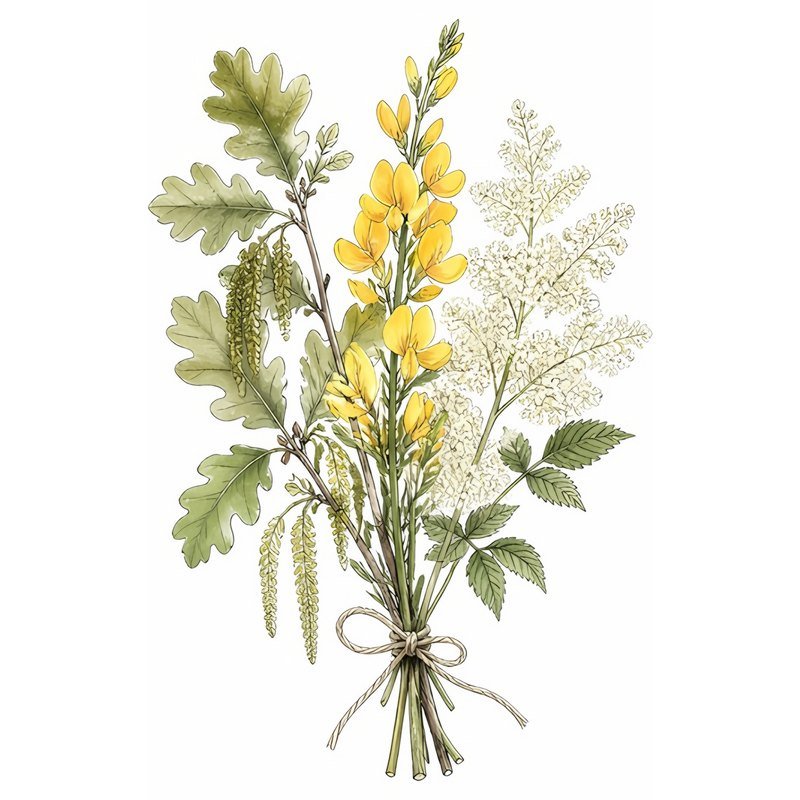
    Botanical sketch of oak leaves and catkins, yellow broom flowers and creamy meadowsweet tied with twine, the three flowers Blodeuwedd was made from

    The Blodeuwedd Story

    Made from flowers

    Arianrhod had laid three destinies on her son Lleu: he would have no name unless she gave it, no weapons unless she armed him, and no wife of any race now on the earth. Gwydion found tricks to get around the first two. For the third, he went to his uncle Math, the great magician king of Gwynedd. Together they gathered the flowers of the oak, the flowers of the broom and the flowers of the meadowsweet, and from them they conjured the most beautiful maiden anyone had ever seen. They named her Blodeuwedd, flower face, and gave her to Lleu as his wife.

    Math gave the couple land in Ardudwy, and they made their home at a court called Mur Castell, which tradition places at Tomen y Mur near Trawsfynydd, where a Norman mound still sits inside the remains of a Roman fort.

    A choice of her own

    One day, while Lleu was away, a hunting party passed by. It belonged to Gronw Pebr, the lord of Penllyn. Blodeuwedd invited him in for courtesy, and the moment they looked at each other they fell in love. It was the first thing in her life that she had chosen for herself.

    Lleu could not easily be killed. So Blodeuwedd, pretending to worry for his safety, gently drew out of him the strange conditions under which he could die. He could not be killed indoors or outdoors, on horseback or on foot. Only a spear worked on for a whole year, only on Sundays during mass, could do it, and only if he stood with one foot on the edge of a bath beneath a thatched roof by a riverbank and the other on the back of a goat.

    She was asked to love on command. The one time she chose for herself, the whole story turned against her.

    The eagle in the oak

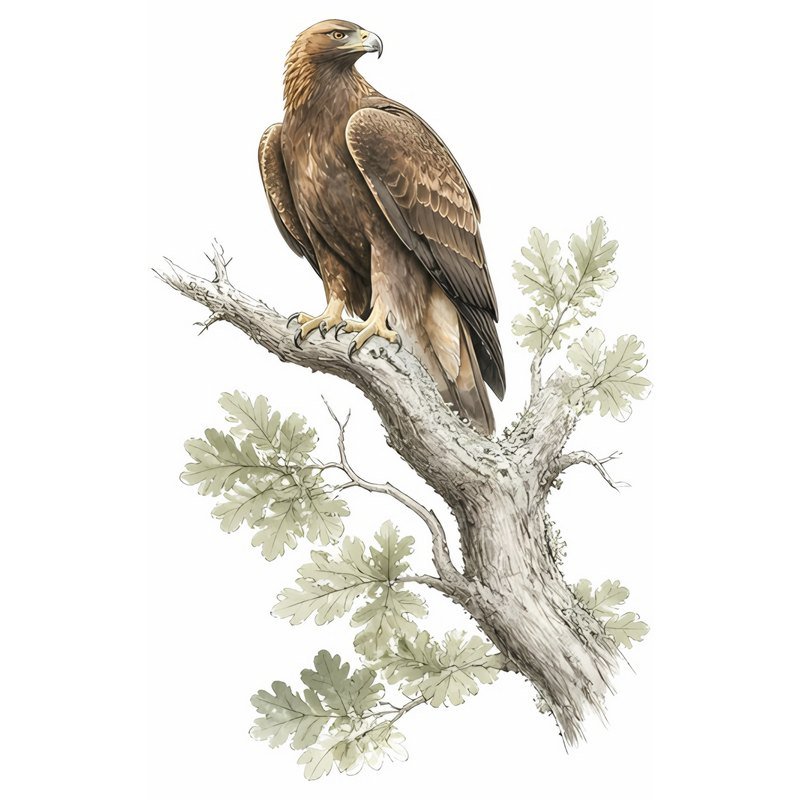
    A year later, Blodeuwedd persuaded Lleu to show her exactly how he would stand. As he did, Gronw threw the spear from a hill beside the River Cynfal. Lleu gave a terrible cry and flew up into the air as an eagle, and was gone.

    Gwydion searched all of Wales for him. At last he followed a sow to a valley called Nant y Llew, where an eagle sat wasting in the top of an oak. Gwydion sang three verses, and with each one the eagle came lower, until it landed on his knee. He touched it with his wand and Lleu was a man again, thin and close to death, but alive.

    Sketch of a golden eagle perched on the branch of an oak tree, the form Lleu takes in the Blodeuwedd story

    Turned into an owl

    When Gwydion came for Blodeuwedd, she fled with her maidens toward the mountains. In their terror the maidens looked back, fell into a lake and drowned. Local tradition names it Llyn Morwynion, the lake of the maidens, above Ffestiniog. Blodeuwedd alone was caught.

    Gwydion did not kill her. He said he would do something worse. He turned her into a bird and told her she would never again dare to show her face in the light of day, that all other birds would hate her and attack her wherever they found her, and that she would keep her name forever. The tale ends by saying that Blodeuwedd is a word for owl in the language of its own time.

    Gronw, for his part, was made to stand where Lleu had stood and take a spear in return. He asked to hold a stone slab between himself and the blow. The spear passed straight through the stone and through him, and the holed stone was called Llech Gronw ever after.

    FROM FLOWERS TO OWLthe shape of the Blodeuwedd storyFlowersoak, broom andmeadowsweetA bridemade for Lleu,never askedA choiceshe loves Gronwof PenllynAn eagleLleu is struckand fliesAn owlshe is changedby Gwydion FROM FLOWERS TO OWLthe shape of the Blodeuwedd storyFlowersoak, broom andmeadowsweetA bridemade for Lleu,never askedA choiceshe loves Gronwof PenllynAn eagleLleu is struckand fliesAn owlshe is changedby Gwydion
    The Blodeuwedd story in five steps, read from left to right on a wide screen or from top to bottom on a phone.
    Sketch of a pale barn owl in silent flight with flower petals drifting behind it, the owl Blodeuwedd becomes

    Was Blodeuwedd Wronged, or Was She Free?

    This is the question that keeps her alive. For centuries the story was read as a warning about a faithless wife. Many modern readers see it very differently.

    Blodeuwedd was made for someone else’s purpose, without a childhood, a family or a choice. She was married the day she was made. When she finally wanted something for herself, she was hunted down and transformed. Read that way, she is one of the most wronged women in the Mabinogi, and the owl that refuses the daylight becomes a symbol of a woman who would rather live wild than be made into someone else’s idea of a wife.

    Others point out that she did plot a murder, and that the tale does not ask us to admire her. Both readings are honest. Perhaps the reason the story lasts is that it does not settle the question for us. It leaves us sitting with it, the way the best old stories do.

    Blodeuwedd, Flowers and the Owl

    Because she was made from blossoms, Blodeuwedd is often honoured at Beltane, the May festival of flowers, when the broom and hawthorn are out and meadowsweet is not far behind. Oak, broom and meadowsweet are all native British plants, which makes her one of the most local of goddesses. You can find all three within a few miles of most homes in Wales and England.

    Her other season is the long night. The owl is a creature of autumn and winter dark, heard more than seen, and many people who work with Blodeuwedd feel closest to her when the nights draw in. The tawny owl’s call is a familiar October sound across Britain, as the young owls look for territories of their own.

    Botanical sketch of wild honeysuckle and wild rose branches twisting around each other

    The Honest History of Blodeuwedd

    Her story is medieval and Welsh. The Four Branches of the Mabinogi survive in two great manuscripts, the White Book of Rhydderch from the middle of the fourteenth century and the Red Book of Hergest from around 1400, both described by the National Library of Wales. The tales themselves were probably shaped in the eleventh or twelfth century from much older storytelling. You can read Lady Charlotte Guest’s nineteenth century translation of the Fourth Branch on sacred texts.

    She is not called a goddess in the old text. The Mabinogi does not describe its characters as gods at all. Historian Ronald Hutton makes this point in his lecture Finding Lost Gods in Wales. Seeing Blodeuwedd as a goddess of flowers and spring is a modern reading, and a lovely one, but it is a modern one.

    The places are real. Tomen y Mur, the Afon Cynfal and Ffestiniog are all there to visit, and the Royal Commission’s record of Tomen y Mur describes the medieval mound and Roman fort. A holed stone thought to be Llech Gronw has been found more than once by the river, though no one can be sure which, if any, is the original. The Eryri National Park has a short retelling of her story tied to the landscape.

    Her modern life is rich. The Welsh dramatist Saunders Lewis wrote a celebrated play called Blodeuwedd. Alan Garner’s novel The Owl Service, published in 1967 and later made for television, retold the story through three teenagers in a Welsh valley, and many readers first met her there. Feminist retellings since have made her one of the most popular figures in modern Celtic spirituality.

    Crystals for Blodeuwedd

    No medieval text links Blodeuwedd with crystals. The stones below are modern correspondences chosen for her flowers, her heart and her owl. All are stocked at Mystic Grove.

    Flower agate, for the woman made of blossoms

    Flower agate holds tiny bloom like patterns inside soft pink and cream stone. Of every stone we carry, it is the closest match for a woman made from flowers. Ours is a flower agate sphere with druzy pockets, a lovely altar centrepiece for Blodeuwedd.

    Rose quartz, for love that is freely chosen

    Rose quartz is the classic stone of love, and with Blodeuwedd it speaks of the love she chose for herself. Many people use it for self love and self worth. Try a rose quartz palm stone or a rose quartz heart.

    Rhodonite, for a heart that has been hurt

    Pink rhodonite with its black veins is often described as a stone for emotional healing and forgiveness, love with its wounds showing. It suits a story with so much hurt in it. See our rhodonite towers.

    Moonstone, for the night

    Moonstone glows softly like moonlight, the only light the owl is said to keep. It is a gentle stone for intuition and for working at night. Our moonstone spheres and tumblestones both suit her.

    Labradorite, for transformation

    Labradorite flashes with hidden colour, the right stone for a woman who changed shape. It is also one of the stones in our 5cm crystal owl carvings, alongside green aventurine, bloodstone, clear quartz and red jasper.

    Green aventurine, for spring growth

    Green aventurine carries the fresh green of new leaves, the season Blodeuwedd was born in. It is a hopeful stone for new beginnings. Find it as a green aventurine tower or tumblestone.

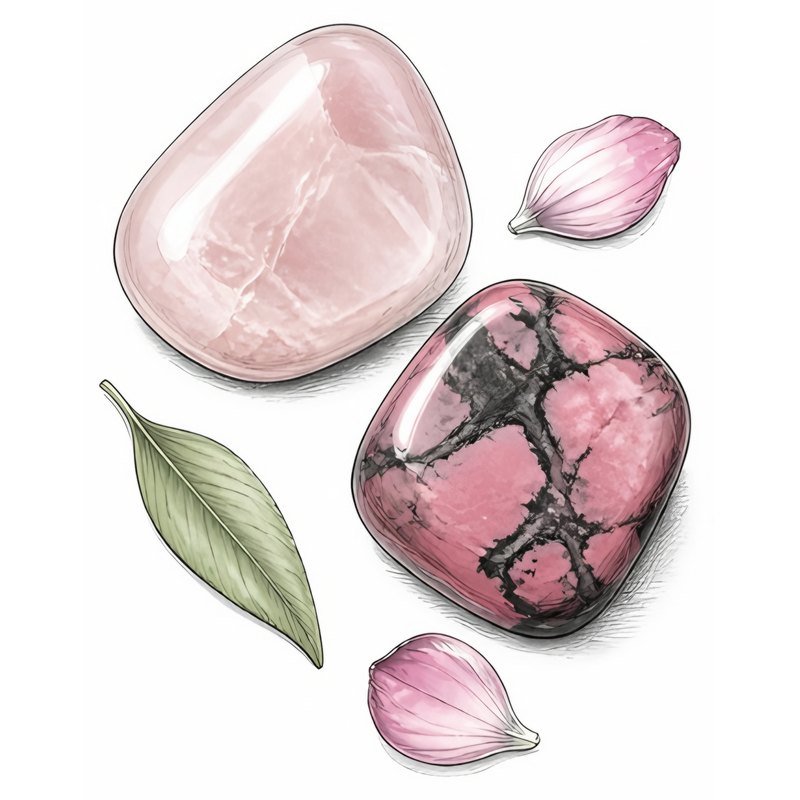
    Sketch of a pale pink rose quartz tumblestone and a deep pink rhodonite with black veins, with pink petals and a leaf

    An owl on the altar. If you would like a single focus for Blodeuwedd, a small crystal owl says more than a pile of stones. Choose the stone that matches what you are asking for: rose tones for love, labradorite for change, clear quartz for a fresh start.

    A Simple Flower Offering to Blodeuwedd

    This practice honours Blodeuwedd and the part of you that wants to choose for yourself. It can be done at any time of year, with whatever flowers or leaves are in season.

    • Gather three flowers or sprigs. In spring and summer, look for oak, broom and meadowsweet. In autumn and winter, use any three flowers, leaves or dried herbs you have.
    • Set them on a white plate or cloth with a pink chime candle and a piece of rose quartz.
    • Light the candle and say her name. Blodeuwedd, flower face.
    • Name one thing you love about yourself. Say it aloud. Then name one choice in your life that you want to make for yourself, not for anyone else.
    • Sit quietly for a few minutes. Hold the rose quartz and notice your breath, or listen for any owl calls if you are near an open window at night.
    • Close. Put out the candle and return the flowers to the earth or the compost.
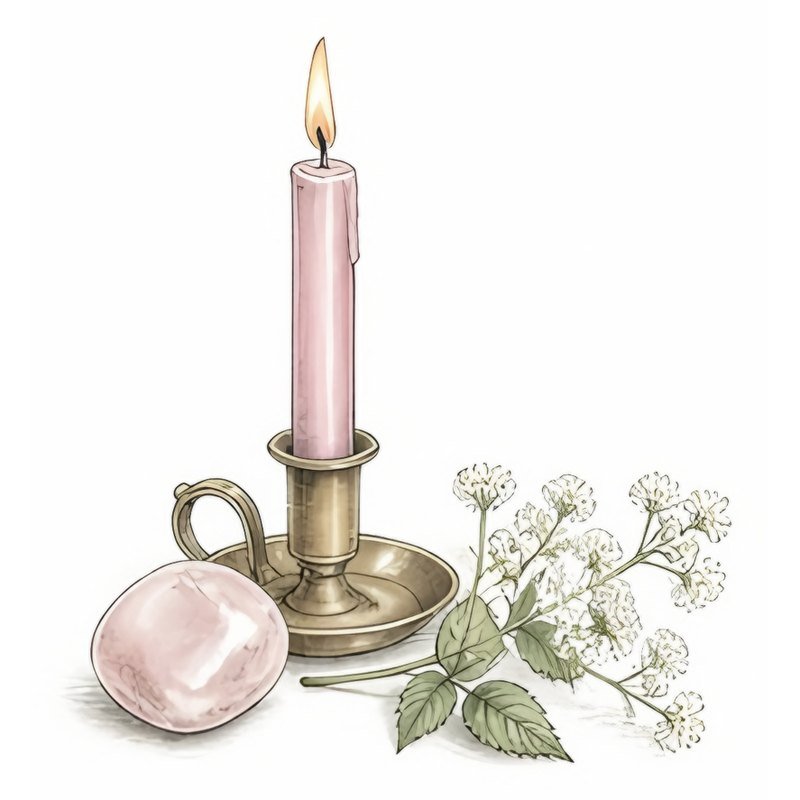
    Sketch of a small pink chime candle in a brass holder beside a rose quartz tumblestone and a sprig of meadowsweet

    Signs Blodeuwedd May Be Calling You

    • Owls keep appearing, in your garden, your dreams or your social feed.
    • You feel shaped by other people’s expectations and long to choose for yourself.
    • Wildflowers, hedgerows and May blossom move you more than you can explain.
    • You are going through a transformation that feels both painful and freeing.
    • You find yourself defending women in old stories who were cast as the villain.

    If you are unsure, our guide to which goddess is calling you may help.

    Light a candle for Blodeuwedd

    Our Manifest Magic chime candles come in ten colours. Goddess Pink is made for self love, which makes it a natural choice for Blodeuwedd, and Protection White suits her moonlit owl.

    Choose your colour

    Questions People Ask About Blodeuwedd

    What does Blodeuwedd mean?

    Blodeuwedd means flower face, from the Welsh blodau, flowers, and gwedd, face or appearance.

    How do you pronounce Blodeuwedd?

    Say blod EYE weth. The final dd is said like the th in the.

    What flowers was Blodeuwedd made from?

    In the Mabinogi she is made from the flowers of the oak, the broom and the meadowsweet. Some modern versions add more flowers, often based on a medieval poem called The Battle of the Trees, but the Mabinogi names those three.

    Why was Blodeuwedd turned into an owl?

    Gwydion turned her into an owl as punishment for plotting with Gronw to kill Lleu. He said she would never again show her face in the light of day.

    Is Blodeuwedd a goddess?

    The Mabinogi does not call her one. Today many people honour her as a goddess of flowers, spring, owls and self determination, and that modern devotion is very much alive.

    What is the Welsh word for owl?

    The everyday Welsh words are tylluan and gwdihŵ. The Mabinogi says that in its own time Blodeuwedd was also a word for owl.

    Bring Blodeuwedd home

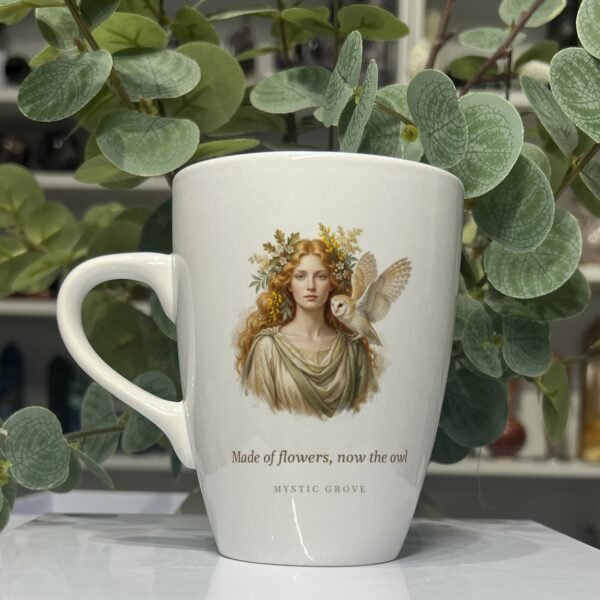
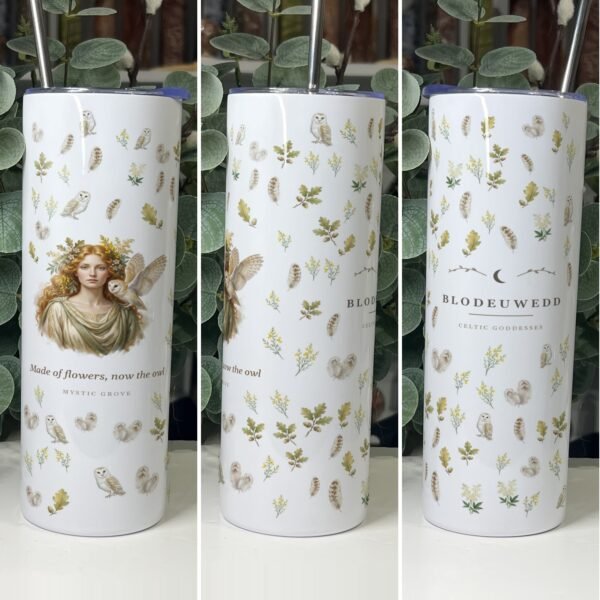
    The Blodeuwedd artwork from this series now comes on a 13oz white ceramic mug and a 20oz skinny tumbler wrapped all the way round in owls, broom and meadowsweet. Each one comes with a printed card telling her story, so it is ready to keep or to give.
    See all the goddess tumblers

  • Danu: Mother of the Irish Gods and the Tuatha Dé Danann

    Danu: Mother of the Irish Gods and the Tuatha Dé Danann

    The Danu goddess of Ireland and Dôn of Wales: the mother of the Tuatha Dé Danann, the rivers that may carry her name, and what the old texts really say

    Danu is honoured today as the great mother of the Irish gods, the goddess the Tuatha Dé Danann are named after. Yet the Danu goddess is also one of the quietest figures in all of Celtic myth, a mother known almost entirely through her children. Here is what we know, what we do not, and how people connect with her now.

    Danu at a glance

    Say it: DAH noo. Her people, the Tuatha Dé Danann, are TOO a ha day DAN an.

    Tradition: Irish, with a Welsh counterpart called Dôn.

    Known for: giving her name to the old gods of Ireland, motherhood, rivers and flowing water.

    Related names: Anu or Ana, honoured as mother of the gods of Ireland.

    Places: the Paps of Anu in County Kerry, and perhaps rivers such as the Danube and the Don.

    Symbols today: rivers, springs, wells, oak trees, the land and the stars.

    Who Is the Danu Goddess?

    In Irish myth the old gods are called the Tuatha Dé Danann, usually translated as the people, or tribe, of the goddess Danu. They are the shining, skilled race who came to Ireland in a cloud of mist, fought the Fomorians, and finally withdrew into the hollow hills when the ancestors of the Irish arrived. The Dagda, Lugh, Nuada, Brigid and the Morrígan all belong to them.

    Danu is the goddess they are named after. That makes her, in the way most people tell it today, the mother of the Irish gods: the source from which the whole family flows. She is linked with rivers, with the fertile land, with abundance, and with the deep, slow kind of care that feeds a family over generations.

    What makes her unusual is that she has almost no stories of her own. She does not fight, travel or speak in any surviving tale. She is simply there at the root, present in the names of those who came after her.

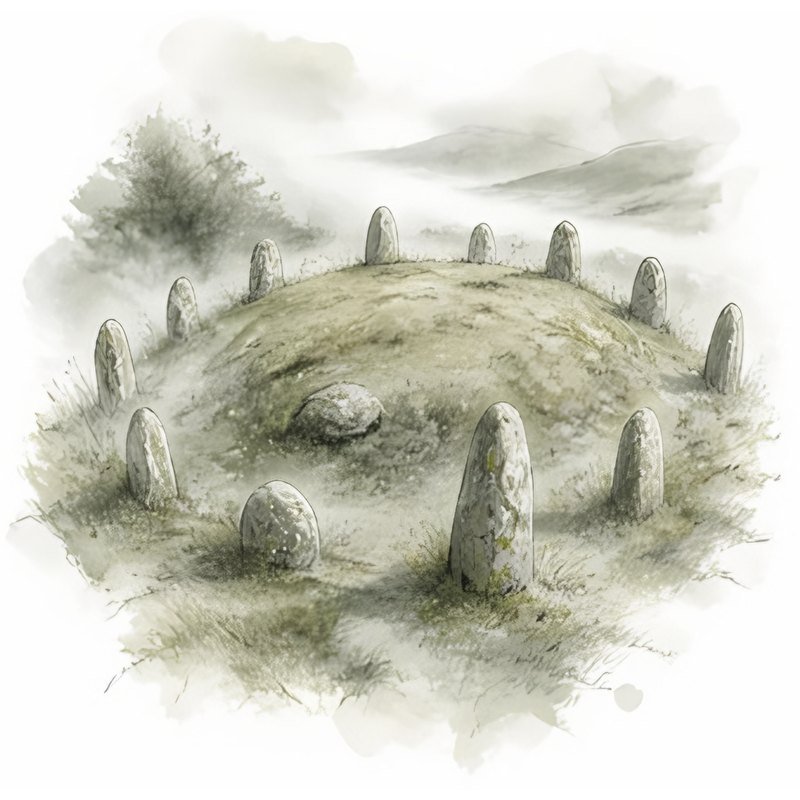
    Sketch of an ancient grassy mound ringed with small standing stones and drifting mist, like the hollow hills of the Tuatha Dé Danann

    The Tuatha Dé Danann, the People of Danu

    The fullest account of the Tuatha Dé Danann is the Lebor Gabála Érenn, the Book of the Taking of Ireland, put together by Irish monks around the eleventh century. It tells of a series of peoples who settled Ireland one after another. The Tuatha Dé Danann are the second to last. They arrive skilled in magic and craft, defeat the Fir Bolg at the first battle of Mag Tuired, and the Fomorians at the second.

    Later, when the Milesians, the ancestors of the Irish, arrive, the Tuatha Dé Danann do not vanish. They go into the sídhe, the hollow hills and ancient mounds, and become the Aos Sí, the people of the mounds. Many Irish stories treat them as still living there, close by and out of sight. If you would like to know more about them, our guide to the Sidhe and Celtic fairies goes deeper.

    A people who never quite left, named after a mother who never quite appears.

    Interestingly, the monks who wrote the Lebor Gabála were careful to present the Tuatha Dé Danann as a people of the distant past rather than as gods. Reading between the lines, most scholars agree they were the gods of pre Christian Ireland, recast as ancestors so that their stories could be kept.

    Danu and the Rivers

    One of the loveliest ideas about Danu is that she may be a river goddess. Her name has often been linked with an old word for flowing water, a root that may also sit behind the names of great rivers: the Danube in Europe, and the Don in Russia and in Scotland and England. If that is right, she would be one of the oldest divine names in Europe, a goddess remembered in the water itself.

    Scholars still argue about this, and some think the Danube took its name from a separate word for river. Even so, the image has stuck, and for many people Danu is first and foremost the goddess of the river: the source that keeps moving, feeds everything along its banks and always finds its way.

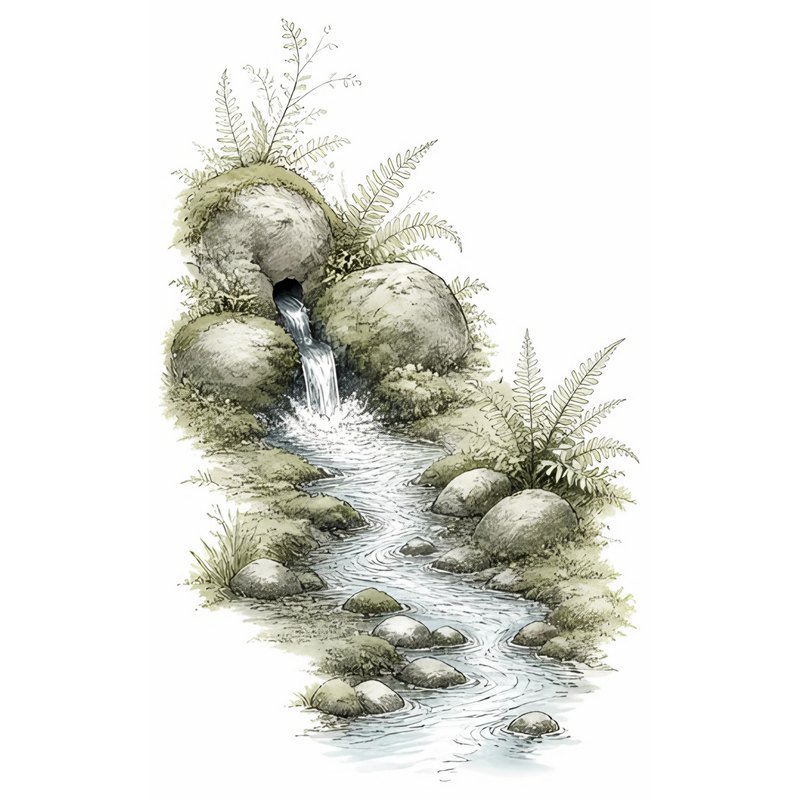
    Sketch of a small spring bubbling from mossy rocks and ferns and running away as a stream, a symbol of the Danu goddess

    Anu and the Paps of Anu

    Many writers treat Danu and Anu as the same goddess, or two forms of one name. Anu, sometimes spelled Ana, appears in Cormac’s Glossary, written around 900, where she is called the mother of the gods of Ireland, who fed the gods well. The Lebor Gabála also names Anand as one of the forms of the Morrígan.

    Her clearest mark on the landscape is in County Kerry, where two rounded mountains are called Dá Chích Anann, the Paps of Anu, the breasts of the goddess. Each summit carries a stone cairn. Few places in Ireland show so plainly the old idea of the land as a woman’s body, a mother who feeds all who live on her.

    Dôn, the Welsh Mother

    Wales has its own version of this hidden mother. In the Fourth Branch of the Mabinogi, the great family of magicians in Gwynedd are called the children of Dôn. Gwydion the magician is Gwydion son of Dôn. Arianrhod, the silver wheel, is Arianrhod daughter of Dôn. Yet Dôn herself never appears, never speaks and is never described.

    THE CHILDREN OF DÔNa family known only through its motherDônthe mother, never seenGwydionthe magicianArianrhodthe silver wheelGilfaethwyhis brotherAmaethonthe farmerGofannonthe smithDylanof the seaLleuof the skilful handSolid lines: her children. Dashed lines: her grandchildren through Arianrhod. THE CHILDREN OF DÔNknown only through its motherDônthe mother, never seenGwydionthe magicianArianrhodthe silver wheelGilfaethwyhis brotherAmaethonthe farmerGofannonthe smithDylanof the seaLleuof the skilful handSolid lines: her children.Dashed lines: her grandchildrenthrough Arianrhod.
    The children of Dôn as named in the Fourth Branch of the Mabinogi. Read from the top: Dôn, her five children, then Arianrhod’s two sons.

    Many people see Dôn and Danu as two forms of the same ancient mother, one Irish and one Welsh, since the names are so close. In Welsh star lore first written down in the nineteenth century, the constellation Cassiopeia was called Llys Dôn, the court of Dôn, and the Milky Way Caer Gwydion, the fortress of her son. It is a beautiful image of a family that begins in the river and ends among the stars.

    You can read more about Arianrhod, her most famous daughter, in our guide to Arianrhod, the silver wheel.

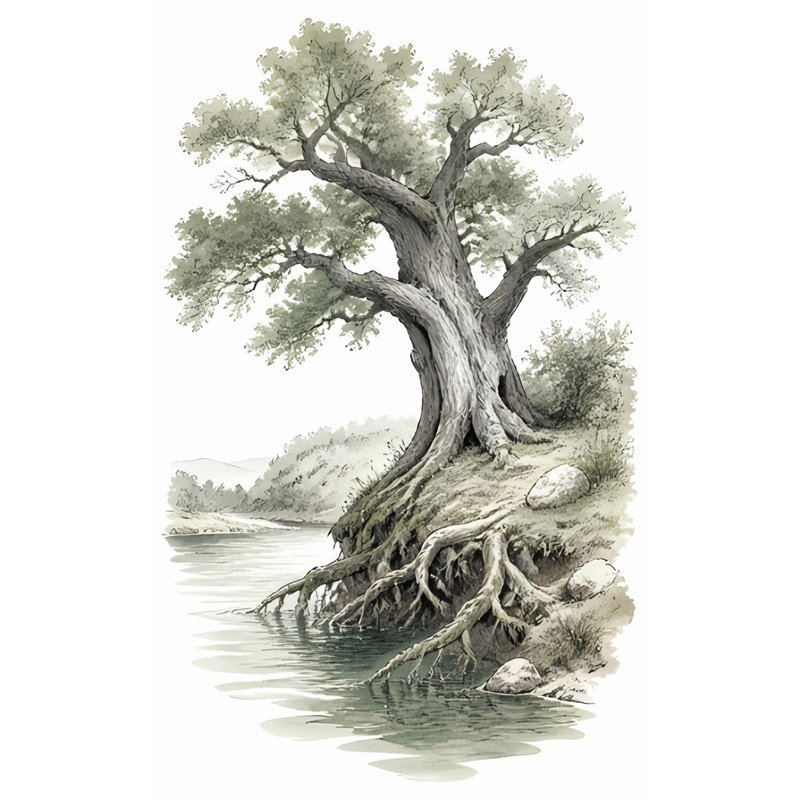
    Sketch of an ancient oak tree on a riverbank with its roots reaching down into the water

    The Honest History of the Danu Goddess

    Danu is a good example of how a goddess can grow far beyond her sources, and the shape of it is simple enough to follow.

    The name Danu itself does not appear in any medieval Irish text. What survives is the form Danann, as in Tuatha Dé Danann, which is a possessive, meaning of Danu. Scholars worked backwards from it to the name Danu. Even the earliest texts often call the gods simply the Túath Dé, the tribe of the gods, with Danann added later. You can follow this on the Danu entry on Wikipedia, which sets out the debate clearly.

    The great mother goddess image is mostly modern. In the nineteenth and twentieth centuries writers filled the gap with a grand earth mother, a Celtic counterpart to Demeter. The medieval writers themselves were far less sure that the Tuatha Dé were gods at all.

    Dôn may not even have been female. The Mabinogi never says whether Dôn is a mother or a father. Some early modern antiquarians assumed Dôn was a king. Linking Dôn with Danu is a reasonable modern reading rather than something the old texts state.

    The river link is a theory. It is a lovely and quite possible one, but scholars also suggest the name may come from words meaning skill, or good, or that Danu began as Anu with a D added.

    Knowing all this does not take anything away. A goddess who survives only in the names of her children, in two mountains and perhaps in a few great rivers, has been remembered in a very particular way. Modern devotion to Danu has built something real on that quiet foundation, and plenty of people find her deeply present in their lives.

    Crystals for the Danu Goddess

    No old source gives Danu any crystals. The stones below are modern correspondences chosen for what she stands for today: rivers and water, the fertile land, the family line and the stars her children became. Each one is in stock at Mystic Grove.

    Moss agate, for the land

    Moss agate holds green, plant like patterns inside clear stone, as if a tiny garden were growing within it. It is the classic gardener’s stone and a natural fit for a mother of the land and its abundance. Look at our moss agate towers and spheres.

    Ocean jasper, for flowing water

    Ocean jasper is covered in soft circles and ripples that look like water moving over stones. It suits a river goddess beautifully and makes a calm, steady companion. See our ocean jasper towers.

    Blue lace agate, for the gentle current

    Pale blue banded agate carries the colour and pattern of a shallow stream. Many people use it for gentle, honest speech, which suits a goddess people pray to for steady care rather than drama. It comes as a tumblestone.

    Lapis lazuli, for the starry family

    Deep blue lapis flecked with gold pyrite has been compared to the night sky for thousands of years. With Danu it speaks of the children of Dôn who were written into the stars. Try a lapis lazuli sphere.

    Bloodstone, for the family line

    Green with red flecks, bloodstone has long been linked with courage and with the strength of a lineage. It is a fitting stone for honouring ancestors, the family you come from and the family you have chosen. You will find it in our tumblestone range.

    Clear quartz, for the source

    Clear as spring water, quartz is the all purpose stone that can stand in for any other. For Danu it represents the source itself, the clear spring where the river begins. A clear quartz palm stone sits comfortably in the hand.

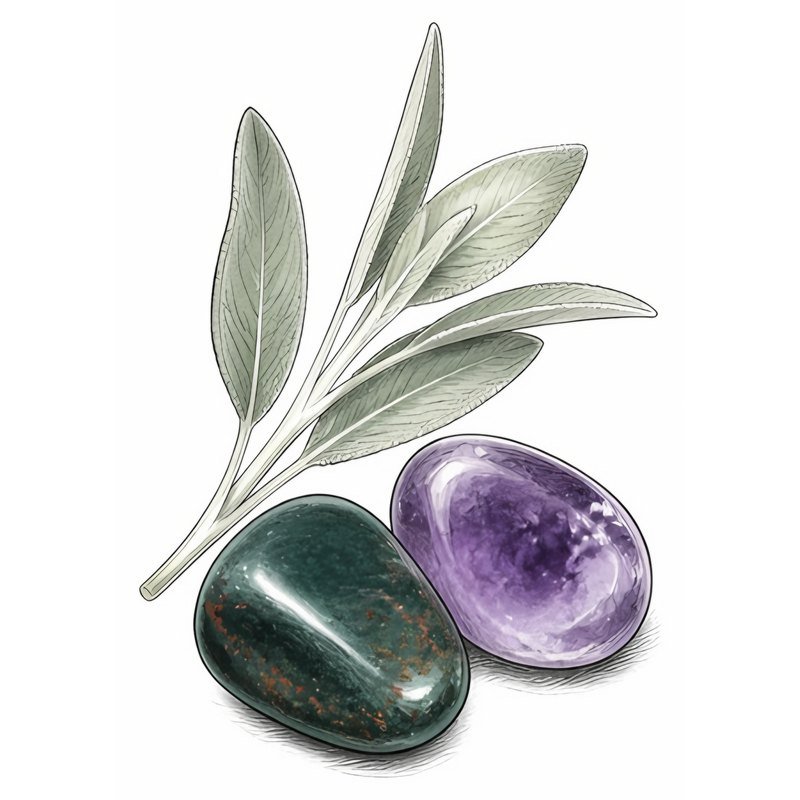
    Sketch of a dark green bloodstone tumblestone with red flecks beside a purple amethyst and a sprig of sage

    Take care of real rivers. If you leave an offering outside, choose clean water, a few words, a song or a picked up piece of litter rather than food, milk or anything that could harm the water. Many people feel this is the offering Danu would most want.

    A Simple River Offering to Danu

    This practice can be done beside any river, stream or spring, or at home with a bowl of fresh water. It is a gentle way to say thank you to the people and places that raised you.

    • Find your water. Go to a river or stream you love, or fill a clear bowl with water and set it on a table with a dark blue chime candle beside it.
    • Light the candle, if you are at home, and hold a stone from the list above.
    • Name your river. Say aloud the name of the water in front of you, or of the river nearest your home. Then say Danu’s name.
    • Give thanks for your family. Speak the names of the people who helped you grow, by blood or by choice. Living or gone, they all belong in the list.
    • Listen. Spend a few minutes with the sound of the water, or rest your fingertips on the surface of the bowl and notice how it feels. Breathe slowly and let your thoughts settle.
    • Close. At a river, leave only your words. At home, pour the water onto a plant or the earth outside and put out the candle.
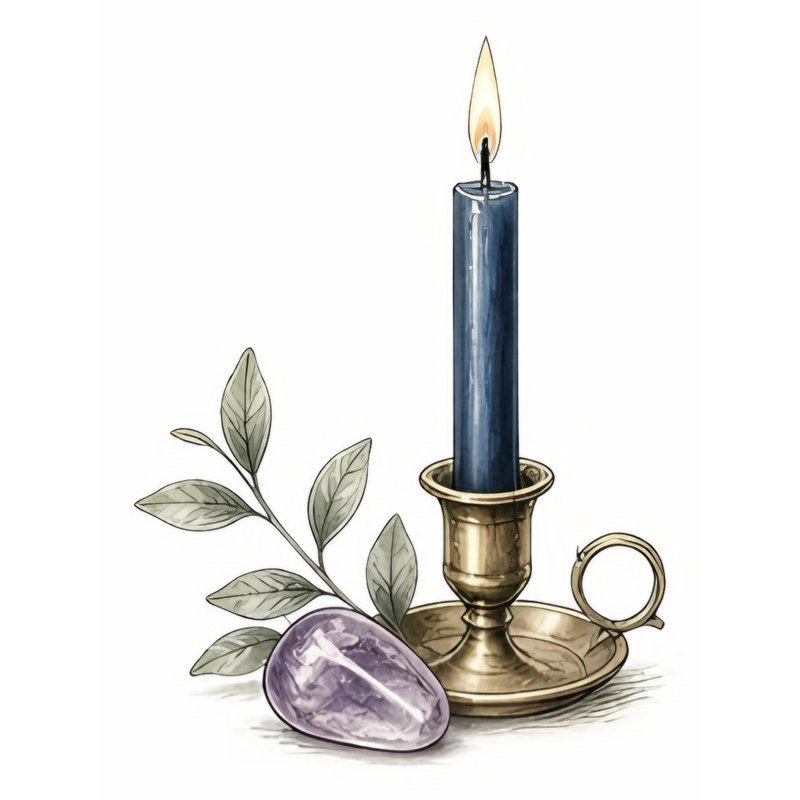
    Sketch of a small dark blue chime candle in a brass holder beside an amethyst tumblestone and a sprig of leaves

    Signs Danu May Be Calling You

    • You feel calm and at home beside rivers, springs and moving water.
    • Your family history, your ancestors or the people who raised you are on your mind.
    • You find yourself drawn to the old gods of Ireland, but none of them feels like your first home.
    • Oak trees, river stones or the night sky keep catching your attention.
    • You are building something slowly, for those who will come after you.

    If you are still not sure, our guide to which goddess is calling you has simple ways to listen for an answer.

    Light a candle for Danu

    Our Manifest Magic chime candles come in ten colours. Dark blue for deep water and the night sky is a lovely choice for Danu, and green for the land and abundance works well too.

    Choose your colour

    Questions People Ask About the Danu Goddess

    What is Danu the goddess of?

    Today Danu is honoured as the mother goddess of the Irish gods, the Tuatha Dé Danann, and as a goddess of rivers, flowing water, the fertile land and abundance. The old texts say very little about her directly.

    How do you pronounce Danu?

    Say DAH noo, with the stress on the first syllable.

    Is Danu Irish or Welsh?

    Danu is Irish. Wales has a very similar figure called Dôn, the mother of Gwydion and Arianrhod, and many people treat the two as one.

    Is Danu the same as Anu?

    Many writers think so. Anu is called the mother of the gods of Ireland in Cormac’s Glossary, and the Paps of Anu in Kerry are named after her. Scholars are still not certain whether they began as one goddess or two.

    Who are the children of Danu?

    The Tuatha Dé Danann as a whole, including the Dagda, Lugh, Nuada, Brigid and the Morrígan. In the Lebor Gabála, Brian, Iuchar and Iucharba are named as the three gods of Danu.

    Is Danu connected to the River Danube?

    Possibly. Both names may come from an ancient word for river, but scholars are divided and it cannot be proven.

    Bring Danu home

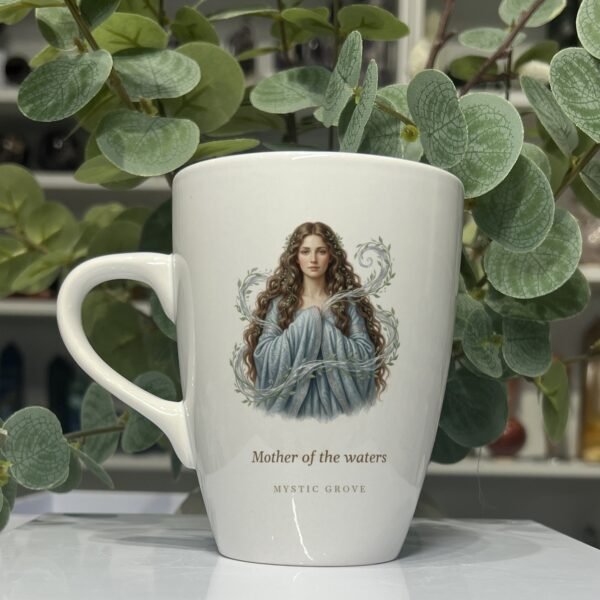
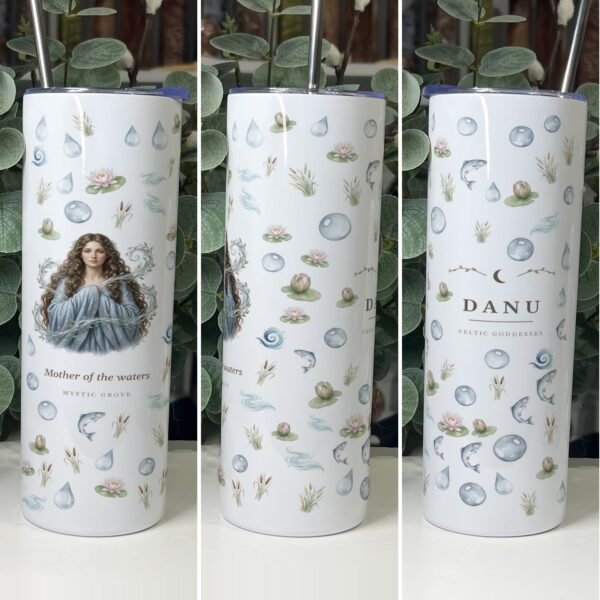
    The Danu artwork from this series now comes on a 13oz white ceramic mug and a 20oz skinny tumbler wrapped all the way round in salmon, water lilies and reeds. Each one comes with a printed card telling her story, so it is ready to keep or to give.
    See all the goddess tumblers

  • Cerridwen: Welsh Goddess of the Cauldron, the Awen and Rebirth

    Cerridwen: Welsh Goddess of the Cauldron, the Awen and Rebirth

    Cerridwen, the Welsh goddess of the cauldron: her story, the awen, the three drops, the chase and the birth of Taliesin

    Cerridwen is the keeper of the cauldron of inspiration in Welsh tradition, the one who brews for a year and a day and does not give her gift easily. Here is who the Cerridwen goddess is, where her story really comes from, what her cauldron means, and the crystals and quiet practices people use to work with her today.

    Cerridwen at a glance

    Say it: ke RID wen. The older Welsh spelling is Ceridwen, with one r.

    Tradition: Welsh, from the Tale of Taliesin and the poems of the Welsh bards.

    Known for: the cauldron of inspiration, the awen, shapeshifting, and giving birth to the poet Taliesin.

    Home: Llyn Tegid, the lake at Bala in north Wales.

    Symbols: the cauldron, three drops, the hen, the grain of wheat, the leather bag on the water.

    Season: many modern pagans honour her at Samhain, the dark turn of the year.

    Who Is the Cerridwen Goddess?

    Cerridwen is a figure from Welsh legend who owns a great cauldron. In it she brews a mixture that, once ready, gives whoever tastes it the awen: the Welsh word for poetic inspiration, the flowing spirit that the old bards believed came to them from outside themselves.

    She is not one of the gods of the Mabinogi. She belongs to a separate tale, the story of how the greatest Welsh poet, Taliesin, came to be born. In that tale she is a powerful wise woman, a mother, a brewer of herbs and a shapeshifter. Over the centuries poets called her cauldron the source of their art, and in the last two hundred years she has grown into one of the best loved goddesses of modern witchcraft.

    People come to Cerridwen for three things above all: inspiration, transformation and the courage to begin again. Her story is the old pattern of an initiation, where the self that went in does not come out the same.

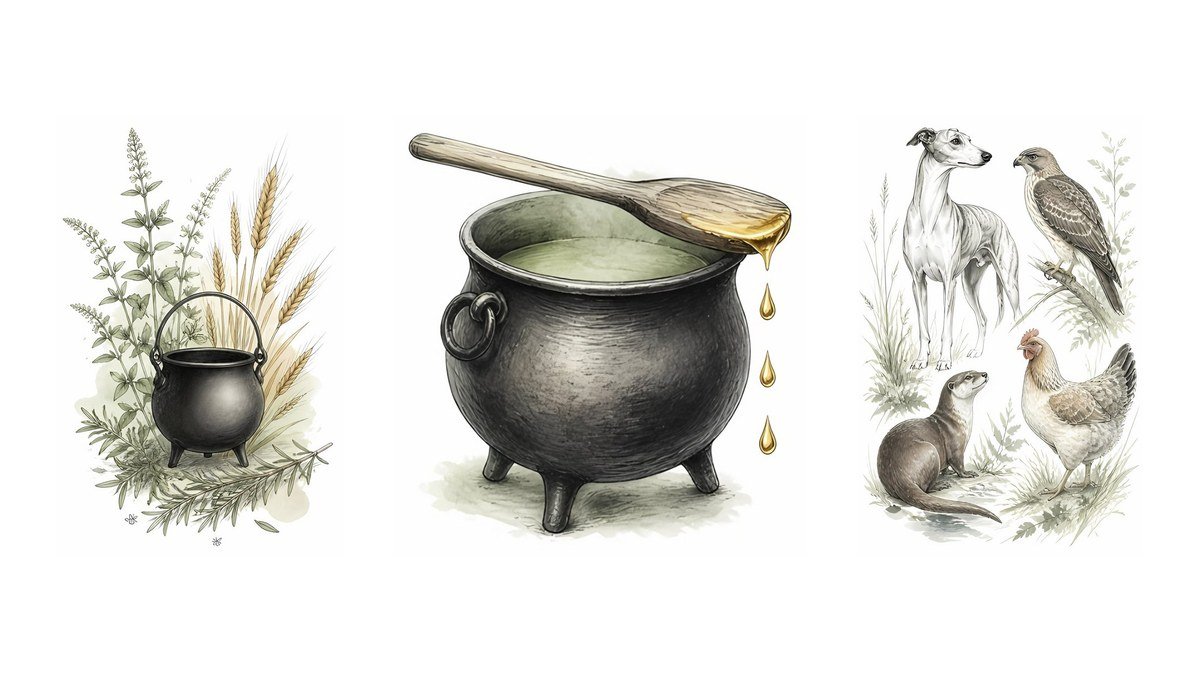
    Pencil and watercolour sketch of a small black cauldron surrounded by herbs and ears of wheat

    The Story of Cerridwen and Gwion Bach

    A cauldron for her son

    Cerridwen lived with her husband, Tegid Foel, at Llyn Tegid, the lake now known as Bala Lake. They had a daughter, Creirwy, said to be the most beautiful girl in the world, and a son, Morfran, also called Afagddu, said to be the most unfortunate looking. To make up for her son’s looks, Cerridwen decided to give him something better: wisdom and inspiration so great that no one would ever think less of him.

    She gathered herbs at their proper times and set her cauldron to boil. The brew had to simmer without stopping for a year and a day. An old blind man named Morda kept the fire, and a village boy, Gwion Bach, was set to stir.

    Three drops

    At the very end of the year, as the brew finished, three drops leapt out of the cauldron and landed on Gwion’s finger. They burned, and he put his finger in his mouth. In that moment all the wisdom meant for Morfran passed to him. The rest of the brew became poison, the cauldron cracked, and the poison ran away into a stream.

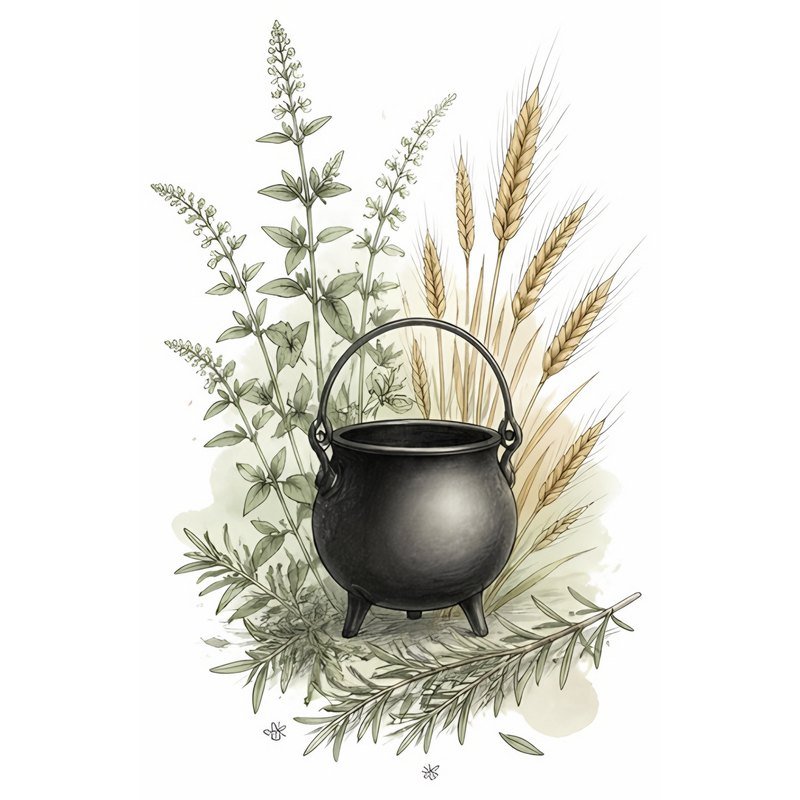
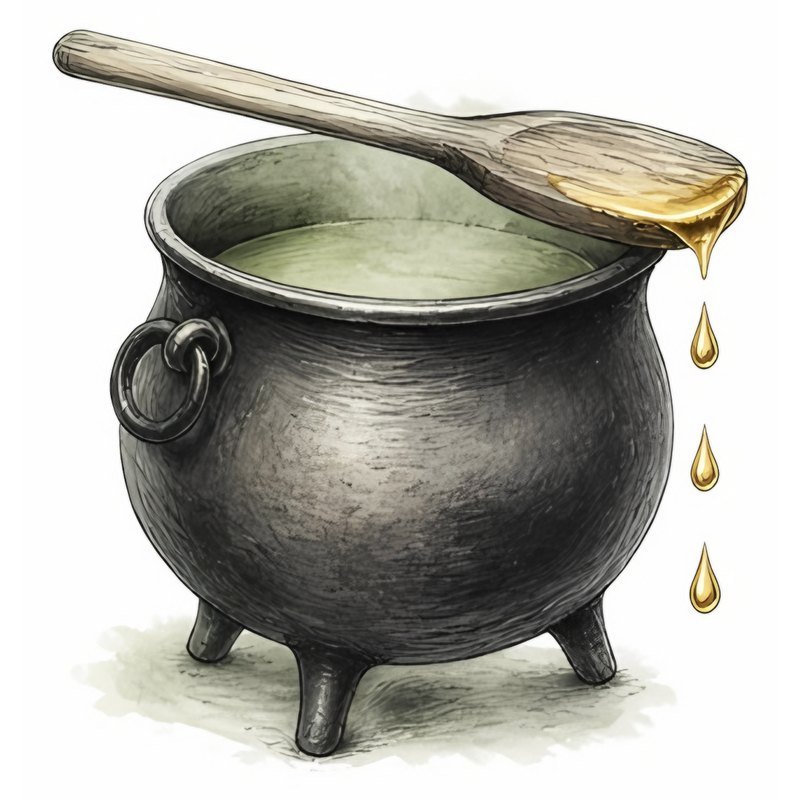
    Sketch of a black cauldron with a wooden paddle across its rim and three golden drops falling

    The gift was never meant for Gwion. It found him anyway, and he spent the rest of the story running from what it cost.

    The chase

    Gwion knew at once that Cerridwen would come for him, so he ran. What follows is one of the great chases of Celtic myth. Each time he changed shape, she changed into the creature that hunts it.

    THE CHASEfour shapes, four answersGwion BachCerridwena harehe runsa greyhoundshe hunts1a fishhe divesan ottershe swims after2a birdhe fliesa hawkshe stoops3a grainof wheat on the floora black henshe swallows him4 THE CHASEfour shapes, four answersGwion BachCerridwena harehe runsa greyhoundshe huntsa fishhe divesan ottershe swims aftera birdhe fliesa hawkshe stoopsa grainof wheat on the floora black henshe swallows him
    The chase from the Tale of Taliesin. Read each column from top to bottom: Gwion’s shape, then the shape Cerridwen takes to follow him.

    At last Gwion fell into a barn as a single grain of wheat among thousands. Cerridwen became a black hen, scratched through the floor and swallowed him.

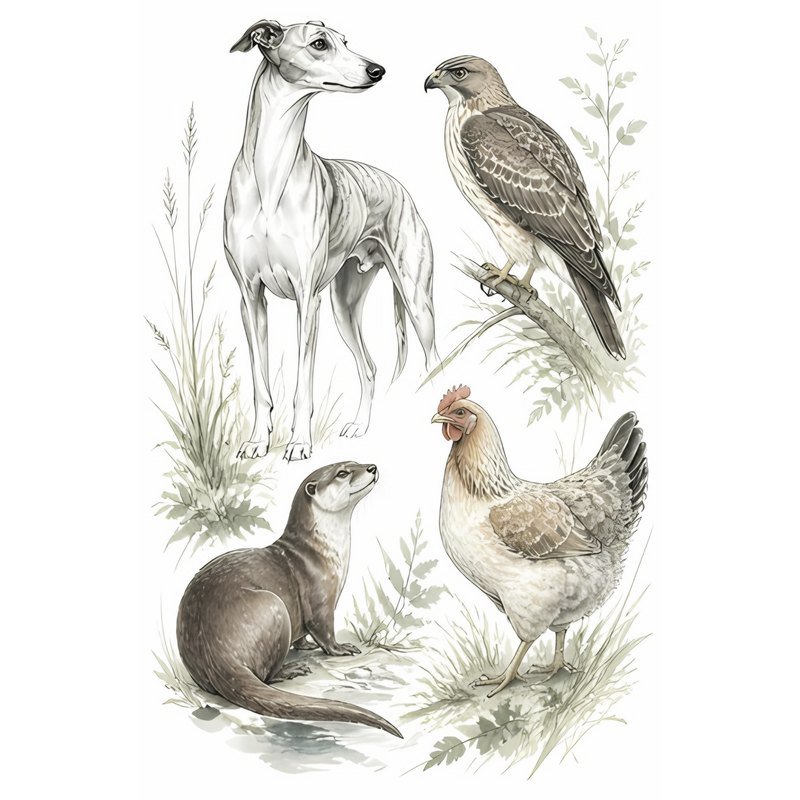
    Natural history sketch of a greyhound, an otter, a hawk and a hen, the four shapes Cerridwen takes in the chase

    The child in the leather bag

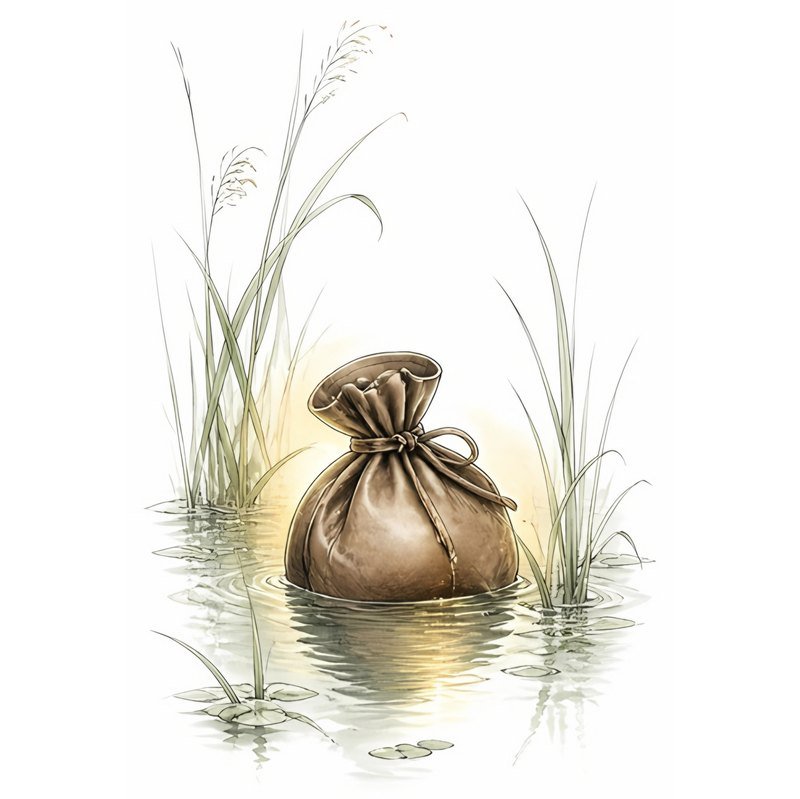
    Nine months later Cerridwen gave birth to a baby boy. He was so beautiful that she could not bring herself to harm him, so she wrapped him in a leather bag and set him adrift on the water. The bag was caught in a salmon weir, where a young man named Elffin found it. When he opened it and saw the child’s shining forehead, he called him Taliesin, which means radiant brow. Even as a baby, Taliesin spoke in verse.

    Sketch of a tied leather bag floating among river reeds with a soft golden glow

    What the Cerridwen Story Means

    Read slowly, the tale follows the shape of an initiation. Gwion takes something he was never offered. He is hunted through every form he can think of. He is swallowed, carried in the dark, and born again with a new name. Gwion Bach ends and Taliesin begins.

    That is why Cerridwen is so often called the demanding one. She is not a gentle fairy godmother who hands out talent. Her inspiration is boiled for a year and a day, it burns, and it changes the person who receives it. For anyone who writes, sings, makes or teaches, her story is a reminder that real creative work asks something of you.

    The cauldron in Welsh tradition

    Cauldrons appear again and again in Welsh story. There is the cauldron of rebirth in the Second Branch of the Mabinogi, which brings dead warriors back to life, and the cauldron of the Head of Annwn in the old poem The Spoils of Annwn, which will not boil food for a coward. Cerridwen’s cauldron sits in this company as the cauldron of knowledge and poetry. Many people today simply say there is one cauldron with many stories.

    The awen

    Awen is a Welsh word that is still used today. It means inspiration, the creative spark a poet waits for. In modern Druidry it is often chanted as three long sounds, AH, OO, EN, and drawn as three rays of light. The three rays are a modern symbol, created in the eighteenth century revival of Druidry, but the word itself and its link to Cerridwen’s cauldron are genuinely old.

    Cerridwen, Samhain and the Moon

    No medieval source gives Cerridwen a festival. Today, though, many witches and pagans honour her at Samhain, at the end of October, when the year tips into its dark half. The cauldron is one of the great symbols of Samhain, a place where old things are broken down so that new life can form, and her story of death and rebirth sits naturally in that season. Some versions of the tale place Taliesin’s discovery at the start of May or at Samhain itself, which may have helped the link along.

    In modern moon work Cerridwen is usually honoured at the waning and dark moon, the nights for letting go, brewing ideas in private and waiting before you act. A year and a day is also a figure that still lives on in magical practice. Many traditions use it as the length of study before an initiation, which owes something to her slow brewing.

    If you would like to read more about the season she belongs to, our guide to Samhain covers its history and traditions.

    The Honest History of Cerridwen

    Cerridwen is much loved, so it helps to know which parts of her story are old and which are recent.

    What the old sources say

    The earliest mentions of Cerridwen are in the work of Welsh court poets of the twelfth and thirteenth centuries, who name her as the source of their inspiration, much as a classical poet might call on the Muse. Two of these poems survive in the Black Book of Carmarthen, written down around 1250. She also appears in poems in the Book of Taliesin, a manuscript of the early fourteenth century.

    The full story of the cauldron, the chase and the leather bag is later still on paper. The earliest surviving copy was written in the sixteenth century by Elis Gruffydd, a Welsh soldier based at Calais, in a vast chronicle of world history. Scholars think the tale itself is centuries older, since the poets clearly knew it, but the version most people read today is a nineteenth century English retelling. You can read an older translation on Mary Jones’s Celtic Literature Collective, and the Eryri National Park has a lovely short retelling tied to the real places around Bala.

    What is modern

    The idea of Cerridwen as the great goddess of ancient Britain began with the Welsh antiquarian Edward Davies in 1809. In 1948 Robert Graves made her a dark moon and crone goddess in his book The White Goddess, and modern witchcraft took much of its idea of her from there. Historian Ronald Hutton, in his Gresham College lecture Finding Lost Gods in Wales, explains how figures like Cerridwen were built up into deities in modern times.

    None of that makes her less real to the people who work with her today. A living tradition grows, and Cerridwen has grown a great deal. It simply means you can enjoy the medieval tale for what it is, and know that the crone of the dark moon is a newer and still meaningful layer.

    Her name is also debated. The ending probably comes from an old Welsh word for woman. One scholar read the whole name as crooked woman, another suggested a link with words meaning fierce or to be believed in. No one knows for certain.

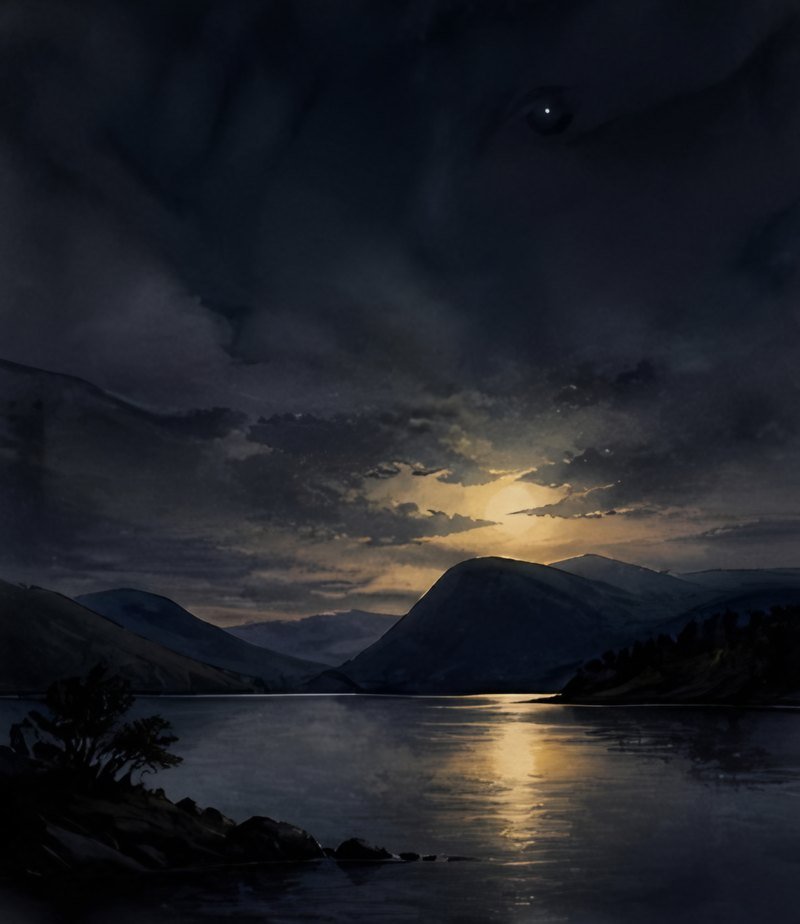
    Dark watercolour of a mountain lake at night with a golden glow on the water, in the spirit of Llyn Tegid at Bala

    Crystals for Cerridwen

    No medieval text links Cerridwen with any crystal. The stones below are modern correspondences, chosen for what her story is about: the dark cauldron, the long brew, the change of shape and the spark of inspiration. Each is one we stock, so you can find it in the shop.

    Labradorite, for shapeshifting and change

    Labradorite looks grey and plain until the light catches it and blue and gold flash across its surface. It is the stone people most often reach for with Cerridwen, because it mirrors the chase: one thing becoming another. Hold a labradorite tumblestone while you journal about a change you are in the middle of, or keep a labradorite tower on your writing desk.

    Black obsidian, for the dark of the cauldron

    Obsidian is volcanic glass, formed when molten rock cools too quickly to crystallise. That fits a goddess whose cauldron melts things down. It is a traditional Samhain stone and a good companion for the waning moon, when you are clearing out what no longer serves. See our obsidian collection.

    Amethyst, for wisdom

    Amethyst has been linked with a clear and sober mind since the ancient Greeks. With Cerridwen it stands for the wisdom in the brew, the knowledge that came to Gwion in a single taste. A piece of amethyst by the bed suits dream journalling.

    Citrine, for the spark

    Golden citrine carries the colour of the three drops. Use it when you want ideas to come, for a writing project, a new course or a creative business. Our natural citrine points and tumblestones both work well.

    Smoky quartz, for letting the old self go

    Smoky quartz is clear quartz darkened deep in the earth. It is a grounding stone, often used when an ending feels heavy. With Cerridwen it speaks to the part of the story where Gwion has to stop running. Try a smoky quartz tower.

    Fluorite, for study

    Fluorite is sometimes called the student’s stone. Cerridwen gathered every herb at its proper hour and watched her brew for a whole year, which is about as dedicated as study gets. A rainbow fluorite tower makes a quiet desk companion for anyone learning a craft.

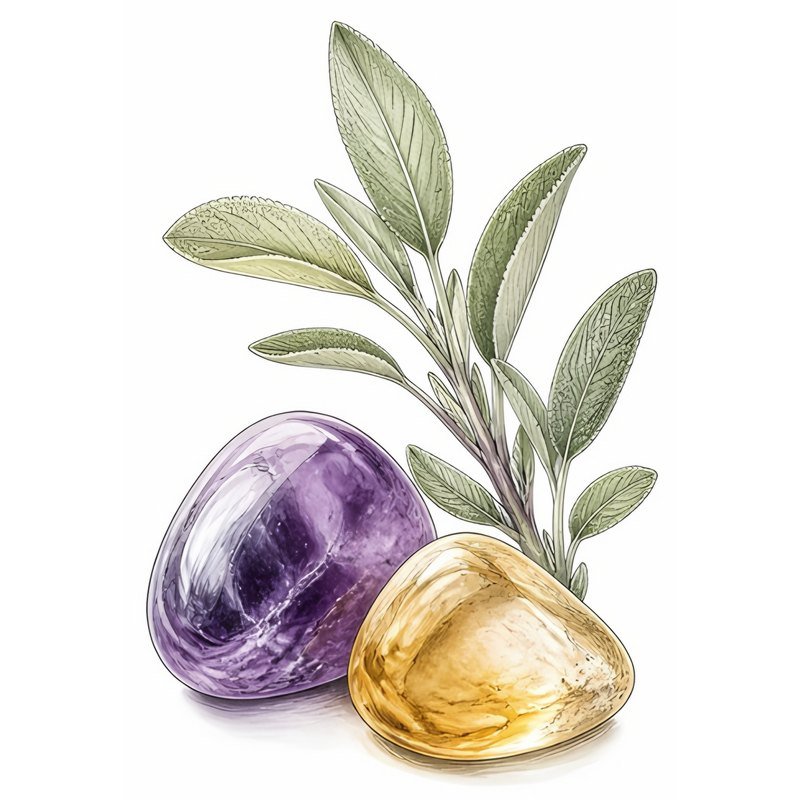
    Sketch of a purple amethyst tumblestone and a golden citrine tumblestone beside a sprig of sage

    If you only have one stone, choose clear quartz and tell it plainly what you are asking for. Many people find a single stone held with a clear intention says more than a full set left in a drawer.

    A Simple Cauldron Practice for Cerridwen

    This is a gentle practice for the waning or dark moon, or for any evening when you want to call in fresh ideas. You need a small cauldron or heatproof bowl, a yellow chime candle, a pen and paper, and one of the stones above.

    • Set your space. Place the cauldron in front of you with the candle beside it and the stone in your hand.
    • Light the candle. Say her name aloud three times: Cerridwen, Cerridwen, Cerridwen.
    • Write what you are ready to leave behind. A habit, a fear, an old way of seeing yourself. Fold the paper and place it in the cauldron. If it is safe to do so, burn it there. If not, tear it up and leave it in the bowl.
    • Write what you are stirring. One idea, one project or one question you would like inspiration for. Keep this paper.
    • Sit with the brew. Rest your hands on the warm sides of the bowl, or simply breathe slowly. Some people like to hum or chant the three sounds of the awen, AH, OO, EN, on the out breath. Others sit in silence. Either is fine.
    • Close. Thank Cerridwen, put out the candle, and keep the second paper somewhere you will see it for the next month.
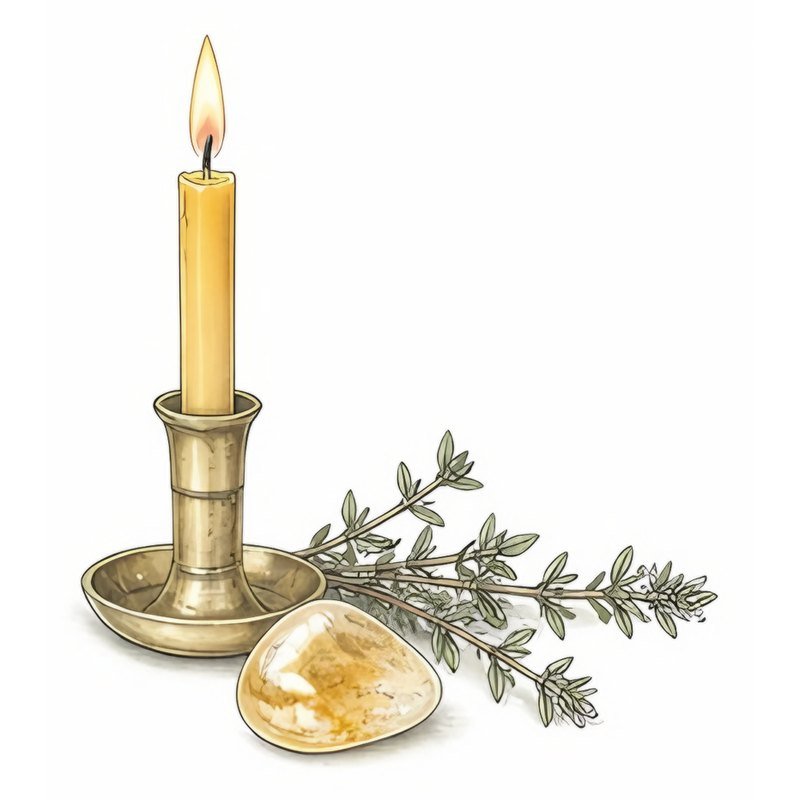
    Sketch of a small yellow chime candle in a brass holder beside a citrine tumblestone and a sprig of herbs

    Signs Cerridwen May Be Calling You

    • You keep returning to cauldrons, brewing, herbs or kitchen witchcraft.
    • You are in a season of big change, where the old version of you no longer fits.
    • A creative project will not leave you alone, even when you try to set it down.
    • Hens, hares, otters or hawks keep appearing in your days or dreams.
    • You feel drawn to Wales, to Welsh poetry or to the Welsh language.

    If you are not sure which goddess is reaching for you, our guide to which goddess is calling you has some simple ways to find out.

    Light a candle for Cerridwen

    Our Manifest Magic chime candles come in ten colours. Yellow is the colour of the three drops and the spark of inspiration, and black suits the dark of the cauldron and Samhain.

    Choose your colour

    Questions People Ask About Cerridwen

    What is Cerridwen the goddess of?

    Cerridwen is the Welsh goddess of the cauldron of inspiration, known for wisdom, poetry, transformation and rebirth. In modern witchcraft she is also honoured as a goddess of herbs, magic and the dark moon.

    How do you pronounce Cerridwen?

    Say ke RID wen, with the stress on the middle syllable. The c is hard, like a k.

    Is Cerridwen a moon goddess?

    Not in the medieval sources. The link with the moon, and especially the dark moon, comes from the twentieth century, largely through Robert Graves. Many people today still honour her at the waning and dark moon, and that modern practice is perfectly valid.

    Is Cerridwen a crone goddess?

    In modern witchcraft she is often seen as a crone, the wise elder of the triple goddess. In the old tale she is a mother of grown children, a wife and a skilled brewer, with no mention of great age.

    Who is Cerridwen’s son?

    Her first son is Morfran, also called Afagddu. Her second, through the swallowed grain, is the poet Taliesin.

    What are Cerridwen’s symbols?

    The cauldron above all, together with the three drops, the hen, the grain of wheat, the greyhound, the otter, the hawk and the leather bag on the water.

    Bring Cerridwen home

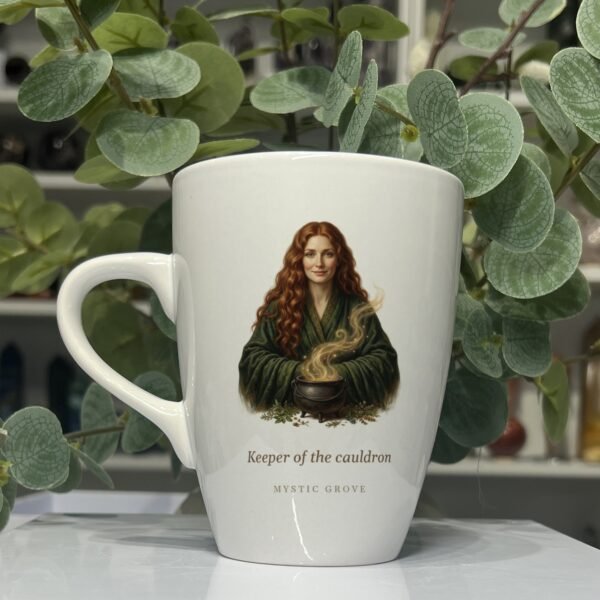
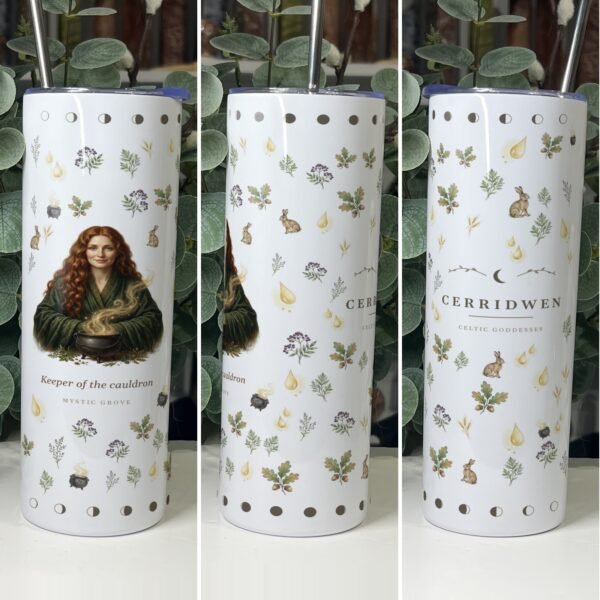
    The Cerridwen artwork from this series now comes on a 13oz white ceramic mug and a 20oz skinny tumbler wrapped all the way round in cauldrons, hares and herbs. Each one comes with a printed card telling her story, so it is ready to keep or to give.
    See all the goddess tumblers

  • Samhain 2026: The Date, the Sky and a Gentle Fortnight Ritual

    Samhain 2026: The Date, the Sky and a Gentle Fortnight Ritual

    Samhain 2026 falls on Saturday 31 October: the date, the sky and a gentle fortnight to keep it

    Samhain 2026 arrives on a Saturday night, five nights after the Hunter’s Moon and a week after the clocks go back. Here is everything that is particular to this year: the dates and times, what the Moon is doing, and a simple way to keep Samhain across the whole dark fortnight rather than a single evening.

    Samhain 2026 at a Glance

    • Samhain eve: Saturday 31 October 2026, running into Sunday 1 November
    • The clocks go back: Sunday 25 October at 2am, so Samhain arrives with the first week of dark evenings
    • Hunter’s Moon in Taurus: Monday 26 October at 4.12am, five nights before Samhain
    • The Moon on Samhain eve: waning, a little over half lit, passing through Cancer
    • Last quarter Moon: Sunday 1 November at 8.28pm
    • Astronomical Samhain: Saturday 7 November, when the Sun reaches 15 degrees of Scorpio
    • Lunar Samhain: the New Moon in Scorpio, Monday 9 November at 7.02am
    • Altar stones: obsidian, black tourmaline, smoky quartz, labradorite, moonstone, carnelian and red jasper

    When is Samhain 2026?

    Samhain 2026 is kept on the evening of Saturday 31 October and through Sunday 1 November. The old Gaelic year counted its days from dusk, so the festival begins as the light goes on the 31st rather than at midnight. That makes Saturday evening the heart of it, with Sunday as a slow, quiet day after.

    Some people prefer to mark the astronomical midpoint between the autumn equinox and the winter solstice instead. In 2026 the Sun reaches 15 degrees of Scorpio, the exact halfway point, on Saturday 7 November. Neither date is more correct than the other. The fixed date of 31 October is the one the old calendars and the Irish stories use, and the astronomical date suits anyone who likes to follow the sky. This year they fall exactly a week apart, both on a Saturday, which gives a natural fortnight to work with.

    A third way is lunar Samhain, kept on the dark or new Moon closest to the festival. In 2026 that is the New Moon in Scorpio at 7.02am on Monday 9 November, two days after astronomical Samhain, so all three ways of keeping it sit inside the same fortnight.

    What Is Samhain?

    Samhain, said SOW in (rhymes with cow), is the old Gaelic festival that marks the end of the harvest and the start of winter, the dark half of the year. In medieval Ireland it was one of the four great seasonal festivals, a time for bringing in the herds and gathering together, and the old stories tell of the doors to the Otherworld standing open on Samhain night.

    Today it is kept by people of many paths as a night for remembering those who have gone before, and for letting go of whatever the year has finished with.

    For the full background to the festival, the meaning of the word and the old stories, our evergreen guide to the Samhain meaning and its honest history covers it in depth. This post stays with what is particular to Samhain 2026.

    This year the dark half of the year begins on a weekend, under a waning Moon, with an hour of evening already handed back to the night.

    The sky around Samhain 2026

    The fortnight opens on Sunday 25 October, when the clocks go back at 2am and the evenings close in an hour earlier. It is worth noticing how that first dark evening feels in the body. For many of us it is the moment the year turns, more than any date on a calendar.

    The next morning, at 4.12am on Monday 26 October, the Hunter’s Moon is full in Taurus. Taurus is the steady earth sign that asks what we value and want to keep. Our guide to the Hunter’s Moon 2026 has a ritual for that night if you would like to begin there.

    By Samhain eve the Moon is waning and a little over half lit, moving through Cancer. Cancer is the sign of home, family and the people who came before us, which sits beautifully with a night given to remembering. A waning Moon is the classic time for releasing and clearing, so Samhain 2026 leans towards letting go rather than starting anything new.

    The Moon reaches its last quarter at 8.28pm on Sunday 1 November, the half lit point that marks the final stretch of the cycle. Then, after astronomical Samhain on Saturday 7 November, the New Moon in Scorpio arrives at 7.02am on Monday 9 November. Our New Moon in Scorpio 2026 guide picks up the thread there, with intentions for the dark months ahead.

    There is a numerology note too. 2026 adds to 10, which reduces to 1, the number of beginnings. Samhain in a 1 year makes a clean doorway: close the old chapter honestly, and the new one has room.

    MYSTIC GROVEThe Samhain 2026 FortnightSun 25 OctClocks go backDarker evenings beginMon 26 OctHunter’s MoonFull in Taurus, 4.12amSat 31 OctSamhain eveMoon waning in CancerSun 1 NovLast quarter8.28pm, the Moon half litSat 7 NovAstronomical SamhainSun at 15 degrees ScorpioMon 9 NovNew Moon in Scorpio7.02am, a fresh startAll times UK time (GMT) MYSTIC GROVEThe Samhain 2026 FortnightSun 25 OctClocks go backDarker evenings beginMon 26 OctHunter’s MoonFull in Taurus, 4.12amSat 31 OctSamhain eveMoon waning in CancerSun 1 NovLast quarter8.28pm, the Moon half litSat 7 NovAstronomical SamhainSun at 15 degrees ScorpioMon 9 NovNew Moon in Scorpio7.02am, a fresh startAll times UK time (GMT)
    The Samhain 2026 fortnight, read in order: the clocks go back, the Hunter’s Moon, Samhain eve, the last quarter Moon, astronomical Samhain and the New Moon in Scorpio. Samhain eve is the largest marker.

    Keeping Samhain 2026 across the fortnight

    Because Samhain 2026 and its astronomical twin sit a week apart, there is no need to fit everything into one night. Here is a gentle shape for the fortnight. Each step needs only a candle, a bell and a few stones.

    Sunday 25 October: notice the dark

    On the first evening after the clocks change, sit for ten minutes as the light goes, without switching on a lamp. Let your breath slow. Notice where in the body you feel the change of season. Some feel it in the shoulders, some in the belly. Say quietly, “The dark half of the year is coming.” That is enough.

    Monday 26 to Friday 30 October: clear and gather

    Use the days after the Hunter’s Moon to clear the space where your altar will sit. Wipe the surface, open a window and ring a bell or tap a bowl once in each corner of the room, listening for the moment the sound fades. Gather what you will use on Saturday: a candle, a cloth, your stones and something that belonged to, or reminds you of, the people you want to remember.

    Saturday 31 October: Samhain eve

    As the light goes, lay your cloth and set out the stones, with obsidian at the centre and the others around it. Light the candle. Strike a chime or bell once and stay with the sound until it has gone completely. In that silence, say the names of those you are remembering, one at a time, aloud. After each name, rest a hand on your chest and take one slow breath.

    When the names are said, hold a piece of smoky quartz or Whitby jet in your palm and speak aloud one thing you are ready to put down this year. Place the stone back on the cloth as a way of setting the words down with it. Finish with a second ring of the bell and sit until the candle has burned a little way, then put it out.

    Never leave a lit candle unattended. Samhain evenings are long and it is easy to drift off by candlelight. Keep candles on a heatproof dish or in a cast iron cauldron burner, away from cloths and dried herbs, and put them out before you sleep.

    Sunday 1 November: the quiet day

    The old Samhain ran from dusk to dusk, so Sunday belongs to the festival too. Take a slow walk if you can, and listen rather than look: the sound of leaves underfoot, rooks settling, wind in bare branches. At the last quarter Moon at 8.28pm, return to your altar and ring the bell once more.

    Saturday 7 to Monday 9 November: the second threshold

    On astronomical Samhain, revisit the altar. Notice whether anything has shifted since the 31st. Then, at the New Moon in Scorpio on the morning of Monday 9 November, write one quiet intention for the winter. It closes the fortnight with something planted in the dark, ready to grow when the light returns.

    Your Samhain 2026 altar

    Everything here is in stock at Mystic Grove for Samhain 2026. You do not need all of it. A cloth, a candle and one dark stone make a full Samhain altar.

    The Samhain crystal set

    Our Wheel of the Year crystal set in its Samhain version holds seven tumblestones: obsidian for the centre, with black tourmaline, smoky quartz, labradorite, moonstone, carnelian and red jasper around it. It comes with a numbered grid card, and the full layout is in our Samhain crystal grid guide.

    Obsidian and smoky quartz

    For a larger centrepiece, a black obsidian tower is traditionally linked with clearing and endings, and a smoky quartz tower with grounding and steadiness through grief.

    Whitby jet

    Whitby jet tumbles carry a long British history as the stone of Victorian mourning jewellery, which makes jet a natural choice for a night of remembering.

    The raven and the threshold

    A raven skull crystal carving honours the bird long linked in story with the space between worlds, and a black tourmaline merkabah sits well at the edge of the altar as a guardian of the threshold.

    Candles, cloth and burner

    A protection crystal candle or a black chime candle for the evening, an esoteric fringed altar cloth to set it all on, and a cauldron burner to keep the flame safe.

    Ready your Samhain 2026 altar

    Our Samhain collection gathers crystal sets, candles, cauldrons, offering plates and altar cloths for Saturday 31 October in one place. Free UK delivery on orders of £50 or more.

    Shop the Samhain collection

    Journal prompts for Samhain 2026

    • Who am I remembering this Samhain, and what did they give me that I still carry?
    • What has 2026 asked me to let go of, and what am I ready to put down now?
    • What do I want to keep, as the Hunter’s Moon in Taurus asked, and what is quietly finished?
    • What one small thing would I like to begin in the dark, at the New Moon on 9 November?

    Dates and times in this post are UK time and were checked against the Royal Observatory Greenwich full moon calendar for 2026 and the official UK clock change dates.

  • The Ogham Alphabet: Letters, Tree Meanings and How to Read Ogham

    The Ogham Alphabet: Letters, Tree Meanings and How to Read Ogham

    The ancient Irish alphabet of strokes and notches: where it came from, all twenty letters with their trees and meanings, and how to make and read your own Ogham set

    Ogham is the old Irish alphabet carved as short strokes along the edge of standing stones. It is often called the tree alphabet, because each letter carries the name of a tree or plant: birch, rowan, oak, hazel, yew. Today many people use it as a gentle way of reading guidance, much like runes or tarot. Here is where Ogham really came from, the full alphabet with its meanings, and a simple way to make a set and read three staves.

    Ogham at a Glance

    • What it is: an early medieval alphabet used to write Old Irish, made of strokes cut along a central line
    • How to say it: OH·um, or OG·um; in modern Irish it is spelled ogham and in Old Irish ogam
    • When: the stone inscriptions date from around the 4th to the 7th centuries AD
    • Where: mostly in Ireland, especially the south, with more in Wales, Scotland, the Isle of Man, Cornwall and Devon
    • Letters: twenty, in four groups of five called aicmí (singular aicme), plus five later extra letters
    • Named after: trees and plants, starting with Beith, the birch
    • Said to be invented by: Ogma, the Irish god of eloquence
    • Used today for: divination, meditation, journalling and spellwork

    What Is Ogham?

    Ogham is the only writing system made by a Celtic people. Rather than curved letters, it uses straight lines: one to five strokes cut to one side of a central line, to the other side, or straight across it. On standing stones, the corner edge of the stone itself serves as that central line, called the stemline. The writing usually starts at the bottom and runs upwards, sometimes turning over the top and down the other side.

    Each letter has a name, and each name is linked to a tree or plant. The first letter, Beith, is the birch. That is why Ogham is so often called the Celtic tree alphabet, and why it feels so close to the natural world.

    Where Does Ogham Come From?

    The oldest Ogham inscriptions are carved on standing stones and date from around the 4th to the 7th centuries AD. There are several hundred of them, most in Ireland, with the greatest numbers in Kerry, Cork and Waterford. Others stand in Wales, where many are carved in both Ogham and Latin, and in Scotland, the Isle of Man, Cornwall and Devon.

    Most of these Ogham stones carry a simple message: a person’s name and the name of their father or family, in the form “of so and so, son of so and so”. They were probably memorials or markers of land, set up where everyone passing could see them.

    No one knows exactly how Ogham began. Some scholars think it was modelled on the Latin alphabet, which was known in Ireland through contact with Roman Britain. Others suggest it grew from a system of tally marks, or that it was simply a clever invention of its own. The medieval Irish had their own answer. A learned treatise on language, the Auraicept na nÉces, says Ogham was created by Ogma, the god of eloquence and poetry, and named after him.

    Ogham in story

    Ogham does not only appear on stones. Medieval Irish tales mention messages cut in Ogham on sticks of wood. In one story, The Wooing of Étaín, a druid named Dalán cuts four wands of yew and writes Ogham on them to discover where the lost Étaín has been taken. It is a tradition many keep that the ancient Celts used Ogham for magic and for casting divination sticks, and stories like this one show how closely the letters were bound up with hidden knowledge.

    The Tree Meanings: Old and New

    The tree names come from medieval Irish manuscripts, written centuries after the first stones. These texts give each letter a tree and also short riddling phrases, called the Bríatharogam or word oghams, which hint at each letter’s meaning. Whether the tree names go back to the very beginning of Ogham or were added later by scholars is still debated. Either way, they have been part of Ogham for well over a thousand years.

    Many modern books also give each letter a month of the year, starting with Beith in November. This tree calendar comes from the poet Robert Graves, in his 1948 book The White Goddess. It is beautifully written and has been very influential, but it is a modern creation and does not appear in any medieval source. Plenty of people still enjoy working with the months as a modern tradition. It simply helps to know where they came from.

    How the Ogham Alphabet Is Built

    The twenty letters fall into four groups of five, each called an aicme, meaning “family”, and each named after its first letter. Within each group, the letters are told apart by the number of strokes, from one to five.

    • Aicme Beithe (B, L, F, S, N): strokes to the right of the stemline, or below it when written across the page.
    • Aicme hÚatha (H, D, T, C, Q): strokes to the left of the stemline, or above it.
    • Aicme Muine (M, G, NG, Z, R): longer strokes slanting right across the stemline.
    • Aicme Ailme (A, O, U, E, I): the vowels, short straight strokes or notches across the stemline.

    So Beith, the birch, is one stroke to the right; Nuin, the ash, is five strokes to the right; Ioho, the yew, is five notches across.

    The Ogham Alphabet: All Twenty Letters and Their Meanings

    Spellings vary between books (Beith or Beth, Sail or Saille, Ngetal or Ngetel), so do not worry if you see slightly different forms elsewhere. The meanings below are the ones used for divination.

    LetterSoundTreeMeaning in a reading
    BeithBBirchPurification, change, new beginnings
    LuisLRowanGaining control of your life, protection from the control of others
    FearnF, VAlderHelp with choices, spiritual guidance and protection
    SailleSWillowFinding balance in your life
    NuinNAshLocked into a chain of events, binding
    HuatheHHawthornBeing held back for a short time
    DuirDOakSecurity and strength
    TinneTHollyEnergy and guidance, with problems to come
    CollC, KHazelCreative energy for work or projects
    QuertQAppleA choice must be made
    MuinMVineInner growth is happening, but take time to rest
    GortGIvyTime for soul searching, or wrong decisions may be made
    NgetalNGReedUpsets or surprises
    StraifZ, STBlackthornResentment and confusion, refusing to see the truth
    RuisRElderThe end of a cycle or of a problem
    AilimASilver firLearning from past mistakes
    OhnOFurze (gorse)Information that could change your life
    UrUHeather and mistletoeHealing and growth on a spiritual level
    EadhaEWhite poplar or aspenProblems, doubts and fears
    IohoI, J, YYewA complete change in direction or attitude

    The five extra letters, the forfeda

    A fifth group, the forfeda or “extra letters”, was added later to cover sounds the first twenty did not. Their tree links are less certain, and many readers leave them out of their sets. If you would like to include them, the meanings often used are: Koad, the grove, wisdom gained by seeing through past illusions; Oir, spindle, finish your obligations so life can move forward; Uilleand, honeysuckle, proceed with caution; Phagos, beech, new experiences and information coming; and Mor, the sea, travel.

    Tree Lore Woven Through Ogham

    The trees of Ogham carry a great deal of old folklore, and knowing a little of it adds depth to a reading.

    • Oak, ash and thorn were known as the fairy triad. Where all three grow together, it is said the fairies still live there.
    • Hawthorn blossom was thought unlucky to bring indoors, and many people still follow that rule. Beltane Eve was the one time a hawthorn branch could be cut without inviting bad luck.
    • Elder should never be cut without first asking the tree’s permission.
    • Rowan has long been planted by doors and gates in Ireland, Scotland and Wales as a protection for the home, which fits its meaning in Ogham.

    How to Make Your Own Ogham Set

    Making your own set is the best way to learn the letters. By the time you have finished, they will be in your hands and in your voice as well as in your head.

    1. Choose your material. Wooden staves are traditional: twenty small, smooth sticks of about the same length and width. Flat pebbles of a similar size, or cards cut from stiff paper, work well too. If you gather wood, take fallen twigs and give thanks, rather than cutting living trees.
    2. Decide how many letters. A traditional set has the twenty letters in the table above. You can add the five forfeda if you wish.
    3. Learn the associations. Read through the trees and meanings before you begin, so you understand what you are marking.
    4. Mark the letters. Draw a straight stemline down the centre of each piece, then add the strokes for one letter with a fine pen, a paint pen or a small carving tool. Check each one against the stroke groups above.
    5. Speak as you make. As you finish each piece, say the letter’s name and its tree aloud: “Beith, birch”, “Luis, rowan”. Run your finger along the strokes so you learn each letter by touch as well as by sight.
    6. Personalise it. You might add a small symbol or a touch of colour that means something to you, or write the tree name on the back.
    7. Cleanse and bless it. Pass the set through incense smoke, sprinkle it lightly with salt water, or leave it out in moonlight for a night. Many people like to do this on a full or new moon; avoid eclipse nights. Hold the set and say why you will be using it, for guidance and for learning.
    8. Keep it safe. Store your staves in a cloth bag or a box on your altar.

    Autumn is a lovely time to begin. As the year darkens towards Samhain on 31 October, many people of many paths turn to divination and quiet reflection.

    How to Read Ogham: A Three Stave Reading

    Reading Ogham takes practice, and it grows richer the more you use it. This simple layout follows the shape of a tree.

    1. Settle yourself. Find a quiet moment. Light a candle if you like and take a few slow breaths.
    2. Write your question. Write it clearly in your journal. A question such as “What do I need to know about this new job?” works better than a simple yes or no.
    3. Mix the staves. Shake the bag, or stir the staves gently with your hand, so that you draw without choosing on purpose.
    4. Draw three. Take out three staves one at a time and lay them in a row from left to right.
    5. Read the positions. The first is the roots, what lies behind the situation. The second is the trunk, where you stand now. The third is the branches, what is growing and the guidance for what comes next.
    6. Look at the links. Notice how the three relate. Do they agree, or pull against each other? Are two from the same aicme?
    7. Trust your own sense. The set meanings are a starting point. Pay attention to any thought, feeling or memory that comes as you look at each letter.
    8. Record and reflect. Write down the letters and your thoughts, then snuff your candle. Look back at the reading in a week or two and note what made sense.

    An example reading

    Say you ask about starting a new creative project and draw Huathe, Beith and Coll. In the roots, Huathe, the hawthorn, speaks of a time you felt held back. In the trunk, Beith, the birch, says you are at a fresh start now, clearing the way. In the branches, Coll, the hazel, promises creative energy for work and projects. Together they suggest the waiting is over and this is a good time to begin.

    One stave a day

    For a gentler way to learn, draw one stave each morning for a week. Say its name and tree aloud, carry its meaning with you through the day, and write a few lines about it each evening. By the end of the week, those letters will feel like old friends.

    Questions People Ask

    What is the Ogham alphabet?

    Ogham is an early medieval alphabet used to write Old Irish. It is made of one to five strokes cut along a central line, usually the edge of a standing stone, and each of its twenty letters is named after a tree or plant, which is why it is called the Celtic tree alphabet.

    How old is Ogham?

    The surviving Ogham stones date from around the 4th to the 7th centuries AD. Ogham went on being used and studied in Irish manuscripts for many centuries after that, and the tree names come from those medieval texts.

    Where can you see Ogham stones?

    Most are in Ireland, especially in Kerry, Cork and Waterford, where some still stand in fields and churchyards. Others are in Wales, often alongside Latin, and a few are in Scotland, the Isle of Man, Cornwall and Devon. Many are now kept safe in museums.

    Is the Celtic tree calendar ancient?

    The idea of giving each Ogham letter a month comes from Robert Graves’s book The White Goddess, published in 1948. It is a modern system rather than an ancient Celtic one, though many people enjoy using it alongside the older tree meanings.

    Can anyone use Ogham for divination?

    Yes. Ogham is open to anyone who approaches it with respect and a willingness to learn its history. Making your own set and drawing one stave a day is a simple way to start. For more Celtic signs to work with, see our guide to Celtic symbols and meanings.

    How do you write your name in Ogham?

    Spell your name by sound, then match each sound to its letter in the table above, writing the strokes along a single line from bottom to top. Letters like J, V and Y borrow from the nearest sounds: Ioho for J and Y, Fearn for V.

    Keep reading: Celtic Symbols and Meanings · What Is a Sigil? · Samhain Meaning · Celtic Circles and Ancient Crystal Magic

  • Celtic Symbols and Meanings: Knots, the Triquetra, Triskele and Tree of Life

    Celtic Symbols and Meanings: Knots, the Triquetra, Triskele and Tree of Life

    The Celtic knot, triquetra, triskele, awen, Tree of Life and shield knot: what each symbol means, how old it really is, and simple ways to bring them into your practice

    Celtic symbols are everywhere: on rings and pendants, on gravestones and tattoos, carved on candles and stitched into altar cloths. Most people recognise a Celtic knot on sight, yet very few know where the designs came from or what they were meant to say. This guide walks through the best loved symbols one by one, with their traditional meanings, an honest look at their age, and a few gentle ways to work with them at home.

    Celtic Symbols at a Glance

    • What they are: knots, spirals and emblems linked with the Celtic speaking lands of Ireland, Scotland, Wales, Cornwall, the Isle of Man and Brittany
    • Oldest: the spirals carved at Newgrange in Ireland, around 5,000 years old
    • Best known knot: the triquetra, or trinity knot, with three interlaced loops
    • For protection: the shield knot, the Celtic square knot and Brigid’s cross
    • For love and family: the Claddagh, the triquetra within a circle and the Tree of Life
    • Key number: three, which runs through Celtic myth, from triple goddesses to land, sea and sky
    • How to say them: triquetra, try·KWET·ruh; triskele, TRISS·keel; awen, AH·wen; Claddagh, KLAH·duh

    What Do Celtic Knots Mean?

    Celtic knot
    A Celtic knot: one unbroken cord woven over and under itself, with no beginning and no end.

    A Celtic knot is a pattern of lines that weave over and under one another with no obvious beginning or end. That unbroken line is the heart of its meaning. In the way the knots are read today, the endless path stands for the cycle of life, death and rebirth, and for the idea that everything is connected to everything else.

    Several meanings have gathered around knotwork over the centuries:

    • Eternal love and unity. A line that never breaks makes a natural emblem of loyalty, which is why knotwork is so popular on wedding rings.
    • Protection. There is an old belief that the twisting paths of a knot could confuse and trap harmful spirits, so a knot over a door or on a charm acted as a guard.
    • Balance and harmony. Most knots are symmetrical, and their even shapes are linked with balance between the four elements of earth, air, fire and water.
    • Thin places. Knotwork is often connected with the Celtic idea of thin places, spots where this world and the Otherworld sit very close together.

    The Honest History of Celtic Knotwork

    Here is something that surprises a lot of people. The tight, interlaced knots we now call Celtic are mostly not from the pagan Iron Age at all. The art of the earlier Celts, known as the La Tène style, loved flowing curves, leafy shapes, spirals and three armed whirls, but it rarely used true knotwork.

    Interlace came into its own in the Christian monasteries of Ireland and Britain from around the 7th century, in what historians call Insular art. The great gospel books are full of it: the Book of Durrow, the Lindisfarne Gospels and above all the Book of Kells, made around 800 AD, where whole pages are filled with knots, spirals and twisting beasts. The same patterns were carved on the tall stone crosses of Ireland, Scotland and Wales.

    Older still are the spirals. The triple spiral carved inside Newgrange in County Meath was made around 3200 BC, centuries before Stonehenge’s great stones were raised and long before anything we would call Celtic culture reached Ireland. Later generations inherited these ancient places and wove them into their myths: in Irish story, Newgrange, or Brú na Bóinne, is the home of the Dagda and his son Aengus.

    None of this makes the symbols less meaningful. It simply shows a living tradition growing, layer by layer.

    The Triquetra or Trinity Knot

    Triquetra or trinity knot
    The triquetra, three pointed loops woven together and bound by a circle.

    The triquetra is made of three pointed loops, called vesica shapes, woven together into one shape. Its name is Latin and means “three cornered”. It is often drawn with a circle running through the loops, which binds the three parts together.

    Meaning: the triquetra stands for the power of three, which appears again and again in Celtic myth. It is read as land, sea and sky; as birth, life and death; and in modern practice as mind, body and spirit. Its themes are unity, balance and spiritual connection.

    History: the triquetra is best known from the Christian manuscripts and carved stones of the early medieval period, where it was read as a sign of the Holy Trinity, which is why it is also called the trinity knot. Similar three part shapes turn up in earlier art across northern Europe. Today it is also much loved in modern Paganism, often as a sign of the triple goddess, maiden, mother and crone.

    For family: a triquetra inside a circle is one of the most popular Celtic symbols for family, since the circle wraps the three loops in one unbroken line, much like a family held together.

    The Triskele, the Triple Spiral

    Triskele or triple spiral
    The triskele, three spirals turning out from one centre.

    The triskele is a shape of three arms or spirals turning out from one central point, so that it seems to spin. Its name comes from Greek and means “three legged”.

    History: the triskele is one of the oldest symbols in these islands. The triple spiral on the stone inside the chamber at Newgrange is over 5,000 years old. Three armed whirls then appear again in Iron Age Celtic metalwork, curling across bronze brooches, shield fittings and horse gear, and they live on in the spiral pages of the Book of Kells. The three legged emblem of the Isle of Man is a close cousin.

    Meaning: because it always looks as though it is turning, the triskele stands for movement and progress. It is read as the cycle of life, death and rebirth, the three realms of land, sea and sky, and the bond between body, mind and spirit. Many choose it as a sign of moving forward through change.

    The Celtic Tree of Life

    Celtic Tree of Life, Crann Bethadh
    The Celtic Tree of Life, its branches above and roots below meeting in one circle.

    The Celtic Tree of Life shows a tree whose branches reach up and whose roots spread down, often joining in a circle so that branch and root become one unbroken line.

    Meaning: with no true beginning or end, the tree stands for the eternal nature of life and the bond between the world above and the world below. It is a reminder of the cycles of the earth and of keeping perspective and peace in your own life. Many people also read it as a family tree, with ancestors in the roots and new generations in the branches, which makes it a favourite symbol for family.

    History: the reverence for trees is truly old. Early Irish kingdoms had a sacred tree, a bile, at their gathering places, and the Irish name for the tree of life, crann bethadh, is still used. The circular knotwork tree you see on jewellery, though, is a modern design, a lovely new way of drawing an ancient feeling.

    The Awen

    The Awen, three rays of light
    The Awen: three points of light above three rays, held within three circles.

    The awen symbol is three straight rays fanning down from three small dots, usually set inside three circles.

    Meaning: awen is a Welsh word meaning poetic inspiration, the flowing spirit that moves a poet or bard. The word itself is old and appears in medieval Welsh poetry. In modern Druidry the three rays are read as love, wisdom and truth, or as earth, sea and sky, and the symbol is used as a sign of creativity and inspiration. Many people chant the word slowly, drawing it out on a long breath, as a way to open a ritual or creative session.

    History: the three rayed symbol is much younger than the word. It was created by the Welsh poet and antiquarian Iolo Morganwg in the late 18th century, during the Welsh revival, and was taken up by the Gorsedd of Bards. It is now the best known emblem of modern Druid orders.

    The Shield Knot and Celtic Protection Symbols

    Celtic shield knot
    A shield knot, its four corner loops woven through a square.

    The shield knot is a four sided knot, sometimes simple, sometimes very detailed, with four corners or loops facing outwards. Versions of it are found right across Europe and beyond, including the Norse solar cross and the knot known as Solomon’s knot. The Celtic forms share one purpose: to guard and keep harm away.

    The Celtic square knot is a close relative, with four corners linked to the four elements and the four directions of north, south, east and west. It is read as protection, balance and stability.

    Brigid’s cross is perhaps the best loved protection symbol of all in Ireland. It is woven from rushes on the eve of Brigid’s feast, 31 January, and hung over the door or in the kitchen to protect the home for the coming year. You can read more about her in our guide to Brigid the goddess.

    Any of these can be drawn at the threshold, as in our gentle protection spell for your home.

    The Dara Knot

    Dara knot design
    One form of the Dara knot, a woven pattern inspired by the roots of the oak.

    The Dara knot takes its name from the Irish word for oak, doire. Its interlaced lines look like the roots of an oak tree wound together. It stands for strength, wisdom, endurance and a deep connection to nature. In the Ogham alphabet the oak is Duir, the letter of security and strength. The Dara knot itself is a modern design built from older knotwork.

    Celtic Love Knots and the Claddagh

    The Claddagh, hands, heart and crown
    The Claddagh: two hands for friendship, a heart for love and a crown for loyalty.

    The phrase Celtic love knot is used for many knot designs, usually two interlaced loops or hearts with no beginning or end, given as a sign of a love that lasts. Most are modern jewellery designs.

    The Claddagh is the most famous Irish love token: two hands holding a heart topped with a crown. It is read as love (the heart), friendship (the hands) and loyalty (the crown). The ring takes its name from the fishing village of Claddagh in Galway and dates to around the 17th century. Tradition says that worn on the right hand with the heart pointing outwards, it shows your heart is free; turned inwards, it is taken. On the left hand, heart inwards, it often marks marriage.

    More Celtic Symbols and Their Meanings

    The Celtic cross

    Celtic cross
    The Celtic cross, with a ring around the meeting of its arms.

    A cross with a ring around its centre. It is read as the meeting of the spiritual and material worlds, with the circle standing for eternal love and the cycle of life. The great stone high crosses of Ireland and Britain were raised by Christian communities from around the 8th century onwards.

    The spiral

    Spiral
    The spiral, a single line turning outward from its centre.

    A single curling line, standing for growth and the path of life. Many people trace it inwards for going within and outwards for sending energy into the world.

    The shamrock

    Shamrock
    The shamrock, three leaves on one stem.

    The three leaved clover, linked with luck, protection and the Holy Trinity, and a proud emblem of Ireland.

    The harp

    Celtic harp
    The Celtic harp, with its curved neck and forepillar.

    The harp stands for music, story and heritage, and is the national emblem of Ireland.

    Quick Reference: Celtic Symbols and Meanings

    SymbolWhat it looks likeTraditional meaningHow old
    Celtic knotEndless interwoven linesEternity, unity, protection, balanceFlourished from the 7th century AD in Insular art
    TriquetraThree interlaced loops, often with a circleThe power of three, unity, familyEarly medieval manuscripts and stones
    TriskeleThree spirals or arms turning from a centreMotion, growth, life cycles, land sea and skyOver 5,000 years, at Newgrange
    Tree of LifeTree with roots and branches joined in a circleLife’s cycles, ancestry, connectionSacred trees are ancient; the knotwork design is modern
    AwenThree rays falling from three dotsInspiration, creativity, the bardic spiritWord is medieval; symbol from the late 18th century
    Shield knotFour sided knot with outward cornersProtection, warding off harmFound in many cultures over many centuries
    Square knotSquare knot with four cornersProtection, the four elements and directionsTraditional knotwork form
    Dara knotKnotwork like oak rootsStrength, wisdom, enduranceModern design
    CladdaghHands holding a crowned heartLove, friendship, loyaltyAround the 17th century
    Brigid’s crossWoven rush cross with four armsProtection of the homeLong standing Irish folk custom
    Celtic crossCross with a ring at the centreSpirit meeting matter, eternal loveHigh crosses from around the 8th century
    SpiralOne line curling outwardsGrowth, the path of lifeNeolithic

    How to Use Celtic Symbols in Your Practice Today

    On your altar

    Place something carrying a Celtic symbol on your altar: a candle holder, an altar cloth with a knot border, a stone you have drawn a triskele on, or a Tree of Life charging plate. A triquetra beside your candles honours the power of three.

    On candles

    Carve a small symbol into a candle with a pin or the tip of a knife before you light it: a shield knot for protection, a Claddagh heart or love knot for love, a spiral for growth. Speak your intention as you carve. Let the candle burn safely while you sit with it, then snuff it out rather than blowing. A white candle can stand in for any colour, and our candle colour guide covers the rest.

    In your journal

    Choose one symbol for a week. Draw it at the top of each page of your journal or Book of Shadows and write what its meaning brings up for you that day. Slowly tracing a knot’s line with a pen until you return to the start is a quietly absorbing practice in itself.

    As a sigil

    Knots and spirals can be woven into your own personal symbols. Our guide on what a sigil is and how to make one shows you how.

    With crystals

    Pair a symbol with a stone that shares its meaning. Black obsidian or hematite sit well with the shield knot; rose quartz with the Claddagh or a love knot; serpentine or unakite with the Tree of Life; labradorite with the triskele and times of change. For more ideas, see our post on Celtic circles and ancient crystal magic.

    A Tree of Life Meditation

    Give yourself fifteen quiet minutes for this meditation.

    1. Sit comfortably, with your feet on the floor. Light a candle if you like. Close your eyes and take three slow, deep breaths, letting your body settle.
    2. Imagine yourself at the edge of an old forest. Notice the cool air, the smell of earth and the sound of leaves moving in the wind.
    3. Walk slowly into the trees. Ahead of you stands one tree taller than all the rest, its branches stretching to the sky and its roots deep in the ground. This is the Tree of Life.
    4. Step up to it and place your hand on its rough bark. Feel the steady strength in its trunk. Breathe in slowly and let that steadiness fill you.
    5. Sit at its roots, your back against the trunk. Ask a question that matters to you, or simply ask for guidance. Then wait quietly.
    6. Answers may come as an image, a word, a feeling or a simple sense of knowing.
    7. Thank the tree. Take a deep breath, feel your feet on the floor, and gently open your eyes.
    8. Write down anything you received in your journal while it is fresh, then snuff your candle.

    It works beautifully at the turning points of the year, such as Samhain on 31 October, when many people of many paths remember their ancestors, the roots of their own family tree.

    Questions People Ask

    What is the Celtic symbol for protection?

    The shield knot is the best known Celtic protection symbol, with its four outward corners guarding all sides. The Celtic square knot and Brigid’s cross, woven at the start of February and hung over the door, are also traditional for protecting a home. Many people also see the triquetra as protective. You will find more ideas in our guide to crystals for protection.

    What is the Celtic symbol for family?

    The triquetra set within a circle and the Celtic Tree of Life are the two most popular Celtic symbols for family. The circle around the triquetra holds its three loops together in one unbroken line, while the Tree of Life links ancestors in the roots with children and grandchildren in the branches.

    What is the difference between a triquetra and a triskele?

    A triquetra is a knot made of three interlaced pointed loops, while a triskele is a shape of three spirals or arms turning out from a centre. Both honour the number three, but the triskele is far older, carved at Newgrange over 5,000 years ago, and it carries a sense of movement and growth that the knot does not.

    What does the trinity knot mean?

    The trinity knot is another name for the triquetra. It stands for the power of three: land, sea and sky, or birth, life and death, or mind, body and spirit. In Christian art it represents the Holy Trinity, and in modern Paganism it is often linked with the triple goddess.

    Is the awen symbol ancient?

    The word awen is old and appears in medieval Welsh poetry, where it means poetic inspiration. The three rayed symbol, though, was created by Iolo Morganwg in the late 18th century and has been widely used in modern Druidry ever since.

    Are Celtic knots pagan or Christian?

    Both, in different ways. The spirals and curves of pre Christian Celtic art came first, while true interlaced knotwork flourished in Christian monasteries, in books like the Book of Kells. Today the knots are loved by people of many paths, and their meanings of unity and eternity belong to everyone.

    Keep reading: The Ogham Alphabet and Tree Meanings · What Is a Sigil? · Celtic Gods and Goddesses · Samhain Meaning

  • The Sidhe and Celtic Fairies: Aos Sí, the Púca, Cat Sidhe and the Bean Sidhe

    The Sidhe and Celtic Fairies: Aos Sí, the Púca, Cat Sidhe and the Bean Sidhe

    The fair folk of Ireland, Scotland and Wales: who the Sidhe are, how to say their names, the Púca, the Cat Sidhe, the Bean Sidhe and the old customs of respect still kept at Samhain

    Long before fairies became tiny winged figures in children’s books, the people of Ireland and Scotland spoke of something older and far more powerful: the Sidhe, the people of the mounds. They were tall, beautiful and unpredictable, with music that could steal a whole night away. Their doors were said to open at Samhain. Here is who they are, the names you will meet, the customs people kept to stay on good terms with them, and the honest history behind the stories.

    The Sidhe at a Glance

    • Who: the fairy people of Irish and Scottish folklore, also called the Aos Sí, “the people of the mounds”
    • How to say it: Sidhe is said SHEE. Aos Sí is said EES SHEE
    • Where they live: in fairy mounds, hills and ringforts, in an Otherworld that sits alongside our own
    • Known for: music, dancing, beauty, enchantment, and a strong sense of their own rules
    • Other names: the Good Folk, the Good People, the Gentry, the Other Crowd, the Good Neighbours
    • Their night: Samhain, 31 October, when the veil is said to be thin. This year that is Saturday 31 October 2026
    • Traditional offerings: milk, bread, butter and a little of the first of the food

    Who Are the Sidhe?

    The word sídh in old Irish means a mound or a hill, the grassy humps and ancient earthworks that are scattered all over the Irish countryside. The people who were believed to live inside them became known as the aos sí, the people of the mounds. Over time the name of the place and the name of the people blended, and today “the Sidhe” is used for both.

    In Irish mythology the Sidhe are a distinct race, separate from humans, who live in the Otherworld, a place that lies right beside ours. They are described as tall, fair and radiant, with a glow about them that no mortal has. They love music, poetry and dancing, and anyone who hears their music may be drawn in and lose track of time altogether. One night with the Sidhe can turn out to be a hundred years in the human world.

    Many tellings link them with the Tuatha Dé Danann, the old gods of Ireland. When new people came to rule the land, the old gods are said to have gone into the hills and mounds rather than leave Ireland. In this way gods such as Aengus and the Dagda became lords of the fairy hills, and the Sidhe kept something of their divine nature.

    Kind, but not to be taken lightly

    The Sidhe can be generous. They might help a family in hard times or teach a fiddler a new tune. But they keep their own code, and they can be mischievous or even vengeful if their rules are broken or their places disturbed. The old advice is simple: show respect, be careful, and do not assume their goodwill.

    Fairy Mounds and Fairy Forts

    Across Ireland there are tens of thousands of round earthworks known as raths or ringforts. In folklore these are fairy forts, the homes and meeting places of the Sidhe, and for generations farmers would not plough them, cut their trees or carry away their stones. A lone hawthorn growing in a field was treated with the same care. It was a fairy tree, and harming it was thought to bring bad luck to the whole household.

    That respect still runs deep. In 1999 the route of a new road in County Clare was adjusted after the folklorist Eddie Lenihan spoke up for a fairy bush at Latoon that stood in its path. The bush is still there.

    Samhain: The Night the Veil Is Thin

    The Sidhe were thought to come out of their mounds at certain times of year, and Samhain was the most important of all. On the night of 31 October, as the old Celtic year ended and the dark half began, the doors of the fairy hills opened and the boundary between worlds grew thin. The Sidhe rode out across the land, and the dead walked close to the living.

    That is why so many Samhain customs are about care and protection: keeping a light in the window, staying away from crossroads and lonely places after dark, and leaving something out for the Good Folk. Beltane, on 1 May, was the other great night when the Sidhe were close. You can read more about the festival itself in our guide to Samhain meaning and traditions.

    Customs of Respect

    Folk tradition in Ireland, Scotland and Wales is full of small, everyday ways to stay on good terms with the fair folk. Many are still kept today.

    Not naming them directly

    People were careful not to say “fairies” out loud, in case it was heard as rude or drew their attention. Instead they used kind, careful names: the Good Folk, the Good People, the Gentry, Themselves or the Other Crowd. In Scotland they were the Good Neighbours, and in Wales the Tylwyth Teg, “the fair family”.

    Offerings of milk and bread

    A little milk, a piece of bread or a knob of butter was left out at night, especially at Samhain and Beltane. The first drop of milk from the churn or the first of a fresh loaf might be set aside for them. Food left out for the Sidhe was never taken back in. Once given, it was theirs.

    Leaving their places alone

    Fairy forts, lone hawthorns and certain paths were left undisturbed. Some houses were even built with a corner cut away so as not to block a fairy path.

    Iron and other protections

    Iron was believed to keep unwanted fairy mischief away. A horseshoe over the door or an iron nail in a baby’s cradle were common. Turning your coat inside out was said to help if you found yourself lost, perhaps after stepping on a fóidín mearaí, a “stray sod” that leads walkers round in circles.

    The Fair Folk and Their Names

    The Sidhe are only one group in a crowded Otherworld. Here are some of the beings most often searched for, with how to say their names.

    NameSay itWhereIn short
    Sidhe, Aos SíSHEE, EES SHEEIrelandThe tall, radiant people of the fairy mounds
    Sìth, sìthicheanSHEE, SHEE·ich·anScotlandThe fairy folk of the Highland hollow hills
    PúcaPOO·kaIrelandA shapeshifter, often a black horse, linked with harvest and Samhain
    Cat SidheKAT SHEEScottish HighlandsA large black fairy cat with a white mark on its chest
    Bean SidheBAN SHEEIrelandThe fairy woman whose keening is heard before a death in the family
    Leanan SidheLAN·awn SHEEIrelandThe fairy lover and muse of poets
    GwyllionGWILL·ee·on, with the soft Welsh llWalesMountain spirits who lead travellers astray
    Grogochas spelledIrelandA small, hairy, playful guardian of old places
    LeprechaunLEP·re·kawnIrelandThe solitary fairy shoemaker with his pot of gold

    The Púca

    The Púca, also spelled Pooka or Phouka, is one of the great shapeshifters of Irish folklore. Most often it appears as a sleek black horse with burning eyes, but it can also take the form of a goat, a dog, a hare or even a person. Meeting it can be a blessing or a curse. Sometimes it brings luck or good advice. At other times it plays tricks, or takes a rider on a wild gallop through the night and drops them in a ditch at dawn.

    The Púca is closely tied to the harvest and to Samhain. It could protect the crops or spoil them. An old saying warns that you should not pick blackberries after Samhain, because the Púca has spoiled them. In some places 1 November was known as the Púca’s day. Many writers think the mischievous Puck of English folklore and of Shakespeare’s A Midsummer Night’s Dream shares the same root.

    The Cat Sidhe

    In the Scottish Highlands, the Cat Sidhe (in Scottish Gaelic, Cat Sìth) is a fairy cat as big as a dog, jet black with a single white spot on its chest. It was said to roam at Samhain. A saucer of milk set out for it on Samhain night could bring a blessing on the house, while a home that left nothing might find its cows’ milk dry up.

    Old stories also say the Cat Sidhe could take a soul from the body of someone who had just died, before it could pass on. So the dead were watched over by family and neighbours, night and day, until burial.

    The Bean Sidhe

    The Bean Sidhe, or banshee, is the “woman of the fairy mound”. She is not a monster. She is a fairy woman attached to certain old Irish families, and her keening, a high, sorrowful wail, is heard at night before a member of the family dies. She may appear as a young woman, a stately lady or an old woman, often combing her long hair.

    In Scotland a close cousin is the bean nighe, the washer at the ford, who is seen washing the clothes of those about to die. That image reaches back to the Morrígan, the Irish goddess of fate, who appears in the old tales washing the armour of warriors at a river crossing before battle. Read more in our post on the Morrígan.

    The Leanan Sidhe

    The Leanan Sidhe, the “fairy sweetheart”, is a fairy woman who becomes the lover and muse of a poet or musician. She brings dazzling inspiration, but the gift comes at a cost, and those she loves were said to burn bright and live short lives. Much of her popular image comes from the poet W. B. Yeats, who wrote about her in the 1880s and 1890s. Older Irish and Manx tradition does speak of fairy lovers, but the Leanan Sidhe as most people know her today owes a great deal to Yeats and his circle.

    Gwyllion, Grogoch and the Leprechaun

    In Wales, the Gwyllion are female spirits of the mountains and remote roads. They are said to appear as old women in grey or green, and to lead travellers astray in mist and storm.

    The Grogoch is a small, red, hairy fellow with wild hair and ragged clothes, fond of practical jokes. He is linked with old trees, ruins and sacred places, which he guards, and he is mischievous rather than harmful.

    The leprechaun is the best known Irish fairy of all, a solitary shoemaker with a pot of gold. The name may come from the Irish luchorpán, “small body”. The cheerful figure in green on St Patrick’s Day is a much later picture. Older stories give a craftier, more prickly character.

    Scotland’s Water Folk: Kelpies and Selkies

    Scottish lore adds its own beings of water. The kelpie is a shapeshifting spirit of lochs and rivers, usually a beautiful horse that tempts a rider onto its back before plunging into deep water.

    The selkies are gentler. They are seal folk of Orkney and Shetland who shed their skins to take human form on land. If a skin is stolen, the selkie cannot return to the sea.

    The Honest History

    The Sidhe are genuinely old. They appear in medieval Irish literature, written down from older tradition, and the belief that the mounds were homes of a powerful hidden people runs deep in Irish and Scottish life. In the nineteenth century collectors such as Alexander Carmichael in the Highlands, and Lady Wilde and Yeats in Ireland, found fairy belief still strong in rural communities.

    Archaeology adds another layer. Most of the ringforts we call fairy forts were in fact the farmsteads of early medieval families, and great mounds such as Newgrange, said in the stories to be the home of Aengus, are thousands of years older still. Over time, as the builders were forgotten, people came to see these places as homes of the Sidhe. And because no one dared disturb them, many have survived to this day.

    The small, winged, sparkling fairy is mostly a creation of Victorian art and literature. The Sidhe of the old stories are human sized or taller, and treated with both warmth and caution.

    A Simple Samhain Offering for the Good Folk

    If you would like to honour the old custom this Samhain, here is a gentle way to do it on the evening of Saturday 31 October 2026.

    1. Prepare the offering. Pour a little fresh milk into a small dish and set a piece of bread or oatcake beside it. A little butter or honey is a kind touch.
    2. Light a candle indoors. Set a white candle in a window that faces out towards the garden or the street, as a sign of welcome and protection.
    3. Take it outside at dusk. Place the dish on a step, a stone or at the foot of a tree.
    4. Speak kindly. Say a few words such as “For the Good Folk, with thanks and respect. May there be peace between us this night.” There is no need to name them more directly than that.
    5. Leave it be. Go back inside and do not take the offering in again. Snuff the candle before bed.
    6. Return it in the morning. Pour what remains onto the earth or add the bread to the garden.

    Some people like to keep a small piece of hematite, an iron rich stone, by the door at Samhain, in the spirit of the old iron horseshoe. Black obsidian is another favourite for the threshold on this night.

    Questions People Ask

    What does Sidhe mean?

    Sidhe comes from the old Irish word for a fairy mound or hill. The fairy people who lived in those mounds were called the Aos Sí, the people of the mounds, and today the Sidhe is used for both the mounds and their people.

    How do you pronounce Sidhe?

    Sidhe is said SHEE. The same sound appears in Bean Sidhe, BAN SHEE, and Cat Sidhe, KAT SHEE. The dh is silent.

    What is a Cat Sidhe?

    The Cat Sidhe is a fairy cat from the Scottish Highlands, as big as a dog and black with a white spot on its chest. A saucer of milk was left out for it at Samhain to bring a blessing on the house.

    Is a banshee a fairy?

    Yes. Bean Sidhe means “woman of the fairy mound”. She is a fairy woman linked with certain old Irish families, whose keening is heard before a death. She is a mourner, not a monster.

    Why is Samhain linked with fairies?

    Samhain was the night the old Celtic year turned and the doors of the fairy mounds were believed to open. The Sidhe rode out, the veil between worlds was thin, and people left offerings and lit lights for protection. Read more in our guide to Samhain.

    What is a Púca?

    The Púca is an Irish shapeshifter, usually a black horse but sometimes a goat, dog, hare or person. It can bring good or bad luck, and it is closely linked with the harvest and Samhain.

    Keep reading: Samhain Meaning and Traditions · The Morrígan · A Protection Spell for Your Home · Celtic Gods and Goddesses

  • Brigid: Celtic Goddess of Fire, Poetry and Healing, and Saint Brigid

    Brigid: Celtic Goddess of Fire, Poetry and Healing, and Saint Brigid

    Who Brigid is, the three fires she keeps, how the goddess and Saint Brigid of Kildare became so closely woven together, and how to make a Brigid’s cross for St Brigid’s Day

    Few figures in Irish tradition are loved as much as Brigid. As a goddess she keeps the fires of poetry, the forge and healing. As a saint she founded a great church at Kildare and gave her name to wells, crosses and a spring festival still kept on 1 February. Here is her story, her symbols, her honest history, and a few gentle ways to honour her at home.

    Brigid at a Glance

    • Who: an Irish goddess of fire, poetry, smithcraft and healing, and Saint Brigid of Kildare, one of the patron saints of Ireland
    • How to say it: BRIJ·id in English; in Irish, Bríd is said BREED. You will also see Brighid, Brigit and Bride
    • Name meaning: “the high one” or “the exalted one”
    • Family: daughter of the Dagda; mother of Ruadán
    • Known for: the three fires, the perpetual flame at Kildare, holy wells, the protection of cattle and the home
    • Symbols: Brigid’s cross, the eternal flame, sacred wells, bells, doorways, arrows
    • Animals: cows, bees, owls and serpents
    • Festival: Imbolc and St Brigid’s Day, 1 February. Next: Monday 1 February 2027
    • Colours: white, green and red

    Who Is the Goddess Brigid?

    In Irish mythology Brigid belongs to the Tuatha Dé Danann, the family of gods who ruled Ireland in the old stories. She is a daughter of the Dagda, the great father god whose cauldron never runs empty. Her name comes from an old Celtic word meaning “the high one” or “the exalted one”, and that sense of brightness and height runs through everything told about her.

    The story of her birth is pure fire. Brigid was born at the break of dawn, and as she came into the world a tower of flame rose above her head. The light spread across the land. Cattle thrived, crops grew and people rejoiced. From that first morning she was a goddess of fire and inspiration.

    She is also a healer. It is said that wherever she walked, springs of fresh water welled up from the earth, and she became the guardian of healers and midwives. Poets and craftspeople looked to her too, for she was the patron of bards and the one who sparked new verse and new work.

    Brigid, Bres and Ruadán

    Not all her stories are bright. To make peace between the gods and the Fomorians, Brigid was married to Bres, son of a Fomorian king. Their son Ruadán fought on the Fomorian side in the great battle of Mag Tuired and was killed. Brigid came to the battlefield and grieved for him so loudly that, in the old telling, it was the first keening ever heard in Ireland. It is a reminder that the goddess of the hearth also knows loss.

    One old tradition says that one side of Brigid’s face is beautiful and the other is not. Many see this as a sign that she holds both sides of life, the warm and the hard, in the same gaze.

    The Three Brigids and the Three Fires

    Brigid often appears as three sisters, all called Brigid. Cormac’s Glossary, written in Ireland around the year 900, describes Brigid the poet, with her sisters Brigid the healer and Brigid the smith. Each keeps a different fire:

    • The fire of inspiration: poetry, music, words and new ideas
    • The fire of the forge: smithcraft, metalwork and making things with your hands
    • The fire of healing: warmth, care and the tending of others

    These are not three separate goddesses so much as three sides of one creative power. Three is a pattern you meet again and again in Celtic tradition, with three Morrígans and three mothers as well as three Brigids. To know one face only is to know her in part.

    Brigantia and the High One

    The same old root word that gives us Brigid also gives us Brigantia, the goddess of the Brigantes, a large tribal confederation in northern Britain whose lands ran from what is now Yorkshire to the Scottish border. Carved stones from the Roman period name her. Whether Brigid and Brigantia are the same goddess known in two places, or two goddesses who share a name, is not something the tradition settles, and it is fine to leave the question open. What they share is the sense of height, of sovereignty, and of a protective power watching over the land and its people.

    Saint Brigid of Kildare

    Saint Brigid lived in the fifth and early sixth centuries and founded a monastery at Kildare, from the Irish Cill Dara, “the church of the oak”. Her feast day is 1 February, the same day as Imbolc. The stories told of her are full of generosity: giving away her father’s goods to the poor, turning water into ale for visitors, and a favourite legend in which a king offered her as much land as her cloak would cover, only to watch the cloak spread across the plain.

    The saint carries so many of the goddess’s gifts, fire, healing, wells, cattle and poetry, that a tradition many keep sees them as one beloved figure who simply changed her clothes when Christianity arrived. The Irish loved Brigid too much to let her go. Historians still talk over the details, and both the goddess and the saint can be honoured in their own right.

    The perpetual flame at Kildare

    At Kildare a fire was kept burning in Brigid’s honour. In the twelfth century Gerald of Wales wrote that nineteen nuns took turns to tend it, and on the twentieth night the fire was left to Brigid herself, and still it did not go out. The flame burned from the fifth century until 1220, when the Archbishop of Dublin ordered it put out. In 1993 the Brigidine Sisters relit it in Kildare, and it has been tended there since.

    Holy wells

    Brigid’s wells are found all over Ireland, and in parts of Britain too. Two of the best known are at Kildare and at Liscannor in County Clare. People still visit them around her feast day, walking around the well, saying prayers and tying ribbons or strips of cloth to nearby trees. It is one of the clearest places where you can feel how close the goddess of healing springs and the saint of the wells still stand.

    St Brigid’s Day today

    Since 2023 Ireland has marked a public holiday for St Brigid’s Day, the first named after a woman. It falls on the first Monday of February, or on 1 February itself when that day is a Friday. In 2027 the holiday and the feast day fall together on Monday 1 February. Brigid is also at the heart of Imbolc, the festival of the first light of spring.

    Brigid’s Symbols

    • Brigid’s cross: the woven rush cross hung over doors for protection
    • The eternal flame: her fire at Kildare, and any candle lit in her honour
    • Wells and springs: the healing waters that rose where she walked
    • Cows and milk: she was said to have a white cow, and she protects cattle and dairy
    • Bells and doorways: thresholds, welcome and the turning from winter to spring
    • Snowdrops and crocus: the first flowers of her season
    • The rowan tree: sacred to Brigid in Celtic herb lore

    Brigid and the Cailleach

    In Scottish and Irish lore, Brigid meets the Cailleach, the old woman of winter, each year at the turning of the seasons. The Cailleach strikes the ground with her staff to freeze it. Brigid brings the thaw. In some tellings they struggle for the land, and in others the Cailleach rules from Samhain to Beltane and Brigid rules the bright half, so the year passes between them. You can read more in our posts on the Cailleach and her father the Dagda.

    How to Make a Brigid’s Cross

    Making a Brigid’s cross is the most loved Brigid tradition of all. Rushes were pulled by hand on the eve of her feast, and the cross was made by the fire that evening. If you cannot find rushes, long stems of dried grass, wheat straw or even paper straws work well.

    You will need: about 16 rushes or straws, soaked for an hour if they are dry, and four short pieces of thread or small elastic bands.

    1. Start with one. Hold one rush upright between your finger and thumb.
    2. Fold the second. Fold a second rush in half around the middle of the first, so its two ends point to the right.
    3. Turn. Hold the centre firmly and turn the whole piece a quarter turn anticlockwise, so the folded rush now points upwards.
    4. Add the third. Fold a third rush in half over both strands of the upright one, so it points to the right again.
    5. Turn and repeat. Turn a quarter anticlockwise again, fold the next rush over the strands pointing upwards, and keep going. Hold the centre tightly as you work.
    6. Watch the square grow. After a few rounds you will see a woven square form in the middle, with four arms reaching out.
    7. Tie the arms. When the centre is as large as you like, usually after 12 to 16 rushes, tie the end of each arm with thread.
    8. Trim. Cut the ends of the arms so they are even.

    Hang your cross above the front door or over the hearth. Traditionally the old cross from the year before is taken down and burned or returned to the earth when the new one goes up.

    Crystals for Brigid

    The old correspondences link Brigid with amethyst, jasper, agate and warm metals such as copper and gold. A few stones that suit her well:

    • Red jasper: a warm, earthy stone for the fire of the hearth and the forge
    • Chevron amethyst: amethyst is one of her traditional stones, and its bands of purple and white suit clear, calm inspiration
    • Goldstone: made in fire and flecked with copper, a fitting stone for the smith goddess
    • Lapis lazuli: long associated with words, wisdom and the voice, for the poet in her
    • Howlite: white like milk and snowdrops, for her season

    A Simple Candle Practice for Brigid

    This short practice can be done on Imbolc, on a Friday, the day of Venus, her traditional planet, or whenever you would like to ask for inspiration, healing or a fresh start. You will need a white candle, a small bowl of water, and a poem or a few lines of your own writing.

    1. Prepare. Tidy your space and set the candle and the bowl of water side by side, fire and well together.
    2. Breathe. Take a few slow breaths and let the day settle.
    3. Light the flame. Light the candle and say, “Brigid of the three fires, I light this flame in your honour.”
    4. Bring her to mind. Many people like to close their eyes and picture her flame rising, or simply sit with the warmth and the quiet sound of the room.
    5. Offer your words. Read a poem aloud, or speak a few lines you have written. Poetry and spoken word are her traditional offerings.
    6. Ask. Name one thing you would like her help with: a creative project, care for someone you love, or the courage to begin.
    7. Bless the water. Dip your fingers in the bowl and touch your forehead, as people do at her wells.
    8. Close. Thank her, then snuff the candle. Pour the water onto the earth or onto a plant the next day.

    If you would like to see which other goddesses may be close to you, try our gentle guide, Which Goddess Is Calling You?

    Signs Brigid May Be Calling You

    • You feel a strong pull to write, make or create, especially in the dark weeks of winter
    • Candles, fire and the hearth have started to feel important to you
    • You keep noticing wells, springs, snowdrops or Brigid’s crosses
    • You find yourself caring for others and want to do it with more warmth
    • February has always felt like a turning point in your year
    • Her name keeps coming up, in books, places or conversations

    Questions People Ask

    What is Brigid the goddess of?

    Brigid is the Irish goddess of fire, poetry, smithcraft and healing, often described as keeping three fires. She is also linked with wells, cattle, the home and the coming of spring at Imbolc.

    Is St Brigid the same as the goddess Brigid?

    They share a name, a feast day and many symbols, including fire, wells and cattle. A tradition many keep sees the saint as the goddess carried into the Christian age, while historians still discuss how much passed from one to the other. You can honour either, or both.

    What is St Brigid’s Day?

    St Brigid’s Day is 1 February, the feast of Saint Brigid of Kildare and the same day as Imbolc. In Ireland it is now a public holiday, held on the first Monday of February or on 1 February when it falls on a Friday.

    What does a Brigid’s cross mean?

    A Brigid’s cross is a woven rush cross made on the eve of her feast and hung over the door or hearth. It was believed to protect the house and everyone in it, and a new one was made each year.

    Where do you hang a Brigid’s cross?

    Traditionally it goes above the front door, over the hearth or in the rafters. Many people today hang it in the kitchen, near the heart of the home.

    What offerings does Brigid like?

    Her traditional offerings are poetry and the spoken word. Many people also offer milk, bread, a lit candle or water from a spring, and tend a small flame in her honour on 1 February.

    A mini goddess body carving in grey calcite or labradorite makes a gentle focal point for a Brigid altar beside a candle and a Brigid’s cross. For a larger piece, see our goddess body crystal carving collection.

    Bring Brigid home

    The Brigid artwork from this series now comes on a 13oz white ceramic mug and a 20oz skinny tumbler wrapped all the way round in Brigid’s crosses, candles and snowdrops. Each one comes with a printed card telling her story, so it is ready to keep or to give.
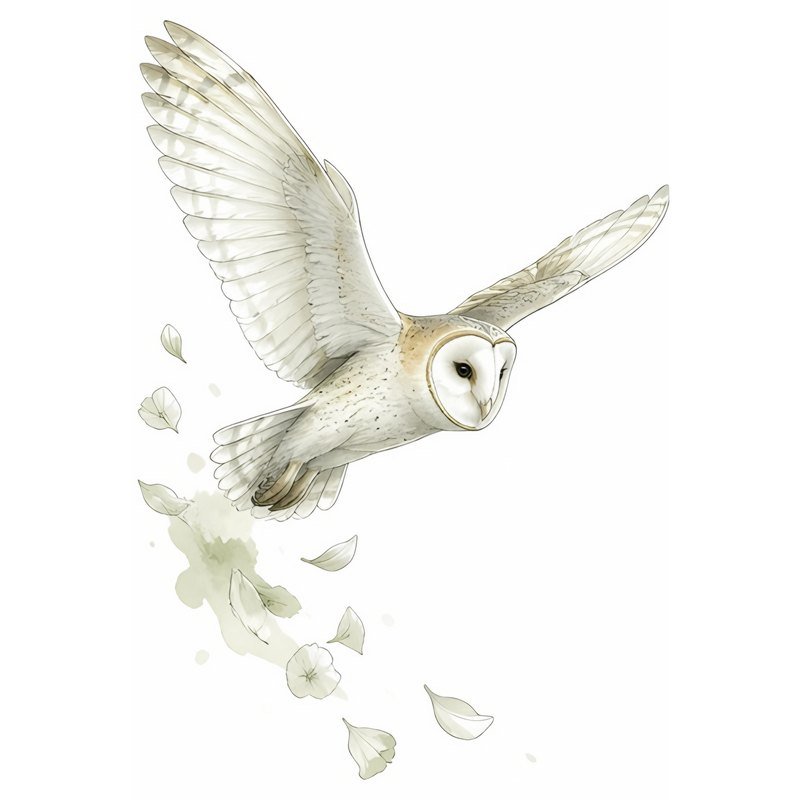
    See all the goddess tumblers

    Keep reading: Imbolc Meaning and Traditions · The Dagda, the Good God · The Cailleach · Which Goddess Is Calling You?

  • Cernunnos: The Horned God of the Celts, His Symbols and Honest History

    Cernunnos: The Horned God of the Celts, His Symbols and Honest History

    The antlered god of the Celts: who Cernunnos was, how to say his name, his torc and serpent, the honest history behind the Horned God, and a quiet way to honour him in the woods

    Cernunnos is the antlered god who sits cross legged among the animals, a torc in one hand and a serpent in the other. He is one of the most searched for figures in Celtic myth, and one of the most mysterious, because no story about him survives from the ancient world. What we have are carvings, a single inscription and a great deal of modern love. Here is what is truly old, what is newer, and how people honour him today.

    Cernunnos is one of the deities in our guide to Celtic gods and goddesses, which sits within our wider guide to gods and goddesses of myth and magic.

    Cernunnos at a Glance

    • Who: an antlered Celtic god of the wild, of animals, of plenty and of the forest
    • How to say it: ker·NUN·os
    • Name means: usually read as “the horned one”
    • Where he comes from: continental Europe, especially Gaul (roughly modern France)
    • Best known image: the seated, antlered figure on the Gundestrup Cauldron
    • Where his name appears: once only, on the Pillar of the Boatmen from Paris
    • Symbols: antlers, the torc, the ram horned serpent, the stag, oak and acorns
    • Season: honoured by many at Yule and Beltane; one tradition gives him the month of December
    • Stones often linked with him: Whitby jet, serpentine, tiger’s eye, unakite, dalmatian jasper

    Who Is Cernunnos?

    Cernunnos is the name we give to a horned god who appears again and again in the art of the ancient Celts. He is shown as a man with the antlers of a stag growing from his head. He usually sits on the ground with his legs folded, calm and still, with wild animals gathered around him. He does not rule them from a throne; he sits among them.

    More than thirty ancient images of an antlered god like this have been found across the Celtic world, so he clearly mattered to many people. In the tradition many keep today, he is a lord of nature, of animals and of abundance, and also a lord of the underworld and of souls: the one who watches over the turning of life into death and back into life again.

    His name is usually explained as “the horned one”, from an old root word, ker, connected with horns and with growing large and strong.

    The god with no surviving story

    Here is the part that surprises people. Unlike Brigid, the Dagda or the Morrígan, Cernunnos has no ancient myth that has come down to us. The Irish and Welsh tales were written down by medieval monks, and he does not appear in them. Everything we know of him comes from stone, metal and one carved word. The stories told about him now, of a forest lord who drives back the darkness, are modern tales inspired by those images, and lovely to enjoy as exactly that.

    The Gundestrup Cauldron

    The most famous picture of Cernunnos is on the Gundestrup Cauldron, a great silver bowl found in a peat bog in Denmark in 1891. It is around two thousand years old, and it is covered inside and out with panels of gods, animals and strange scenes.

    On one inner panel sits the antlered figure. His legs are crossed beneath him. Around his neck he wears a torc, and in his right hand he holds up a second torc. In his left hand he grips a serpent with the horns of a ram. Beside him stands a stag whose antlers match his own, and around him gathers a crowd of wild creatures. It is a scene of complete stillness in the middle of the wild.

    Nobody knows exactly where the cauldron was made. What matters is the picture: a god rooted to the earth, holding power in one hand and the coiled life of the land in the other.

    The Pillar of the Boatmen: The Only Place His Name Appears

    So where does the name Cernunnos come from? From one carved stone in Paris.

    In the early 1700s, workmen digging beneath the cathedral of Notre Dame found the blocks of a tall Roman era monument. It had been raised by the boatmen of the river Seine in the time of the emperor Tiberius, nearly two thousand years ago, and it is known as the Pillar of the Boatmen. Its sides show Roman gods and Celtic gods side by side. On one block is a bearded god with antlers, and from each antler hangs a torc. Above him, carved into the stone, is his name. The first letter has worn away, so it reads ERNUNNOS, and the missing C has been filled in ever since.

    That is the only time the name is written anywhere in the surviving record. Other antlered gods in other places may well have been called by other names. We use Cernunnos as a convenience, a name that fits the images well, rather than as a certainty. The pillar is now kept in the Musée de Cluny in Paris.

    His Symbols and What They Mean

    The antlers

    The antlers link him to the stag, the greatest wild animal of the old northern forests. A stag sheds its antlers in late winter and grows them again each year, and many read this as the cycle of the year itself.

    The torc

    A torc is a heavy neck ring of twisted metal, often gold, worn by Celtic leaders and gods as a sign of honour and authority. Cernunnos wears one and holds another, as if he has power to wear and power to give.

    The ram horned serpent

    A snake with the curled horns of a ram is one of the most unusual creatures in Celtic art, and it often appears with Cernunnos. A serpent lives close to the earth and sheds its skin, so it speaks of the land, of renewal and of hidden places. The ram’s horns add strength and fertility. Together they make a creature of the earth’s own life force.

    The stag and the animals

    The stag is his closest companion, and in the tradition many keep, bulls, dogs and even rats belong to him too. He is a god of all creatures, not only the noble ones. Oak, ivy, mistletoe and juniper are the plants most linked with him, with acorns as a favourite offering.

    Honest History: What Is Old and What Is New

    What is ancient. An antlered god was honoured across continental Europe in the Iron Age and Roman era. He is shown seated, with a torc and often a ram horned serpent, and surrounded by animals. One carved stone gives his name as Cernunnos. All of this is real and old.

    What is uncertain. We do not know his stories, his festivals or exactly how he was worshipped. He is a continental figure, preserved in art rather than in writing, and he does not appear in the Irish or Welsh tales. Almost everything said about him beyond what the images show is interpretation.

    What is modern. In the twentieth century, Cernunnos became the best known face of the Horned God of modern witchcraft and Paganism: the partner of the Goddess, born at Yule, in his strength at Beltane, and returning to the earth at the end of the harvest. This picture is much loved and deeply meaningful to many people, and it goes well beyond the ancient evidence. It is a modern construction built on an old image, and it is fine to hold it that way.

    Herne the Hunter and Gwyn ap Nudd

    Britain has its own wild figures often linked with Cernunnos.

    Herne the Hunter belongs to English folklore. He is a ghostly huntsman with antlers on his head who is said to haunt Windsor Great Park, near an old tree known as Herne’s Oak. The earliest written mention of him is in Shakespeare’s play The Merry Wives of Windsor, from around 1600. Some feel he carries an old British memory of the horned god; others see a local ghost story.

    Gwyn ap Nudd comes from Welsh tradition. He is a king of Annwn, the Welsh otherworld, and a king of the fair folk, remembered as a great hunter who rides out with his hounds. He is not antlered, but he shares the same theme: a figure who stands at the edge of the wild, between the world of people and the world beyond.

    Neither is the same being as Cernunnos, and no ancient text joins them. What they share is an idea that runs deep in these islands: the lord of the forest who wears the wild as a crown.

    How to Pronounce Cernunnos

    Most people in Britain say it ker·NUN·os, with a hard K at the start, as in “kernel”, and the weight on the middle syllable. You will also hear ser·NUN·os, with a soft S, and both are widely used. The hard K is closest to how it was likely said, and speaking his name slowly, with care, is a simple act of respect.

    Cernunnos and the Wheel of the Year

    No festival of his survives, so people honour him at the points of the Wheel of the Year, kept by people of many paths, that feel most like him.

    Yule, around the winter solstice on 21 December, is when many honour the horned god as the returning light in the darkest days, the stag sleeping in the frozen forest and waiting for spring.

    Beltane, on 1 May, is when many honour him in his full strength: green, fertile and alive, the wild partner of the blossoming earth. Our guide to crystals for Beltane pairs well with this.

    A god for December

    There is a gentle tradition that gives each month of the year its own deity, drawn from the many cultures that shaped the northern world. In that calendar, December belongs to Odin or Cernunnos, a figure of magic, wisdom and prophecy, celebrated on 31 December, New Year’s Eve, a night for fortune telling and looking ahead. The trees of that month are elder and birch, its animals the owl and the goose, and its flower the narcissus. It is a tradition many keep, and a lovely reason to light a candle for the antlered one as the old year ends.

    Crystals for Cernunnos

    Earthy, rooted stones suit a god of forest and field.

    • Whitby jet: a stone traditionally linked with Cernunnos, made from ancient fossilised wood, so it carries the old forest in it.
    • Serpentine: green and smooth, its name and markings echo the ram horned serpent he holds.
    • Tiger’s eye: warm and golden like the torc, a stone traditionally associated with steady strength and courage.
    • Unakite: a mix of moss green and soft pink, often chosen for growth, patience and the slow cycles of nature.
    • Dalmatian jasper: spotted like the coat of a young deer, a playful, grounding stone for honouring the animals in his care.

    Green, gold and silver are the colours most linked with him, so a green, gold or white candle suits any of these. A white candle can always stand in for any colour.

    A Simple Woodland Offering to Cernunnos

    This is a quiet, traditional way to honour him, outdoors if you can, or at a window that looks out on trees if you cannot.

    1. Gather your offering. Choose something natural and kind to the land: a handful of acorns, a few oak leaves, some oats or grain, or a piece of fruit. These are the offerings traditionally given to him.
    2. Find your place. Walk into woodland, a park or your garden, and find a tree that feels welcoming, ideally an oak. At home, set a small altar with a green or white candle, your chosen stone and a sprig of ivy or evergreen.
    3. Settle yourself. Stand or sit still. Take a few slow breaths and listen to the sounds around you: wind in the branches, birds, your own breathing. Many people like to picture the antlered god seated among the animals, as he sits on the cauldron.
    4. Speak to him. Say his name three times, slowly. Then speak simply and from the heart, for example: “Cernunnos, horned one, lord of the wild, I bring this gift with thanks for the forest, the creatures and the turning year.”
    5. Give the offering. Place your acorns, grain or fruit at the foot of the tree, or on a plate on your altar. Leave nothing outdoors that could harm wildlife, such as plastic, salt or ribbon.
    6. Listen. Sit for a few minutes. Notice what you feel and anything that catches your attention. Write it in your journal afterwards.
    7. Close gently. Thank him. If you lit a candle, snuff it rather than blowing it out, and return any indoor offering to the earth the next day.

    Signs Cernunnos May Be Calling You

    • You feel a strong pull towards woodland, and time among trees feels like coming home.
    • Deer, stags or antlers keep appearing, on walks, in dreams, in pictures or in conversation.
    • You notice oak trees and acorns everywhere you go.
    • You feel moved to care for wild animals and wild places.

    None of these is proof on its own. If you are wondering whether a deity is reaching out to you, our gentle guide to knowing which deity is calling you walks through it step by step.

    Questions People Ask

    Who is Cernunnos?

    Cernunnos is an antlered Celtic god of nature, animals and plenty, shown in ancient art seated among wild animals with a torc and a ram horned serpent. He was honoured in Gaul around two thousand years ago and is widely honoured today as the Horned God.

    How do you pronounce Cernunnos?

    The most common pronunciation is ker·NUN·os, with a hard K and the stress on the middle syllable. Some people say ser·NUN·os with a soft S. Both are widely heard, but the hard K is closer to how the name was likely spoken.

    Is Cernunnos Irish?

    No. Cernunnos is a continental Celtic god, known from carvings and metalwork in places such as France, and he does not appear in the Irish or Welsh myths. Ireland’s great father god is the Dagda, and Britain has its own wild figures such as Herne the Hunter and Gwyn ap Nudd.

    What is the symbol of Cernunnos?

    His main symbols are stag’s antlers, the torc, a twisted neck ring standing for honour and authority, and the ram horned serpent. The stag, the oak tree and acorns are also strongly linked with him.

    Is Cernunnos the same as Herne the Hunter?

    Not exactly. Herne is an antlered ghost of English folklore tied to Windsor, first written about around 1600, while Cernunnos is a much older continental god. Many people feel the two share the same spirit of the wild, but there is no ancient source that makes them one.

    When is Cernunnos celebrated?

    No ancient festival for him survives, so people honour him today at Yule and Beltane, and one tradition gives him the month of December and New Year’s Eve. Our guide to Celtic gods and goddesses shows how he fits among the other deities.

    Keep reading: Celtic Gods and Goddesses · The Dagda, the Good God of Ireland · Gods and Goddesses: A Guide to the Deities of Myth and Magic · Celtic Circles and Ancient Crystal Magic

  • The Dagda: The Good God of Ireland, His Cauldron, Club and Harp

    The Dagda: The Good God of Ireland, His Cauldron, Club and Harp

    The great father of the Tuatha Dé Danann: what his name means, the stories of his club, his cauldron of plenty and his harp of three musics, and a simple hearth offering for an abundant winter

    Of all the old gods of Ireland, the Dagda is perhaps the easiest to like. He is huge, hungry, clever and kind, a god who carries a club that can take life and give it back, a cauldron that never runs empty, and a harp that can make a whole hall weep, laugh or fall asleep. As autumn turns to winter and thoughts go to warm kitchens and full tables, he is a lovely god to get to know. Here is who he is, where his stories come from, and a simple hearth offering for the season.

    The Dagda at a Glance

    • Who: the great father god of the Tuatha Dé Danann in Irish myth
    • How to say it: DAG·da in everyday English; closer to DAHG·dah in Irish
    • What the name means: “the good god”, good in the sense of good at everything
    • Other names: Eochaid Ollathair, “father of all”, and Ruad Rofhessa, “the red one of great knowledge”
    • Known for: strength, wisdom, abundance, druid magic, music and his huge appetite
    • His three great possessions: a club, the cauldron called the Undry, and the harp Uaithne
    • Family: son of Danu in the traditional teaching; father of Brigid and of Aengus Óg
    • Festival: Samhain, when he meets the Morrígan by the river
    • Symbols: club, cauldron, harp, torc, oak
    • Colours: white and red

    Who Is the Dagda?

    The Dagda is the chief father figure of the Tuatha Dé Danann, the divine people who, in Irish myth, ruled Ireland before the arrival of mortal kings. The traditional teaching names his mother as Danu, the great mother goddess from whom the Tuatha Dé Danann take their name.

    He is a warrior, a druid, a harper, a builder and a wise leader all at once. He is strong enough to turn a battle, clever enough to outwit his enemies and skilled enough to play music that changes how people feel. He is linked with fertility, the harvest, the weather and the good things of the earth.

    He is also, unlike the graceful gods of Greece and Rome, wonderfully earthy. The old stories describe him as a huge man with a great belly, wearing a short rough tunic and dragging his club behind him so that it ploughed a track along the ground. He eats enormously and laughs easily. That roughness is part of his charm, and part of his meaning. He is a god of the body, the hearth and the land, and he does not pretend to be anything grander.

    What Does Dagda Mean?

    Dagda means “the good god”. This does not mean good in the moral sense, gentle or well behaved. It means good at things. In one story, when the Tuatha Dé Danann are preparing for battle and each of them lists what they can do, the Dagda says he will do all the things they have promised, by himself. Everyone agrees: he is the good god.

    His other names fill in the picture. Eochaid Ollathair means “father of all”, a title of the great protector and provider. Ruad Rofhessa means “the red one of great knowledge”, pointing to his wisdom and his skill in druid magic.

    The Club, the Cauldron and the Harp

    The Dagda owns three famous magical possessions. Together they tell you almost everything about him.

    The club

    His great club, called the Lorg Mór in the traditional teaching, is so heavy it takes several men to carry it. One end can kill nine men with a single blow. The other end, the handle, can touch the dead and bring them back to life. It is the power over life and death held in one hand, and it is the weapon he used to help win victory for his people at the Battle of Mag Tuired.

    The cauldron of plenty

    His cauldron, the Undry, is a cauldron of endless plenty. No company ever went away from it hungry, and no one ever left the Dagda’s presence unsatisfied. In the old tales it was one of four marvels the Tuatha Dé Danann brought with them to Ireland from the four great cities of their homeland, alongside the Stone of Fál, the spear of Lugh and the sword of Nuada. The cauldron is abundance and generosity in its simplest form: there is enough, and it is shared.

    Cauldrons are central to Celtic myth more widely, from the Irish cauldron of plenty to the Welsh cauldrons of rebirth and inspiration, and the Dagda’s cauldron is one of the earliest and best loved.

    The harp of three musics

    His harp, called Uaithne in the traditional teaching, is made of oak and carved with great skill. It answers only to him. It is said to set the seasons in their proper order, and it can play three kinds of music: the music of sorrow, which makes all who hear it weep; the music of joy, which makes them laugh; and the music of sleep, which sends them into a deep slumber.

    After the Second Battle of Mag Tuired, the Fomorians stole the harp and carried it off to their hall. The Dagda went after it with Lugh and Ogma. When he called out to it, the harp leapt from the wall into his hands. He played the music of sorrow, and the Fomorians wept. He played the music of joy, and they laughed. Then he played the music of sleep, and while the whole hall slept, the three gods walked out unharmed with the harp.

    The club, the cauldron and the harp: the power over life and death, the abundance that feeds everyone, and the art that moves the heart.

    The Dagda and the Battle of Mag Tuired

    The Dagda’s greatest stories come from the tale of the Second Battle of Mag Tuired, when the Tuatha Dé Danann fought the Fomorians, a race of powerful beings linked with chaos and the deep, for control of Ireland.

    Before the battle, the Dagda was sent to the Fomorian camp to ask for a truce. The Fomorians, knowing his love of porridge, set a test. They filled a pit in the ground with a vast meal of porridge, milk, meat and fat, and told him he must eat all of it or die. The Dagda took up a ladle big enough to hold a man and a woman, ate every last scrap, scraped the bottom of the pit with his finger, and then lay down for a well earned sleep. It is one of the funniest stories in Irish myth, and it shows his good humour as much as his appetite.

    The Dagda and the Morrígan at Samhain

    At Samhain, shortly before the battle, the Dagda went to the river Unshin in Connacht (written Unius in older spellings). There he found the Morrígan, the Great Queen, washing in the river with one foot on each bank. They came together there, and in return she told him where the Fomorians would land and promised to help the Tuatha Dé Danann win.

    The traditional teaching says that the Dagda and the Morrígan consummate their union on Samhain so that crops, cattle and people would thrive in the year ahead. It is a meeting of two great powers: his abundance and her power over fate and death, coming together on the night the old year ends and the new one begins. In 2026, Samhain falls on Saturday 31 October. Our guide to the meaning of Samhain tells more of the festival.

    His Family: Brigid and Aengus

    The Dagda is the father of Brigid, the beloved goddess of poetry, healing and smithcraft, whose festival is Imbolc on 1 February. In some of the old sources she is three sisters, all named Brigid, each keeping one of the three sacred fires.

    He is also the father of Aengus Óg, the young god of love and beauty. In a tradition many keep, Aengus was born of the Dagda’s meeting with the Morrígan by the river; other tellings name Boann, goddess of the River Boyne, as his mother. Aengus later won the Dagda’s great home at Brú na Bóinne, the ancient passage tombs by the Boyne that include Newgrange, by a clever trick. He asked to live there for a day and a night, and then pointed out that all of time is made of days and nights, so the house was his forever.

    The Honest History

    Everything we know about the Dagda comes from Irish stories written down by Christian monks, mostly from around the eleventh and twelfth centuries, although much of the material is older. The tale of the Second Battle of Mag Tuired, his most important story, survives in a single manuscript copied in the sixteenth century, while the text itself is centuries older.

    The monks were not writing as worshippers, and some scholars think the comic picture of the Dagda, the huge belly, the short tunic and the porridge pit, may partly reflect their own humour at the expense of an old god. Others see it as true to a very old idea of the father god as earthy, generous and close to the land. Both may be true.

    We have no inscriptions or temples naming him. Some scholars compare him with the Gaulish god Sucellus, the “good striker”, who carries a mallet and a pot, but that link is a suggestion, not a certainty. The way many people honour him today, as a god of abundance, the hearth and generosity, is a modern devotional practice built on the old stories, and a warm and fitting one.

    Crystals for the Dagda

    Earthy, warm stones suit his altar:

    • Red jasper: grounding and steady, the stone most often linked with him, in his colour of red
    • Tiger’s eye: golden brown and warm, traditionally kept for strength, confidence and good fortune
    • Goldstone: glittering copper brown, a cheerful stone often kept for abundance and generosity
    • Mahogany jasper: deep red brown like an oak hearth, a stone of stability and steady effort

    Plants traditionally linked with him include oak, clover and aspen. Oak is especially fitting, as his harp was made of it.

    A Simple Hearth and Abundance Offering to the Dagda

    The offerings traditionally given to the Dagda are simple, everyday things: oats, grain, bread and music. This hearth practice suits Samhain night, Saturday 31 October 2026, or any evening as the moon grows towards the full Beaver Moon in late November, a waxing time traditionally used for growth and plenty.

    1. Prepare the hearth. Choose a kitchen table, hearth or altar. Place a red or white candle there; a white candle can stand in for any colour. Set a small cauldron or bowl beside it, with your crystals around it.
    2. Fill the cauldron. Add a handful of oats or grain, or a piece of fresh bread. If you are cooking a meal or a pot of porridge, set aside a spoonful for him.
    3. Light the candle and call to him. Speak aloud: “Dagda, good god, father of all, keeper of the cauldron that never empties, I honour you at this hearth. May there always be enough here, and enough to share.”
    4. Offer music. Play a piece of music you love, sing, hum or play an instrument if you have one. Music was one of his great gifts, and it is one of the best offerings for him.
    5. Sit with the image of plenty. Close your eyes and picture a great cauldron over a fire, steaming and full, with people gathered round it. Notice the warmth and the sense of enough.
    6. Write a list of plenty. In your journal, note the things you already have enough of, and one way you could share your abundance this winter.
    7. Close with thanks. Thank him and snuff the candle.
    8. Share the plenty. The next day, scatter the oats or bread outside for the birds, and if you can, give something to a food bank or a cause that cares for the land, an offering in his generous spirit.

    Signs the Dagda May Be Calling You

    • A pull towards cooking, feeding people and gathering friends round a table
    • A growing interest in music, especially the harp or traditional Irish music
    • Noticing oak trees, acorns and cauldrons everywhere you look
    • A season of life where you need to provide for others or step into a leadership role
    • A wish to feel more grounded, generous and at home in your own body

    If you are drawn to the wider family of the old gods, our guide to Celtic gods and goddesses introduces them all.

    Questions People Ask

    What is the Dagda the god of?

    The Dagda is an Irish father god linked with abundance, fertility, strength, wisdom, druid magic and music. He is the chief father figure of the Tuatha Dé Danann.

    What does the name Dagda mean?

    Dagda means “the good god”. The word good here means good at everything rather than morally good: he is warrior, druid, harper and leader all in one.

    What magical items does the Dagda own?

    He owns a great club that can kill with one end and bring the dead back to life with the other, the Undry, a cauldron that never runs empty, and the harp Uaithne, which plays the music of sorrow, joy and sleep.

    Who is the Dagda’s partner?

    His best known union is with the Morrígan, the Great Queen, whom he meets by the river at Samhain before the Second Battle of Mag Tuired. Some stories also pair him with Boann, goddess of the River Boyne. You can read more in our post on the Morrígan.

    Is the Dagda like Zeus or Odin?

    He is a father of the gods, and his name Eochaid Ollathair, “father of all”, is often compared with Odin’s title All Father. But he is much earthier than either, with a great appetite, a rough tunic and a strong sense of humour.

    How do you pronounce Dagda?

    Most English speakers say DAG·da. In Irish it is closer to DAHG·dah, and the modern Irish spelling is Daghda.

    Keep reading: The Morrígan, Celtic Goddess of Prophecy · Brigid, Goddess of Fire and Spring · Celtic Gods and Goddesses · Samhain Meaning

  • The Cailleach: The Celtic Winter Goddess and Hag of the Mountains

    The Cailleach: The Celtic Winter Goddess and Hag of the Mountains

    The old woman of winter in Scottish, Irish and Manx lore: how to say her name, the mountains she built, her yearly handover to Brigid, and a gentle way to welcome the cold months

    When the first hard frost silvers the grass and the hills turn grey with cloud, the old stories say the Cailleach has woken. She is the great old woman of winter, the one who strides across the mountains with her staff, drops boulders from her apron and shapes the land as she goes. For centuries people in Scotland, Ireland and the Isle of Man told her stories through the long dark months. Here is who she is, where her lore comes from, and a quiet way to greet her as winter begins.

    The Cailleach at a Glance

    • Who: the old woman of winter, storms and wild places in the folklore of Scotland, Ireland and the Isle of Man
    • How to say it: KAL·yakh, with the “kh” said softly in the throat, as in loch
    • What the name means: “old woman”, from an old word linked with a veil, so “the veiled one”
    • Other names: the Cailleach Bheur in the Scottish Highlands, the Cailleach Bhéarra or Hag of Beara in Ireland, Caillagh ny Groamagh in the Isle of Man
    • Known for: building mountains, bringing the winter weather, her seasonal handover with Brigid
    • Her season: Samhain to Beltane, the dark half of the year
    • Symbols: her staff, an apron or creel of stones, mountains, standing stones, deer, the waning moon
    • Colours: grey, blue, black, white and silver
    • Plants: witch hazel, holly, ivy and moss

    Who Is the Cailleach?

    The Cailleach is one of the oldest figures in the folklore of the Gaelic world. The stories say she has been here since the beginning of time, older than the hills, because she made many of them. She rules the weather and the turning of the seasons, and above all she rules winter.

    Descriptions of her are wonderfully wild. In some tellings she is a giant old woman with a single eye in the middle of a blue black face, red teeth and matted hair white with frost. In others she is spoken of as beautiful. She has deep knowledge of the natural world and the strength to reshape it. Wild deer were said to be her herds, and she watched over them through the winter.

    She is not evil, even when she is harsh. Winter in the Highlands and on the Atlantic coasts was hard and could be deadly, and the Cailleach is that hardness given a face. She is the cold that tests what is weak so that what is strong can survive, and the long rest the land needs before it can grow again.

    The Maker of Mountains

    Many of the Cailleach’s stories are written into the landscape itself. She is said to have carried great loads of stone in her apron or in a creel on her back, and wherever she let some fall, a hill or a mountain was born. Lines of boulders across moorland, lone rocks on hillsides and whole ranges are explained this way across Scotland and Ireland.

    In Ireland, the hills of Loughcrew in County Meath are known in Irish as Sliabh na Caillí, the mountain of the hag. The ancient cairns on their summits are said to be stones she dropped as she leapt from hill to hill, and a great carved stone there is still called the Hag’s Chair.

    In Argyll, a well known tale tells how she kept a spring on Ben Cruachan, covering it with a stone slab every evening. One night, tired after a long day driving her cattle, she fell asleep and forgot. The water burst out, flooded the glen below and became Loch Awe.

    Further out to sea lies the whirlpool of Corryvreckan, between the islands of Jura and Scarba. The old story says the Cailleach washes her great plaid there at the start of winter. When it comes out of the churning water clean and white, she spreads it over the land, and Scotland is covered in snow.

    The Cailleach in Scotland

    In the Highlands she is the Cailleach Bheur, said roughly KAL·yakh VAYR. She rules from Samhain to Beltane. As winter comes in, she grows stronger and more active, striking the ground with her staff so that the earth freezes, the rivers turn to ice and the snow falls.

    When winter ends, the stories divide. In some she is turned to stone until the next Samhain. In others she becomes a young woman again. In one Highland telling she throws her staff beneath a holly tree when her season is over, and that is why no grass grows under holly.

    Perhaps the most moving piece of her lore still in the landscape is a tiny stone shrine in Glen Lyon in Perthshire, known as Tigh nan Cailleach, the house of the old woman. Inside sit a handful of smooth, water worn stones said to be the Cailleach, her husband and their children. By long custom, the stones are brought out at Beltane to face the summer and put back inside at Samhain to shelter for the winter. It is one of the very few places in Britain where a seasonal custom like this is still kept.

    The Hag of Beara in Ireland

    In Ireland she is the Cailleach Bhéarra, the Hag of Beara, linked especially with the Beara peninsula in the far south west. The traditional teaching says she is almost the same figure as the Highland Cailleach, though less tied to winter and the wild beasts and more to building the land. On the Beara peninsula, a rock at Kilcatherine is still pointed out as the old woman herself, turned to stone as she looks out to sea.

    Irish lore says she lived through seven periods of youth, outliving husband after husband and seeing whole generations come and go. An Old Irish poem known as the Lament of the Old Woman of Beare, usually dated to around the ninth century, gives her a voice: an old woman remembering the days when she was young and beautiful and kings sought her company. It is one of the oldest pieces of writing connected with her, and one of the most beautiful.

    The Cailleach in the Isle of Man

    In the Isle of Man she is Caillagh ny Groamagh, the old woman of gloominess. Manx lore, like Highland lore, ties her to the first day of February. On that morning she goes out to gather firewood for the rest of the winter. If the day is bright and dry, she can gather plenty, so the cold will last a long while yet. If the day is wet and stormy, she has stayed in, and that means she has enough wood and winter will soon be over.

    It is the same idea as the American Groundhog Day, and it explains why a grey, rainy start to February was once welcomed with relief.

    The Cailleach and Brigid

    The heart of the Cailleach’s story is her relationship with Brigid, the bright goddess of spring, fire and healing. The Cailleach holds the land through the dark months. Brigid brings back the light. The changeover happens around Imbolc, on 1 February, which in 2027 falls on Monday 1 February.

    The traditional teaching describes it as a yearly contest for sovereignty over the land, each trying to bring in her own season. How long and hard the winter is depends on how the struggle goes. In some versions the Cailleach finally yields and spring arrives. In others the contest simply goes round and round, year after year, winter and spring forever taking turns.

    In parts of Scotland the two are spoken of almost as one: the old woman of winter and the young woman of spring, two faces of the same turning year. You can read more about her bright partner in our post on Brigid and about the festival itself in the meaning of Imbolc.

    The Hag Who Becomes a Queen

    The Cailleach also belongs to one of the oldest patterns in Irish storytelling: the hag of sovereignty. In these tales, a young man meets a hideous old woman, often guarding a well, who asks him for a kiss. The young men who refuse go on their way. The one who kisses her without hesitation finds her changed into a beautiful woman, and she tells him she is Sovereignty itself. He will be king.

    The lesson is that the land must be accepted whole, in its harsh season as well as its gentle one, and that the right to rule belongs to the one who honours it. The Cailleach, old and young, wintry and green, carries that idea in every story. The Morrígan, the Great Queen, carries a fiercer version of the same teaching.

    The Cailleach, Samhain and the Waning Moon

    Her season opens at Samhain, kept on 31 October by people of many paths, and in 2026 it falls on Saturday 31 October. It marks the start of the dark half of the year, and in Highland lore it is the night the Cailleach takes up her staff. Our guide to the meaning of Samhain covers the festival in full.

    Her moon is the waning moon, the shrinking light that leads down into darkness. Through the Wheel of the Year she walks from Samhain, through Yule and the longest night, to Imbolc. In the sky, these are the months of Scorpio, Sagittarius and Capricorn, ending as the Sun moves through Aquarius at Imbolc: signs of depth, endurance and slow, patient building, all very much in her spirit.

    The Honest History

    Many people today honour the Cailleach as an ancient goddess of the land, a tradition many keep with real devotion. It is worth knowing where her stories come from.

    Most of what we know about her is folklore: tales, sayings and place names gathered by collectors in Scotland, Ireland and the Isle of Man, largely between the eighteenth and early twentieth centuries. Some threads are much older. The Lament of the Old Woman of Beare dates back over a thousand years, and her name is woven into very old place names. But we have no ancient inscriptions or temples to tell us exactly how people saw her before Christianity, or whether she was worshipped as a goddess in the way we would understand it today.

    What we can say is that people in the Gaelic world spoke of her for a very long time, tied her to real mountains, lochs and stones, and kept customs for her, like the stones of Glen Lyon, into living memory.

    How to Pronounce Cailleach

    Cailleach is said KAL·yakh. The first part rhymes with “pal”. The ending is a soft breathy sound at the back of the throat, like the ch in the Scottish word loch, not a hard “k”. In Irish you will sometimes hear it as KAL·yukh, slightly softer. Cailleach Bheur is KAL·yakh VAYR, and Cailleach Bhéarra is KAL·yakh VAY·ra.

    Crystals for the Cailleach

    Stones in her colours of grey, white, blue, black and silver suit a winter altar for her:

    • Hematite: heavy, silver grey and grounding, traditionally linked with her
    • Snowflake obsidian: black flecked with white, like the first snow on dark hills
    • Howlite: white with grey veins, a calm stone for winter rest
    • Sodalite: deep winter blue, often kept for quiet reflection and inner wisdom
    • Silver leaf jasper: grey and silver patterned, an earthy stone of patience and endurance

    A Simple Winter Welcome for the Cailleach

    This practice greets her at the start of her season, at Samhain or on the first frosty night of autumn, and closes again at Imbolc. Offerings traditionally linked with her are stones: little cairns, spirals, painted pebbles and hag stones, the stones with natural holes through them.

    1. Gather stones. On a walk, pick up a small handful of stones that catch your eye, taking only what is loose and plentiful. A hag stone is a lovely find if one comes your way.
    2. Set your space. On a windowsill or outdoors, place a grey, blue or white candle, with a sprig of holly, ivy or witch hazel beside it. Add your crystals if you like.
    3. Light the candle and greet her. Breathe slowly, then speak aloud: “Old woman of the mountains, Cailleach, I welcome your season. Teach me to rest, to endure, and to trust that spring will come.”
    4. Build a small cairn. Stack your stones one by one into a small pile or spiral. With each stone, name something you will let rest this winter: a worry, a plan that needs time, an old habit.
    5. Sit in the cold quiet. Close your eyes and picture a mountain under snow, a wide grey sky and an old woman walking the ridge with her staff. Let the stillness of winter settle around you for a few minutes.
    6. Write it down. Note in your journal what you have chosen to rest, and what you hope will be ready to grow by spring.
    7. Close with thanks. Thank her and snuff the candle.
    8. Leave the cairn through winter. On Imbolc, return the stones to the earth or to where you found them, and light a candle for Brigid as the season turns.

    Signs the Cailleach May Be Calling You

    • A pull towards mountains, moorland, standing stones and wild weather
    • Finding hag stones or noticing deer more often than usual
    • Feeling deeply at home in winter, rather than simply enduring it
    • A season of life that asks you to slow down, rest and let something lie fallow
    • A growing respect for age, wisdom and the older women in your life

    Questions People Ask

    What does Cailleach mean?

    Cailleach means “old woman” in Irish and Scottish Gaelic. The word is linked with an old word for a veil, so it can also be read as “the veiled one”. In everyday Gaelic it can simply mean an old woman.

    How do you pronounce Cailleach?

    Say it KAL·yakh, with the ending sounding like the ch in loch. In Irish it is sometimes softer, closer to KAL·yukh.

    What is the Cailleach the goddess of?

    She is linked with winter, storms, weather, mountains and wild places, and with the wild deer. She rules the dark half of the year from Samhain until the spring.

    What is the connection between the Cailleach and Brigid?

    They are the two halves of the year. The Cailleach holds winter and Brigid brings the spring, and the handover happens around Imbolc on 1 February. Our post on Brigid tells her side of the story.

    Is the Cailleach the same as the Morrígan?

    No, they are different figures, though both can appear as old women and both are tied to the land and sovereignty. The Morrígan is a goddess of fate and battle, while the Cailleach belongs to winter and the shaping of the landscape.

    Is the Cailleach a crone goddess?

    She is often called one today, and the old woman form is her best known. But in many stories she is young again in spring, so she can be seen as the whole cycle of the year rather than old age alone.

    Bring the Cailleach home

    The Cailleach artwork from this series now comes on a 13oz white ceramic mug and a 20oz skinny tumbler wrapped all the way round in snowflakes, holly and stags. Each one comes with a printed card telling her story, so it is ready to keep or to give.
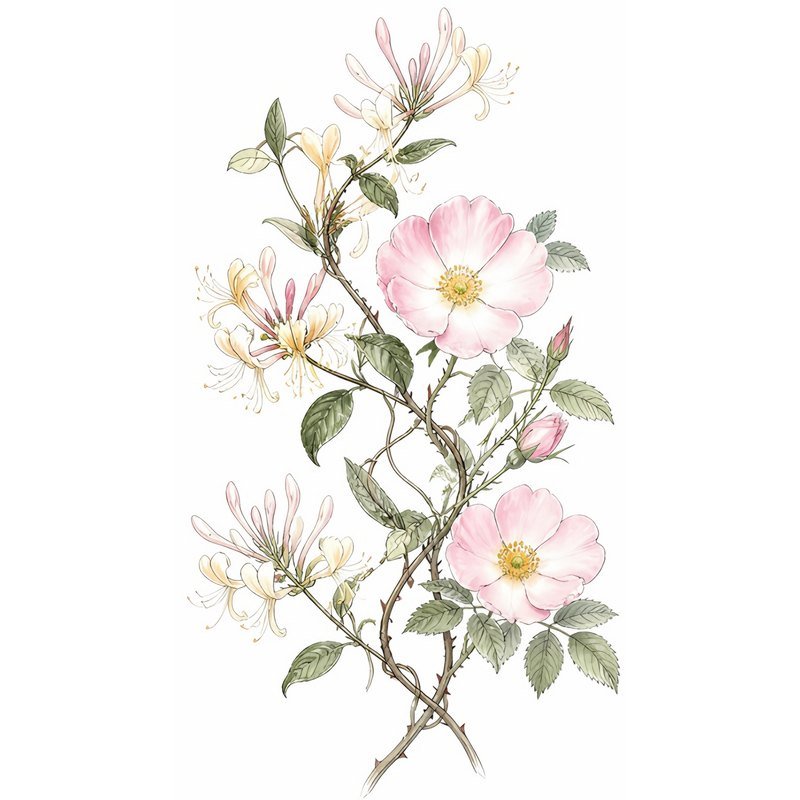
    See all the goddess tumblers

    Keep reading: Brigid, Goddess of Fire and Spring · Imbolc Meaning · The Morrígan, Celtic Goddess of Prophecy · Samhain Meaning