The Danu goddess of Ireland and Dôn of Wales: the mother of the Tuatha Dé Danann, the rivers that may carry her name, and what the old texts really say
Danu is honoured today as the great mother of the Irish gods, the goddess the Tuatha Dé Danann are named after. Yet the Danu goddess is also one of the quietest figures in all of Celtic myth, a mother known almost entirely through her children. Here is what we know, what we do not, and how people connect with her now.
Danu at a glance
Say it: DAH noo. Her people, the Tuatha Dé Danann, are TOO a ha day DAN an.
Tradition: Irish, with a Welsh counterpart called Dôn.
Known for: giving her name to the old gods of Ireland, motherhood, rivers and flowing water.
Related names: Anu or Ana, honoured as mother of the gods of Ireland.
Places: the Paps of Anu in County Kerry, and perhaps rivers such as the Danube and the Don.
Symbols today: rivers, springs, wells, oak trees, the land and the stars.
Who Is the Danu Goddess?
In Irish myth the old gods are called the Tuatha Dé Danann, usually translated as the people, or tribe, of the goddess Danu. They are the shining, skilled race who came to Ireland in a cloud of mist, fought the Fomorians, and finally withdrew into the hollow hills when the ancestors of the Irish arrived. The Dagda, Lugh, Nuada, Brigid and the Morrígan all belong to them.
Danu is the goddess they are named after. That makes her, in the way most people tell it today, the mother of the Irish gods: the source from which the whole family flows. She is linked with rivers, with the fertile land, with abundance, and with the deep, slow kind of care that feeds a family over generations.
What makes her unusual is that she has almost no stories of her own. She does not fight, travel or speak in any surviving tale. She is simply there at the root, present in the names of those who came after her.
The Tuatha Dé Danann, the People of Danu
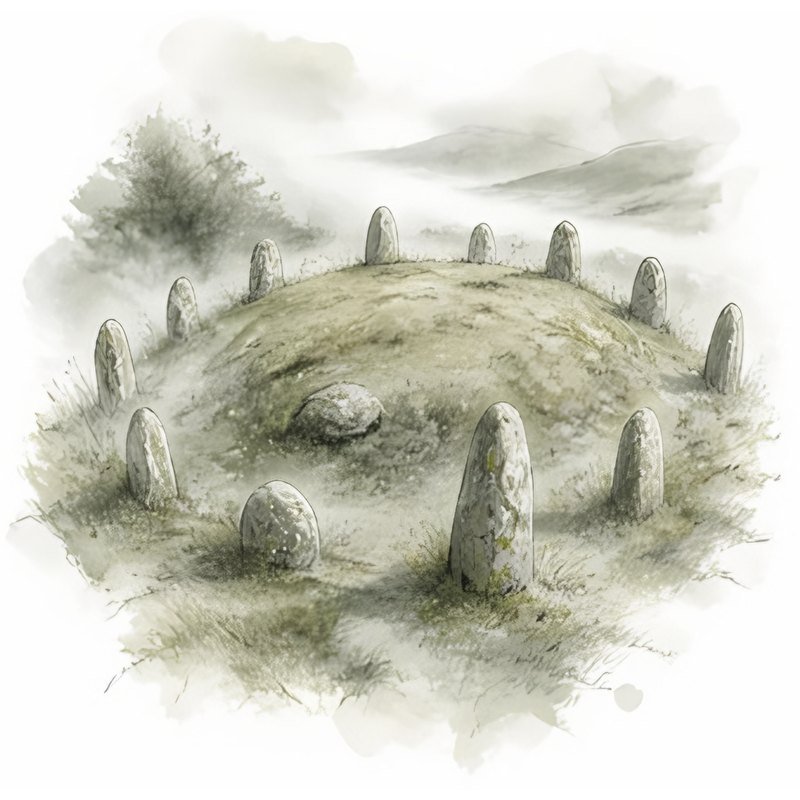
The fullest account of the Tuatha Dé Danann is the Lebor Gabála Érenn, the Book of the Taking of Ireland, put together by Irish monks around the eleventh century. It tells of a series of peoples who settled Ireland one after another. The Tuatha Dé Danann are the second to last. They arrive skilled in magic and craft, defeat the Fir Bolg at the first battle of Mag Tuired, and the Fomorians at the second.
Later, when the Milesians, the ancestors of the Irish, arrive, the Tuatha Dé Danann do not vanish. They go into the sídhe, the hollow hills and ancient mounds, and become the Aos Sí, the people of the mounds. Many Irish stories treat them as still living there, close by and out of sight. If you would like to know more about them, our guide to the Sidhe and Celtic fairies goes deeper.
A people who never quite left, named after a mother who never quite appears.
Interestingly, the monks who wrote the Lebor Gabála were careful to present the Tuatha Dé Danann as a people of the distant past rather than as gods. Reading between the lines, most scholars agree they were the gods of pre Christian Ireland, recast as ancestors so that their stories could be kept.
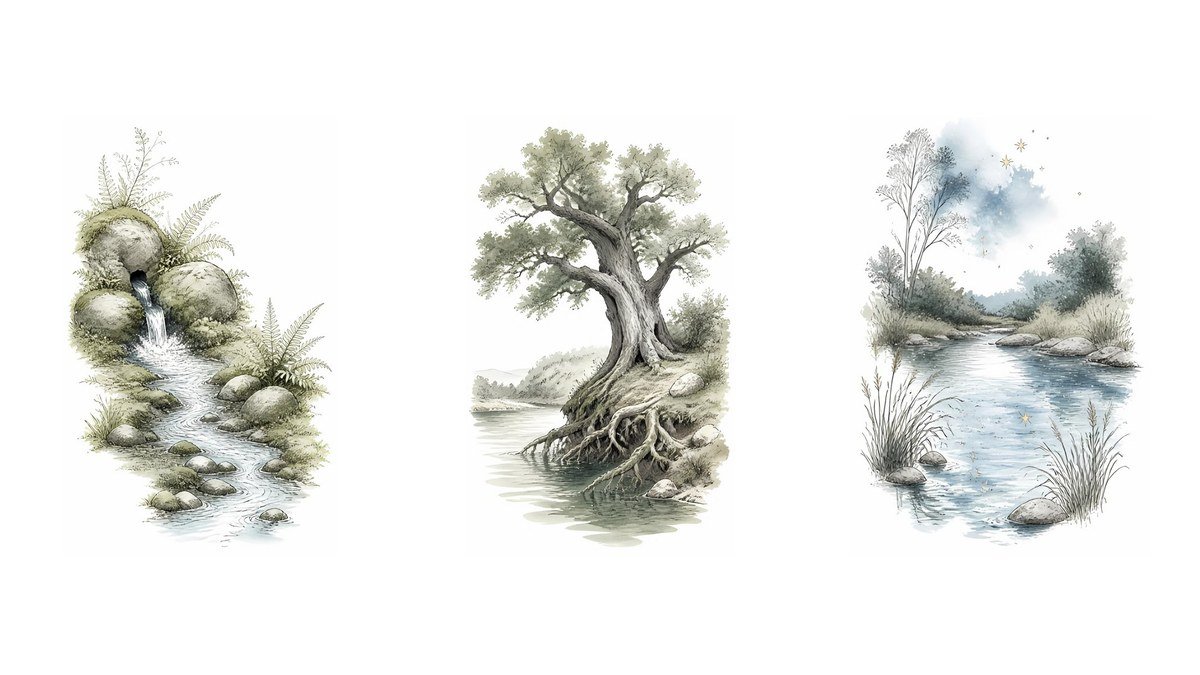
Danu and the Rivers
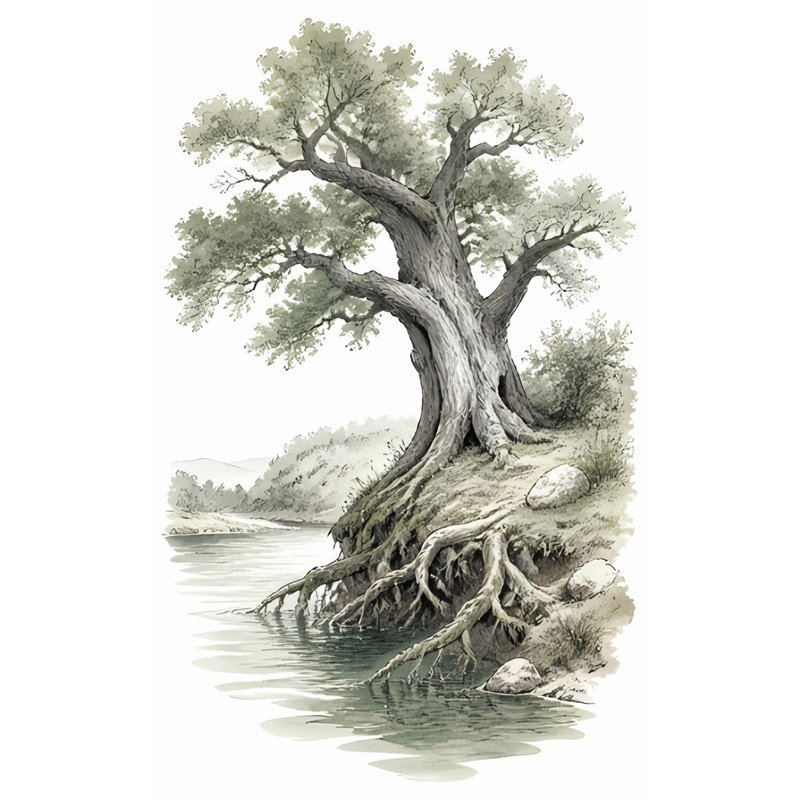
One of the loveliest ideas about Danu is that she may be a river goddess. Her name has often been linked with an old word for flowing water, a root that may also sit behind the names of great rivers: the Danube in Europe, and the Don in Russia and in Scotland and England. If that is right, she would be one of the oldest divine names in Europe, a goddess remembered in the water itself.
Scholars still argue about this, and some think the Danube took its name from a separate word for river. Even so, the image has stuck, and for many people Danu is first and foremost the goddess of the river: the source that keeps moving, feeds everything along its banks and always finds its way.
Anu and the Paps of Anu
Many writers treat Danu and Anu as the same goddess, or two forms of one name. Anu, sometimes spelled Ana, appears in Cormac’s Glossary, written around 900, where she is called the mother of the gods of Ireland, who fed the gods well. The Lebor Gabála also names Anand as one of the forms of the Morrígan.
Her clearest mark on the landscape is in County Kerry, where two rounded mountains are called Dá Chích Anann, the Paps of Anu, the breasts of the goddess. Each summit carries a stone cairn. Few places in Ireland show so plainly the old idea of the land as a woman’s body, a mother who feeds all who live on her.
Dôn, the Welsh Mother
Wales has its own version of this hidden mother. In the Fourth Branch of the Mabinogi, the great family of magicians in Gwynedd are called the children of Dôn. Gwydion the magician is Gwydion son of Dôn. Arianrhod, the silver wheel, is Arianrhod daughter of Dôn. Yet Dôn herself never appears, never speaks and is never described.
Many people see Dôn and Danu as two forms of the same ancient mother, one Irish and one Welsh, since the names are so close. In Welsh star lore first written down in the nineteenth century, the constellation Cassiopeia was called Llys Dôn, the court of Dôn, and the Milky Way Caer Gwydion, the fortress of her son. It is a beautiful image of a family that begins in the river and ends among the stars.
You can read more about Arianrhod, her most famous daughter, in our guide to Arianrhod, the silver wheel.
The Honest History of the Danu Goddess
Danu is a good example of how a goddess can grow far beyond her sources, and the shape of it is simple enough to follow.
The name Danu itself does not appear in any medieval Irish text. What survives is the form Danann, as in Tuatha Dé Danann, which is a possessive, meaning of Danu. Scholars worked backwards from it to the name Danu. Even the earliest texts often call the gods simply the Túath Dé, the tribe of the gods, with Danann added later. You can follow this on the Danu entry on Wikipedia, which sets out the debate clearly.
The great mother goddess image is mostly modern. In the nineteenth and twentieth centuries writers filled the gap with a grand earth mother, a Celtic counterpart to Demeter. The medieval writers themselves were far less sure that the Tuatha Dé were gods at all.
Dôn may not even have been female. The Mabinogi never says whether Dôn is a mother or a father. Some early modern antiquarians assumed Dôn was a king. Linking Dôn with Danu is a reasonable modern reading rather than something the old texts state.
The river link is a theory. It is a lovely and quite possible one, but scholars also suggest the name may come from words meaning skill, or good, or that Danu began as Anu with a D added.
Knowing all this does not take anything away. A goddess who survives only in the names of her children, in two mountains and perhaps in a few great rivers, has been remembered in a very particular way. Modern devotion to Danu has built something real on that quiet foundation, and plenty of people find her deeply present in their lives.
Crystals for the Danu Goddess
No old source gives Danu any crystals. The stones below are modern correspondences chosen for what she stands for today: rivers and water, the fertile land, the family line and the stars her children became. Each one is in stock at Mystic Grove.
Moss agate, for the land
Moss agate holds green, plant like patterns inside clear stone, as if a tiny garden were growing within it. It is the classic gardener’s stone and a natural fit for a mother of the land and its abundance. Look at our moss agate towers and spheres.
Ocean jasper, for flowing water
Ocean jasper is covered in soft circles and ripples that look like water moving over stones. It suits a river goddess beautifully and makes a calm, steady companion. See our ocean jasper towers.
Blue lace agate, for the gentle current
Pale blue banded agate carries the colour and pattern of a shallow stream. Many people use it for gentle, honest speech, which suits a goddess people pray to for steady care rather than drama. It comes as a tumblestone.
Lapis lazuli, for the starry family
Deep blue lapis flecked with gold pyrite has been compared to the night sky for thousands of years. With Danu it speaks of the children of Dôn who were written into the stars. Try a lapis lazuli sphere.
Bloodstone, for the family line
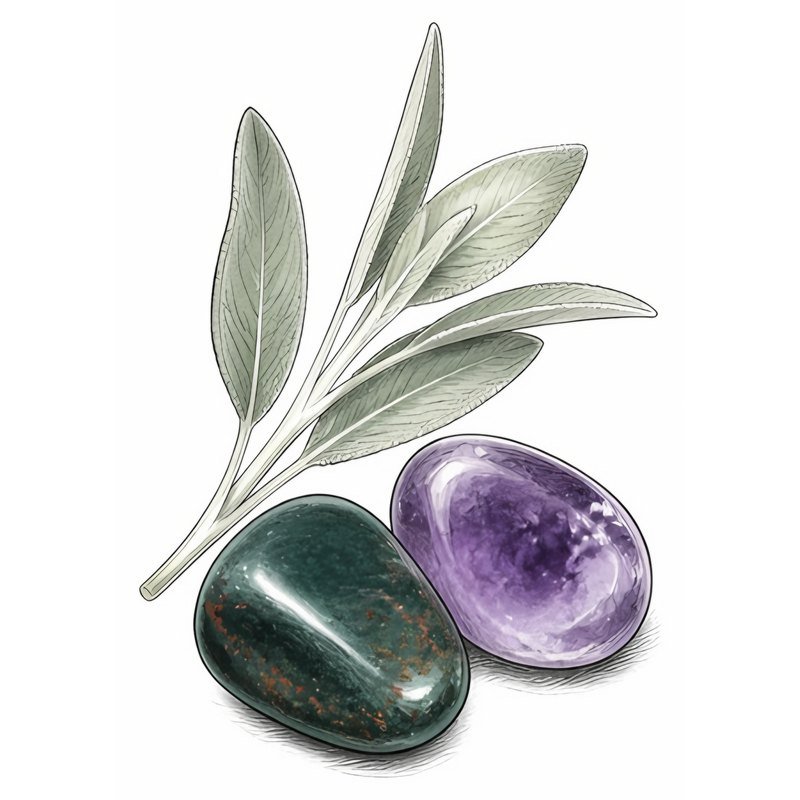
Green with red flecks, bloodstone has long been linked with courage and with the strength of a lineage. It is a fitting stone for honouring ancestors, the family you come from and the family you have chosen. You will find it in our tumblestone range.
Clear quartz, for the source
Clear as spring water, quartz is the all purpose stone that can stand in for any other. For Danu it represents the source itself, the clear spring where the river begins. A clear quartz palm stone sits comfortably in the hand.
Take care of real rivers. If you leave an offering outside, choose clean water, a few words, a song or a picked up piece of litter rather than food, milk or anything that could harm the water. Many people feel this is the offering Danu would most want.
A Simple River Offering to Danu
This practice can be done beside any river, stream or spring, or at home with a bowl of fresh water. It is a gentle way to say thank you to the people and places that raised you.
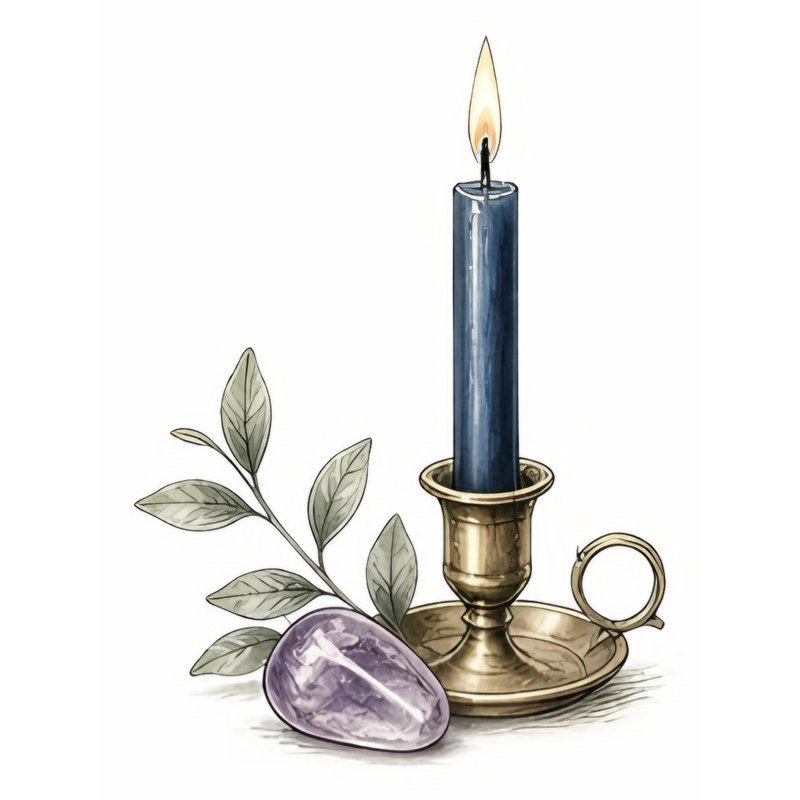
- Find your water. Go to a river or stream you love, or fill a clear bowl with water and set it on a table with a dark blue chime candle beside it.
- Light the candle, if you are at home, and hold a stone from the list above.
- Name your river. Say aloud the name of the water in front of you, or of the river nearest your home. Then say Danu’s name.
- Give thanks for your family. Speak the names of the people who helped you grow, by blood or by choice. Living or gone, they all belong in the list.
- Listen. Spend a few minutes with the sound of the water, or rest your fingertips on the surface of the bowl and notice how it feels. Breathe slowly and let your thoughts settle.
- Close. At a river, leave only your words. At home, pour the water onto a plant or the earth outside and put out the candle.
Signs Danu May Be Calling You
- You feel calm and at home beside rivers, springs and moving water.
- Your family history, your ancestors or the people who raised you are on your mind.
- You find yourself drawn to the old gods of Ireland, but none of them feels like your first home.
- Oak trees, river stones or the night sky keep catching your attention.
- You are building something slowly, for those who will come after you.
If you are still not sure, our guide to which goddess is calling you has simple ways to listen for an answer.
Light a candle for Danu
Our Manifest Magic chime candles come in ten colours. Dark blue for deep water and the night sky is a lovely choice for Danu, and green for the land and abundance works well too.
Questions People Ask About the Danu Goddess
What is Danu the goddess of?
Today Danu is honoured as the mother goddess of the Irish gods, the Tuatha Dé Danann, and as a goddess of rivers, flowing water, the fertile land and abundance. The old texts say very little about her directly.
How do you pronounce Danu?
Say DAH noo, with the stress on the first syllable.
Is Danu Irish or Welsh?
Danu is Irish. Wales has a very similar figure called Dôn, the mother of Gwydion and Arianrhod, and many people treat the two as one.
Is Danu the same as Anu?
Many writers think so. Anu is called the mother of the gods of Ireland in Cormac’s Glossary, and the Paps of Anu in Kerry are named after her. Scholars are still not certain whether they began as one goddess or two.
Who are the children of Danu?
The Tuatha Dé Danann as a whole, including the Dagda, Lugh, Nuada, Brigid and the Morrígan. In the Lebor Gabála, Brian, Iuchar and Iucharba are named as the three gods of Danu.
Is Danu connected to the River Danube?
Possibly. Both names may come from an ancient word for river, but scholars are divided and it cannot be proven.