
Moldavite, Libyan desert glass, Darwin glass and the stones sold beside them, and how to choose the right one
A tektite is a natural glass made when a meteorite strikes the Earth so hard that the ground melts, is thrown through the air and cools as it falls. Moldavite is the best known. Several other stones sold as tektites, though, have a different story: some are glass that formed where the impact happened, some are probably volcanic, and one is not glass at all. This guide walks through each one honestly, then helps you choose.
Every one of these stones is worth knowing. Their real histories are part of what makes them special, so it is worth knowing which is which before you buy.
What is a tektite?
When a large meteorite hits the Earth, the energy of the strike melts the rock and sand at the surface. Some of that molten material is flung high into the air, sometimes hundreds of kilometres from the crater. It cools and hardens in flight, then rains down over a wide area known as a strewn field.
The word tektite comes from the Greek for molten. True tektites are found far from where they formed, they hold almost no water, and many show tiny bubbles and swirls from their fast flight.
Every tektite is a small piece of the ground thrown into the sky and brought back down as glass.
Which stones are true tektites?
Crystal shops often place several natural glasses together under one name. Here is how they actually sort.
True tektites
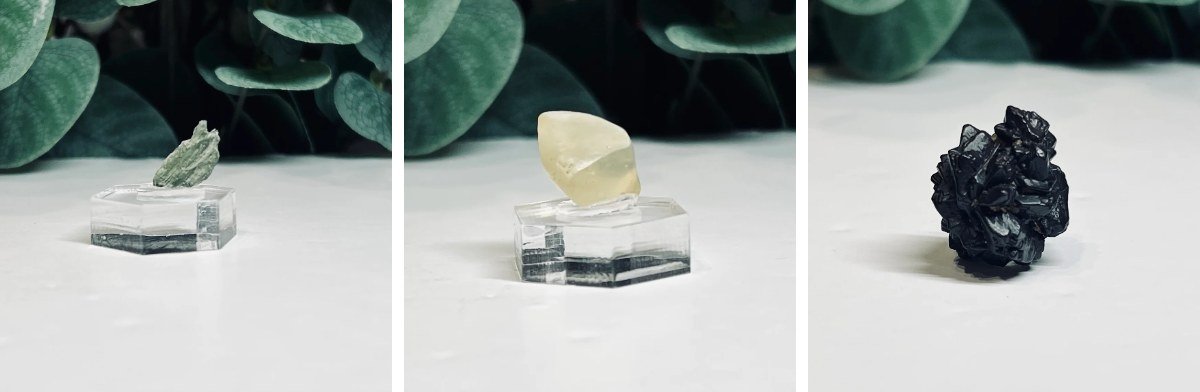
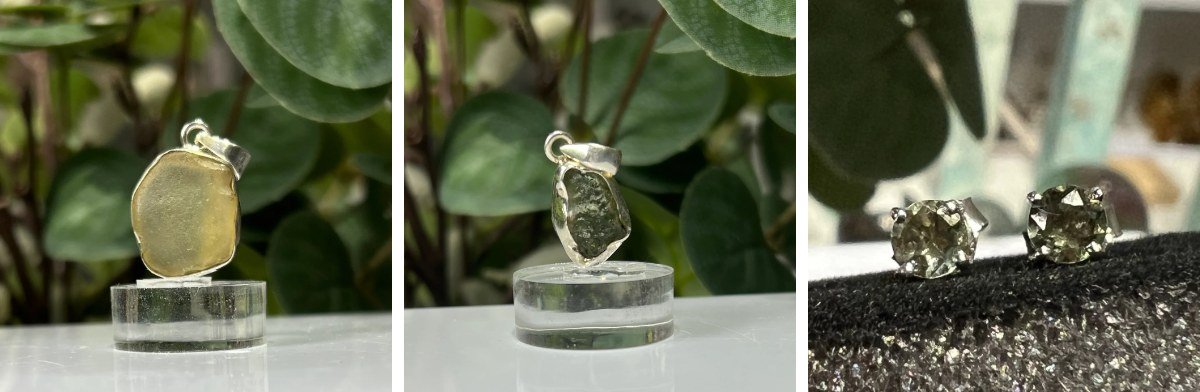
Moldavite formed around fifteen million years ago, when a meteorite struck what is now the Ries crater in Bavaria, southern Germany. The molten glass landed hundreds of kilometres away in Bohemia and Moravia, in today’s Czech Republic. It is green, often deeply sculpted, and the most sought after tektite in the world.
Indochinite is a black tektite from Southeast Asia, part of a huge strewn field formed around 790,000 years ago. You will sometimes see it sold simply as black tektite.
Impact glass, formed where the strike happened
Libyan desert glass is a golden glass found in the Great Sand Sea of western Egypt, near the Libyan border. It formed around 29 million years ago. A 2019 study found minerals inside it that only form under the extreme pressure of an impact, so it is now understood to be impact glass rather than the result of an airburst. A piece of it sits at the centre of a scarab pectoral found in the tomb of Tutankhamun. It is sometimes sold as Libyan gold tektite.
Darwin glass comes from western Tasmania, scattered over more than 400 square kilometres around the Darwin crater. It formed around 816,000 years ago and ranges from pale green to almost black.
Glass with a disputed story
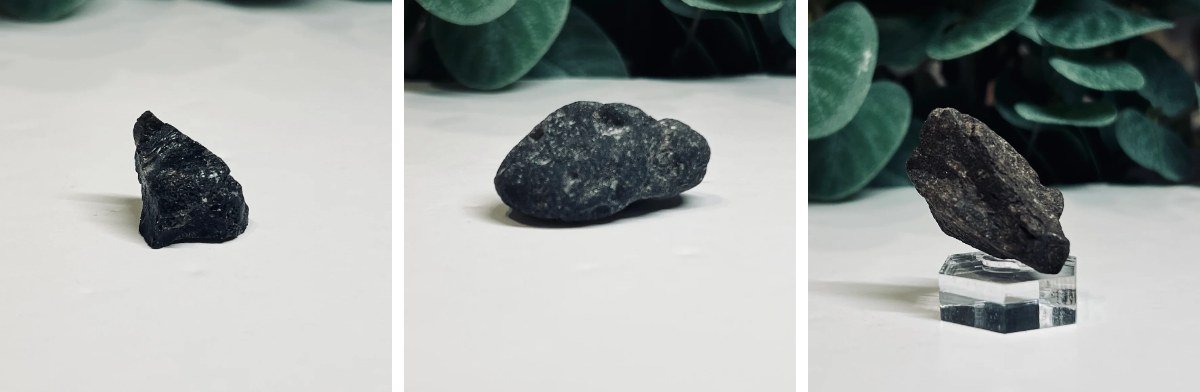
Colombianite is a black glass from near Cali in western Colombia. It was described as volcanic glass back in 1823, later sold as a tektite, and a 2021 study led by the Natural History Museum in Vienna concluded that it is volcanic after all.
Agni manitite is a dark, glassy stone from Java in Indonesia. Its name draws on the Sanskrit word for fire. It is sold as a tektite, but its origin is still debated and many geologists see it as volcanic glass.
Sold beside tektites, but not glass
Prophecy stone comes from the White Desert of western Egypt. It is a small, dark concretion of iron minerals, mostly hematite and limonite, that formed slowly inside sandstone. It has nothing to do with an impact, but it is so often sold alongside tektites that it belongs in this guide.
None of this takes anything away from these stones. A volcanic glass is just as natural as an impact glass, and many people love working with Agni manitite and Colombianite. Knowing the true story simply means you choose with your eyes open.
Which tektite is right for you?
The meanings below come from modern crystal practice. Choose the one that matches what you are working on now.
| Stone | Colour | Traditionally linked with | Choose it if you want |
|---|---|---|---|
| Moldavite | Bottle to forest green | Transformation, heart and third eye | A fresh start or a big change |
| Libyan desert glass | Pale lemon to honey gold | The Sun, solar plexus, confidence | To feel braver and more sure of yourself |
| Darwin glass | Green to near black | Earth, grounding, the heart | To feel steady and connected to nature |
| Agni manitite | Black with a smoky glow | Fire, willpower, manifestation | Drive to make something happen |
| Colombianite | Glossy black | Intuition and quiet inner work | To listen more closely to yourself |
| Prophecy stone | Dark brown to black | Intuition and grounding together | A steady companion for tarot and divination |
If you are new to tektites
Start with Darwin glass or Agni manitite, which are gentle on the purse, or a small piece of raw moldavite if transformation is what calls you. Many people find moldavite strong at first and like to hold it for short spells before wearing it all day.
If you want a pair
Moldavite and Libyan desert glass are often worn together, the green of one balancing the gold of the other. One is linked with change, the other with the confidence to see that change through.
How to tell if a tektite is real
- Look at the surface. Real moldavite and Darwin glass have natural sculpting, pits and ridges. Very smooth, uniform pieces at a low price are worth questioning.
- Hold it to the light. Moldavite and Libyan desert glass usually show tiny bubbles or swirls inside. Bright, even colour with no inclusions can point to manufactured glass.
- Check the weight and price. Genuine moldavite is sold by exact weight, and a large piece at a bargain price is a warning sign.
- Buy from a source you trust. A clear photo of the exact piece you will receive tells you more than any paper certificate.
A simple way to work with your tektite
Sit somewhere quiet with your stone in your open palm. Take three slow breaths and notice the weight and texture of the glass. Say your intention in one plain sentence, out loud or in your head. Then place the stone on your altar, on your bedside table or wear it close, so it reminds you of that intention through the day.
Under a full moon or during a meteor shower, many people like to set their tektites on a windowsill, a nod to the sky they came from.
Caring for tektites. All of these stones are glass or brittle iron, so they can chip if dropped or knocked against harder crystals. Store them wrapped or in their own pouch.
Cleanse them with incense smoke, sound or moonlight. Avoid salt and long soaks in water, especially for prophecy stone, which can rust.
Find your tektite
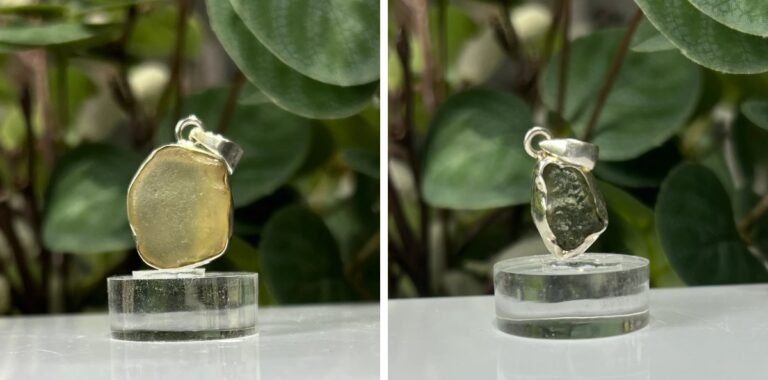
Every piece is shown exactly as you will receive it.
Sources: Mindat on moldavite, the 2019 Libyan desert glass study, Natural History Museum Vienna on Cali glass.
Crystal correspondences are shared as part of traditional practice. They are not a substitute for medical or professional advice.
Leave a Reply