What the Night of Hecate is, where it comes from, and a simple way to keep it on Monday 16 November
The Night of Hecate falls on Monday 16 November 2026. It is a night many witches and pagans keep in honour of Hecate, goddess of crossroads, keys and the dark moon. Here is the honest history, how her older monthly rite works, and a simple ritual you can keep at home.
Quick answer
Night of Hecate 2026: Monday 16 November
Is it ancient? The 16 November date is modern. The ancient Greeks honoured Hecate at the dark of every moon.
This month’s dark moon: Sunday 8 November, before the New Moon in Scorpio
Jump to
Who Is Hecate?
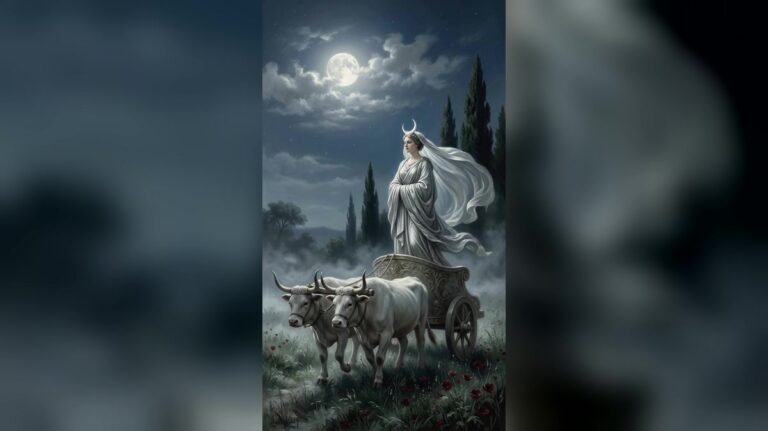
Hecate is a Greek goddess of crossroads, thresholds, keys, torches and the night. In the poet Hesiod’s Theogony, written around 700 BCE, she is honoured above almost every other deity, with a share in the earth, the sea and the sky.
Later she became closely linked with magic, ghosts and the moon, and she was often shown in triple form, facing three ways at a meeting of roads. Today she is one of the best loved goddesses in modern witchcraft. For her full story, read Hecate: goddess of crossroads, keys and the dark moon.
The Honest History of the Night of Hecate
You will often read that 16 November is an ancient Greek festival of Hecate. We could not find any ancient source for that date, and it is best understood as a modern devotional night that has spread through books and online communities.
That does not make it any less meaningful. Many traditions are young, and a night chosen by people who love a goddess is still a night of real devotion. It simply helps to know which parts are old and which are new.
Hecate’s Supper at the Dark Moon
What is well attested is the deipnon, Hecate’s supper. In ancient Athens, at the end of each lunar month, households cleaned their homes and left food for Hecate at a crossroads. The comic playwright Aristophanes jokes about hungry people helping themselves to it.
In November 2026 the dark moon falls on Sunday 8 November, the night before the New Moon in Scorpio at 7.02am on Monday 9 November. Many people keep both: the old supper at the dark moon, and the modern Night of Hecate a week later.
Hecate’s Symbols
| Symbol | What it stands for |
|---|---|
| Keys | Thresholds, hidden knowledge and the door between worlds |
| Torches | Light carried into the dark. She searched for Persephone by torchlight |
| Crossroads | Choices, meeting points and the places her suppers were left |
| Dogs | Her companions, often heard barking when she was near |
| The triple form | A goddess who looks three ways at once |
| The dark moon | The end of one cycle and the threshold of the next |
A Simple Night of Hecate Ritual
Keep this on the evening of Monday 16 November. The Moon will be a growing crescent, a little under half lit, so the night carries both the dark she rules and the light returning.
- Clear the threshold: sweep your front step or doorway and open the door for a moment to the night air.
- Light a torch for her: a black or white candle, or one of our Ancient Witch ritual candles, set where you can see the door.
- Place a key: any old key on your altar, to ask for guidance at a crossroads in your own life.
- Make an offering: a little bread, honey or garlic in a triple moon chalice or bowl.
- Name your crossroads: say aloud the choice in front of you and ask for the clarity to see the right road.
- Close: thank her, let the candle burn down safely and, the next morning, leave the offering outside, away from pets.
A Crossroads Walk for Hecate
If you would rather be outside, a quiet walk makes a lovely devotion, especially with a dog at your side, since dogs were Hecate’s companions.
- Walk at dusk to a place where three paths or roads meet.
- Stand for a moment and notice each direction: where you have come from, where you could go, and the road you have not considered.
- Leave a small, natural offering such as a few oats or seeds that birds and animals can eat.
- Walk home without looking back, a custom long linked with offerings at the crossroads.
Hecate and the Rest of November
November is a natural month for Hecate. The New Moon in Scorpio on 9 November falls in the sign of depth and endings, and Mercury turns direct on 13 November, three days before her night, opening the road for decisions you have been weighing. Many people use the dark moon to name what is ending, and the Night of Hecate to choose the road ahead.
Stones and Tools for Hecate’s Altar
For your practice
A black obsidian tower for the dark moon, and labradorite for magic and intuition.
For the offering
A small cast iron ritual pot for burning written intentions and herbs.
For a Hecate lover
The Hecate goddess mug and tumbler, each with her story card.
For grounding
A smoky quartz tower by the door, for a steady, protected threshold.
Hecate in the Ancient Sources
Much of what is written about Hecate online is modern. The older picture comes from a handful of ancient texts, and they are worth knowing because they show how her story grew.
| Source | Roughly when | What it tells us |
|---|---|---|
| Hesiod, Theogony | About 700 BCE | Hecate is honoured by Zeus above other deities, with a share in earth, sea and sky, and she helps people who call on her. |
| Homeric Hymn to Demeter | About 600 BCE | Hecate hears Persephone cry out when she is taken, and later meets Demeter with torches in her hands. |
| Classical Athens | 400s BCE onwards | Shrines of Hecate stand at doorways and crossroads, and households leave her monthly supper at the dark moon. |
| Later Greek and Roman writers | 300s BCE onwards | She is called the three formed, and becomes more closely tied to magic, ghosts and the Moon. |
Her name is usually explained as meaning worker from afar. The Theoi Project’s page on Hekate gathers the original passages in translation and is the best place to read them for yourself.
Is Hecate the Triple Goddess?
You will often see Hecate described as a maiden, mother and crone. That idea is modern. It was popularised in the twentieth century, largely through the poet Robert Graves, and it is not how the ancient Greeks saw her.
The ancient triple Hecate is something different. Statues showed her as three figures standing back to back, each facing a different road at a crossroads. She is triple because she watches every direction at once, not because she passes through three stages of life.
Both images are used in modern practice, and there is no harm in loving either. It simply helps to know which one is old.
Is Hecate a Moon Goddess?
In the oldest sources Hecate is not a moon goddess. Selene is the Moon itself, and Artemis is linked with it too. Hecate belongs to the night, the torch and the threshold.
Over time the three goddesses were blended, and by the Roman period Hecate was often named alongside the Moon. Her monthly supper at the dark moon ties her to the lunar cycle in a quieter way: she rules the night when there is no Moon at all. That is the honest reason she sits so naturally beside the moon goddesses of the Grove.
How to Say Hecate
In English Hecate is usually said HEK uh tee, with three syllables. Hekate, with a k, is the Greek spelling and is often said HEK ah tay. Both are used by people who honour her, so choose the one that feels natural to you.
Setting a Hecate Altar for the Dark Months
November is the month the nights stretch longest towards the solstice, so a small altar for Hecate fits the season well. Keep it near a door or window if you can, since thresholds are hers.
- A light: a single candle stands in for her torch. Our Ancient Witch ritual candle is made for a quiet evening.
- A key: any key that matters to you, for the doors you are choosing between.
- A dark stone: a black obsidian tower for the dark moon, with a labradorite sphere for the flash of light within the dark.
- A vessel: a triple moon chalice for water or an offering.
- Something from the season: a pine cone, a few fallen leaves or a sprig of rosemary.
A note on plants. Old stories link Hecate with poisonous plants such as aconite and yew berries. Keep these as stories. Never handle, burn or offer a poisonous plant, and keep any offerings away from pets and wildlife.
Questions to Sit With on Hecate’s Night
If you would rather write than perform a ritual, these questions suit a goddess of crossroads. Take one, light a candle and give yourself ten quiet minutes.
- Which road in my life am I standing at right now?
- What am I carrying that belongs to the old road, not the new one?
- Where do I need a little light to see the next step?
- Which door am I ready to close, and which am I ready to open?
Quick Questions About the Night of Hecate
When is the Night of Hecate 2026?
Monday 16 November 2026.
Is the Night of Hecate an ancient festival?
The 16 November date is modern. The ancient Greeks honoured Hecate with a supper at the dark of each moon.
What do you offer Hecate?
Traditional offerings include bread, honey, eggs and garlic, left at a crossroads or a threshold. A candle and a key are common on modern altars.
When is the next dark moon for Hecate?
Sunday 8 November 2026, then Tuesday 8 December 2026.
Who is Hecate in Greek mythology?
A goddess of crossroads, thresholds, torches and the night. Hesiod says Zeus honoured her above other deities, and in the Homeric Hymn to Demeter she helps search for Persephone by torchlight.
Is Hecate a moon goddess?
Not in the oldest sources, where Selene is the Moon. She later became linked with the Moon, and her monthly supper at the dark moon ties her to the lunar cycle.
How do you pronounce Hecate?
In English it is usually HEK uh tee. With the Greek spelling, Hekate, many people say HEK ah tay.
Is Hecate the maiden, mother and crone?
That is a modern idea. The ancient triple Hecate faces three roads at a crossroads rather than standing for three stages of life.
For Hecate’s altar
Black obsidian, ritual candles, a chalice for offerings and the Hecate goddess mug with her story card.
Leave a Reply