Crystal Shop UK · Rooted in intention, curated with care

Author: Mystic Grove

  • Diana: Roman Goddess of the Hunt, the Moon and the Grove at Nemi

    Diana: Roman Goddess of the Hunt, the Moon and the Grove at Nemi

    Diana, the Roman goddess of the hunt and the moon: her grove at Nemi, the Festival of Torches, her three faces and her night in the Hunter’s Moon week

    Diana is the Roman huntress of the woods, the guardian of wild places and women, and, by the light she borrows, the moon. Here is who the Diana goddess really is, where her story comes from, and the crystals and simple practices people use to honour her today. She is the third goddess in our moon goddesses week, from the Hunter’s Moon to Samhain.

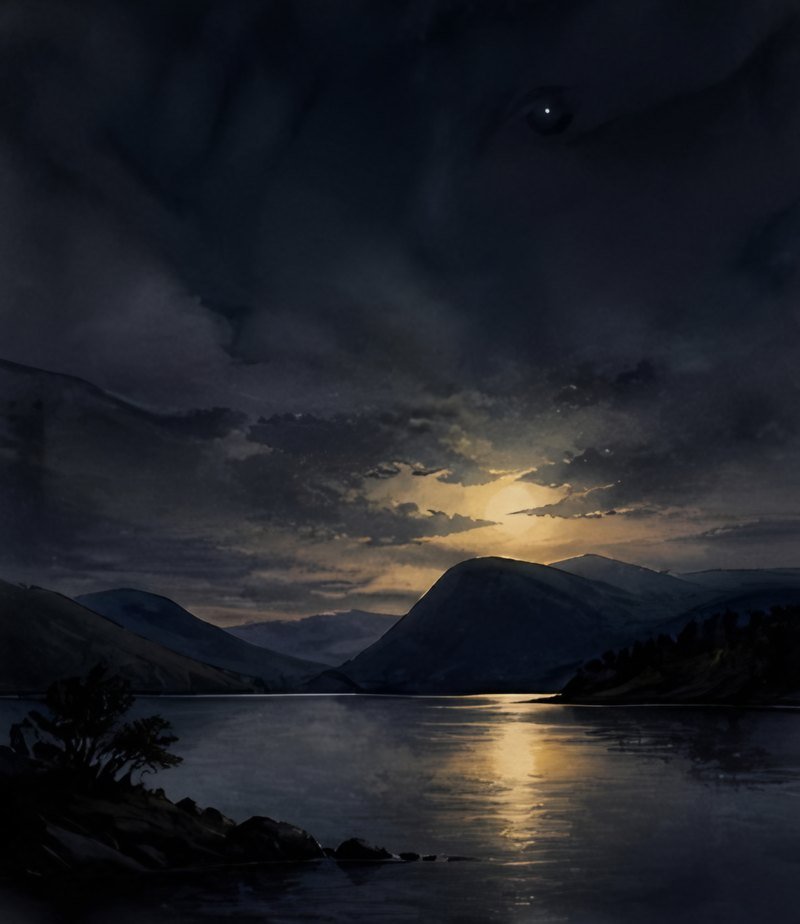
    Diana on the shore of Lake Nemi, the water holding the full moon like a mirror

    Diana at a glance

    Say it: dye AN uh, as in English. The Romans said dee AH na.

    Tradition: Roman and Latin, later blended with the Greek Artemis.

    Known for: the hunt, wild woods and animals, protection of women in childbirth, and the moon.

    Home: her sacred grove beside Lake Nemi in the Alban Hills, south of Rome, and her temple on the Aventine Hill in Rome.

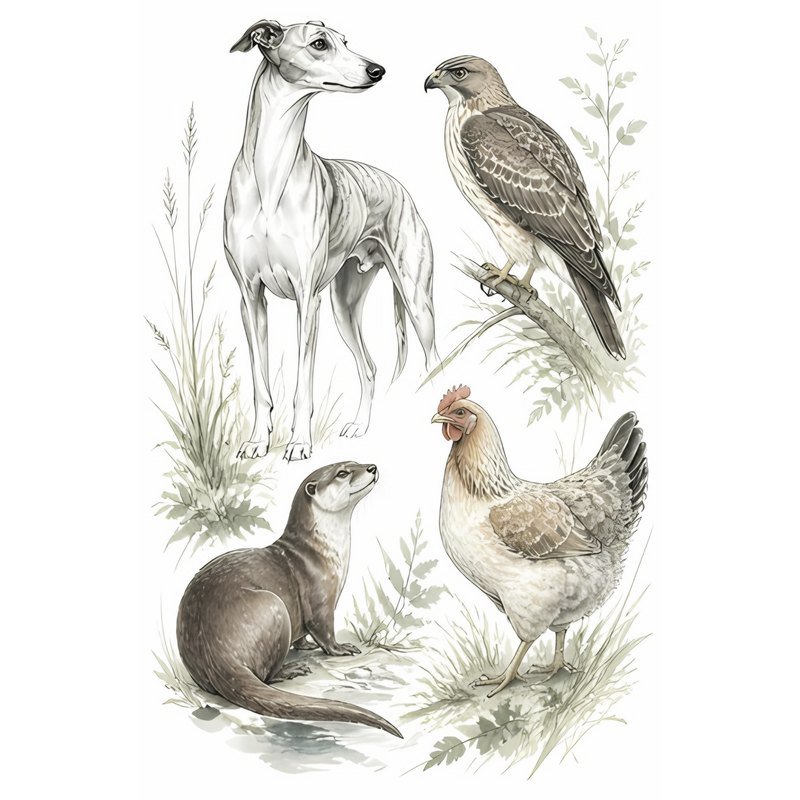
    Symbols: the bow and quiver, the crescent, the torch, the hound, the deer and the cypress tree.

    Festival: the Nemoralia, the Festival of Torches, on the Ides of August (13th August).

    Who Is the Diana Goddess?

    Diana is one of the oldest goddesses of Italy. Long before Rome was powerful, the Latin towns around it shared a sanctuary to her beside a lake in the woods. She ruled the open country beyond the farms, its forests, mountains and animals, and she protected women in childbirth, the young, and people with little power of their own.

    Her name is usually traced to an old word for divine, which shares its root with the Latin for day and the bright sky. Cicero explained it his own way: as the moon, she made a kind of day in the middle of the night.

    As Rome came to know Greek culture, Diana was matched with the Greek huntress Artemis, and gained a twin brother, Apollo, a mother, Latona, and a father, Jupiter. If you read yesterday’s post on Artemis, some of this will feel familiar, but Diana kept a character of her own, rooted in the Italian landscape.

    The Story of Diana Goddess of the Hunt

    Born on Delos

    In the story the Romans borrowed from Greece, Latona, pregnant by Jupiter, was turned away from every land until the floating island of Delos took her in. Diana was born first and then helped her mother deliver her twin, Apollo, which is one reason women in labour called on her.

    Diana and Actaeon

    The best known Roman telling of a Diana myth is in the third book of Ovid’s Metamorphoses. The hunter Actaeon stumbles on Diana bathing in a hidden pool with her nymphs. She splashes him with water and he becomes a stag, and his own hounds run him down. The story is harsh on purpose. It is about the boundary between the human world and the wild.

    Diana does not live in the town. To meet her, you walk out past the last of the fields and into the trees.

    A prophecy for Britain

    Around 1136, Geoffrey of Monmouth wrote in his History of the Kings of Britain that Brutus, a descendant of the Trojans, found a ruined temple of Diana on an empty island. He poured wine at her altar, slept before her image, and dreamed she told him of an island beyond Gaul, in the western sea, where he would found a second Troy. That island was Britain. It is legend rather than history, but Diana has been part of the story Britain tells about itself for almost nine hundred years.

    Painting of the Diana goddess as a huntress with a crescent on her brow, a deep green cloak and quiver, standing on the wooded shore of Lake Nemi as the still water mirrors the full moon, small flames along the shore and a hound beside her

    Lake Nemi, Diana’s Mirror

    The heart of Diana’s worship lay about eighteen miles south east of Rome, near the old town of Aricia, where a small round lake fills a volcanic crater ringed by wooded slopes. The place was called Nemus, the grove, and the goddess was Diana Nemorensis, Diana of the Wood. The lake is still known as Diana’s Mirror, because on a still night it holds the moon perfectly.

    In his Fasti, Ovid writes of a lake in the vale of Aricia ringed by dense woods, where the hedge was hung with threads and thank you tablets, and where a woman whose prayer was answered would walk out from the city carrying lighted torches. You can read his lines in the Fasti, Book Three. The Greek geographer Strabo describes the temple in its sacred grove, with the lake in front of it, in his Geography, Book Five.

    Strabo also records the strangest custom of all. The priest of the grove, the King of the Wood, was a runaway slave who had killed the priest before him, and he kept a sword in his hand, waiting for the next challenger. Historians are unsure how literally to take it.

    The Nemoralia, the Festival of Torches

    Diana’s great festival fell on the Ides of August. The poet Statius, writing in the first century AD, describes the grove on that night with torches shining across the lake and hunting dogs crowned with garlands, since no animal was hunted while the goddess was being honoured. The same day was kept as a festival of Diana at her temple on the Aventine Hill in Rome. Plutarch, in his Roman Questions, notes that on this day enslaved people kept a holiday and women took care to wash their hair.

    The Honest History of Diana

    Diana is so loved in modern witchcraft that it helps to know which layers are ancient and which are recent.

    What the ancient sources say

    Diana was worshipped in Roman and Latin religion for many centuries, and her sanctuary at Nemi is well attested in writing and archaeology. The historian Livy credits King Servius Tullius with founding her temple on the Aventine, though modern historians debate the date.

    Her link with the moon is old too, but it grew over time. Rome had a separate moon goddess, Luna, who is tomorrow’s goddess in this series. By the first century BC, poets were blending the two. Catullus wrote a hymn to Diana that calls her Lucina for women in childbirth, Trivia of the crossroads, and Luna for the light she borrows.

    A silver coin struck in Rome in 43 BC shows the cult statue of Diana of Nemi as three linked figures before a grove of cypress trees. You can see one in the British Museum collection. Much later, the commentator Servius summed it up: the same goddess was Luna in the sky, Diana on earth and Proserpina below.

    Her most famous statue, the Diana of Versailles in the Louvre, shows her striding forward, reaching for an arrow, with a deer at her side. The Theoi Project has photographs.

    What came later

    In the early tenth century a church text, the Canon Episcopi, complained of women who believed they rode out at night with Diana, goddess of the pagans. That line shaped later ideas of witches and their night journeys.

    In 1890 James Frazer opened The Golden Bough with the King of the Wood at Nemi. Most of his grand theory has since been set aside, but it made Nemi famous. In 1899 Charles Godfrey Leland published Aradia, or the Gospel of the Witches, presenting Diana as Queen of the Witches. Scholars doubt it records an old tradition, yet it fed straight into modern witchcraft, and in the 1970s Dianic Wicca grew up around her.

    One London correction: a Roman altar found in 1830 while Goldsmiths’ Hall was being built was long called the altar of Diana, but Goldsmiths’ Hall now says recent scholarship identifies the figure as a hunter god.

    And when old Bibles speak of Diana of the Ephesians, the famous temple at Ephesus belonged to the Greek Artemis. The translators simply used her Roman name.

    Diana and the Moon: The Three Faces

    A triple Diana is one of the few pieces of triple goddess imagery with genuinely ancient roots. Roman poets called her triformis, three formed, and her statue at Nemi had three parts.

    THE THREE FACES OF DIANAsky, earth and the roads belowIN THE SKYLunathe moon’s own light,measuring out the monthcrescent, chariot, torch1ON EARTHDianahuntress of the woodsand the lake at Nemibow, hound, deer, cypress2AT THE CROSSROADSHecateTrivia, where threeroads meet in the darktorch, key, the crossing3Luna in the sky, Diana on earth, a third goddess belowafter Servius on Virgil, and the triple statue of Nemi on a coin of 43 BC THE THREE FACES OF DIANAsky, earth and the roads belowIN THE SKYLunathe moon’s own light,measuring out the monthcrescent, chariot, torchON EARTHDianahuntress of the woodsand the lake at Nemibow, hound, deer, cypressAT THE CROSSROADSHecateTrivia, where threeroads meet in the darktorch, key, the crossingLuna in the sky, Diana on earth, a third goddess belowafter Servius on Virgil, and the triple statue of Nemi on a coin of 43 BC
    The three faces of Diana as Roman writers described them. Read from left to right, or top to bottom on a phone: the moon in the sky, the huntress on earth, and the goddess of the crossroads below.

    The lower face is the one most people now call Hecate, who closes this series on Samhain night. Statius even calls Diana’s August festival the Hecatean Ides. If you are drawn to these three faces as patterns in your own life, our guide to lunar goddess archetypes and crystal grids explores them further.

    The Diana Goddess in the Week of the Hunter’s Moon

    The Hunter’s Moon was full at 4.12am GMT on Monday 26th October, in Taurus, with the Sun in Scorpio. By Diana’s evening on Tuesday 27th October the moon is just past full, still in Taurus and still almost round, rising a little later than the night before. It has just begun to wane.

    That makes this a good night for the huntress. A hunter does not chase everything. She chooses one quarry, follows it patiently and lets the rest go by. The first nights of the waning moon ask the same question: of everything you set out to do this year, what are you really aiming for? The moon in Taurus, an earthy, steady sign, suits the Diana who lives on earth, and favours slow, rooted choices.

    Her own festival falls in high summer, near Lammas, but this week she walks the darkening nights towards Samhain.

    Crystals for Diana

    No ancient text links Diana with any crystal. The stones below are modern correspondences, chosen for her story: the green grove, the crescent, the moon on the lake, the torches, the arrow and her care for the vulnerable. Each one is in stock, so you can find it in the shop.

    Green aventurine, for the grove

    Green aventurine has a soft shimmer, like sunlight through leaves, and the colour of Diana’s woodland. A green aventurine tower on a windowsill brings a little of the grove at Nemi indoors.

    A carved crescent, for the moon on her brow

    Diana is so often shown with a crescent on her forehead that the shape has become her sign. A crystal moon carving makes a simple focus for her altar in the nights after the Hunter’s Moon.

    Labradorite, for Diana’s Mirror

    Labradorite looks dark until the light catches it and blue flashes across the surface, much like moonlight on a still lake. A blue labradorite freeform suits quiet reflection as the moon begins to wane.

    Citrine, for the torches

    Golden citrine carries the warm colour of torchlight, for the Nemoralia and for courage when you walk out into the dark. A natural citrine point can sit beside your candle.

    Black obsidian, for the arrow

    Obsidian is volcanic glass that breaks to a fine, sharp edge, and people made arrowheads from it for thousands of years. Hold an obsidian sphere as you name the one thing you are aiming for.

    Black tourmaline, for the guardian

    Black tourmaline is one of the stones most often chosen for protection. It suits Diana as the guardian of women, children and wild creatures. Try a black tourmaline merkabah by the door.

    If you only have one stone, choose clear quartz and say aloud what you are asking for. Any of the six above can also be bought as a small tumblestone, which is an easy way to begin.

    A Simple Practice for Diana’s Night

    This is a gentle practice for the evening of Tuesday 27th October, or any night as the moon begins to wane. It borrows two images from Nemi, the torch and the lake, but it is a modern practice, not an ancient rite. You need a white or green chime candle in a safe holder, a small bowl of water, a short length of natural thread or ribbon, a pen and journal, and one of the stones above.

    • Set your space. Place the bowl of water in front of you with the candle just behind it, so that when it is lit the flame shows in the water. Put your stone beside the bowl.
    • Light the candle. Say her name aloud three times: Diana, Diana, Diana. You might add the closing words of Catullus’s hymn: be holy, under whatever name pleases you.
    • Name your quarry. In your journal, write the one aim you most want to follow through the coming season. Only one. Underneath, write two things you are willing to let go by so you can follow it.
    • Tie a knot. Hold the thread and tie a single knot in it as you say your aim aloud. This echoes the threads Ovid saw hanging in the grove. Keep the thread somewhere you will see it, or tie it loosely to a branch outdoors.
    • Look into the mirror. Sit for a few minutes with the flame in the water. If you like, rest your fingertips on the surface, or simply breathe slowly and listen to the room. Either is fine.
    • Close. Thank Diana, put out the candle, and pour the water onto the earth or a plant.

    Never leave a lit candle unattended. If you enjoy working with water at the full moon, our guide to moon water and lunar elixirs has more ideas.

    Light a candle for Diana

    Our Manifest Magic chime candles come in ten colours. White suits the moon in Diana’s Mirror, and green suits the goddess of the grove. Light one on Tuesday 27th, as the Hunter’s Moon begins to wane.

    Choose your colour

    The Seven Moon Goddesses Film

    Diana is one of seven moon goddesses in our short film, which follows the moon from the Hunter’s Moon to Samhain night. Each goddess has her own day this week.

    Seven Moon Goddesses: a one minute film, from the Hunter’s Moon to Samhain

    Questions People Ask About Diana

    What is Diana the goddess of?

    Diana is the Roman goddess of the hunt, wild animals and the woods. She also protected women in childbirth and was honoured as a goddess of the moon.

    Is Diana the same as Artemis?

    Not quite. Diana was an Italian goddess in her own right, with her own sanctuary at Nemi. The Romans later matched her with Artemis and took on her myths.

    Is Diana a moon goddess?

    Yes, though that side of her grew over time. Rome also had a separate moon goddess, Luna, and by the first century BC poets were calling Diana by Luna’s name.

    What are the symbols of Diana?

    The bow, arrows and quiver, the crescent moon, the torch, hunting dogs, deer and the cypress tree. Lake Nemi, known as Diana’s Mirror, is closely tied to her too.

    What is the Nemoralia?

    The Nemoralia, or Festival of Torches, was Diana’s festival on the Ides of August, 13th August. Worshippers carried torches to her grove at Nemi and hunting dogs were garlanded.

    Who are Diana’s parents?

    In the Roman retelling of the Greek myth, Diana is the daughter of Jupiter and Latona, and the twin sister of Apollo, born on the island of Delos.

    Bring Diana home

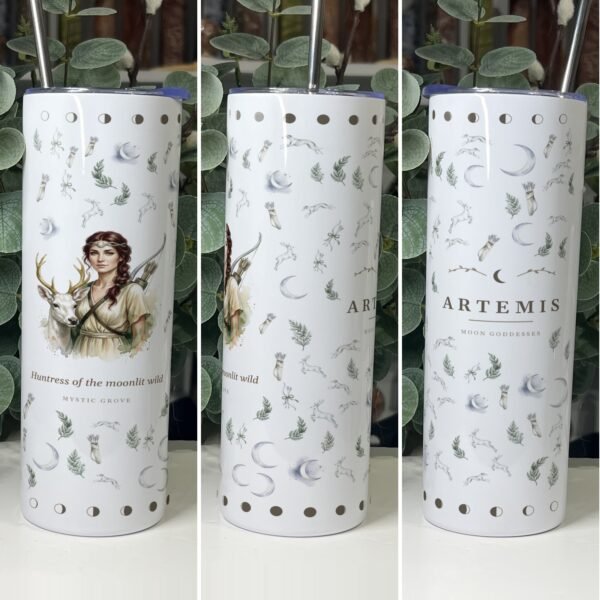
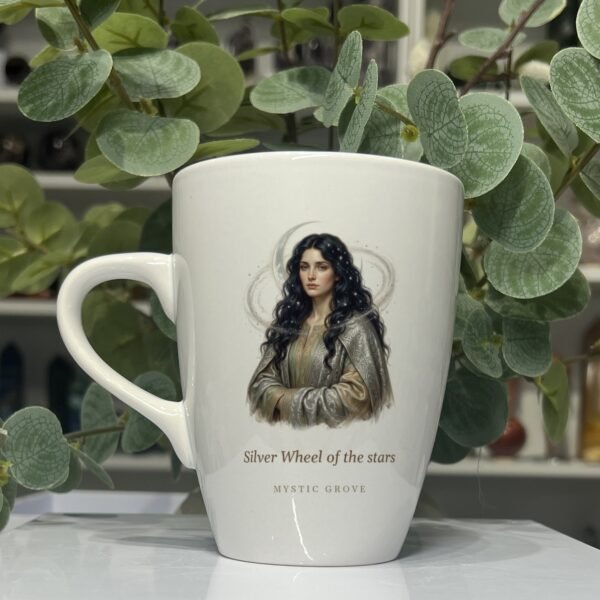
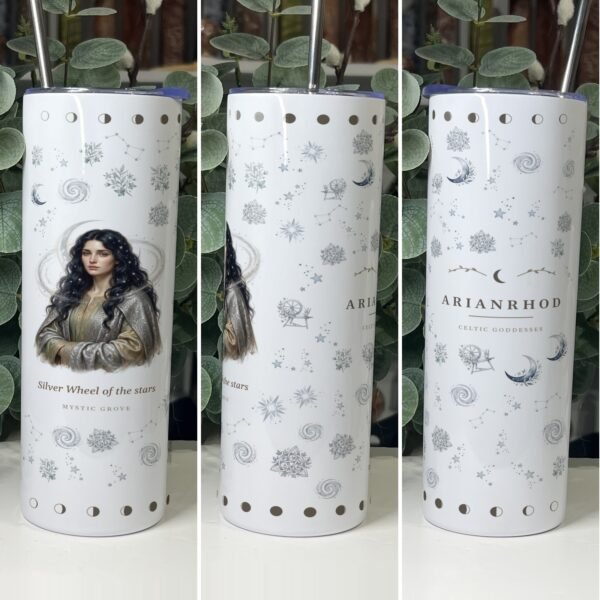
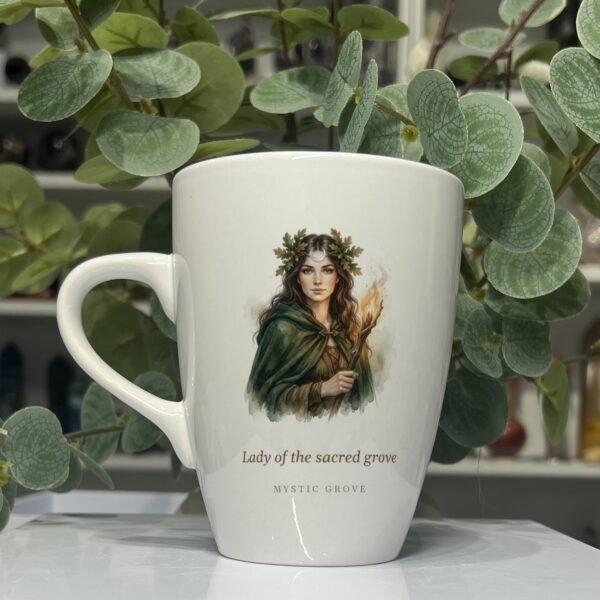
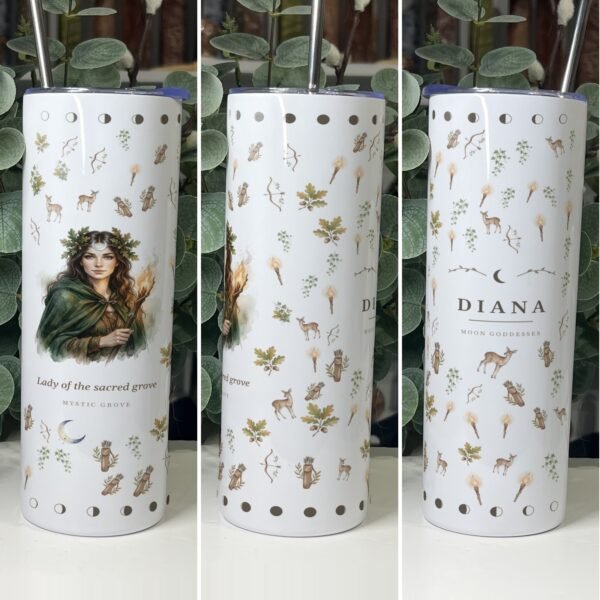
    The Diana artwork from this series now comes on a 13oz white ceramic mug and a 20oz skinny tumbler wrapped all the way round in oak leaves, torches and deer. Each one comes with a printed card telling her story, so it is ready to keep or to give.
    See all the goddess tumblers

  • Artemis: Greek Goddess of the Hunt and the Hunter’s Moon

    Artemis: Greek Goddess of the Hunt and the Hunter’s Moon

    Artemis, the Greek goddess of the hunt and the moonlit woods: who she is, her stories, her symbols, and how to honour the Artemis goddess at the Hunter’s Moon

    Artemis is the huntress of the Greek hills, the twin sister of Apollo, the one who runs with her hounds through the cypress groves and keeps the wild places for herself. Here is who the Artemis goddess really is, how she came to be linked with the moon, and the crystals and simple practices people use to honour her at the Hunter’s Moon. She is the second goddess in our week of moon goddesses, from the full moon to Samhain.

    Artemis in the cypress grove, with her hound and the white stag, under a young crescent moon.

    Artemis at a glance

    Say it: AR te miss, with the stress on the first syllable.

    Tradition: Ancient Greek. Her Roman counterpart is Diana.

    Family: daughter of Zeus and Leto, twin sister of Apollo.

    Known for: hunting, wild animals, the wilderness, the protection of girls and young creatures, and help in childbirth.

    Symbols: the bow and golden arrows, the quiver, the deer, the hound, the bear, the cypress, the torch and, in later art, the crescent moon.

    Moon night this week: the Hunter’s Moon, full at 4.12am GMT on Monday 26th October 2026.

    Who Is the Artemis Goddess?

    Artemis is one of the twelve Olympian gods of ancient Greece. She is the goddess of the hunt and of everything that lives beyond the edge of the town: the mountains, the forests, the marshes and the animals that live there. Homer calls her the mistress of animals, and the Greeks pictured her as a young woman who never married, who ran with a pack of hounds and a band of nymphs, and who could bring down a deer with a single arrow.

    The Greeks did not see her as a goddess of killing. The hunter who knows the woods is also the one who protects them, and Artemis looked after young animals, young girls and women giving birth.

    She is very old. Her name has been read on clay tablets from the Mycenaean palace at Pylos, written more than three thousand years ago, and no one knows for certain what it means.

    The Stories of Artemis

    Born on an island

    In the story, Leto was carrying twins by Zeus, and Hera, his jealous wife, made sure no land would let her rest. At last the small floating island of Delos took her in. Some tellings say Artemis was born first, on the nearby island of Ortygia, and then helped her mother deliver Apollo. That is one reason women in labour prayed to her.

    A girl who asked for everything

    The loveliest picture of young Artemis comes from the poet Callimachus, writing in Alexandria in the third century BC. In his Hymn to Artemis, the little goddess sits on her father’s knee and asks for her wishes. She wants to stay unmarried forever. She wants many names, so that her brother Apollo cannot outshine her. She wants a bow and arrows, a hunting tunic that falls only to the knee, a choir of nymphs and all the mountains of the world. Zeus laughs and gives her all of it, and more.

    In the same poem the Cyclopes forge her bow, the god Pan gives her hunting dogs, and in Arcadia she catches four deer with golden horns on foot to draw her golden chariot.

    She did not ask her father for a crown. She asked for the mountains, and the right to keep them wild.

    Actaeon, Callisto and Orion

    The stories also show her fierce side. The hunter Actaeon came upon her bathing, and she turned him into a stag, chased down by his own hounds. Her companion Callisto, after Zeus came to her, was turned into a bear and placed in the sky as the Great Bear.

    The giant hunter Orion was her friend on the hunt. In one telling he boasted he would kill every creature on earth, the earth sent a scorpion against him, and Artemis set him among the stars. These are myths, told differently across the Greek world, and they read best as stories about respect for wild things rather than as history.

    Artemis goddess of the hunt in a moonlit oil painting: a young huntress in a short pale tunic with a crescent diadem, a quiver and bow, walking through tall cypress trees with a white stag and a lean hound under a thin crescent moon

    The Honest History of Artemis

    It helps to know which parts of her picture are ancient and which came later.

    What the ancient sources say

    In Homer she is the archer and the mistress of animals. The short Homeric Hymn to Artemis opens with the line “I sing of Artemis, whose shafts are of gold”, and shows her hunting across the shadowy hills before she goes to her brother’s house at Delphi to lead the dancing.

    Her worship was real and widespread. At Brauron, on the coast east of Athens, young Athenian girls served her as little bears, wearing saffron coloured dresses, a custom the playwright Aristophanes mentions in Lysistrata. At Sparta she was honoured as Artemis Orthia. At Ephesus, on the coast of what is now Türkiye, her great temple was counted among the Seven Wonders of the ancient world, and the site is now on the UNESCO World Heritage List. The goddess of Ephesus looked quite different from the slim huntress, a reminder that Artemis was worshipped in many forms.

    Her most famous statue today is the Diana of Versailles in the Louvre, a Roman copy of a Greek bronze. She strides forward in a short tunic, reaching for an arrow.

    How Artemis became a moon goddess

    In Homer and the early hymns, Artemis is not the moon. The moon was Selene, a separate goddess who drove her own silver chariot across the night sky. Over time Greek writers began to treat Artemis and Selene as one, much as Apollo came to be linked with the sun, and by Roman times the huntress with a crescent on her brow was a familiar figure.

    There were moonlit threads in her worship long before that. At the Mounichia festival in Athens, held on the sixteenth day of the spring month Mounichion, close to the full moon, people offered her round cakes set all around with small lit candles. Plutarch tells us the festival remembered the Greek victory over the Persians at Salamis, when, he says, the goddess shone with a full moon on the Greek fleet. So a candle on a round cake for Artemis is a genuinely ancient gesture.

    What is modern

    Calling Artemis the maiden of a triple moon goddess, alongside a mother and a crone, is a twentieth century idea, made popular by Robert Graves and then by modern witchcraft. The same goes for her crystals and her place in the zodiac. None of this is in the ancient texts. That does not make it less meaningful; the young huntress is old, the triple goddess is new, and you are free to love both.

    Artemis Symbols and What They Mean

    Ancient art gave Artemis a clear set of signs, so anyone could recognise her on a vase or a coin.

    • The bow and arrows. Her most iconic symbols. Her arrows were said to be golden.
    • The deer. Her sacred animal, from her golden horned chariot deer to the doe beside her in the Louvre.
    • The hound. Her hunting companions, the gift from Pan.
    • The bear. Linked with the girls of Brauron and with Callisto.
    • The cypress. The tall dark tree of her sacred groves.
    • The torch. She was sometimes called the light bringer, and torches were carried for her at night.
    • The crescent moon. Worn as a diadem or a pendant in later art, once she had come to be seen as a moon goddess.

    Callimachus has her ask for many names, and the Greeks gave them to her. Together they show how wide her care reached.

    THE MANY NAMES OF ARTEMISshe asked for many names, so that Apollo could not rival her1Agroteraof the wild landshuntress of thehills and woods2Potnia Theronmistress of animalsthe name Homergives her3Lochiaof childbirthcalled on bywomen in labour4Mounichiaof Munichia hillround cakes andcandles at full moon5Brauroniaof Brauronwhere young girlsdanced as bears6Ephesiaof Ephesusher temple was awonder of the world THE MANY NAMES OF ARTEMISshe asked for many names, so that Apollo could not rival her1Agroteraof the wild landshuntress of thehills and woods2Potnia Theronmistress of animalsthe name Homergives her3Lochiaof childbirthcalled on bywomen in labour4Mounichiaof Munichia hillround cakes andcandles at full moon5Brauroniaof Brauronwhere young girlsdanced as bears6Ephesiaof Ephesusher temple was awonder of the world
    Six of the many names of Artemis, each tied to a place or a role in her worship. Read across the rows from the wild lands to the great temple at Ephesus.

    Artemis and the Hunter’s Moon

    Her day in our series falls on Monday 26th October 2026, the morning of the Hunter’s Moon. The moon is full at 4.12am GMT, so the night to watch is Sunday 25th, when the moon rises low and golden in the east as the light fades. UK clocks go back that same weekend, at 2am on Sunday, so the evenings suddenly feel darker. Our guide to the Hunter’s Moon 2026 has the timings and the folklore of the name.

    The sky adds its own echo of her story. The Sun is in Scorpio, the sign of the scorpion that brought Orion down, and on autumn nights Orion himself climbs into the late evening sky in the east. The full moon is in Taurus, the bull, and Artemis had a bull name too: the playwright Euripides calls her Tauropolos at her shrine at Halai, near Brauron. These are modern pairings, not ancient teaching, but they give the week a lovely shape.

    From Monday the moon begins to wane, shrinking a little each night towards Samhain on the 31st. In modern moon work this is the time to finish, gather in and release. For Artemis that is the hunter’s rhythm: the chase is over, and now the catch comes home. It is a good week to look at one goal you have been chasing and decide what it needs from you now.

    Crystals for Artemis

    No ancient text gives Artemis a crystal. The stones below are modern correspondences, chosen for her story, and each one is in stock.

    Moss agate, for the wild groves

    Moss agate holds green, branching patterns that look like a tiny forest caught in stone. A moss agate tower on a windowsill brings a little of her grove indoors.

    Clear quartz, for the arrow’s aim

    A clear quartz point has a natural tip, like an arrowhead of light. A clear quartz point laid towards the moon is a simple way to set your aim for the coming month.

    Tiger’s eye, for the hunter’s sight

    Tiger’s eye has a golden band of light that moves as you turn it, like the eye of an animal in the dark. It speaks of sharp sight and patience, and its gold recalls her arrows. Try a tiger’s eye tower.

    Howlite, for the white stag

    Howlite is soft white with fine grey veins, the colour of the pale deer that so often walk beside her in art. It is a calming stone for quiet evenings. A howlite tower suits a bedside altar during the waning week.

    Carnelian, for the swift stride

    Warm orange carnelian is a stone of energy and courage, a good match for a goddess who caught golden horned deer on foot. A carnelian wand is lovely to hold while you speak your aim aloud.

    Rainbow moonstone, for the crescent

    Rainbow moonstone shows a blue sheen that seems to float under the surface, like moonlight through leaves. It stands for the crescent she wears in later art. Our rainbow moonstone tower makes a gentle centre for a small moon altar.

    If you only have one stone, choose clear quartz and tell it plainly what you are aiming for. Any of these stones can also be bought as a single tumblestone from our choose your stone range.

    A Simple Hunter’s Moon Practice for Artemis

    This practice borrows a gesture from her ancient worship: a round cake and a small flame under the full moon. Do it on Sunday 25th as the moon rises, or on Monday 26th as it begins to wane. You need a white chime candle, a small round cake or biscuit, a pen and paper, and one of the stones above.

    • Set your space. Place the cake on a plate with the candle beside it, and the stone in front.
    • Light the candle. Say her name aloud three times: Artemis, Artemis, Artemis. You might add, “Lady of the wild places, huntress of the moon, I honour you tonight.”
    • Name your aim. Write one clear goal on the paper, the thing you have been chasing this year. One line, as sharp as an arrow.
    • Name what you are bringing home. Underneath, write one thing you have already achieved towards it.
    • Make your offering. Break off a piece of the cake and set it aside for her. Later, leave it outside for the birds.
    • Sit with the light. Hold the stone and watch the flame. Some people like to breathe slowly and count each breath, or step softly on the spot as if walking through the woods. Others simply sit quietly. Any of these is fine.
    • Close. Thank Artemis, put out the candle, and keep the paper under the stone until Samhain.

    If you enjoy making moon water, the Hunter’s Moon is a fine night for it, and our guide to moon water and lunar elixirs explains how.

    Signs the Artemis Goddess May Be Calling You

    • You feel most yourself outdoors, in woods, on hills or by wild water.
    • Deer, dogs or bears keep appearing in your days or dreams.
    • You guard your independence and your own space.
    • You have a clear goal and the patience to follow it through.

    If you are not sure, our guide to which goddess is calling you has some simple ways to find out, and lunar goddess archetypes and crystal grids shows how to build a grid around her.

    Light a candle for Artemis

    Our Manifest Magic chime candles come in ten colours. White suits the pale deer and the bright full moon of Sunday night, and green suits her woods and groves.

    Choose your colour

    The Seven Moon Goddesses Film

    Artemis is one of seven goddesses in our short film for this week, which follows the moon from the Hunter’s Moon to Samhain night.

    Seven Moon Goddesses: a one minute film, from the Hunter’s Moon to Samhain

    Questions People Ask About Artemis

    What is Artemis the goddess of?

    Artemis is the Greek goddess of the hunt, wild animals and the wilderness. She also protected young girls and helped women in childbirth, and in later times she became a goddess of the moon.

    Is Artemis a moon goddess?

    Not at first. In the earliest Greek sources the moon is Selene. Artemis came to be identified with Selene over time, and by the Roman period she was widely seen as a moon goddess. Most people who work with her today honour her at the crescent and full moon.

    What are the symbols of Artemis?

    The bow and arrows, the quiver, the deer, the hound, the bear, the cypress and the torch, with the crescent moon added in later art.

    Who is Artemis’s twin?

    Her twin brother is Apollo, god of music, prophecy and light. Their parents are Zeus and Leto, and they were born on or near the island of Delos.

    What is the Roman name for Artemis?

    The Romans honoured Diana, who came to be treated as the same goddess. You can read her own story, with the torchlit festival at Lake Nemi, in our post on Diana.

    How do you pronounce Artemis?

    Say AR te miss, with the stress on the first syllable.

    Bring Artemis home

    The Artemis artwork from this series now comes on a 13oz white ceramic mug and a 20oz skinny tumbler wrapped all the way round in bows, white deer and hounds. Each one comes with a printed card telling her story, so it is ready to keep or to give.

    See all the goddess tumblers

  • Selene: Greek Goddess of the Moon and the Silver Chariot

    Selene: Greek Goddess of the Moon and the Silver Chariot

    Selene, the Greek goddess of the moon: her silver chariot, her love for Endymion, her symbols and a simple practice for the eve of the Hunter’s Moon

    Selene is the moon itself in Greek myth, the shining goddess who bathes in the Ocean at dusk, yokes her white horses and drives her chariot across the night sky. Here is who the Selene goddess is, what the oldest Greek sources really say, the story of Selene and Endymion, and the crystals and gentle practice people use to honour her today. She opens our week of moon goddesses, on the night before the Hunter’s Moon.

    Selene drives her silver chariot across the night sky, her veil lifting in an arch above her head.

    Selene at a glance

    Say it: seh LEE nee. Her name is still the everyday Greek word for the moon.

    Tradition: ancient Greek, from Hesiod and the Homeric Hymns.

    Known for: driving the moon across the night sky, and her love for the sleeping Endymion.

    Family: daughter of the Titans Hyperion and Theia, sister of Helios the sun and Eos the dawn.

    Symbols: the silver chariot, two white horses, the crescent crown and the veil that arches over her head.

    Roman name: Luna.

    Her night this week: Sunday 25th October 2026, the eve of the Hunter’s Moon.

    Who Is the Selene Goddess?

    Selene is the Greek goddess of the moon, and in the oldest stories she is not simply linked with the moon, she is the moon. When the Greeks looked up at its light, they saw her face and her chariot. Her name comes from selas, an old Greek word for brightness or gleaming light, and it has never left the language: Greeks still call the moon selini today.

    The poet Hesiod, writing around 700 BC, places her in a family of light. Her parents are the Titans Hyperion and Theia, and her brother and sister are Helios, the sun, and Eos, the dawn. The three of them share the sky. Helios drives his chariot across the day, Eos opens the gates of morning, and Selene takes the night.

    THE THREE LIGHTSchildren of the Titans Hyperion and TheiaHyperion and TheiaTitans of lightEosthe dawnopens the gatesof morningHeliosthe sundrives his chariotacross the daySelenethe moondrives two whitehorses across the nightEach evening Selene rises from the Ocean as her brother sets,and she sinks again as her sister brings the dawn. THE THREE LIGHTSchildren of Hyperion and TheiaHyperion and TheiaTitans of lightEosthe dawnopens the gatesof morningHeliosthe sundrives his chariotacross the daySelenethe moondrives two whitehorses across the nightEach evening Selene rises from the Oceanas her brother sets, and sinks againas her sister brings the dawn.
    Selene’s family as Hesiod tells it. Read from the top: the two Titans, then their three children, the lights that share the sky between them.

    Unlike the great Olympians, Selene had very few temples. She was honoured more as a living presence in the sky than as a goddess with priests and festivals. You do not need a temple to find her, only a clear night.

    The Story of Selene and Endymion

    The sleeper on Mount Latmos

    The best known Selene story is a love story. On Mount Latmos, above what is now Lake Bafa in western Turkey, a beautiful young man named Endymion lay asleep in a cave. In most tellings he is a shepherd. Driving across the sky, Selene saw him sleeping in the moonlight and fell in love.

    Night after night she stepped from her chariot and lay beside him while he slept. The poet Apollonius of Rhodes, writing in the third century BC, has her confess that she often slipped away to the Latmian cave to be with him.

    Moonlit oil painting of the Selene goddess in white and silver robes, a silver crescent diadem on her brow and her long veil billowing in an arch overhead, driving a glowing starry chariot pulled by two white horses before a vast full moon

    The gift of endless sleep

    Endymion was mortal, and mortals grow old. In the version told in the Library, a handbook of Greek myth from the Roman period, Zeus offered Endymion a wish and he chose to sleep forever, never ageing and never dying. Other tellers, among them the Roman writer Cicero, say the moon sent him to sleep herself, so that she could visit him undisturbed. Either way the ending is the same. He sleeps on Latmos still, and the moon still comes to him.

    She could not stop him growing old. She could only stop the clock, and keep coming back.

    The travel writer Pausanias, in the second century AD, adds that Selene bore Endymion fifty daughters. Some scholars suggest the fifty stand for the fifty lunar months between one Olympic festival and the next, which would make them the moon’s own months. It is a lovely idea, but a modern guess.

    Selene’s other loves

    She has two other partners in the stories. With Zeus she had a daughter, Pandia, whose name means all bright, and the poet Alcman names another daughter, Ersa, the dew. The Roman poet Virgil tells a stranger tale, that the woodland god Pan won the moon by tempting her with a snow white fleece. These are stories, told and retold by poets.

    What the Selene Story Means

    Read slowly, the Endymion tale is about faithfulness. The moon cannot stay. Every month she wanes away to nothing, yet she always comes back, and her love for Endymion is that rhythm turned into a story. It is also a story about rest, since sleep and night belong together. That is why so many people turn to Selene for calm evenings, peaceful sleep and dreams, and for a love that does not need to hold on tightly.

    The Honest History of Selene

    It helps to know which parts of Selene are ancient and which are recent.

    What the old sources say

    The most beautiful early picture of her is the short Homeric Hymn 32 to Selene, a poem of about twenty lines whose exact date no one knows, though it is usually counted among the later hymns in the collection. It describes her bathing her lovely skin in the waters of Ocean, putting on shining robes, yoking her bright horses and driving out in the evening in the middle of the month, when her great circle is full and her light is strongest. It calls her full moon a sure token and a sign to mortal men. That is the closest thing we have to an ancient description of Selene in her own right.

    Pausanias saw a stone image of Selene at Elis with horns rising from her head. In Theocritus’s second Idyll, written in the third century BC, a young woman named Simaetha calls on Selene by moonlight as she works a love charm. The idea that witches could draw down the moon was familiar enough for Aristophanes to joke about it in his comedy The Clouds in 423 BC. You can read many of these passages gathered together at Theoi Greek Mythology.

    Where you can still see her

    Selene drives across some of the finest sculpture of the ancient world. On the east pediment of the Parthenon in Athens, carved between 438 and 432 BC, the sun’s horses rise at one corner and the moon’s horses sink at the other. One of those horse heads, its nostrils flared and its mouth open after a night of hard driving, is in the British Museum in London as the horse of Selene. The museum notes the driver may be Selene or Nyx, the night.

    The Romans loved the Endymion story so much that they carved it on coffins. On these sarcophagi Selene steps down from her chariot towards the sleeping young man, her veil swelling in an arch above her head like a sail. The Metropolitan Museum’s Selene and Endymion sarcophagus from the early third century AD shows exactly this, with the sun rising in his chariot at one end and the moon sinking in hers at the other.

    What is modern

    Over time the Greeks blended their moon goddesses. By the Roman period Artemis, Hecate and Selene were often treated as faces of one lunar power, and Selene was matched with the Roman Luna. The triple goddess of maiden, mother and crone is newer still, popularised in the twentieth century by Robert Graves. Modern pagans often place Selene as the mother, the full moon. That is a meaningful modern layer, but it is not how the ancient Greeks arranged their gods.

    Selene Goddess Symbols

    Each Selene goddess symbol below comes from ancient poetry or art.

    • The chariot. Her silver chariot carries the moon across the sky, just as her brother’s carries the sun. Later art often decorates it with stars.
    • White horses. Usually a pair, pale as moonlight. Some poets give her oxen or bulls instead, and Pausanias mentions a mule.
    • The crescent. Worn as a crown or diadem on her brow, or rising like horns from her head.
    • The arching veil. A cloak or veil billowing over her head in a curve, which Roman artists used to show her drifting through the night.
    • Silver and white. Her colours are the colours of moonlight itself.

    Selene and the Hunter’s Moon

    Selene’s day in our series is Sunday 25th October 2026, and the timing could hardly suit her better. It is the night the clocks go back. At 2am UK clocks fall from BST to GMT, and that evening the dark arrives an hour earlier than the night before. Sunday is named for the sun, her brother, so his day hands over to her night.

    On Sunday evening the moon is a bright waxing gibbous, almost round, rising in the east around sunset. It slips into Taurus overnight and becomes the full Hunter’s Moon at 4.12am GMT on Monday 26th October, with the Sun in Scorpio opposite. Astrologers call the moon exalted in Taurus, the sign of the bull, a happy match for a goddess some poets gave a team of bulls. This is the full moon of the hymn.

    For lovers of numbers, the digits of the 25th add up to seven, the number of goddesses in this series. From here the moon begins to wane, night by night, towards Samhain on Saturday 31st October, when Hecate closes the week.

    Crystals for Selene

    No ancient text gives Selene any crystal. The stones below are modern correspondences, chosen for her story: the moonlight, the white horses, the starry chariot, the sleeping Endymion and a love that keeps returning. Each is one we stock, and any of them can also be bought as a single tumblestone.

    Selenite, the stone that carries her name

    Selenite takes its name from the Greek for stone of the moon, after Selene herself, for its soft pearly glow. A selenite moon bowl makes a simple altar centre, and a selenite wand sits well beside a white candle.

    Moonstone, for the full moon

    Moonstone has a gentle sheen that seems to move across its surface, like moonlight on water. Our moonstone sphere echoes the round full moon itself.

    Howlite, for the white horses

    Howlite is white with soft grey veins, the colour of her pale horses. It is widely used as a calming stone before sleep, which ties it to the quiet hours she drives through. Try a howlite tower on a bedside table.

    Amethyst, for Endymion’s dreams

    Amethyst has long been a stone of rest and clear dreaming. With Selene it speaks to the sleeper on Latmos and the dreams the moon watches over. A dream amethyst sphere suits a dream journal kept by the bed.

    Clear quartz, for the stars on the chariot

    Clear quartz scatters light, much as the moon reflects her brother the sun, and stands for the stars on her chariot. A clear quartz cluster catches candlelight beautifully on a moon altar.

    Rose quartz, for a faithful love

    Rose quartz is the classic stone of tender love. With Selene it carries the side of her story that keeps coming back, a love that is patient and does not grasp. Hold a rose quartz palm stone while you think of someone you hold dear.

    Keep selenite out of water. Selenite is a soft form of gypsum and it dissolves, clouds and pits when wet. If you are making moon water under the Hunter’s Moon, set the selenite beside the jar, never inside it. Moonstone and clear quartz are the safer stones to place near water.

    A Simple Full Moon Practice for Selene

    A gentle practice for the evening of Sunday 25th October, or any night near the full moon. You need a white chime candle, a small bowl of water, a pen and a journal, and one of the stones above. If you have a moon cycles charging plate, it makes a lovely base for your stone.

    • Find the moon. Look for her rising in the east around sunset, or set your space by a window that faces her.
    • Light the candle. Place the bowl of water in front of it, so the flame and the moonlight both catch on the surface. Say her name aloud three times: Selene, Selene, Selene.
    • Speak to her. Say a few words of greeting in your own way. You might borrow the spirit of the old hymn: Hail, bright Selene, who drives the night. Thank you for your light.
    • Write what you keep returning to. In your journal, write one thing in your life that is worth coming back to, again and again, like the moon to Endymion.
    • Rest with the light. Hold your stone and sit quietly for a few minutes. Some people like to hum softly, or simply notice the slow rhythm of their breathing, as the night settles. Others sit in silence. Either is fine.
    • Close. Thank Selene, put out the candle, and pour the water onto a plant or the earth outside. Keep your journal page private, just for you.

    Light a candle for Selene

    Our Manifest Magic chime candles come in ten colours. White is the colour of moonlight and of Selene’s horses, and a small chime candle burns down in a single evening, just right for the night before the Hunter’s Moon.

    Choose your colour

    For a fuller altar, our guide to lunar goddess archetypes and crystal grids shows how to lay stones around a centre, with a crystal moon carving at its heart. Not sure Selene is the goddess for you? Our guide to which goddess is calling you may help.

    The Seven Moon Goddesses Film

    Selene is the first of seven moon goddesses in our short film, each painted in moonlight and following the moon from full to waning across the week of Samhain.

    Seven Moon Goddesses: a one minute film, from the Hunter’s Moon to Samhain

    Questions People Ask About Selene

    What is Selene the goddess of?

    Selene is the Greek goddess of the moon. In the oldest sources she is the moon itself, driving it across the night sky in her chariot.

    What is the story of Selene and Endymion?

    Selene fell in love with Endymion, a young man who slept in a cave on Mount Latmos. He was granted endless sleep and eternal youth, and the moon visits him every night.

    Is Selene the same as Artemis?

    No, they began as separate goddesses. Selene was the moon itself, while Artemis was the goddess of the hunt. In later times Artemis took on moon symbolism and the two were often blended.

    What is Selene’s Roman name?

    The Romans called her Luna, and they told the Endymion story of Luna just as the Greeks told it of Selene.

    Who are Selene’s parents?

    Hesiod names the Titans Hyperion and Theia, which makes her the sister of Helios and Eos. One of the Homeric Hymns gives her father as Pallas instead.

    What are Selene’s symbols?

    Her chariot, her pair of white horses, the crescent crown, the arching veil, and the colours silver and white.

    Bring Selene home

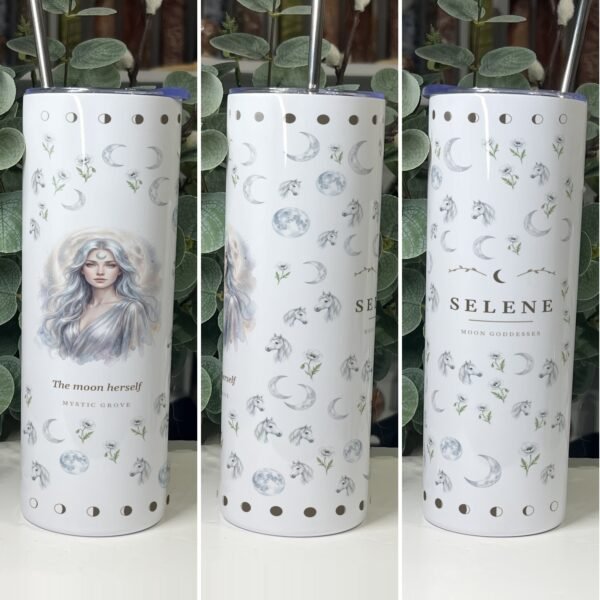
    The Selene artwork from this series now comes on a 13oz white ceramic mug and a 20oz skinny tumbler wrapped all the way round in white horses, poppies and moons. Each one comes with a printed card telling her story, so it is ready to keep or to give.

    See all the goddess tumblers

  • Witchy Gifts UK 2026: 30 Ideas for Every Budget

    Witchy Gifts UK 2026: 30 Ideas for Every Budget

    Thirty gift ideas for the witch in your life, sorted by budget, with the stories behind the tools

    Buying for someone who lights candles with intention, keeps a tarot deck by the bed or talks to the moon? This is our Witchy Gifts UK guide for 2026: thirty ideas we actually stock, sorted into gifts under £10, gifts from £10 to £25 and gifts of £25 and over, with a little honest history on why witches use each one.

    Witchy gifts UK 2026 at a glance

    • Under £10: chime candles, altar cloths, incense, moon tote bags, angel number crystal balls, spell journals and goddess mugs.
    • £10 to £25: tarot and oracle decks, a cast iron ritual pot, spell kits, Wheel of the Year crystal sets, raven skull carvings, goddess tumblers and the crystal advent calendar.
    • £25 and over: a leather Book of Shadows, a singing bowl, a rose quartz heart and a garnet sphere.
    • The big date: Yule, the winter solstice, falls on Monday 21 December 2026 at 8.49pm UK time.
    • Delivery: free UK delivery on orders of £50 or more, and orders usually go out within one working day.

    Prefer to browse? Shop our gift edits: Christmas gifts for witches, witchy gifts under £10 and witchy gifts under £25.

    First, who are you buying for?

    The most common question we hear in December is some version of “what do I get a friend who is into witchy things?” The honest answer depends on how deep into the practice they are, so it helps to place them first.

    Someone just starting out

    Give them the basics they will use every week: candles, incense, a small crystal set and a journal to write it all down. Beginners seldom own these yet, and nothing sits unused.

    A practising witch

    Seasoned practitioners already own the basics, so choose something with a story: a new tarot or oracle deck, a cauldron for loose incense, a Book of Shadows worth keeping, or a goddess piece tied to the deities they work with.

    Someone who loves the look

    Plenty of people adore the witchy aesthetic without keeping a practice at all, and that is perfectly lovely. Go for things that look beautiful on a shelf or in the hand: a tote bag, a goddess mug, a selenite bowl or a crystal sphere.

    THE WITCHY GIFT FINDER Just starting Chime candles Incense Angel number ball Spell journal Practising witch Tarot or oracle deck Cast iron ritual pot Book of Shadows Goddess tumbler Loves the look Moon tote bag Goddess mug Selenite bowl Crystal sphere THE WITCHY GIFT FINDER Just starting Chime candles Incense Angel number ball Spell journal Practising witch Tarot or oracle deck Cast iron ritual pot Book of Shadows Goddess tumbler Loves the look Moon tote bag Goddess mug Selenite bowl Crystal sphere
    The witchy gift finder: start with who they are, then choose from the matching column.

    Witchy gifts under £10

    Stocking fillers, Secret Santa and little extras. These are the everyday tools a witch burns through, so they are always welcome.

    1. Manifest Magic chime candles

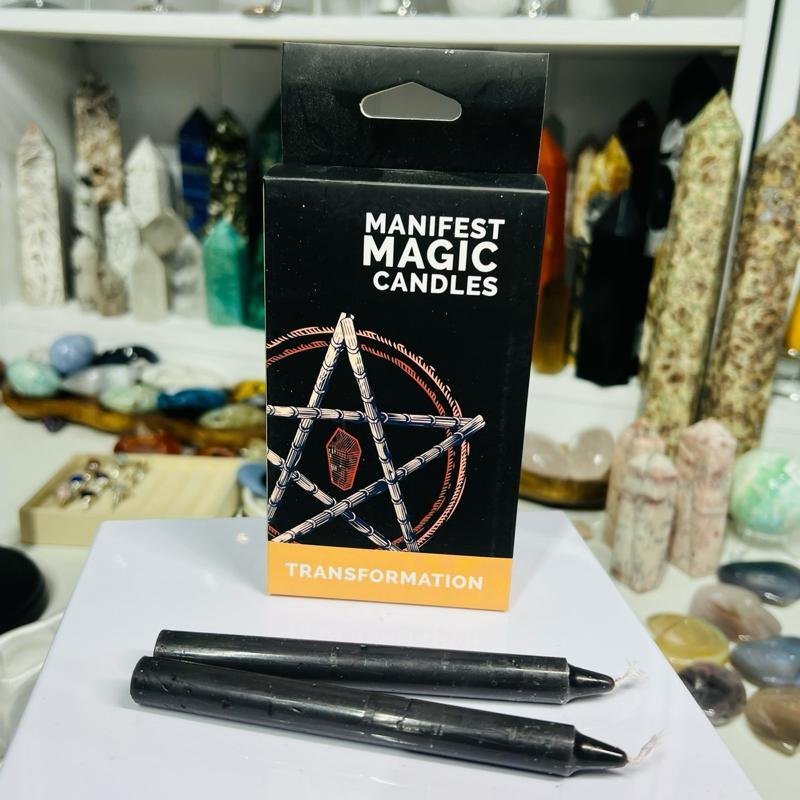
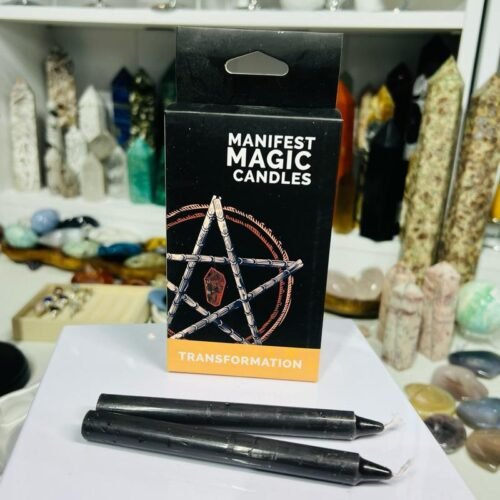
    Chime candles are small, quick burning spell candles, usually finished in an hour or two, which makes them ideal for a single intention. Our Manifest Magic chime candles come in ten colours, from Protection white to Transformation black. Pair them with our candle colour meanings guide so they know which colour suits which spell.

    2. An esoteric altar cloth

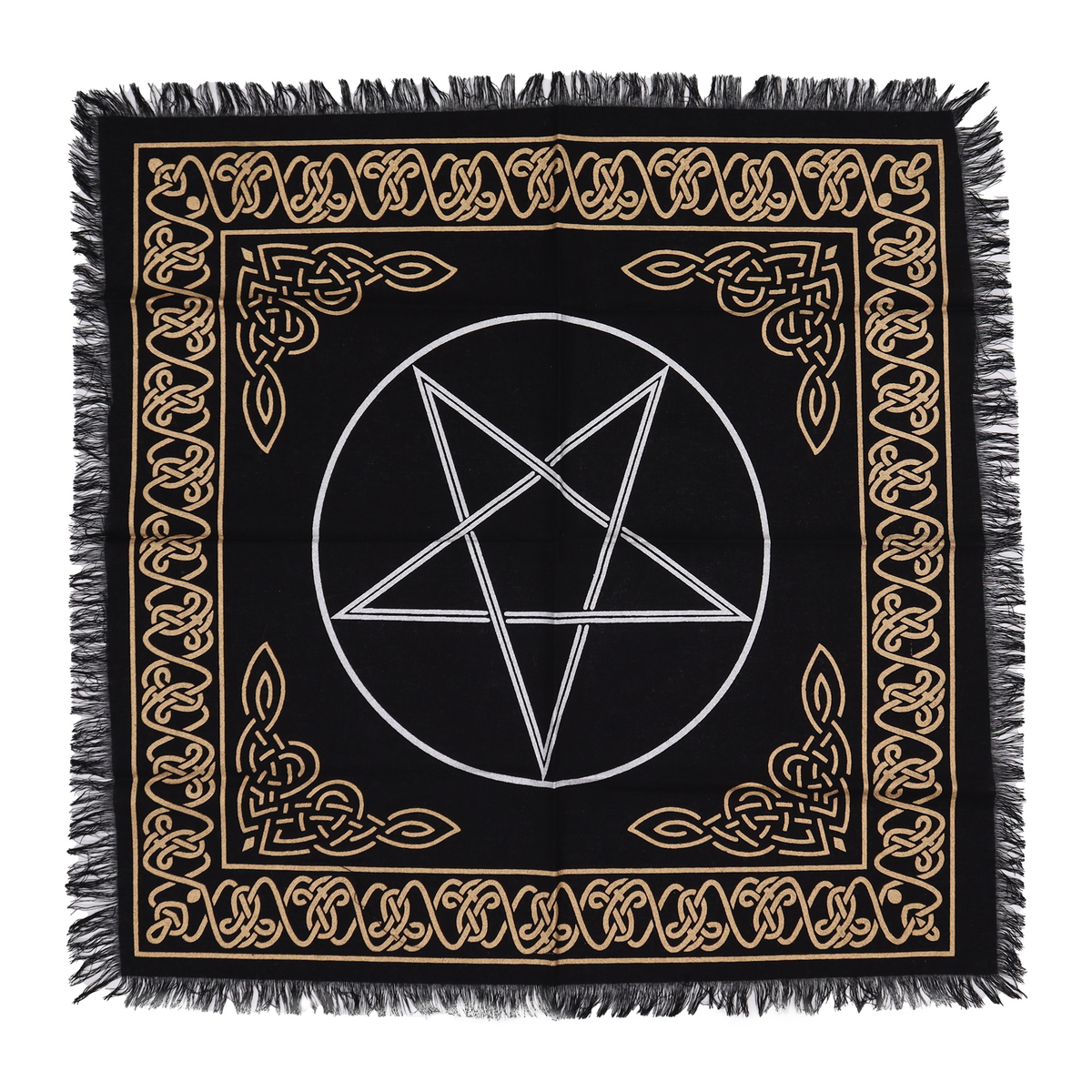
    An altar cloth marks out a small space as set apart, even if it is only a corner of a bedside table. The fringed altar cloths come in six designs, including Metatron’s Cube.

    3. Satya incense

    Incense is one of the oldest offerings in almost every tradition, and a box of Satya incense sticks is the stocking filler every witch uses up. Each scent carries its intention in its name, so it is easy to choose.

    4. A moon tote bag

    For the friend who carries crystals in every pocket. Our witchy tote bags include moon phase, mushroom moon and moon child designs.

    5. An angel number crystal ball

    For the friend who keeps seeing 11:11 or 444. Each little clear crystal ball is engraved with an angel number, from 111 to 999, so you can choose the one that keeps finding them. Our angel numbers guide explains what each one is said to mean, and the angel number crystal balls make a sweet stocking filler.

    6. A Book of Spells journal

    Every witch writes things down: spells that worked, dreams, moon notes. The Book of Spells journal comes with an amethyst crystal pen.

    7. A magic spell candle

    Inspired by the traditional seven day prayer candle, the Luck green tea magic spell candle is made for one intention: good fortune. It is a lovely first spell for someone curious, and there are Protection and Friendship versions too.

    8. A goddess mug

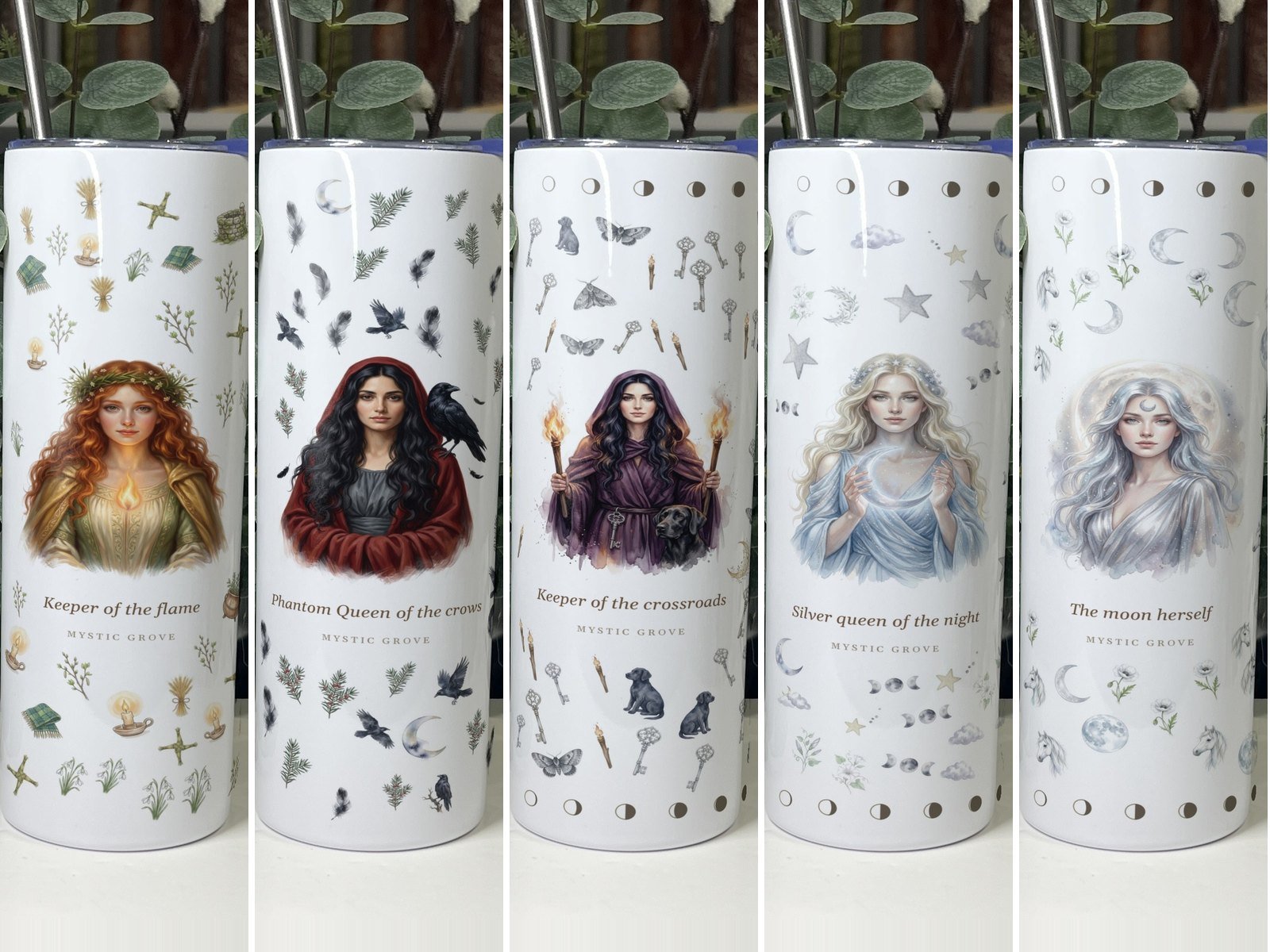
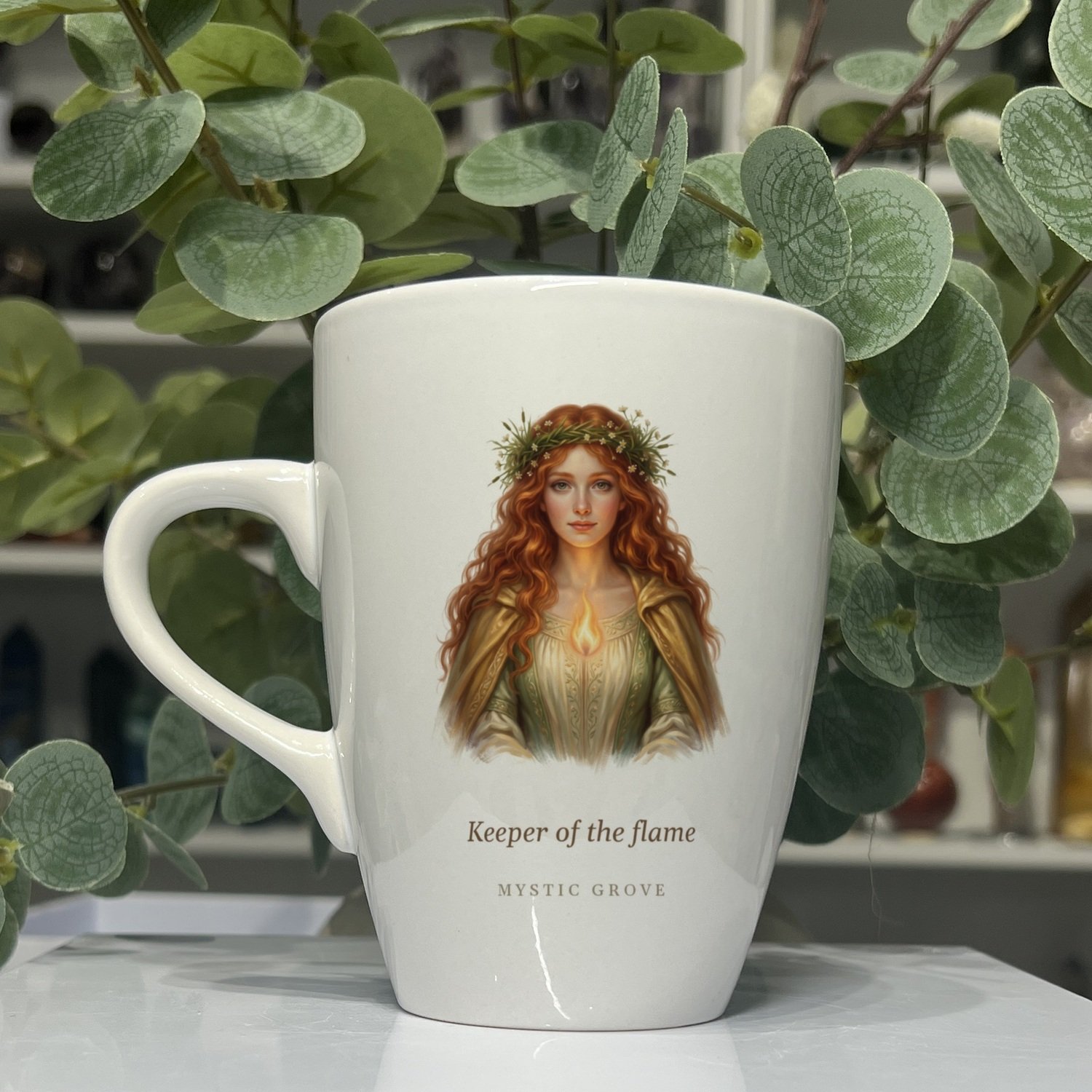
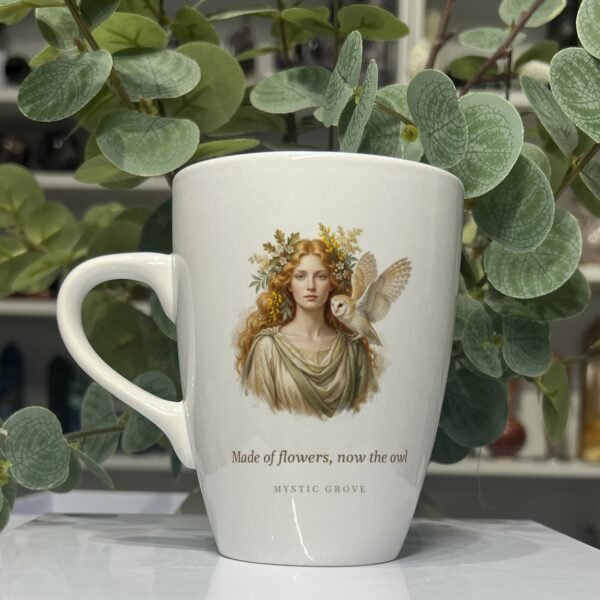
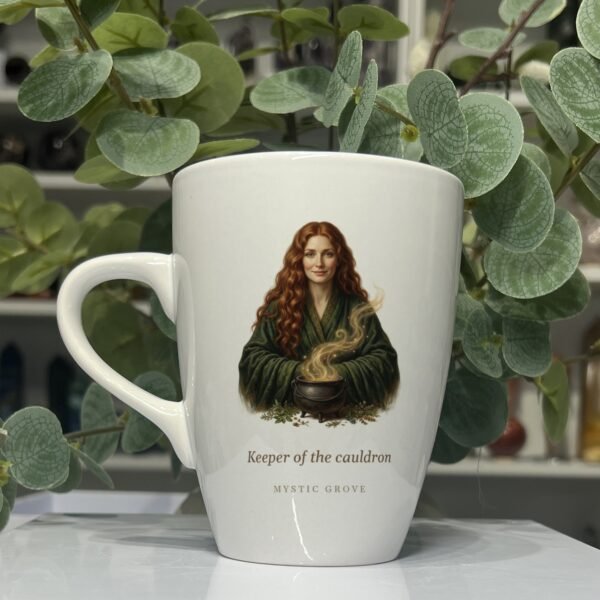
    Our own design. Fourteen Celtic and moon goddesses, from Brigid and the Morrígan to Selene and Hecate, each painted for Mystic Grove and printed on a 13oz white ceramic mug with her name on the other side. Browse the full set of goddess mugs.

    Witchy gifts from £10 to £25

    The sweet spot for a birthday, a Yule gift or a proper Christmas present.

    9. A Wheel of the Year crystal set

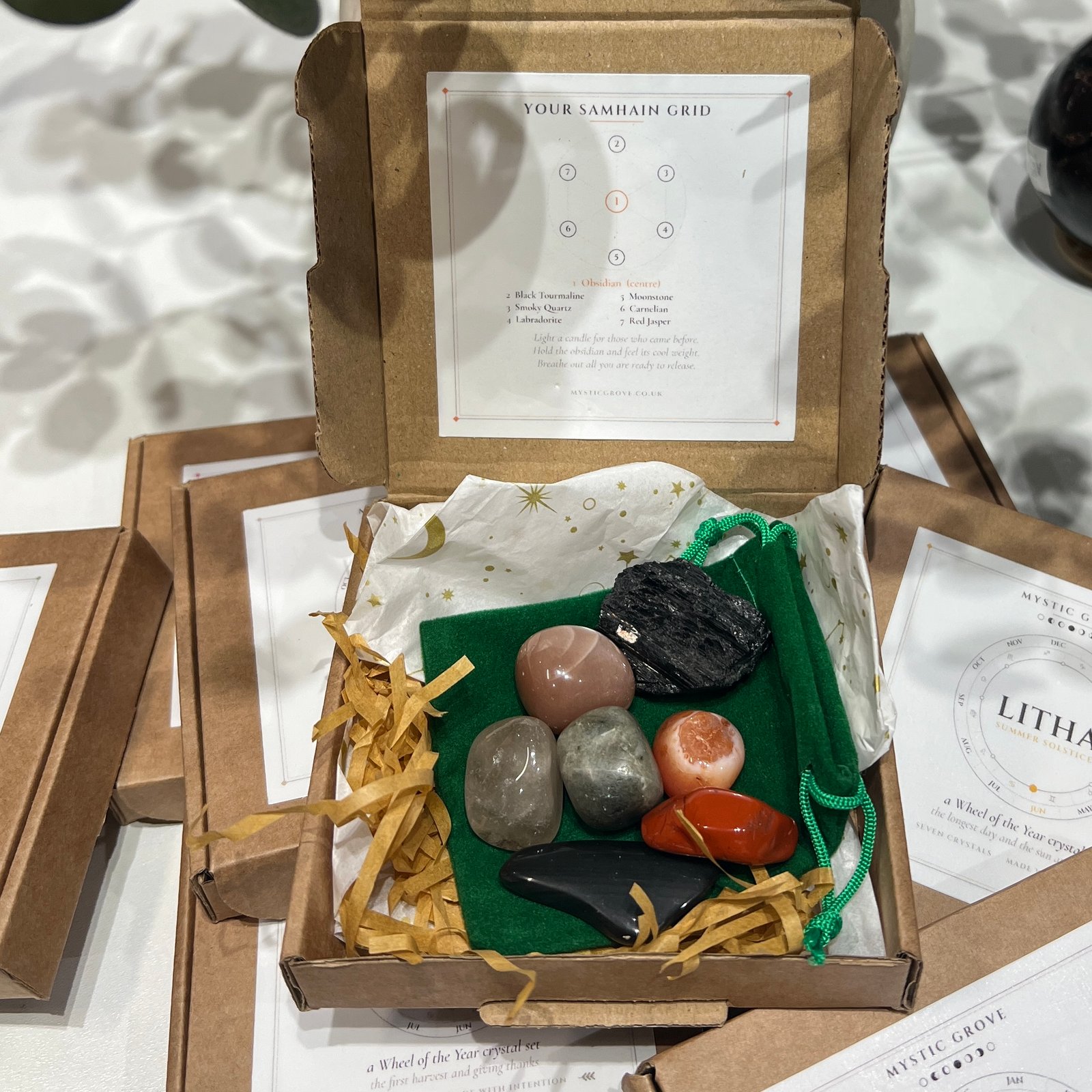
    Seven tumblestones with a Sabbat grid card, chosen for one of the eight festivals. The Wheel of the Year crystal set lets you pick Yule for a December gift, or their favourite Sabbat.

    10. A raven skull crystal carving

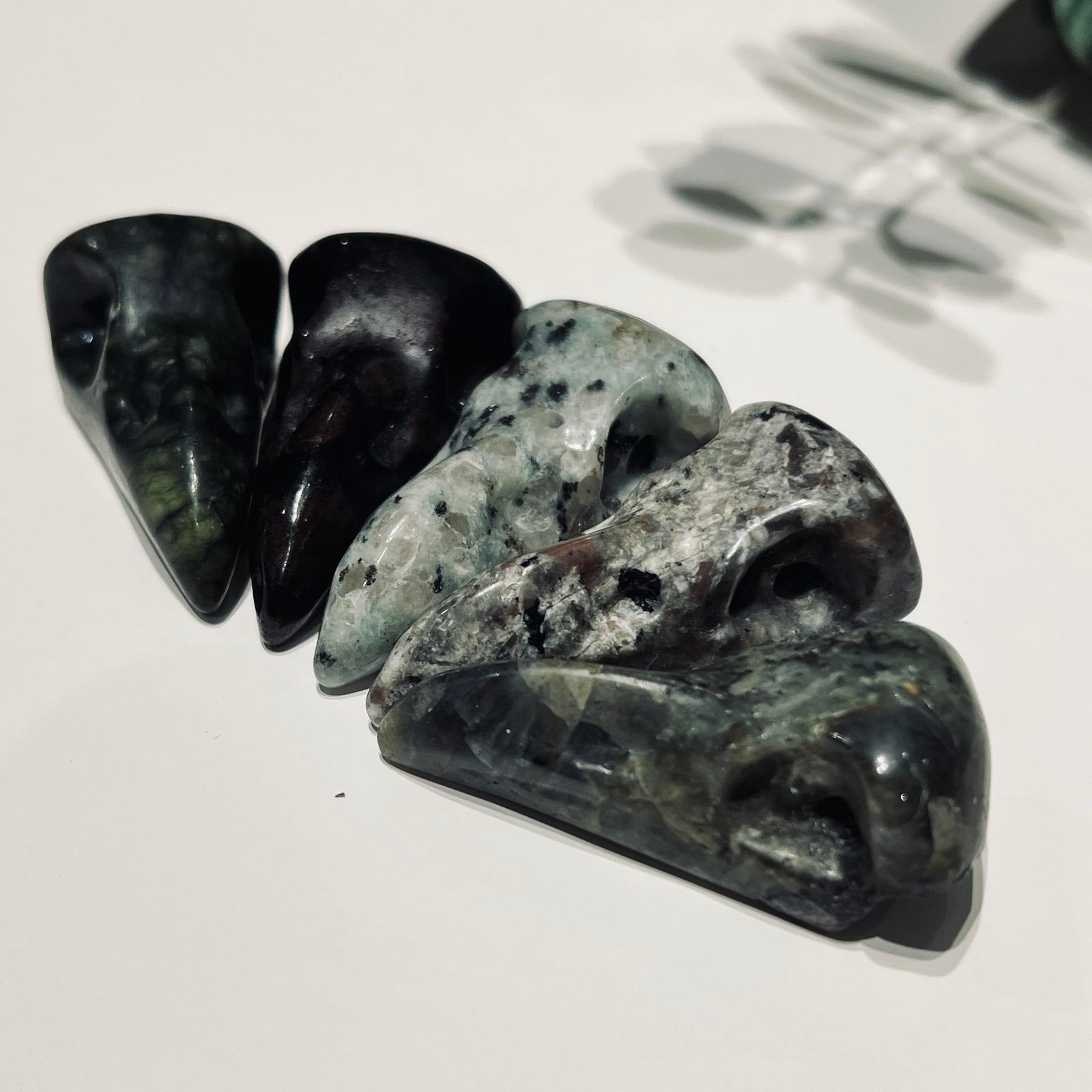
    Ravens and crows have long been tied to the Morrígan in Irish story and to Odin’s two ravens in Norse myth. Our raven skull carvings are 5cm, carved and polished, and you choose the stone.

    11. A sunstone tower

    Yule is the festival of the returning sun, so a sunstone tower is a quietly clever solstice gift. The sunstone towers run from 9cm to 26cm, peach sunstone with a coppery glitter.

    12. A small cast iron ritual pot

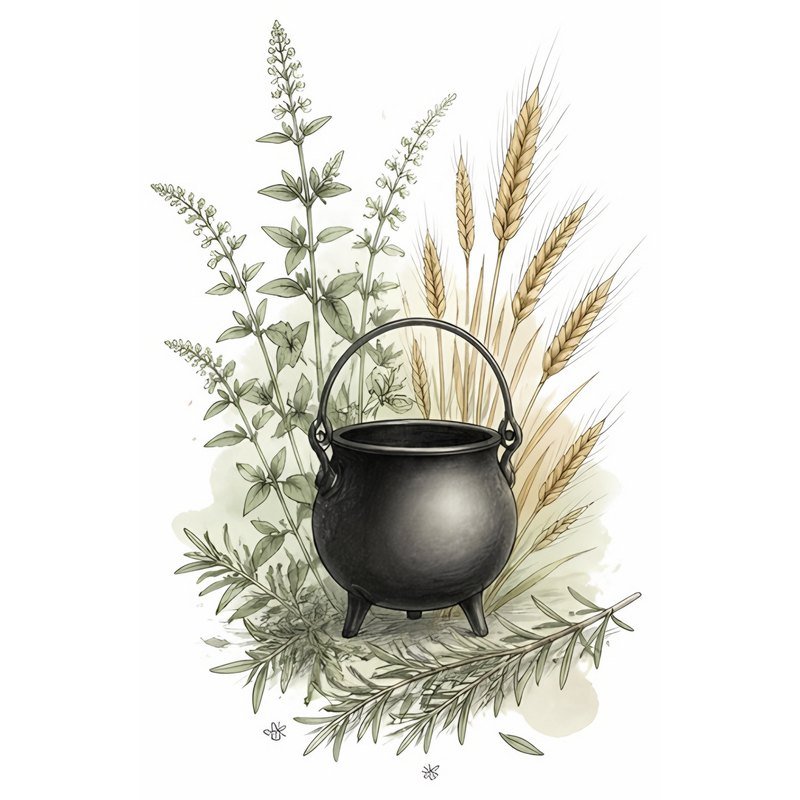
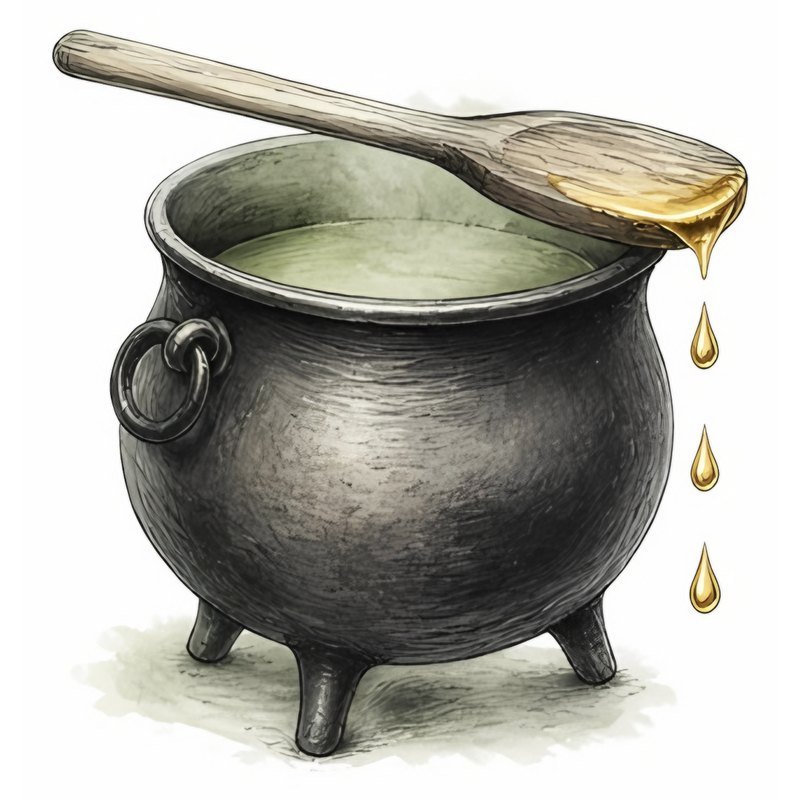
    The witch’s cauldron began life as the ordinary iron cooking pot found in almost every home. Our small cast iron ritual pot is sized for loose incense, resin and burning a written intention safely.

    13. A Herbal Magick spell kit

    A small ritual in one box. The Herbal Magick Happiness spell kit includes a selenite wand, palo santo, sunflowers, an abalone shell and a guide book. There are Self Love and Stress Less versions too.

    14 to 16. A tarot deck

    A new deck is the gift most readers secretly want. Three we love: The Light Seer’s Tarot for a warm, modern deck, The Witches’ Wisdom Tarot for the practising witch, and the Seasons of the Witch Winter Tarot for a deck made for the dark half of the year. See all our tarot cards.

    17 and 18. An oracle deck

    Oracle decks are freer than tarot and kinder to a beginner, since there is no fixed system to learn. Try The Witch’s Way Home Oracle or the Moonology Manifestation Oracle for a moon lover. More in our oracle cards.

    19. An evil eye leather journal

    The evil eye is one of the oldest protective symbols around the Mediterranean, worn to turn envy away. The evil eye leather journal makes a handsome dream diary or spell book.

    20. A selenite ritual bowl

    Selenite is soft and pale, and many practitioners keep a bowl of it to rest jewellery and smaller crystals in. The 10cm selenite ritual bowl suits a dressing table as well as an altar. Keep it dry, as selenite marks easily and does not like water.

    21 to 24. A goddess tumbler

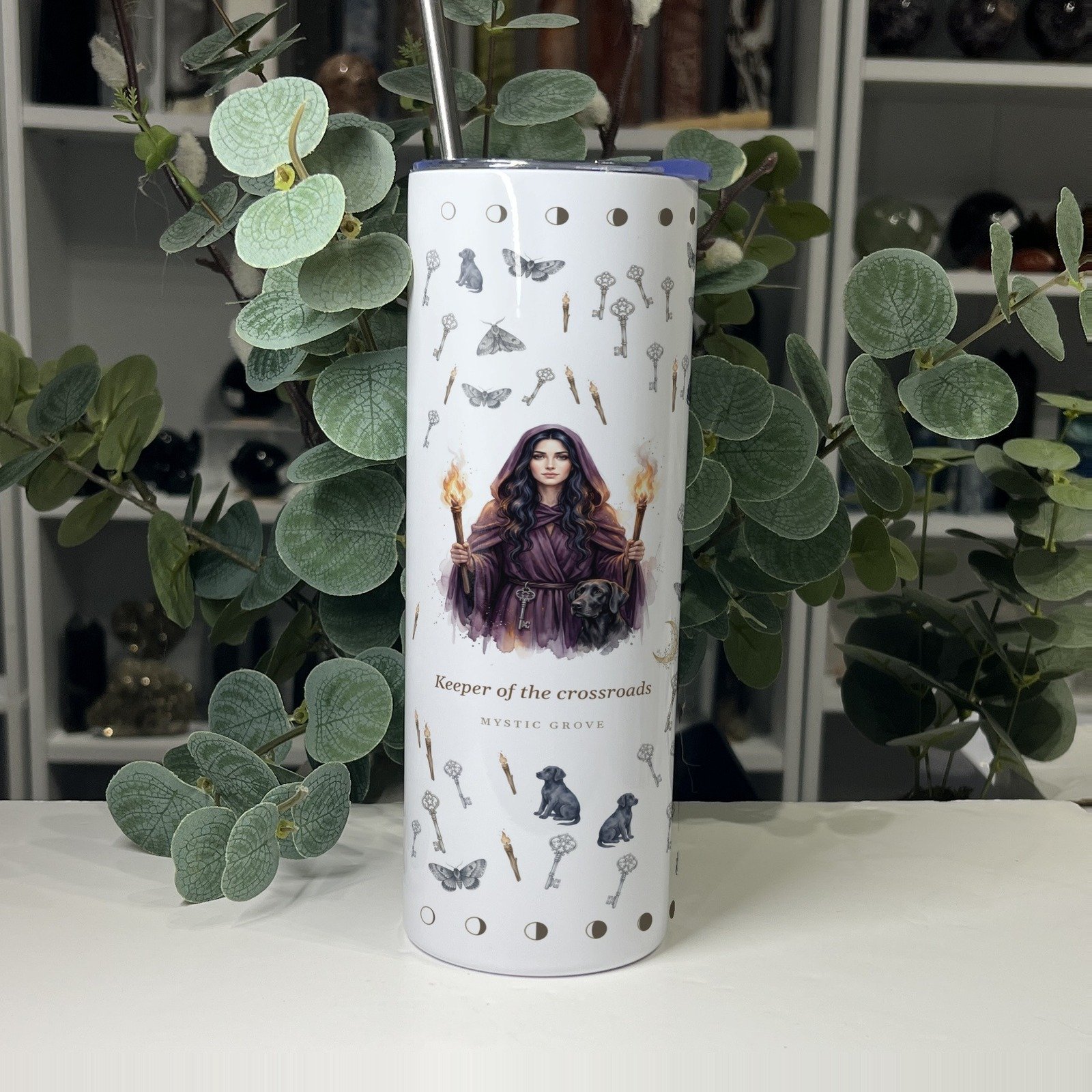
    Our goddess artwork wraps all the way round a 20oz skinny tumbler with a straw, gift boxed with a printed card telling her story. For a Yule gift choose the Cailleach, the old woman of winter, or pick the Morrígan, Brigid or Hecate. See all fourteen goddess tumblers, or find theirs with which goddess is calling you.

    25. The crystal advent calendar

    Twenty four days, twenty four crystals. The crystal advent calendar needs ordering in November so it arrives before 1 December.

    Witchy gifts of £25 and over

    For the person who matters most, or a gift you would like them to keep for years.

    26. A rose quartz heart on a stand

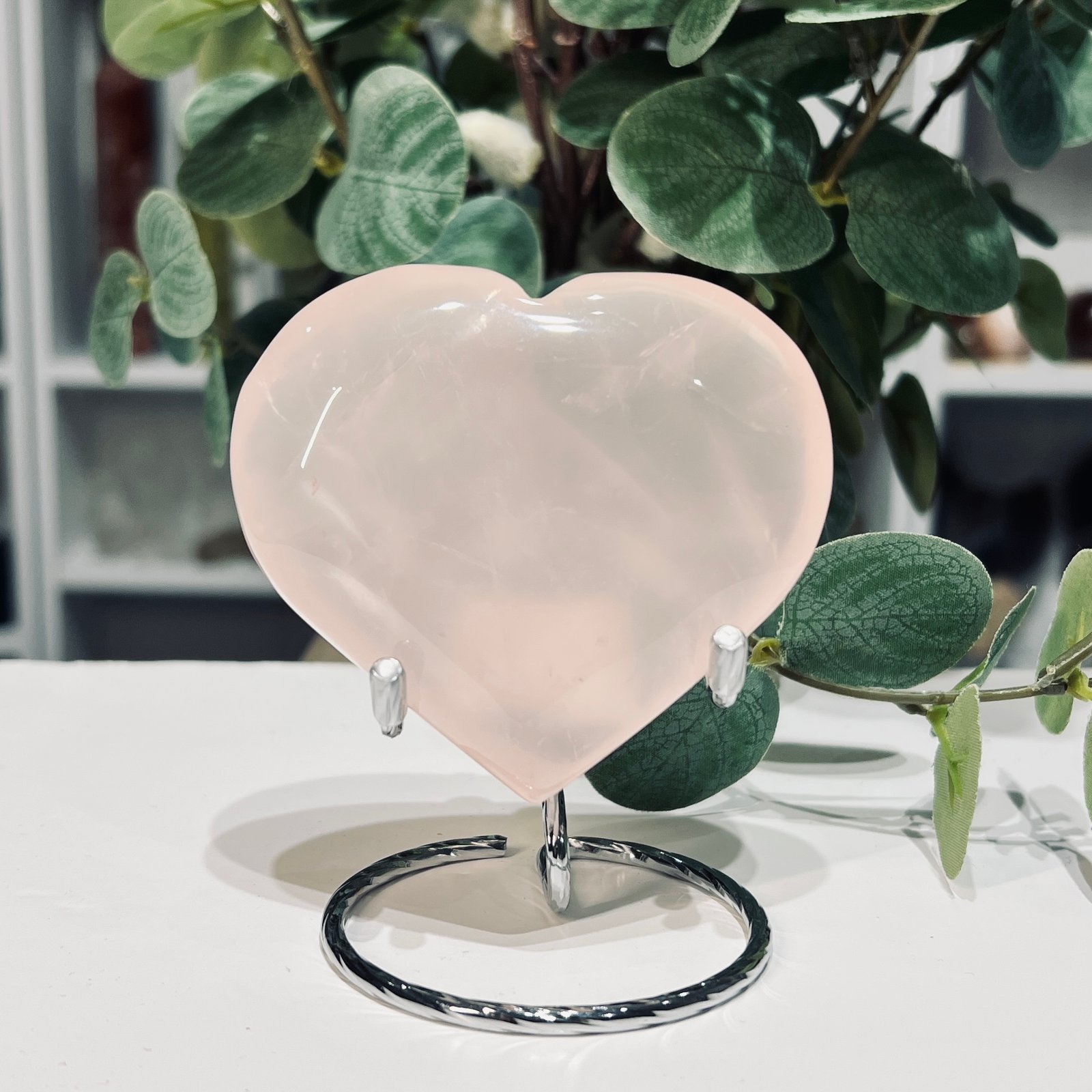
    Rose quartz is the stone most people link with love and kindness, and a heart is the simplest way to say it. The rose quartz heart on a stand is 10cm. Keep it out of direct sun, as rose quartz can fade.

    27. An earth powder singing bowl

    Singing bowls are struck or circled with a wooden striker to make a long, ringing tone, and many people use one to open and close a meditation or clear a room. Our singing bowls include the earth powder bowls.

    28. A pentagram Book of Shadows

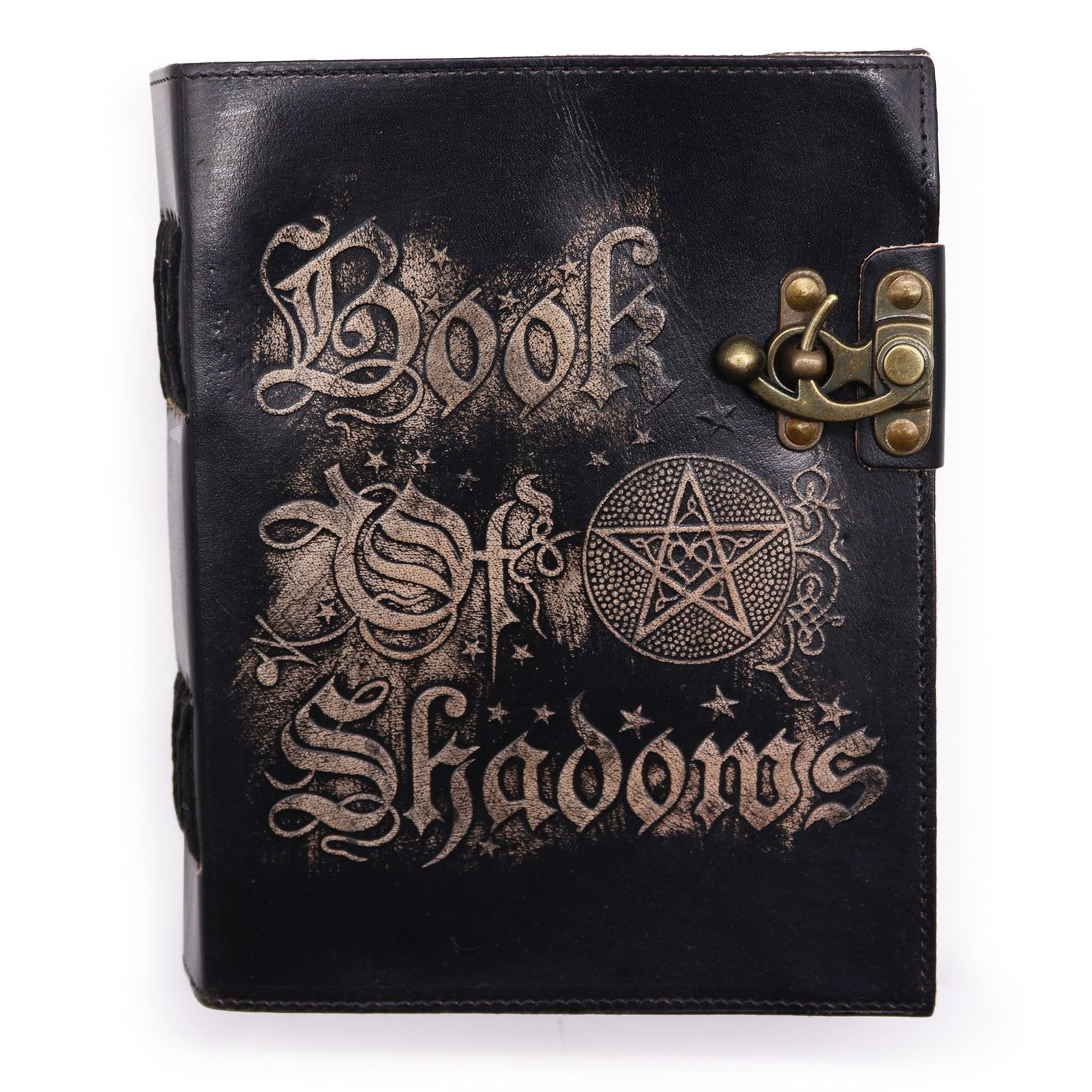
    A proper leather bound book for a lifetime of spells. The pentagram Book of Shadows is the one we would choose for a practising witch.

    29. An almandine garnet sphere

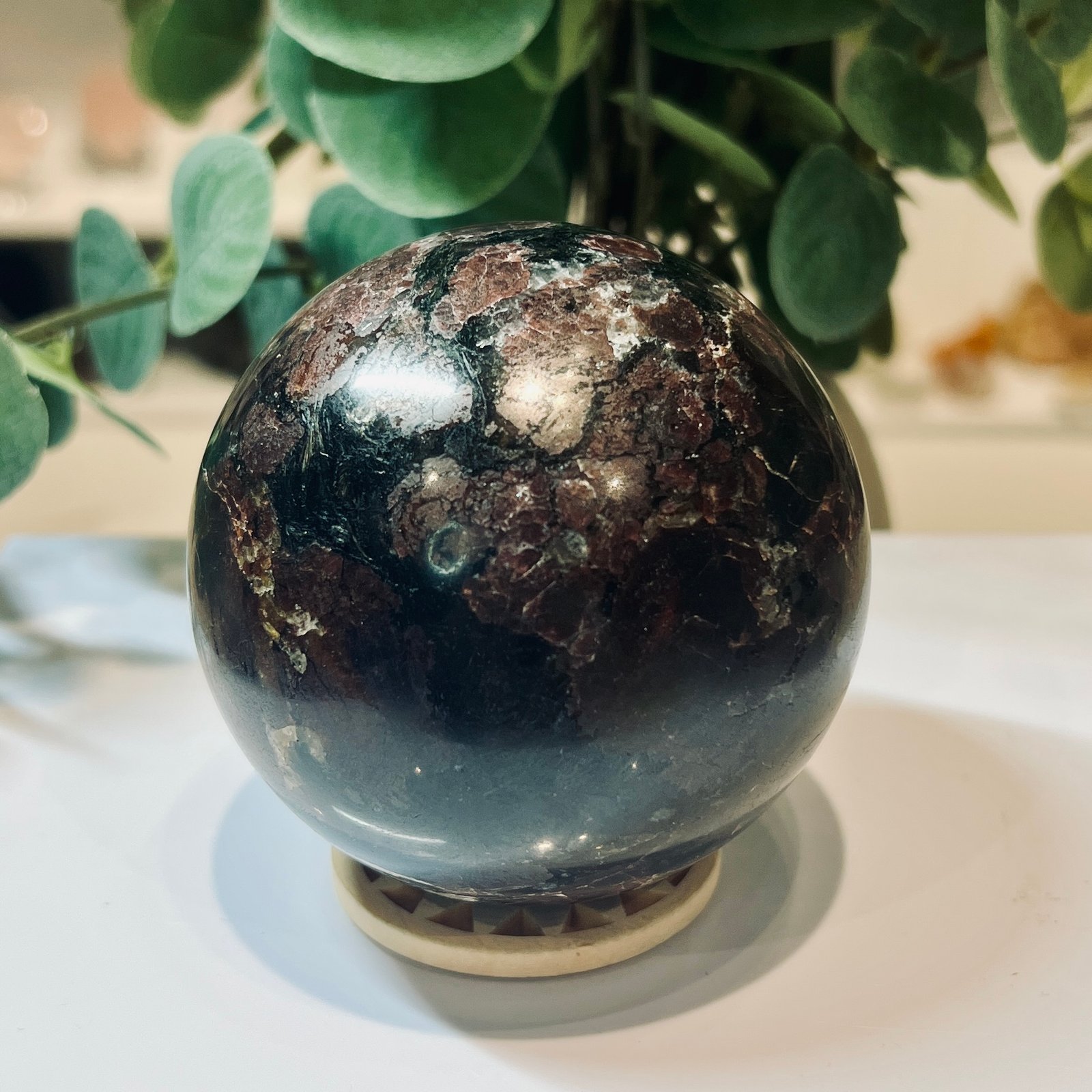
    Deep red garnet suits the darkest month, and this 81mm almandine garnet sphere in matrix sits on one of our wooden sphere stands. A gift for someone who already has the basics and would love a statement piece.

    30. A bundle of their own

    Build it yourself: a goddess mug, a box of incense, a set of chime candles and a deck of cards comes in around £50, and orders of £50 or more get free UK delivery.

    The five gift rule, witch style

    You may have heard of the five gift rule: something they want, something they need, something to wear, something to read and something to share. It works beautifully for a witch.

    • Something they want: a new tarot or oracle deck.
    • Something they need: candles and incense, which every practice uses up.
    • Something to carry: a moon tote bag or a pocket crystal set.
    • Something to read or write: a Book of Shadows or a spell journal.
    • Something to share: a goddess mug for the morning tea, which is how most rituals begin.

    Where the witch’s tools come from

    A little honest history makes any gift feel more considered, and it is a lovely thing to write in a card.

    The cauldron

    For centuries an iron pot hung over almost every hearth in Britain and Ireland, so it is no surprise that it became the witch’s tool in story. Shakespeare’s three witches gather round a cauldron in Macbeth, first performed in the early 1600s, and that picture has stayed with us ever since.

    The Book of Shadows

    The name is modern. It comes from Gerald Gardner and the Wiccan revival of the 1950s, where a Book of Shadows was the handwritten book of rites passed from teacher to student. Today most witches simply mean their own record of spells and notes.

    Tarot

    Tarot began in fifteenth century Italy as a card game. Reading the cards for meaning came much later, in late eighteenth century France, and the deck most people learn with today, the Rider Waite Smith, was published in London in 1909.

    Yule

    Yule is a genuinely old name. The Anglo Saxon monk Bede, writing in the eighth century, recorded Giuli as the name of the midwinter months. The modern pagan Yule, kept on the winter solstice, draws on that old midwinter feast while being a newer celebration in its own right. In Scottish and Irish story the Cailleach, the old woman of winter, rules the dark months until spring, which is why we chose her for our Yule goddess piece.

    Ordering in time for Yule and Christmas

    The winter solstice falls on Monday 21 December 2026 at 8.49pm UK time. Orders usually go out within one working day, and UK delivery is free on orders of £50 or more. Royal Mail publishes its last posting dates for Christmas each year, so check them before you order in December.

    Our own goddess range

    The goddess mugs and tumblers are designed by us, painted with the Celtic and moon goddesses, and each one comes with a printed card telling her story, so it is ready to give.

    Shop the goddess tumblers

  • 11:11 Portal 2026: Wednesday 11 November, Meaning and a Simple Ritual

    11:11 Portal 2026: Wednesday 11 November, Meaning and a Simple Ritual

    The 11:11 portal 2026 falls on Wednesday 11 November. What the gateway is said to mean, when to mark it, and a simple candle and crystal ritual for the day

    Once a year the calendar lines up with the clock, and the date reads 11/11. For many people the 11:11 portal is the brightest wishing day of the year, a moment to set a clear intention and plant something new. Here is when the 11:11 portal 2026 falls, what it is said to mean, how to mark it gently on a day the whole country also pauses, and the stones to keep close.

    Shop the 11:11 manifestation kit

    Stones, candles and a notebook for setting your intentions.

    The 11:11 Portal 2026 Wednesday 11 November Focus moments at 11.11am and 11.11pm, UK time
    • Date: Wednesday 11 November 2026
    • The moments: 11.11am and 11.11pm UK time, with the whole day held as the portal
    • The moon: a young crescent, two days after the New Moon in Scorpio on Monday 9 November at 7.02am
    • The numbers: master number 11, twice over
    • Also that day: Armistice Day, with the two minutes’ silence at 11am
    • Stones: clear quartz, citrine, moonstone, labradorite and howlite

    What Is the 11:11 Portal?

    The 11:11 portal is the name given to 11 November, the one day each year when the date matches the famous wishing minute. Where the 1111 angel number is a small nudge you might catch on a clock, the portal is the same idea stretched across a whole day.

    People describe it as a doorway, a day when the line between what you think and what you go on to create feels unusually thin. That is why it is kept for manifesting, for writing down what you want next, and for choosing one clear new beginning rather than a long list of hopes.

    You do not have to believe a door literally opens. Many people simply use the date as a well timed reminder to stop, get honest about what they want, and take the first small step.

    When Is the 11:11 Portal in 2026?

    The 11:11 portal 2026 falls on Wednesday 11 November. The whole day is treated as the portal, and two moments are kept as the heart of it: 11.11 in the morning and 11.11 at night, both in UK time.

    How long is the 11:11 portal open?

    Most people keep the portal for the full day of 11 November. Some like to begin preparing on the evening of the 10th and let the intention settle over the days that follow. Others carry it on to 22 November, because 22 is the other great master number, and treat the eleven days between as one gentle stretch of building.

    There is no single rule. Choose the window that suits your week, and keep one quiet moment on the day itself.

    The 11:11 Portal and Armistice Day

    In Britain, 11 November already holds a pause. The First World War ended at 11 o’clock on 11 November 1918, the eleventh hour of the eleventh day of the eleventh month, and the two minutes’ silence is kept at that moment every year.

    It is worth holding both with care. A lovely way to do it is to let the silence come first at 11am, with all that it remembers, and keep your own portal pause a little later at 11.11, or in the quiet of the evening at 11.11pm.

    The Numbers Behind 11 November 2026

    In numerology, 11 is one of the two master numbers, which are traditionally left whole rather than added down. Eleven is linked with intuition, inspiration and insight, and on 11/11 it appears twice, which is why the date feels so charged.

    Add the full date down, 1 + 1 + 1 + 1 + 2 + 0 + 2 + 6, and you reach 14, then 5. Five is the number of change, movement and freedom. It makes 11 November 2026 a day for a fresh start that actually moves, rather than one that stays on the page.

    The four ones of 1111 themselves add to 4, the number of foundations, as we explain in our 1111 angel number guide. Read together, the day offers inspiration, movement and something solid to stand on.

    The Moon on the 11:11 Portal

    This year the portal arrives two days after the New Moon in Scorpio, which is on Monday 9 November at 7.02am UK time. By the 11th the moon is a slim young crescent, just beginning to grow.

    A waxing moon has long been the traditional time for anything you want to increase, so the timing is kind. An intention set on the portal can be tended as the moon fills, all the way to the Beaver Moon on Tuesday 24 November.

    What to Do on the 11:11 Portal: A Simple Ritual

    This 11:11 portal ritual follows the traditional shape of a new beginnings candle spell. It takes about fifteen minutes and needs very little.

    You will need

    • A white candle, or a Manifest Magic chime candle in the colour that matches your wish
    • A pen and a page, ideally in a journal kept for intentions
    • A few tumblestones, such as clear quartz and citrine

    The ritual

    1. Clear the space. Tidy the surface you will work on, open a window for a moment, and set out your candle, stones and journal.
    2. Light the candle. As it catches, say quietly that you are opening this time for a new beginning.
    3. Take eleven slow breaths. Count them. By the last one your mind will usually have settled on what matters most.
    4. Write your intention. Write one clear sentence in the present tense, as if it is already happening. Many people write it eleven times, or list eleven small steps towards it.
    5. Hold your stones. Hold the clear quartz while you read your words aloud, then rest the stones on the page.
    6. Close gently. Thank the moment, then snuff the candle rather than blowing it out. Leave the stones on your words until the Beaver Moon on 24 November.

    If you can, light the candle again for a few minutes each evening as the moon grows, and add one small real world action each time.

    Crystals for the 11:11 Portal

    Stones for clarity, new beginnings and helping an intention take shape, all on the shelf now in our crystals for manifestation and choose your stone tumblestones.

    Clear Quartz

    The classic stone for clarity and for carrying an intention. Clear quartz is traditionally said to hold whatever you bring to it, which makes it the natural centre of any portal ritual.

    Citrine

    Sunny and golden, citrine is kept for confidence, abundance and the energy to start. It suits a wish that needs a little courage behind it.

    Moonstone

    Moonstone is linked with new beginnings and the waxing moon, a fitting companion for a portal that opens just after the new moon.

    Labradorite

    With its flash of blue and gold, labradorite is traditionally kept for intuition and for moments of change, the in between feeling the 11:11 portal is all about.

    Howlite

    White with fine grey veins, like a clean page with a few lines on it. Howlite is kept for calm and patience, for quieting a busy head long enough to hear what you actually want.

    Correspondences are traditional and offered as part of a practice, not as a substitute for medical or professional advice.

    Your 11:11 Portal Toolkit

    Everything for the ritual above in one place: a Manifest Magic chime candle for the flame, tumblestones chosen for manifestation, and a journal to keep your intention safe as the moon grows.

    Shop manifestation crystals

    Manifest Magic chime candles · Journals and notebooks

    Where the 11:11 Portal Idea Comes From

    Wishing at 11:11 spread with digital clocks and then mobile phones, which show the time as four matching digits. The idea of 11:11 as a doorway was popularised in the early 1990s by the American writer Solara, whose book 11:11: Inside the Doorway came out in 1992. The angel number meaning was set down later, in the 2000s.

    The portal day itself grew from those threads and became widely shared online. There is a plain reason the number catches us, too: once you have noticed 11:11 a few times, your attention starts looking for it. Whatever you make of that, the date remains a good, memorable moment to stop and choose. Our angel numbers guide covers the wider history.

    Questions People Ask About the 11:11 Portal

    Is 11/11 a portal day?

    In modern spiritual practice, yes. 11 November is widely kept as the 11:11 portal, a day for intentions, manifesting and new beginnings. It is a recent tradition rather than an ancient one, and it means as much as you choose to bring to it.

    What time is the 11:11 portal?

    The whole of Wednesday 11 November 2026 is held as the portal, with 11.11am and 11.11pm UK time as the two focus moments.

    How long is the 11:11 portal open?

    Most people keep it for the full day. Some begin the evening before, and some carry the intention through to 22 November, the other master number date.

    What should I do on the 11:11 portal?

    Keep it simple: light a candle, take eleven slow breaths, write one clear intention in the present tense, and hold a stone such as clear quartz while you read it aloud. Then take one small real step towards it.

    What should I avoid on the 11:11 portal?

    Try not to fill the day with worry or a long list of wants. Choose one or two intentions you truly care about, and remember that 11 November is also a day of remembrance in Britain, so keep the 11am silence with respect.

  • Birthstones by Month: The Traditional Gems and the Crystals to Match

    Birthstones by Month: The Traditional Gems and the Crystals to Match

    Birthstones by month, the traditional gems and the crystals you can hold today

    Everyone has a birthstone, but not everyone wants a diamond, a ruby or a sapphire on a Tuesday afternoon. This guide to birthstones by month gives you the traditional gem for every month, where those lists actually came from, and the crystal or tumblestone that carries the same colour and story for a pound or two.

    Birthstones by month at a glance

    Here is the whole year in one place. The first column is the traditional gem most people know. The second is the crystal we suggest starting with, chosen because it is either on an official birthstone list already or shares the colour and character of the gem. The third shows the star signs that fall in each month, because your birthstone and your zodiac crystals are two different things, and most people only ever hear about one of them.

    JanuaryGarnetGarnetFebruaryAmethystAmethystMarchAquamarineDragon BloodstoneAprilDiamondClear QuartzMayEmeraldGreen AventurineJunePearlMoonstoneJulyRubyCarnelianAugustPeridotPrasioliteSeptemberSapphireLapis LazuliOctoberOpalPink TourmalineNovemberTopazCitrineDecemberTanzaniteLapis LazuliBIRTHSTONESBY MONTHTraditional gemCrystal to start with BIRTHSTONES BY MONTHTraditional gemCrystal to start withJanuaryGarnetGarnetFebruaryAmethystAmethystMarchAquamarineDragon BloodstoneAprilDiamondClear QuartzMayEmeraldGreen AventurineJunePearlMoonstoneJulyRubyCarnelianAugustPeridotPrasioliteSeptemberSapphireLapis LazuliOctoberOpalPink TourmalineNovemberTopazCitrineDecemberTanzaniteLapis Lazuli
    Read each month from the outside in: the month, its traditional gem, and in italics the crystal to start with.
    • January: Garnet. Start with garnet itself, or red jasper. Capricorn and Aquarius.
    • February: Amethyst. Start with amethyst. Aquarius and Pisces.
    • March: Aquamarine or bloodstone. Start with Dragon Bloodstone. Pisces and Aries.
    • April: Diamond or rock crystal. Start with clear quartz. Aries and Taurus.
    • May: Emerald or chrysoprase. Start with green aventurine. Taurus and Gemini.
    • June: Pearl or moonstone. Start with moonstone. Gemini and Cancer.
    • July: Ruby or carnelian. Start with carnelian. Cancer and Leo.
    • August: Peridot or sardonyx. Start with prasiolite. Leo and Virgo.
    • September: Sapphire or lapis lazuli. Start with lapis lazuli. Virgo and Libra.
    • October: Opal or tourmaline. Start with pink tourmaline or rose quartz. Libra and Scorpio.
    • November: Topaz or citrine. Start with citrine. Scorpio and Sagittarius.
    • December: Tanzanite or turquoise. Start with lapis lazuli. Sagittarius and Capricorn.

    Where birthstones really come from

    The story usually starts with the breastplate of Aaron in the Book of Exodus, set with twelve stones for the twelve tribes of Israel. In the first century the historian Josephus linked those twelve stones to the twelve months and the twelve signs of the zodiac. Later, St Jerome suggested the twelve foundation stones of the New Jerusalem would suit Christians just as well.

    That is the ancient root, but it is a long way from a jeweller’s window. Nobody agrees exactly when people began wearing one stone for their birth month. The gem writer George Kunz placed the custom in eighteenth century Poland. The Gemological Institute of America puts it earlier, in Germany in the 1560s. What is certain is that the modern lists have very little to do with the breastplate at all.

    The list most websites copy is American. In August 1912 the National Association of Jewelers met in Kansas City and adopted an official list, and it has been revised several times since, with tanzanite added to December in 2002. Britain has its own version. The National Association of Goldsmiths drew up a standard list in 1937, and the current UK list gives a second stone for several months: rock crystal in April, chrysoprase in May, carnelian in July, lapis lazuli in September and citrine in November. You can see every version side by side on the Wikipedia birthstone page.

    The British list already names crystals. A clear quartz point is an April birthstone, not a stand in for one.

    Why a crystal can carry your birthstone

    Birthstone lists were written by jewellers, so they lean towards stones that sell well in a ring. That is fair enough, but it means a lot of people assume their birthstone is out of reach. It is not. The UK list itself offers a crystal option in five months, and the older traditions were always about colour first. Before anyone could test a stone in a laboratory, a red stone was a red stone, and a green stone was a green stone.
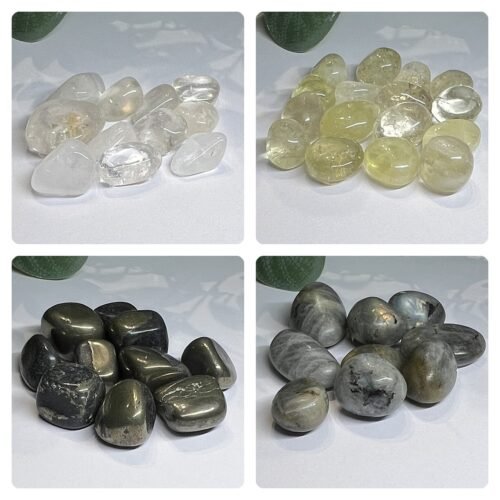
    So we have matched each month in two ways. Where a crystal is on an official list, we say so. Where it is not, we choose the closest colour match and tell you plainly that it is a different mineral. A birthstone you can keep in a pocket, hold during a quiet moment or set on a birthday altar is worth more to most of us than one that stays in a box.

    A colour match is not the same stone. Where we suggest an alternative, such as prasiolite for August, it shares the colour and feeling of the traditional gem but it is a different mineral. We name it honestly so you always know what you are holding.

    Your birthstone month by month

    Winter birthstones

    January: garnet

    Deep red garnet has been January’s stone on every list, British and American, so this is one of the easiest months to keep traditional. Our Blood Garnet Bracelet is real garnet you can wear every day, and the Almandine Garnet Sphere in Matrix is the showpiece version for a shelf or altar.

    If you would like a tumblestone, red jasper shares the same earthy red and sits in our Crystals for Grounding tumbles. It is a jasper rather than a garnet, but it suits a month spent getting through the cold and dark. You can now choose red jasper as January in our Birthstone Tumblestones.

    February: amethyst

    Amethyst is February’s stone on every list, so the tumblestone is the traditional birthstone in its simplest form. Choose February in our Birthstone Tumblestones. Amethyst has long been linked with clear thinking and calm, and the Greek name itself means “not intoxicated”.

    December: tanzanite, turquoise and lapis lazuli

    December has changed more than any other month. The 1912 American list gave turquoise and lapis lazuli. The current UK list gives tanzanite and turquoise. We suggest deep blue lapis lazuli, which has a genuine place in December’s history and is the same velvet blue as a winter night. Choose December in the Birthstone Tumblestones, or look at the Lapis Lazuli Tower and Lapis Lazuli Bracelet.

    Spring birthstones

    March: aquamarine and bloodstone

    March has two traditional stones: pale sea blue aquamarine and dark green bloodstone with its red flecks. We do not currently stock either, so here is our honest suggestion. Dragon Bloodstone, in our Crystals for Confidence and Crystals for Grounding tumbles, has the same green and red colouring as bloodstone. It is a different mineral, a mix of green epidote and red piemontite, so treat it as a colour companion for March rather than the classic stone. It is now March in our Birthstone Tumblestones too.

    April: diamond and rock crystal

    This is the month that surprises people most. The UK list names rock crystal alongside diamond, and rock crystal is simply the old name for clear quartz. So an April birthday can be marked with a clear quartz tumblestone from the Birthstone Tumblestones, a Clear Quartz Point or a Clear Quartz Palm Stone, and it is every bit as traditional as the diamond.

    May: emerald and chrysoprase

    May belongs to green: emerald on every list, and apple green chrysoprase on the UK list. Our suggestion is green aventurine, which shares that fresh spring green and has a soft shimmer in the light. You will find it as a tumble in Crystals for Luck, and as a Green Aventurine Tower or Green Aventurine Bracelet. It is a colour match rather than an emerald, and a lovely one. It is also May in our Birthstone Tumblestones.

    Summer birthstones

    June: pearl and moonstone

    June is one of the few months where a crystal has been on the list since 1912. Moonstone sits alongside pearl on both the American and British lists, so a moonstone tumble from the Birthstone Tumblestones is fully traditional. For something larger, the Moonstone Sphere and Rainbow Moonstone Tower both catch the light beautifully.

    July: ruby and carnelian

    Ruby is the headline stone, but the UK list gives carnelian too, the warm orange red stone worn as seals and amulets since the ancient world. Choose July in the Birthstone Tumblestones, or look at the Carnelian Druzy Palm Stone and Carnelian Sphere.

    August: peridot and sardonyx

    Peridot is the olive green gem of August. We suggest prasiolite, sometimes called green amethyst, as a gentle colour match. It is a quartz rather than a peridot, and we are happy to say so, but its soft green sits well with the late summer month. Choose August in the Birthstone Tumblestones.

    Autumn birthstones

    September: sapphire and lapis lazuli

    Sapphire is the famous one, but the UK list gives lapis lazuli as September’s second stone, so the deep blue tumble is a true birthstone here. Choose September in the Birthstone Tumblestones, or the Lapis Lazuli Sphere for a centrepiece.

    October: opal and tourmaline

    October has opal on every list and tourmaline on the American one, so a pink tourmaline is a real October birthstone. Our Pink Tourmaline Tower is a single statement piece. For an everyday stone, choose October in the Birthstone Tumblestones, which gives you rose quartz in the same soft pink. A quick word on opalite: it is a lovely glass, not an opal, and we would always rather you knew. There is more on this month in our October birthstone edit.

    November: topaz and citrine

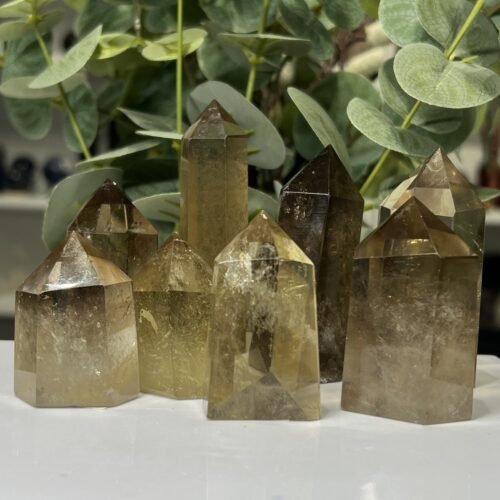
    Golden topaz is the traditional gem, and the UK list gives citrine alongside it, so citrine is a genuine November birthstone. Choose November in the Birthstone Tumblestones, or see our Citrine Point. Much of the bright yellow citrine sold today is heat treated amethyst. Natural citrine is usually paler and smokier, and both have their place as long as they are described honestly.

    Birthstone or star sign? Use both

    Here is the part most birthstone guides leave out. Your birth month and your star sign do not line up. Signs change around the twentieth of each month, so someone born on 25 March has March’s birthstone but is an Aries, not a Pisces. That gives every one of us two sets of stones to work with: one from the calendar and one from the sky.

    Pairing them makes a thoughtful birthday gift. Choose the birthstone tumble for the month, then add the zodiac set for the sign. Our Zodiac Tumblestone Sets at £9.99 bring together several stones traditionally linked to each sign, and the Zodiac Crystal Sets with Selenite at £11.99 add a selenite piece to rest them on.

    Exact sign dates shift by a day from year to year, so if a birthday falls right on the change, a birth chart will tell you which side of the line it lands. Our guide to the zodiac signs and their planetary rulers goes further into each sign.

    How to work with your birthstone

    The traditional way is the simplest. Birthstones were worn or carried, close to the body, as a personal token for the year. You can do exactly that: keep the tumblestone in a pocket or purse, wear it as a bracelet, or keep it on a bedside table.

    • Cleanse it first. Rest it on selenite overnight, leave it in moonlight on a windowsill, or pass it through incense smoke.
    • Set an intention. Hold the stone and say aloud what you would like the coming year to bring. Some people like to write it down and keep the stone on top of the paper.
    • Mark your birthday. Place your birthstone and your zodiac stones together on a small altar on the day itself, with a candle, and take a quiet moment before the celebrations start.
    • Revisit it each month. Hold it, notice how it feels in your hand, and let it remind you of the intention you set.

    If you are creating a crystal grid for the year ahead, a birthstone makes a natural centre. Our solar return crystal grids guide shows how to build one around your birthday.

    Choose your birthstone

    Our Birthstone Tumblestones start at £1.99 and cover nine months of the year. For January, March and May, the garnet, Dragon Bloodstone and green aventurine pieces are linked in each month above. Pair one with a zodiac set for a gift that feels truly personal.

    Shop Birthstone Tumblestones

  • Arianrhod: Welsh Goddess of the Silver Wheel, the Moon and the Stars

    Arianrhod: Welsh Goddess of the Silver Wheel, the Moon and the Stars

    Arianrhod, the Welsh goddess of the silver wheel: her story in the Mabinogi, Caer Arianrhod, the stars and the moon

    Arianrhod is the Welsh goddess whose name is usually translated as silver wheel, and who is linked today with the moon, the stars and a castle beneath the sea. In the old tales she is proud, wronged and fiercely her own. Here is the story of Arianrhod, what is old and what is new about her, and how people honour her now.

    Arianrhod at a glance

    Say it: ar YAN rod, with a soft breath on the rh.

    Name usually means: silver wheel.

    Tradition: Welsh, from the Fourth Branch of the Mabinogi and the Welsh Triads.

    Family: daughter of Dôn, sister of Gwydion, mother of Dylan and Lleu.

    Places: Caer Arianrhod, a reef off Dinas Dinlle on the coast of Gwynedd.

    Linked today with: the moon, the stars, the Northern Crown, the sea and the turning wheel of the year.

    Who Is Arianrhod?

    Arianrhod is one of the children of Dôn, the great family of magicians in the Fourth Branch of the Mabinogi. Her brother is Gwydion, the most famous enchanter in Welsh story. Her uncle is Math, the magician king of Gwynedd. She lives apart from them all in her own fortress by the sea, Caer Arianrhod, and she answers to no one.

    Today Arianrhod is one of the best loved goddesses in modern paganism. Her name and her fortress tie her to silver light, the night sky and the tides, and many people honour her as a goddess of the moon and the stars, of fate and the turning of time, and of a woman’s right to say no.

    Sketch of the Northern Crown constellation, known in Welsh as Caer Arianrhod, inside a silver circle of leaves

    The Story of Arianrhod

    The test at Math’s court

    Math, king of Gwynedd, could only live while his feet rested in the lap of a maiden, except when he was at war. When his footholder was lost to him, Gwydion suggested his own sister, Arianrhod. Math tested her by asking her to step over his magic wand. As she did, she gave birth to a fine boy with yellow hair, and as she ran for the door, something small fell from her. Gwydion caught it up, wrapped it in silk and hid it in a chest at the foot of his bed.

    The first boy, Dylan, made straight for the sea. As soon as he reached it he took on its nature and swam as well as any fish, and was called Dylan Eil Ton, Dylan son of the wave. The second child grew up in Gwydion’s care.

    She was publicly shamed at her uncle’s court. Everything she does afterwards makes more sense once you remember that.

    Three destinies

    When Gwydion brought the boy to Caer Arianrhod, she was furious to be reminded of her shame. She swore three destinies on him. He would have no name unless she gave him one. He would bear no arms unless she armed him. And he would never have a wife of any race now on the earth.

    Gwydion answered each of them with trickery. First he and the boy came to her fortress in a boat disguised as shoemakers. When the boy struck a wren with a single deft shot, Arianrhod laughed and said the fair one had hit it with a skilful hand, and so, without meaning to, she named him Lleu Llaw Gyffes, the fair one of the skilful hand.

    Later the two returned disguised as bards. In the night Gwydion conjured the sound and sight of a hostile fleet, and in the panic Arianrhod armed the young man herself. The third destiny could not be tricked, so Math and Gwydion made Lleu a wife from flowers. You can read where that led in our guide to Blodeuwedd.

    THREE DESTINIESwhat Arianrhod swore, and how Gwydion answeredArianrhod swearsGwydion answersNo nameunless she names himA wren and a shotshe names him Lleu1No armsunless she arms himA fleet of illusionshe arms him herself2No wifeof any race on earthA bride of flowersBlodeuwedd is made3 THREE DESTINIESwhat Arianrhod swore, and how Gwydion answeredArianrhod swearsGwydion answersNo nameunless she names himA wren and a shotshe names him LleuNo armsunless she arms himA fleet of illusionshe arms him herselfNo wifeof any race on earthA bride of flowersBlodeuwedd is made
    The three destinies Arianrhod swears on her son, and how Gwydion answers each one. Read each column, or each row on a phone, from her oath to his answer.

    The woman who said no

    Arianrhod is hard to love on a first reading. She curses her own child. Yet look again at what happened to her. She was tested in public, shamed in front of the court, and then her brother kept bringing the evidence to her door. Some readers think Gwydion himself was the father, which the tale hints at but never says. Seen that way, her three destinies are a refusal, a woman declining to play the part others had written for her.

    That is why so many people today honour her as a goddess of sovereignty and self possession. She keeps her own fortress, she says no, and she cannot simply be pushed into line.

    Sketch of a winding path through rolling green hills with wildflowers and a crescent moon above

    Caer Arianrhod, the Castle in the Sea

    Off the coast of Gwynedd, near the Iron Age hillfort of Dinas Dinlle, a reef of rocks rises from the sea at the lowest tides. It is called Caer Arianrhod, Arianrhod’s fortress. Local tradition says her court once stood there and was swallowed by the waves, and fishermen used to tell of walls glimpsed under the water.

    The Royal Commission on the Ancient and Historical Monuments of Wales surveyed the reef from the air in 2010 and found no convincing sign of anything built by people. It is a natural reef, about 900 metres out, its top showing only at the lowest spring tides. Even so, standing at Dinas Dinlle at low water and watching the line of rocks appear is a moving thing to do. The hillfort itself, partly lost to the sea, is cared for by the National Trust, and you can read about it on Coflein.

    Pencil sketch of a line of rocks emerging from the sea below Welsh hills, the reef called Caer Arianrhod

    Arianrhod, the Stars and the Moon

    In Welsh star lore, the constellation Corona Borealis, the Northern Crown, is called Caer Arianrhod, and the Milky Way is Caer Gwydion, her brother’s fortress. It is a beautiful idea: brother and sister set side by side in the night sky. The Northern Crown is a small, curved ring of stars, easy to find on spring and summer evenings between the bright stars Arcturus and Vega.

    Her link with the moon comes from her name. A silver wheel turning through the dark is an easy image of the moon, and in the twentieth century Arianrhod came to be honoured as a moon goddess. Many people today work with her at the full moon, when the silver wheel is at its brightest, and at the new moon, when she withdraws into her fortress.

    If moon goddesses are your path, our guide to moon goddesses from around the world is a good next read.

    The Honest History of Arianrhod

    Her story is medieval. Arianrhod appears in the Fourth Branch of the Mabinogi, preserved in the White Book of Rhydderch of the mid fourteenth century and the Red Book of Hergest from around 1400. You can read Lady Charlotte Guest’s translation on sacred texts. She also appears in the Welsh Triads, where she is named as a daughter of Beli, and in a poem in the Book of Taliesin that calls her Arianrhod of fine appearance, dawn of serene weather.

    Silver wheel may not be what her name first meant. The oldest spellings are Aranrhod or Aranrot. The second part, rhod, does mean wheel or circle, but the first part may not be arian, silver, at all. Some scholars think it meant huge or round, which would make the silver wheel a later and very attractive reading. Mary Jones’s Celtic Literature Collective gathers the evidence.

    The star name is not ancient. Caer Arianrhod as the name of the Northern Crown is first recorded in the nineteenth century, in a collection drawn from the papers of Iolo Morganwg, a brilliant Welsh scholar who is also known to have invented a good deal of his material. It may record genuine folk tradition, but it cannot be traced further back.

    The moon goddess is modern. Historian Ronald Hutton notes in his lecture Finding Lost Gods in Wales that Arianrhod has been seen as a star goddess only since the twentieth century, and Robert Graves folded her into his White Goddess in 1948. The Mabinogi itself never calls her a goddess.

    None of this makes the modern Arianrhod any less meaningful. A goddess of the silver wheel who keeps her own fortress by the sea has spoken to a great many people. Knowing which parts are medieval simply lets you hold both: the proud, wronged woman of the old tale, and the moon and star goddess she has grown into.

    Crystals for Arianrhod

    No medieval source links Arianrhod with crystals. The stones below are modern correspondences for her silver wheel, her moonlight and her stars. All are stocked at Mystic Grove.

    Moonstone, for the silver wheel

    Moonstone glows with a soft blue white sheen, the closest a stone comes to moonlight. It is the first choice for Arianrhod and a gentle companion for intuition and cycles. See our moonstone spheres or choose a moonstone tumblestone.

    Rainbow moonstone, for the turning sky

    Rainbow moonstone flashes with blue and violet as it turns, like light moving across the night sky. A rainbow moonstone tower makes a lovely focus for full moon work.

    Selenite, for clear silver light

    Selenite is named after Selene, the Greek moon goddess, and has a soft, silky shine. Many people use it to cleanse their space and other crystals. Our selenite moon bowls are perfect for charging stones under the full moon. Keep selenite dry, as water damages it.

    Clear quartz, for the crown of stars

    Clear quartz catches light like a star. Seven small pieces laid in a curve make a simple table version of the Northern Crown. Try our clear quartz palm stones or tumblestones.

    Labradorite, for the tides and the hidden fortress

    Labradorite looks grey until it flashes blue, like a reef appearing out of the sea. It suits Arianrhod’s castle that shows itself only at the lowest tide. See our labradorite towers.

    Lapis lazuli, for the night sky

    Deep blue lapis flecked with gold has been likened to a starry sky for thousands of years. It is a fine stone for working with Arianrhod as a star goddess. Try a lapis lazuli sphere.

    Sketch of a moonstone and a selenite tumblestone with sprigs of lavender and eucalyptus

    A simple Northern Crown. Lay seven small clear quartz or moonstone tumblestones in a gentle curve, like a crown open at the top. Place a candle in the open space. It is a quiet way to bring Arianrhod’s stars onto your altar without needing anything rare.

    A Simple Full Moon Practice for Arianrhod

    This practice is for the full moon, or any night when you want to honour your own choices. You need a white chime candle, a moonstone and somewhere you can see the sky, even through a window.

    • Set your space. Place the candle on a white plate or cloth with the moonstone beside it. If you like, lay the seven stone crown described above.
    • Look for the moon. If the sky is clear, take a moment to find it. If it is cloudy, that is fine. The wheel still turns.
    • Light the candle and say her name three times. Arianrhod, Arianrhod, Arianrhod.
    • Hold the moonstone and name one thing that is yours to choose. A boundary you want to keep, a yes or a no that belongs to you, a direction for the next month.
    • Rest for a few minutes. Breathe slowly, feel the weight and coolness of the stone in your hand, and let the room fall quiet.
    • Close. Thank Arianrhod, put out the candle, and leave the moonstone on a windowsill overnight if you wish.
    Sketch of a slim white chime candle in a brass holder beside a moonstone and a sprig of lavender

    Signs Arianrhod May Be Calling You

    • You feel pulled toward the moon, the stars and the night sky.
    • Silver jewellery, wheels, spirals or circles keep catching your eye.
    • You are learning to say no and to keep your own boundaries.
    • The sea, tides and coastlines feel like home.
    • You feel drawn to Wales, especially to Gwynedd and the coast near Caernarfon.

    Not sure yet? Our guide to which goddess is calling you has gentle ways to find out.

    Light a candle for Arianrhod

    Our Manifest Magic chime candles come in ten colours. Protection White carries her silver moonlight, and Crown Violet suits her starry sky.

    Choose your colour

    Questions People Ask About Arianrhod

    What is Arianrhod the goddess of?

    Today Arianrhod is honoured as a Welsh goddess of the moon, the stars, fate, the sea and women’s sovereignty. In the Mabinogi she is a powerful enchantress who keeps her own fortress by the sea.

    How do you pronounce Arianrhod?

    Say ar YAN rod. The Welsh rh is a breathy r, as if you breathe out as you say it.

    What does Arianrhod mean?

    The name is usually translated as silver wheel, from arian, silver, and rhod, wheel. The oldest spellings suggest the first part may originally have meant something else, so silver wheel may be a later reading.

    Is Arianrhod a moon goddess?

    Not in the medieval sources, but she has been honoured as one since the twentieth century, and she is now one of the best known moon goddesses of the Celtic world.

    Where is Caer Arianrhod?

    Caer Arianrhod is a reef off the coast of Gwynedd near Dinas Dinlle, south west of Caernarfon. Its top is only uncovered at the lowest spring tides. The same name is used in Welsh star lore for the constellation Corona Borealis.

    Who are Arianrhod’s children?

    Dylan Eil Ton, who went to the sea, and Lleu Llaw Gyffes, raised by her brother Gwydion. A Welsh Triad also names two other sons, Gwenwynwyn and Gwanar.

    Bring Arianrhod home

    The Arianrhod artwork from this series now comes on a 13oz white ceramic mug and a 20oz skinny tumbler wrapped all the way round in silver stars and spinning wheels. Each one comes with a printed card telling her story, so it is ready to keep or to give.

    See all the goddess tumblers

  • Blodeuwedd: the Woman Made of Flowers Who Became an Owl

    Blodeuwedd: the Woman Made of Flowers Who Became an Owl

    Blodeuwedd, the woman made of flowers who became an owl: her story from the Mabinogi, what her name means, and why she still matters

    Blodeuwedd was made from the blossoms of oak, broom and meadowsweet, married without being asked, and turned into an owl for choosing her own love. The Blodeuwedd story is one of the most haunting in Welsh myth, and people have argued about whether she was wronged or free for centuries. Here is her tale, its real history, and the crystals and practices people use with her today.

    Blodeuwedd at a glance

    Say it: blod EYE weth. The dd sounds like the th in the.

    Name means: flower face.

    Tradition: Welsh, from the Fourth Branch of the Mabinogi.

    Made from: the flowers of oak, broom and meadowsweet.

    Becomes: an owl.

    Places: Ardudwy and Ffestiniog in north Wales, around Tomen y Mur and the River Cynfal.

    Season today: Beltane for her flowers, and the long autumn nights for her owl.

    Who Is Blodeuwedd?

    Blodeuwedd is a woman created by magic in the Fourth Branch of the Mabinogi, the great collection of medieval Welsh tales. She was made by two magicians, Math and Gwydion, as a wife for the young hero Lleu Llaw Gyffes, because his mother Arianrhod had sworn he would never marry a woman of any race on earth.

    She is beautiful, she is new to the world, and she has no say in any of it. What she does next, and what is done to her in return, has made her one of the most discussed figures in all of Celtic myth. Today many people honour her as a goddess of flowers, of spring and of the owl, and as a symbol of a woman who chose for herself.

    Botanical sketch of oak leaves and catkins, yellow broom flowers and creamy meadowsweet tied with twine, the three flowers Blodeuwedd was made from

    The Blodeuwedd Story

    Made from flowers

    Arianrhod had laid three destinies on her son Lleu: he would have no name unless she gave it, no weapons unless she armed him, and no wife of any race now on the earth. Gwydion found tricks to get around the first two. For the third, he went to his uncle Math, the great magician king of Gwynedd. Together they gathered the flowers of the oak, the flowers of the broom and the flowers of the meadowsweet, and from them they conjured the most beautiful maiden anyone had ever seen. They named her Blodeuwedd, flower face, and gave her to Lleu as his wife.

    Math gave the couple land in Ardudwy, and they made their home at a court called Mur Castell, which tradition places at Tomen y Mur near Trawsfynydd, where a Norman mound still sits inside the remains of a Roman fort.

    A choice of her own

    One day, while Lleu was away, a hunting party passed by. It belonged to Gronw Pebr, the lord of Penllyn. Blodeuwedd invited him in for courtesy, and the moment they looked at each other they fell in love. It was the first thing in her life that she had chosen for herself.

    Lleu could not easily be killed. So Blodeuwedd, pretending to worry for his safety, gently drew out of him the strange conditions under which he could die. He could not be killed indoors or outdoors, on horseback or on foot. Only a spear worked on for a whole year, only on Sundays during mass, could do it, and only if he stood with one foot on the edge of a bath beneath a thatched roof by a riverbank and the other on the back of a goat.

    She was asked to love on command. The one time she chose for herself, the whole story turned against her.

    The eagle in the oak

    A year later, Blodeuwedd persuaded Lleu to show her exactly how he would stand. As he did, Gronw threw the spear from a hill beside the River Cynfal. Lleu gave a terrible cry and flew up into the air as an eagle, and was gone.

    Gwydion searched all of Wales for him. At last he followed a sow to a valley called Nant y Llew, where an eagle sat wasting in the top of an oak. Gwydion sang three verses, and with each one the eagle came lower, until it landed on his knee. He touched it with his wand and Lleu was a man again, thin and close to death, but alive.

    Sketch of a golden eagle perched on the branch of an oak tree, the form Lleu takes in the Blodeuwedd story

    Turned into an owl

    When Gwydion came for Blodeuwedd, she fled with her maidens toward the mountains. In their terror the maidens looked back, fell into a lake and drowned. Local tradition names it Llyn Morwynion, the lake of the maidens, above Ffestiniog. Blodeuwedd alone was caught.

    Gwydion did not kill her. He said he would do something worse. He turned her into a bird and told her she would never again dare to show her face in the light of day, that all other birds would hate her and attack her wherever they found her, and that she would keep her name forever. The tale ends by saying that Blodeuwedd is a word for owl in the language of its own time.

    Gronw, for his part, was made to stand where Lleu had stood and take a spear in return. He asked to hold a stone slab between himself and the blow. The spear passed straight through the stone and through him, and the holed stone was called Llech Gronw ever after.

    FROM FLOWERS TO OWLthe shape of the Blodeuwedd storyFlowersoak, broom andmeadowsweetA bridemade for Lleu,never askedA choiceshe loves Gronwof PenllynAn eagleLleu is struckand fliesAn owlshe is changedby Gwydion FROM FLOWERS TO OWLthe shape of the Blodeuwedd storyFlowersoak, broom andmeadowsweetA bridemade for Lleu,never askedA choiceshe loves Gronwof PenllynAn eagleLleu is struckand fliesAn owlshe is changedby Gwydion
    The Blodeuwedd story in five steps, read from left to right on a wide screen or from top to bottom on a phone.
    Sketch of a pale barn owl in silent flight with flower petals drifting behind it, the owl Blodeuwedd becomes

    Was Blodeuwedd Wronged, or Was She Free?

    This is the question that keeps her alive. For centuries the story was read as a warning about a faithless wife. Many modern readers see it very differently.

    Blodeuwedd was made for someone else’s purpose, without a childhood, a family or a choice. She was married the day she was made. When she finally wanted something for herself, she was hunted down and transformed. Read that way, she is one of the most wronged women in the Mabinogi, and the owl that refuses the daylight becomes a symbol of a woman who would rather live wild than be made into someone else’s idea of a wife.

    Others point out that she did plot a murder, and that the tale does not ask us to admire her. Both readings are honest. Perhaps the reason the story lasts is that it does not settle the question for us. It leaves us sitting with it, the way the best old stories do.

    Blodeuwedd, Flowers and the Owl

    Because she was made from blossoms, Blodeuwedd is often honoured at Beltane, the May festival of flowers, when the broom and hawthorn are out and meadowsweet is not far behind. Oak, broom and meadowsweet are all native British plants, which makes her one of the most local of goddesses. You can find all three within a few miles of most homes in Wales and England.

    Her other season is the long night. The owl is a creature of autumn and winter dark, heard more than seen, and many people who work with Blodeuwedd feel closest to her when the nights draw in. The tawny owl’s call is a familiar October sound across Britain, as the young owls look for territories of their own.

    Botanical sketch of wild honeysuckle and wild rose branches twisting around each other

    The Honest History of Blodeuwedd

    Her story is medieval and Welsh. The Four Branches of the Mabinogi survive in two great manuscripts, the White Book of Rhydderch from the middle of the fourteenth century and the Red Book of Hergest from around 1400, both described by the National Library of Wales. The tales themselves were probably shaped in the eleventh or twelfth century from much older storytelling. You can read Lady Charlotte Guest’s nineteenth century translation of the Fourth Branch on sacred texts.

    She is not called a goddess in the old text. The Mabinogi does not describe its characters as gods at all. Historian Ronald Hutton makes this point in his lecture Finding Lost Gods in Wales. Seeing Blodeuwedd as a goddess of flowers and spring is a modern reading, and a lovely one, but it is a modern one.

    The places are real. Tomen y Mur, the Afon Cynfal and Ffestiniog are all there to visit, and the Royal Commission’s record of Tomen y Mur describes the medieval mound and Roman fort. A holed stone thought to be Llech Gronw has been found more than once by the river, though no one can be sure which, if any, is the original. The Eryri National Park has a short retelling of her story tied to the landscape.

    Her modern life is rich. The Welsh dramatist Saunders Lewis wrote a celebrated play called Blodeuwedd. Alan Garner’s novel The Owl Service, published in 1967 and later made for television, retold the story through three teenagers in a Welsh valley, and many readers first met her there. Feminist retellings since have made her one of the most popular figures in modern Celtic spirituality.

    Crystals for Blodeuwedd

    No medieval text links Blodeuwedd with crystals. The stones below are modern correspondences chosen for her flowers, her heart and her owl. All are stocked at Mystic Grove.

    Flower agate, for the woman made of blossoms

    Flower agate holds tiny bloom like patterns inside soft pink and cream stone. Of every stone we carry, it is the closest match for a woman made from flowers. Ours is a flower agate sphere with druzy pockets, a lovely altar centrepiece for Blodeuwedd.

    Rose quartz, for love that is freely chosen

    Rose quartz is the classic stone of love, and with Blodeuwedd it speaks of the love she chose for herself. Many people use it for self love and self worth. Try a rose quartz palm stone or a rose quartz heart.

    Rhodonite, for a heart that has been hurt

    Pink rhodonite with its black veins is often described as a stone for emotional healing and forgiveness, love with its wounds showing. It suits a story with so much hurt in it. See our rhodonite towers.

    Moonstone, for the night

    Moonstone glows softly like moonlight, the only light the owl is said to keep. It is a gentle stone for intuition and for working at night. Our moonstone spheres and tumblestones both suit her.

    Labradorite, for transformation

    Labradorite flashes with hidden colour, the right stone for a woman who changed shape. It is also one of the stones in our 5cm crystal owl carvings, alongside green aventurine, bloodstone, clear quartz and red jasper.

    Green aventurine, for spring growth

    Green aventurine carries the fresh green of new leaves, the season Blodeuwedd was born in. It is a hopeful stone for new beginnings. Find it as a green aventurine tower or tumblestone.

    Sketch of a pale pink rose quartz tumblestone and a deep pink rhodonite with black veins, with pink petals and a leaf

    An owl on the altar. If you would like a single focus for Blodeuwedd, a small crystal owl says more than a pile of stones. Choose the stone that matches what you are asking for: rose tones for love, labradorite for change, clear quartz for a fresh start.

    A Simple Flower Offering to Blodeuwedd

    This practice honours Blodeuwedd and the part of you that wants to choose for yourself. It can be done at any time of year, with whatever flowers or leaves are in season.

    • Gather three flowers or sprigs. In spring and summer, look for oak, broom and meadowsweet. In autumn and winter, use any three flowers, leaves or dried herbs you have.
    • Set them on a white plate or cloth with a pink chime candle and a piece of rose quartz.
    • Light the candle and say her name. Blodeuwedd, flower face.
    • Name one thing you love about yourself. Say it aloud. Then name one choice in your life that you want to make for yourself, not for anyone else.
    • Sit quietly for a few minutes. Hold the rose quartz and notice your breath, or listen for any owl calls if you are near an open window at night.
    • Close. Put out the candle and return the flowers to the earth or the compost.
    Sketch of a small pink chime candle in a brass holder beside a rose quartz tumblestone and a sprig of meadowsweet

    Signs Blodeuwedd May Be Calling You

    • Owls keep appearing, in your garden, your dreams or your social feed.
    • You feel shaped by other people’s expectations and long to choose for yourself.
    • Wildflowers, hedgerows and May blossom move you more than you can explain.
    • You are going through a transformation that feels both painful and freeing.
    • You find yourself defending women in old stories who were cast as the villain.

    If you are unsure, our guide to which goddess is calling you may help.

    Light a candle for Blodeuwedd

    Our Manifest Magic chime candles come in ten colours. Goddess Pink is made for self love, which makes it a natural choice for Blodeuwedd, and Protection White suits her moonlit owl.

    Choose your colour

    Questions People Ask About Blodeuwedd

    What does Blodeuwedd mean?

    Blodeuwedd means flower face, from the Welsh blodau, flowers, and gwedd, face or appearance.

    How do you pronounce Blodeuwedd?

    Say blod EYE weth. The final dd is said like the th in the.

    What flowers was Blodeuwedd made from?

    In the Mabinogi she is made from the flowers of the oak, the broom and the meadowsweet. Some modern versions add more flowers, often based on a medieval poem called The Battle of the Trees, but the Mabinogi names those three.

    Why was Blodeuwedd turned into an owl?

    Gwydion turned her into an owl as punishment for plotting with Gronw to kill Lleu. He said she would never again show her face in the light of day.

    Is Blodeuwedd a goddess?

    The Mabinogi does not call her one. Today many people honour her as a goddess of flowers, spring, owls and self determination, and that modern devotion is very much alive.

    What is the Welsh word for owl?

    The everyday Welsh words are tylluan and gwdihŵ. The Mabinogi says that in its own time Blodeuwedd was also a word for owl.

    Bring Blodeuwedd home

    The Blodeuwedd artwork from this series now comes on a 13oz white ceramic mug and a 20oz skinny tumbler wrapped all the way round in owls, broom and meadowsweet. Each one comes with a printed card telling her story, so it is ready to keep or to give.

    See all the goddess tumblers

  • Danu: Mother of the Irish Gods and the Tuatha Dé Danann

    Danu: Mother of the Irish Gods and the Tuatha Dé Danann

    The Danu goddess of Ireland and Dôn of Wales: the mother of the Tuatha Dé Danann, the rivers that may carry her name, and what the old texts really say

    Danu is honoured today as the great mother of the Irish gods, the goddess the Tuatha Dé Danann are named after. Yet the Danu goddess is also one of the quietest figures in all of Celtic myth, a mother known almost entirely through her children. Here is what we know, what we do not, and how people connect with her now.

    Danu at a glance

    Say it: DAH noo. Her people, the Tuatha Dé Danann, are TOO a ha day DAN an.

    Tradition: Irish, with a Welsh counterpart called Dôn.

    Known for: giving her name to the old gods of Ireland, motherhood, rivers and flowing water.

    Related names: Anu or Ana, honoured as mother of the gods of Ireland.

    Places: the Paps of Anu in County Kerry, and perhaps rivers such as the Danube and the Don.

    Symbols today: rivers, springs, wells, oak trees, the land and the stars.

    Who Is the Danu Goddess?

    In Irish myth the old gods are called the Tuatha Dé Danann, usually translated as the people, or tribe, of the goddess Danu. They are the shining, skilled race who came to Ireland in a cloud of mist, fought the Fomorians, and finally withdrew into the hollow hills when the ancestors of the Irish arrived. The Dagda, Lugh, Nuada, Brigid and the Morrígan all belong to them.

    Danu is the goddess they are named after. That makes her, in the way most people tell it today, the mother of the Irish gods: the source from which the whole family flows. She is linked with rivers, with the fertile land, with abundance, and with the deep, slow kind of care that feeds a family over generations.

    What makes her unusual is that she has almost no stories of her own. She does not fight, travel or speak in any surviving tale. She is simply there at the root, present in the names of those who came after her.

    Sketch of an ancient grassy mound ringed with small standing stones and drifting mist, like the hollow hills of the Tuatha Dé Danann

    The Tuatha Dé Danann, the People of Danu

    The fullest account of the Tuatha Dé Danann is the Lebor Gabála Érenn, the Book of the Taking of Ireland, put together by Irish monks around the eleventh century. It tells of a series of peoples who settled Ireland one after another. The Tuatha Dé Danann are the second to last. They arrive skilled in magic and craft, defeat the Fir Bolg at the first battle of Mag Tuired, and the Fomorians at the second.

    Later, when the Milesians, the ancestors of the Irish, arrive, the Tuatha Dé Danann do not vanish. They go into the sídhe, the hollow hills and ancient mounds, and become the Aos Sí, the people of the mounds. Many Irish stories treat them as still living there, close by and out of sight. If you would like to know more about them, our guide to the Sidhe and Celtic fairies goes deeper.

    A people who never quite left, named after a mother who never quite appears.

    Interestingly, the monks who wrote the Lebor Gabála were careful to present the Tuatha Dé Danann as a people of the distant past rather than as gods. Reading between the lines, most scholars agree they were the gods of pre Christian Ireland, recast as ancestors so that their stories could be kept.

    Danu and the Rivers

    One of the loveliest ideas about Danu is that she may be a river goddess. Her name has often been linked with an old word for flowing water, a root that may also sit behind the names of great rivers: the Danube in Europe, and the Don in Russia and in Scotland and England. If that is right, she would be one of the oldest divine names in Europe, a goddess remembered in the water itself.

    Scholars still argue about this, and some think the Danube took its name from a separate word for river. Even so, the image has stuck, and for many people Danu is first and foremost the goddess of the river: the source that keeps moving, feeds everything along its banks and always finds its way.

    Sketch of a small spring bubbling from mossy rocks and ferns and running away as a stream, a symbol of the Danu goddess

    Anu and the Paps of Anu

    Many writers treat Danu and Anu as the same goddess, or two forms of one name. Anu, sometimes spelled Ana, appears in Cormac’s Glossary, written around 900, where she is called the mother of the gods of Ireland, who fed the gods well. The Lebor Gabála also names Anand as one of the forms of the Morrígan.

    Her clearest mark on the landscape is in County Kerry, where two rounded mountains are called Dá Chích Anann, the Paps of Anu, the breasts of the goddess. Each summit carries a stone cairn. Few places in Ireland show so plainly the old idea of the land as a woman’s body, a mother who feeds all who live on her.

    Dôn, the Welsh Mother

    Wales has its own version of this hidden mother. In the Fourth Branch of the Mabinogi, the great family of magicians in Gwynedd are called the children of Dôn. Gwydion the magician is Gwydion son of Dôn. Arianrhod, the silver wheel, is Arianrhod daughter of Dôn. Yet Dôn herself never appears, never speaks and is never described.

    THE CHILDREN OF DÔNa family known only through its motherDônthe mother, never seenGwydionthe magicianArianrhodthe silver wheelGilfaethwyhis brotherAmaethonthe farmerGofannonthe smithDylanof the seaLleuof the skilful handSolid lines: her children. Dashed lines: her grandchildren through Arianrhod. THE CHILDREN OF DÔNknown only through its motherDônthe mother, never seenGwydionthe magicianArianrhodthe silver wheelGilfaethwyhis brotherAmaethonthe farmerGofannonthe smithDylanof the seaLleuof the skilful handSolid lines: her children.Dashed lines: her grandchildrenthrough Arianrhod.
    The children of Dôn as named in the Fourth Branch of the Mabinogi. Read from the top: Dôn, her five children, then Arianrhod’s two sons.

    Many people see Dôn and Danu as two forms of the same ancient mother, one Irish and one Welsh, since the names are so close. In Welsh star lore first written down in the nineteenth century, the constellation Cassiopeia was called Llys Dôn, the court of Dôn, and the Milky Way Caer Gwydion, the fortress of her son. It is a beautiful image of a family that begins in the river and ends among the stars.

    You can read more about Arianrhod, her most famous daughter, in our guide to Arianrhod, the silver wheel.

    Sketch of an ancient oak tree on a riverbank with its roots reaching down into the water

    The Honest History of the Danu Goddess

    Danu is a good example of how a goddess can grow far beyond her sources, and the shape of it is simple enough to follow.

    The name Danu itself does not appear in any medieval Irish text. What survives is the form Danann, as in Tuatha Dé Danann, which is a possessive, meaning of Danu. Scholars worked backwards from it to the name Danu. Even the earliest texts often call the gods simply the Túath Dé, the tribe of the gods, with Danann added later. You can follow this on the Danu entry on Wikipedia, which sets out the debate clearly.

    The great mother goddess image is mostly modern. In the nineteenth and twentieth centuries writers filled the gap with a grand earth mother, a Celtic counterpart to Demeter. The medieval writers themselves were far less sure that the Tuatha Dé were gods at all.

    Dôn may not even have been female. The Mabinogi never says whether Dôn is a mother or a father. Some early modern antiquarians assumed Dôn was a king. Linking Dôn with Danu is a reasonable modern reading rather than something the old texts state.

    The river link is a theory. It is a lovely and quite possible one, but scholars also suggest the name may come from words meaning skill, or good, or that Danu began as Anu with a D added.

    Knowing all this does not take anything away. A goddess who survives only in the names of her children, in two mountains and perhaps in a few great rivers, has been remembered in a very particular way. Modern devotion to Danu has built something real on that quiet foundation, and plenty of people find her deeply present in their lives.

    Crystals for the Danu Goddess

    No old source gives Danu any crystals. The stones below are modern correspondences chosen for what she stands for today: rivers and water, the fertile land, the family line and the stars her children became. Each one is in stock at Mystic Grove.

    Moss agate, for the land

    Moss agate holds green, plant like patterns inside clear stone, as if a tiny garden were growing within it. It is the classic gardener’s stone and a natural fit for a mother of the land and its abundance. Look at our moss agate towers and spheres.

    Ocean jasper, for flowing water

    Ocean jasper is covered in soft circles and ripples that look like water moving over stones. It suits a river goddess beautifully and makes a calm, steady companion. See our ocean jasper towers.

    Blue lace agate, for the gentle current

    Pale blue banded agate carries the colour and pattern of a shallow stream. Many people use it for gentle, honest speech, which suits a goddess people pray to for steady care rather than drama. It comes as a tumblestone.

    Lapis lazuli, for the starry family

    Deep blue lapis flecked with gold pyrite has been compared to the night sky for thousands of years. With Danu it speaks of the children of Dôn who were written into the stars. Try a lapis lazuli sphere.

    Bloodstone, for the family line

    Green with red flecks, bloodstone has long been linked with courage and with the strength of a lineage. It is a fitting stone for honouring ancestors, the family you come from and the family you have chosen. You will find it in our tumblestone range.

    Clear quartz, for the source

    Clear as spring water, quartz is the all purpose stone that can stand in for any other. For Danu it represents the source itself, the clear spring where the river begins. A clear quartz palm stone sits comfortably in the hand.

    Sketch of a dark green bloodstone tumblestone with red flecks beside a purple amethyst and a sprig of sage

    Take care of real rivers. If you leave an offering outside, choose clean water, a few words, a song or a picked up piece of litter rather than food, milk or anything that could harm the water. Many people feel this is the offering Danu would most want.

    A Simple River Offering to Danu

    This practice can be done beside any river, stream or spring, or at home with a bowl of fresh water. It is a gentle way to say thank you to the people and places that raised you.

    • Find your water. Go to a river or stream you love, or fill a clear bowl with water and set it on a table with a dark blue chime candle beside it.
    • Light the candle, if you are at home, and hold a stone from the list above.
    • Name your river. Say aloud the name of the water in front of you, or of the river nearest your home. Then say Danu’s name.
    • Give thanks for your family. Speak the names of the people who helped you grow, by blood or by choice. Living or gone, they all belong in the list.
    • Listen. Spend a few minutes with the sound of the water, or rest your fingertips on the surface of the bowl and notice how it feels. Breathe slowly and let your thoughts settle.
    • Close. At a river, leave only your words. At home, pour the water onto a plant or the earth outside and put out the candle.
    Sketch of a small dark blue chime candle in a brass holder beside an amethyst tumblestone and a sprig of leaves

    Signs Danu May Be Calling You

    • You feel calm and at home beside rivers, springs and moving water.
    • Your family history, your ancestors or the people who raised you are on your mind.
    • You find yourself drawn to the old gods of Ireland, but none of them feels like your first home.
    • Oak trees, river stones or the night sky keep catching your attention.
    • You are building something slowly, for those who will come after you.

    If you are still not sure, our guide to which goddess is calling you has simple ways to listen for an answer.

    Light a candle for Danu

    Our Manifest Magic chime candles come in ten colours. Dark blue for deep water and the night sky is a lovely choice for Danu, and green for the land and abundance works well too.

    Choose your colour

    Questions People Ask About the Danu Goddess

    What is Danu the goddess of?

    Today Danu is honoured as the mother goddess of the Irish gods, the Tuatha Dé Danann, and as a goddess of rivers, flowing water, the fertile land and abundance. The old texts say very little about her directly.

    How do you pronounce Danu?

    Say DAH noo, with the stress on the first syllable.

    Is Danu Irish or Welsh?

    Danu is Irish. Wales has a very similar figure called Dôn, the mother of Gwydion and Arianrhod, and many people treat the two as one.

    Is Danu the same as Anu?

    Many writers think so. Anu is called the mother of the gods of Ireland in Cormac’s Glossary, and the Paps of Anu in Kerry are named after her. Scholars are still not certain whether they began as one goddess or two.

    Who are the children of Danu?

    The Tuatha Dé Danann as a whole, including the Dagda, Lugh, Nuada, Brigid and the Morrígan. In the Lebor Gabála, Brian, Iuchar and Iucharba are named as the three gods of Danu.

    Is Danu connected to the River Danube?

    Possibly. Both names may come from an ancient word for river, but scholars are divided and it cannot be proven.

    Bring Danu home

    The Danu artwork from this series now comes on a 13oz white ceramic mug and a 20oz skinny tumbler wrapped all the way round in salmon, water lilies and reeds. Each one comes with a printed card telling her story, so it is ready to keep or to give.

    See all the goddess tumblers

  • Cerridwen: Welsh Goddess of the Cauldron, the Awen and Rebirth

    Cerridwen: Welsh Goddess of the Cauldron, the Awen and Rebirth

    Cerridwen, the Welsh goddess of the cauldron: her story, the awen, the three drops, the chase and the birth of Taliesin

    Cerridwen is the keeper of the cauldron of inspiration in Welsh tradition, the one who brews for a year and a day and does not give her gift easily. Here is who the Cerridwen goddess is, where her story really comes from, what her cauldron means, and the crystals and quiet practices people use to work with her today.

    Cerridwen at a glance

    Say it: ke RID wen. The older Welsh spelling is Ceridwen, with one r.

    Tradition: Welsh, from the Tale of Taliesin and the poems of the Welsh bards.

    Known for: the cauldron of inspiration, the awen, shapeshifting, and giving birth to the poet Taliesin.

    Home: Llyn Tegid, the lake at Bala in north Wales.

    Symbols: the cauldron, three drops, the hen, the grain of wheat, the leather bag on the water.

    Season: many modern pagans honour her at Samhain, the dark turn of the year.

    Who Is the Cerridwen Goddess?

    Cerridwen is a figure from Welsh legend who owns a great cauldron. In it she brews a mixture that, once ready, gives whoever tastes it the awen: the Welsh word for poetic inspiration, the flowing spirit that the old bards believed came to them from outside themselves.

    She is not one of the gods of the Mabinogi. She belongs to a separate tale, the story of how the greatest Welsh poet, Taliesin, came to be born. In that tale she is a powerful wise woman, a mother, a brewer of herbs and a shapeshifter. Over the centuries poets called her cauldron the source of their art, and in the last two hundred years she has grown into one of the best loved goddesses of modern witchcraft.

    People come to Cerridwen for three things above all: inspiration, transformation and the courage to begin again. Her story is the old pattern of an initiation, where the self that went in does not come out the same.

    Pencil and watercolour sketch of a small black cauldron surrounded by herbs and ears of wheat

    The Story of Cerridwen and Gwion Bach

    A cauldron for her son

    Cerridwen lived with her husband, Tegid Foel, at Llyn Tegid, the lake now known as Bala Lake. They had a daughter, Creirwy, said to be the most beautiful girl in the world, and a son, Morfran, also called Afagddu, said to be the most unfortunate looking. To make up for her son’s looks, Cerridwen decided to give him something better: wisdom and inspiration so great that no one would ever think less of him.

    She gathered herbs at their proper times and set her cauldron to boil. The brew had to simmer without stopping for a year and a day. An old blind man named Morda kept the fire, and a village boy, Gwion Bach, was set to stir.

    Three drops

    At the very end of the year, as the brew finished, three drops leapt out of the cauldron and landed on Gwion’s finger. They burned, and he put his finger in his mouth. In that moment all the wisdom meant for Morfran passed to him. The rest of the brew became poison, the cauldron cracked, and the poison ran away into a stream.

    Sketch of a black cauldron with a wooden paddle across its rim and three golden drops falling

    The gift was never meant for Gwion. It found him anyway, and he spent the rest of the story running from what it cost.

    The chase

    Gwion knew at once that Cerridwen would come for him, so he ran. What follows is one of the great chases of Celtic myth. Each time he changed shape, she changed into the creature that hunts it.

    THE CHASEfour shapes, four answersGwion BachCerridwena harehe runsa greyhoundshe hunts1a fishhe divesan ottershe swims after2a birdhe fliesa hawkshe stoops3a grainof wheat on the floora black henshe swallows him4 THE CHASEfour shapes, four answersGwion BachCerridwena harehe runsa greyhoundshe huntsa fishhe divesan ottershe swims aftera birdhe fliesa hawkshe stoopsa grainof wheat on the floora black henshe swallows him
    The chase from the Tale of Taliesin. Read each column from top to bottom: Gwion’s shape, then the shape Cerridwen takes to follow him.

    At last Gwion fell into a barn as a single grain of wheat among thousands. Cerridwen became a black hen, scratched through the floor and swallowed him.

    Natural history sketch of a greyhound, an otter, a hawk and a hen, the four shapes Cerridwen takes in the chase

    The child in the leather bag

    Nine months later Cerridwen gave birth to a baby boy. He was so beautiful that she could not bring herself to harm him, so she wrapped him in a leather bag and set him adrift on the water. The bag was caught in a salmon weir, where a young man named Elffin found it. When he opened it and saw the child’s shining forehead, he called him Taliesin, which means radiant brow. Even as a baby, Taliesin spoke in verse.

    Sketch of a tied leather bag floating among river reeds with a soft golden glow

    What the Cerridwen Story Means

    Read slowly, the tale follows the shape of an initiation. Gwion takes something he was never offered. He is hunted through every form he can think of. He is swallowed, carried in the dark, and born again with a new name. Gwion Bach ends and Taliesin begins.

    That is why Cerridwen is so often called the demanding one. She is not a gentle fairy godmother who hands out talent. Her inspiration is boiled for a year and a day, it burns, and it changes the person who receives it. For anyone who writes, sings, makes or teaches, her story is a reminder that real creative work asks something of you.

    The cauldron in Welsh tradition

    Cauldrons appear again and again in Welsh story. There is the cauldron of rebirth in the Second Branch of the Mabinogi, which brings dead warriors back to life, and the cauldron of the Head of Annwn in the old poem The Spoils of Annwn, which will not boil food for a coward. Cerridwen’s cauldron sits in this company as the cauldron of knowledge and poetry. Many people today simply say there is one cauldron with many stories.

    The awen

    Awen is a Welsh word that is still used today. It means inspiration, the creative spark a poet waits for. In modern Druidry it is often chanted as three long sounds, AH, OO, EN, and drawn as three rays of light. The three rays are a modern symbol, created in the eighteenth century revival of Druidry, but the word itself and its link to Cerridwen’s cauldron are genuinely old.

    Cerridwen, Samhain and the Moon

    No medieval source gives Cerridwen a festival. Today, though, many witches and pagans honour her at Samhain, at the end of October, when the year tips into its dark half. The cauldron is one of the great symbols of Samhain, a place where old things are broken down so that new life can form, and her story of death and rebirth sits naturally in that season. Some versions of the tale place Taliesin’s discovery at the start of May or at Samhain itself, which may have helped the link along.

    In modern moon work Cerridwen is usually honoured at the waning and dark moon, the nights for letting go, brewing ideas in private and waiting before you act. A year and a day is also a figure that still lives on in magical practice. Many traditions use it as the length of study before an initiation, which owes something to her slow brewing.

    If you would like to read more about the season she belongs to, our guide to Samhain covers its history and traditions.

    The Honest History of Cerridwen

    Cerridwen is much loved, so it helps to know which parts of her story are old and which are recent.

    What the old sources say

    The earliest mentions of Cerridwen are in the work of Welsh court poets of the twelfth and thirteenth centuries, who name her as the source of their inspiration, much as a classical poet might call on the Muse. Two of these poems survive in the Black Book of Carmarthen, written down around 1250. She also appears in poems in the Book of Taliesin, a manuscript of the early fourteenth century.

    The full story of the cauldron, the chase and the leather bag is later still on paper. The earliest surviving copy was written in the sixteenth century by Elis Gruffydd, a Welsh soldier based at Calais, in a vast chronicle of world history. Scholars think the tale itself is centuries older, since the poets clearly knew it, but the version most people read today is a nineteenth century English retelling. You can read an older translation on Mary Jones’s Celtic Literature Collective, and the Eryri National Park has a lovely short retelling tied to the real places around Bala.

    What is modern

    The idea of Cerridwen as the great goddess of ancient Britain began with the Welsh antiquarian Edward Davies in 1809. In 1948 Robert Graves made her a dark moon and crone goddess in his book The White Goddess, and modern witchcraft took much of its idea of her from there. Historian Ronald Hutton, in his Gresham College lecture Finding Lost Gods in Wales, explains how figures like Cerridwen were built up into deities in modern times.
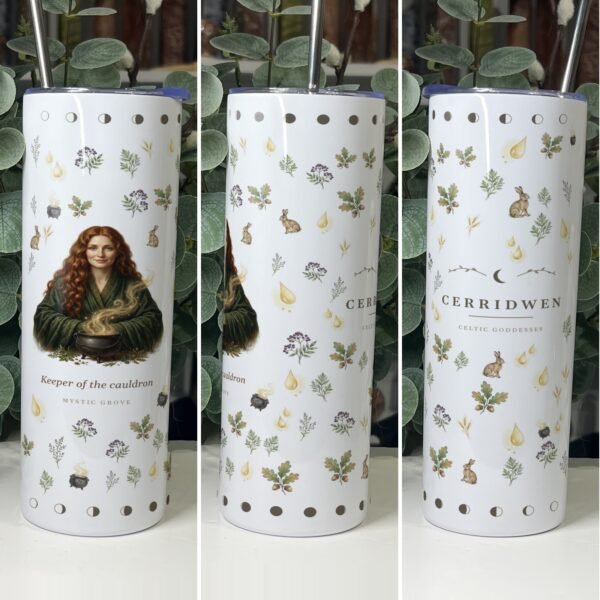
    None of that makes her less real to the people who work with her today. A living tradition grows, and Cerridwen has grown a great deal. It simply means you can enjoy the medieval tale for what it is, and know that the crone of the dark moon is a newer and still meaningful layer.

    Her name is also debated. The ending probably comes from an old Welsh word for woman. One scholar read the whole name as crooked woman, another suggested a link with words meaning fierce or to be believed in. No one knows for certain.

    Dark watercolour of a mountain lake at night with a golden glow on the water, in the spirit of Llyn Tegid at Bala

    Crystals for Cerridwen

    No medieval text links Cerridwen with any crystal. The stones below are modern correspondences, chosen for what her story is about: the dark cauldron, the long brew, the change of shape and the spark of inspiration. Each is one we stock, so you can find it in the shop.

    Labradorite, for shapeshifting and change

    Labradorite looks grey and plain until the light catches it and blue and gold flash across its surface. It is the stone people most often reach for with Cerridwen, because it mirrors the chase: one thing becoming another. Hold a labradorite tumblestone while you journal about a change you are in the middle of, or keep a labradorite tower on your writing desk.

    Black obsidian, for the dark of the cauldron

    Obsidian is volcanic glass, formed when molten rock cools too quickly to crystallise. That fits a goddess whose cauldron melts things down. It is a traditional Samhain stone and a good companion for the waning moon, when you are clearing out what no longer serves. See our obsidian collection.

    Amethyst, for wisdom

    Amethyst has been linked with a clear and sober mind since the ancient Greeks. With Cerridwen it stands for the wisdom in the brew, the knowledge that came to Gwion in a single taste. A piece of amethyst by the bed suits dream journalling.

    Citrine, for the spark

    Golden citrine carries the colour of the three drops. Use it when you want ideas to come, for a writing project, a new course or a creative business. Our natural citrine points and tumblestones both work well.

    Smoky quartz, for letting the old self go

    Smoky quartz is clear quartz darkened deep in the earth. It is a grounding stone, often used when an ending feels heavy. With Cerridwen it speaks to the part of the story where Gwion has to stop running. Try a smoky quartz tower.

    Fluorite, for study

    Fluorite is sometimes called the student’s stone. Cerridwen gathered every herb at its proper hour and watched her brew for a whole year, which is about as dedicated as study gets. A rainbow fluorite tower makes a quiet desk companion for anyone learning a craft.

    Sketch of a purple amethyst tumblestone and a golden citrine tumblestone beside a sprig of sage

    If you only have one stone, choose clear quartz and tell it plainly what you are asking for. Many people find a single stone held with a clear intention says more than a full set left in a drawer.

    A Simple Cauldron Practice for Cerridwen

    This is a gentle practice for the waning or dark moon, or for any evening when you want to call in fresh ideas. You need a small cauldron or heatproof bowl, a yellow chime candle, a pen and paper, and one of the stones above.

    • Set your space. Place the cauldron in front of you with the candle beside it and the stone in your hand.
    • Light the candle. Say her name aloud three times: Cerridwen, Cerridwen, Cerridwen.
    • Write what you are ready to leave behind. A habit, a fear, an old way of seeing yourself. Fold the paper and place it in the cauldron. If it is safe to do so, burn it there. If not, tear it up and leave it in the bowl.
    • Write what you are stirring. One idea, one project or one question you would like inspiration for. Keep this paper.
    • Sit with the brew. Rest your hands on the warm sides of the bowl, or simply breathe slowly. Some people like to hum or chant the three sounds of the awen, AH, OO, EN, on the out breath. Others sit in silence. Either is fine.
    • Close. Thank Cerridwen, put out the candle, and keep the second paper somewhere you will see it for the next month.
    Sketch of a small yellow chime candle in a brass holder beside a citrine tumblestone and a sprig of herbs

    Signs Cerridwen May Be Calling You

    • You keep returning to cauldrons, brewing, herbs or kitchen witchcraft.
    • You are in a season of big change, where the old version of you no longer fits.
    • A creative project will not leave you alone, even when you try to set it down.
    • Hens, hares, otters or hawks keep appearing in your days or dreams.
    • You feel drawn to Wales, to Welsh poetry or to the Welsh language.

    If you are not sure which goddess is reaching for you, our guide to which goddess is calling you has some simple ways to find out.

    Light a candle for Cerridwen

    Our Manifest Magic chime candles come in ten colours. Yellow is the colour of the three drops and the spark of inspiration, and black suits the dark of the cauldron and Samhain.

    Choose your colour

    Questions People Ask About Cerridwen

    What is Cerridwen the goddess of?

    Cerridwen is the Welsh goddess of the cauldron of inspiration, known for wisdom, poetry, transformation and rebirth. In modern witchcraft she is also honoured as a goddess of herbs, magic and the dark moon.

    How do you pronounce Cerridwen?

    Say ke RID wen, with the stress on the middle syllable. The c is hard, like a k.

    Is Cerridwen a moon goddess?

    Not in the medieval sources. The link with the moon, and especially the dark moon, comes from the twentieth century, largely through Robert Graves. Many people today still honour her at the waning and dark moon, and that modern practice is perfectly valid.

    Is Cerridwen a crone goddess?

    In modern witchcraft she is often seen as a crone, the wise elder of the triple goddess. In the old tale she is a mother of grown children, a wife and a skilled brewer, with no mention of great age.

    Who is Cerridwen’s son?

    Her first son is Morfran, also called Afagddu. Her second, through the swallowed grain, is the poet Taliesin.

    What are Cerridwen’s symbols?

    The cauldron above all, together with the three drops, the hen, the grain of wheat, the greyhound, the otter, the hawk and the leather bag on the water.

    Bring Cerridwen home

    The Cerridwen artwork from this series now comes on a 13oz white ceramic mug and a 20oz skinny tumbler wrapped all the way round in cauldrons, hares and herbs. Each one comes with a printed card telling her story, so it is ready to keep or to give.

    See all the goddess tumblers

  • Black Amethyst Meaning: What It Is, Is It Real and How to Use It

    Black Amethyst Meaning: What It Is, Is It Real and How to Use It

    Black amethyst meaning: what this dark form of amethyst is, whether it is real, why it is called galaxy amethyst, and how to use it for protection and grounding

    Black amethyst is one of the most asked about stones on our shelves. People see a geode glittering like a night sky and assume it must be dyed, or a different crystal altogether. It is neither. Black amethyst is amethyst that grew dark, and it carries its own quiet character: the calm of purple amethyst with the steadiness of the darker stones.

    Black Amethyst at a Glance

    • Also known as: galaxy amethyst, dark amethyst
    • What it is: amethyst, a purple variety of quartz, with dense dark inclusions
    • Colour: deep grey to near black, often with a hint of lavender at the edges
    • Usual form: druzy geodes, cut bases and clusters
    • Chakras: root, third eye and crown
    • Traditionally used for: protection, grounding, calm focus and clearing heavy energy
    • Moon and season: the dark moon, and Samhain on 31 October
    • Hardness: around 7 on the Mohs scale

    What Is Black Amethyst?

    Black amethyst is real amethyst. It forms inside volcanic rock in the same way as purple amethyst, as a lining of small quartz crystals growing inward from the walls of a gas pocket. What makes it different is what the crystals took in as they grew.
    Dense inclusions of dark minerals, usually described as hematite and other iron minerals, settled into the crystal points and turned them from violet to charcoal and black. Look closely at a piece in good light and you will often see the original lavender peeping through along an edge or at the tips.
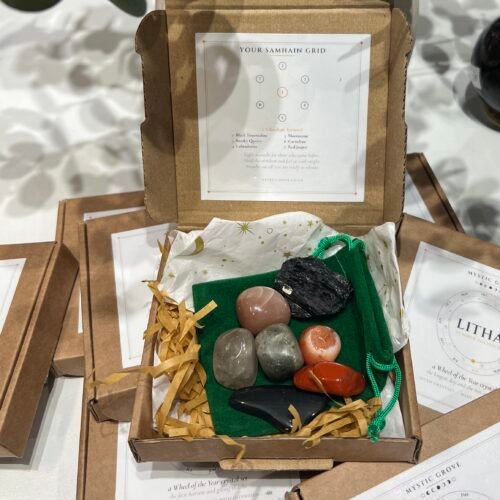
    The name galaxy amethyst comes from the way the tiny dark points catch the light. A black amethyst geode glitters with hundreds of white sparks across a dark field, which is exactly what it looks like: a patch of night sky.

    Is Black Amethyst Real, or Is It Dyed?

    Natural black amethyst is not dyed. The colour is inside the crystals themselves, so it does not rub off, wash out or fade at the edges the way a coating would.

    It is worth knowing that the same name is used for something quite different. Black amethyst glass is a vintage glassware colour, a very deep purple glass that looks black until you hold it to the light, and it is often sold as dishes, vases and carnival glass. If a listing shows a smooth, moulded bowl rather than a crystal lined rock, it is glass, not the stone.

    A natural black amethyst geode or cut base will show a rough, sparkling crystal face, a grey stone shell around it, and often a thin band of agate between the two.

    How Common Is Black Amethyst?

    Black amethyst is much less common than purple amethyst, because the conditions that pack dark inclusions into the crystals do not happen in every geode. It is still easy enough to find, though, and good pieces turn up in most well stocked crystal shops from time to time.

    What varies is the depth of colour and the sparkle. The most sought after pieces are very dark with a fine, even druzy, and large cut bases with a clean face are the hardest to find.

    Black Amethyst Meaning

    In crystal practice, black amethyst is traditionally seen as a bridge between two kinds of stone. Purple amethyst is linked with calm, intuition and the crown and third eye. Black stones such as black tourmaline and obsidian are linked with protection and the root chakra. Black amethyst is said to hold both.

    That is why it is often chosen by people who find purple amethyst a little too floaty, or who want a protective stone that still feels peaceful rather than heavy. It is kept for steady focus, for setting boundaries, and for clearing a room that feels crowded or tense.

    The spiritual significance most people give dark amethyst is protection of the inner self: a stone for quiet reflection, shadow work and turning inward, without losing a sense of calm.

    How to Use Black Amethyst

    By the front door

    A black amethyst cut base by the front door is a traditional placement for protection, a gentle threshold guardian that stands upright on a shelf or windowsill.

    On a desk or workspace

    Kept within sight while you work, black amethyst is used for focus and to keep a busy space feeling settled.

    For meditation and reflection

    Hold a small piece or sit with a geode in front of you, breathe slowly, and let the sparkle hold your attention. Many people find the dark face of the crystal easier to rest the eyes on than a bright stone.

    At the dark moon and Samhain

    Black amethyst suits the dark moon, the days before the new moon when the sky is empty and the focus is on rest and release. It is also a natural altar stone for Samhain on 31 October, when the year turns inward and ancestors and endings are honoured.

    With black tourmaline and purple amethyst

    Black amethyst sits well alongside black tourmaline for a stronger protective layer, and alongside purple amethyst for calm. A simple trio of black tourmaline, black amethyst and rose quartz is a popular combination for a home that feels both protected and kind.

    Caring for Black Amethyst

    Amethyst is hard, around 7 on the Mohs scale, but the tiny druzy points on a geode can chip if knocked. Dust with a soft, dry brush rather than a cloth, which can snag on the crystals.

    Like all quartz, amethyst is best kept out of strong direct sunlight for long periods. To cleanse black amethyst, use sound, breath, smoke or moonlight, and avoid salt, which can sit in the crevices of the druzy.

    Your Black Amethyst Toolkit

    Choose from our black amethyst cut base geodes, photographed piece by piece from 11cm to 18cm, or the black amethyst sphere with its own carved stand. Pair it with crystals for protection such as black tourmaline and obsidian, or browse everything in amethyst.

    Correspondences are traditional and are offered as part of a practice, not as a substitute for medical or professional advice.

  • Samhain 2026: The Date, the Sky and a Gentle Fortnight Ritual

    Samhain 2026: The Date, the Sky and a Gentle Fortnight Ritual

    Samhain 2026 falls on Saturday 31 October: the date, the sky and a gentle fortnight to keep it

    Samhain 2026 arrives on a Saturday night, five nights after the Hunter’s Moon and a week after the clocks go back. Here is everything that is particular to this year: the dates and times, what the Moon is doing, and a simple way to keep Samhain across the whole dark fortnight rather than a single evening.

    Shop for your Samhain altar

    Stones for the thinning of the veil, with the full collection below.

    See the full Samhain collection

    Samhain 2026 at a Glance

    • Samhain eve: Saturday 31 October 2026, running into Sunday 1 November
    • The clocks go back: Sunday 25 October at 2am, so Samhain arrives with the first week of dark evenings
    • Hunter’s Moon in Taurus: Monday 26 October at 4.12am, five nights before Samhain
    • The Moon on Samhain eve: waning, a little over half lit, passing through Cancer
    • Last quarter Moon: Sunday 1 November at 8.28pm
    • Astronomical Samhain: Saturday 7 November, when the Sun reaches 15 degrees of Scorpio
    • Lunar Samhain: the New Moon in Scorpio, Monday 9 November at 7.02am
    • Altar stones: obsidian, black tourmaline, smoky quartz, labradorite, moonstone, carnelian and red jasper

    When is Samhain 2026?

    Samhain 2026 is kept on the evening of Saturday 31 October and through Sunday 1 November. The old Gaelic year counted its days from dusk, so the festival begins as the light goes on the 31st rather than at midnight. That makes Saturday evening the heart of it, with Sunday as a slow, quiet day after.

    Some people prefer to mark the astronomical midpoint between the autumn equinox and the winter solstice instead. In 2026 the Sun reaches 15 degrees of Scorpio, the exact halfway point, on Saturday 7 November. Neither date is more correct than the other. The fixed date of 31 October is the one the old calendars and the Irish stories use, and the astronomical date suits anyone who likes to follow the sky. This year they fall exactly a week apart, both on a Saturday, which gives a natural fortnight to work with.

    A third way is lunar Samhain, kept on the dark or new Moon closest to the festival. In 2026 that is the New Moon in Scorpio at 7.02am on Monday 9 November, two days after astronomical Samhain, so all three ways of keeping it sit inside the same fortnight.

    What Is Samhain?

    Samhain, said SOW in (rhymes with cow), is the old Gaelic festival that marks the end of the harvest and the start of winter, the dark half of the year. In medieval Ireland it was one of the four great seasonal festivals, a time for bringing in the herds and gathering together, and the old stories tell of the doors to the Otherworld standing open on Samhain night.

    Today it is kept by people of many paths as a night for remembering those who have gone before, and for letting go of whatever the year has finished with.

    For the full background to the festival, the meaning of the word and the old stories, our evergreen guide to the Samhain meaning and its honest history covers it in depth. This post stays with what is particular to Samhain 2026.

    This year the dark half of the year begins on a weekend, under a waning Moon, with an hour of evening already handed back to the night.

    The sky around Samhain 2026

    The fortnight opens on Sunday 25 October, when the clocks go back at 2am and the evenings close in an hour earlier. It is worth noticing how that first dark evening feels in the body. For many of us it is the moment the year turns, more than any date on a calendar.

    The next morning, at 4.12am on Monday 26 October, the Hunter’s Moon is full in Taurus. Taurus is the steady earth sign that asks what we value and want to keep. Our guide to the Hunter’s Moon 2026 has a ritual for that night if you would like to begin there.

    By Samhain eve the Moon is waning and a little over half lit, moving through Cancer. Cancer is the sign of home, family and the people who came before us, which sits beautifully with a night given to remembering. A waning Moon is the classic time for releasing and clearing, so Samhain 2026 leans towards letting go rather than starting anything new.

    The Moon reaches its last quarter at 8.28pm on Sunday 1 November, the half lit point that marks the final stretch of the cycle. Then, after astronomical Samhain on Saturday 7 November, the New Moon in Scorpio arrives at 7.02am on Monday 9 November. Our New Moon in Scorpio 2026 guide picks up the thread there, with intentions for the dark months ahead.

    There is a numerology note too. 2026 adds to 10, which reduces to 1, the number of beginnings. Samhain in a 1 year makes a clean doorway: close the old chapter honestly, and the new one has room.

    MYSTIC GROVEThe Samhain 2026 FortnightSun 25 OctClocks go backDarker evenings beginMon 26 OctHunter’s MoonFull in Taurus, 4.12amSat 31 OctSamhain eveMoon waning in CancerSun 1 NovLast quarter8.28pm, the Moon half litSat 7 NovAstronomical SamhainSun at 15 degrees ScorpioMon 9 NovNew Moon in Scorpio7.02am, a fresh startAll times UK time (GMT) MYSTIC GROVEThe Samhain 2026 FortnightSun 25 OctClocks go backDarker evenings beginMon 26 OctHunter’s MoonFull in Taurus, 4.12amSat 31 OctSamhain eveMoon waning in CancerSun 1 NovLast quarter8.28pm, the Moon half litSat 7 NovAstronomical SamhainSun at 15 degrees ScorpioMon 9 NovNew Moon in Scorpio7.02am, a fresh startAll times UK time (GMT)
    The Samhain 2026 fortnight, read in order: the clocks go back, the Hunter’s Moon, Samhain eve, the last quarter Moon, astronomical Samhain and the New Moon in Scorpio. Samhain eve is the largest marker.

    Keeping Samhain 2026 across the fortnight

    Because Samhain 2026 and its astronomical twin sit a week apart, there is no need to fit everything into one night. Here is a gentle shape for the fortnight. Each step needs only a candle, a bell and a few stones.

    Sunday 25 October: notice the dark

    On the first evening after the clocks change, sit for ten minutes as the light goes, without switching on a lamp. Let your breath slow. Notice where in the body you feel the change of season. Some feel it in the shoulders, some in the belly. Say quietly, “The dark half of the year is coming.” That is enough.

    Monday 26 to Friday 30 October: clear and gather

    Use the days after the Hunter’s Moon to clear the space where your altar will sit. Wipe the surface, open a window and ring a bell or tap a bowl once in each corner of the room, listening for the moment the sound fades. Gather what you will use on Saturday: a candle, a cloth, your stones and something that belonged to, or reminds you of, the people you want to remember.

    Saturday 31 October: Samhain eve

    As the light goes, lay your cloth and set out the stones, with obsidian at the centre and the others around it. Light the candle. Strike a chime or bell once and stay with the sound until it has gone completely. In that silence, say the names of those you are remembering, one at a time, aloud. After each name, rest a hand on your chest and take one slow breath.

    When the names are said, hold a piece of smoky quartz or Whitby jet in your palm and speak aloud one thing you are ready to put down this year. Place the stone back on the cloth as a way of setting the words down with it. Finish with a second ring of the bell and sit until the candle has burned a little way, then put it out.

    Never leave a lit candle unattended. Samhain evenings are long and it is easy to drift off by candlelight. Keep candles on a heatproof dish or in a cast iron cauldron burner, away from cloths and dried herbs, and put them out before you sleep.

    Sunday 1 November: the quiet day

    The old Samhain ran from dusk to dusk, so Sunday belongs to the festival too. Take a slow walk if you can, and listen rather than look: the sound of leaves underfoot, rooks settling, wind in bare branches. At the last quarter Moon at 8.28pm, return to your altar and ring the bell once more.

    Saturday 7 to Monday 9 November: the second threshold

    On astronomical Samhain, revisit the altar. Notice whether anything has shifted since the 31st. Then, at the New Moon in Scorpio on the morning of Monday 9 November, write one quiet intention for the winter. It closes the fortnight with something planted in the dark, ready to grow when the light returns.

    Your Samhain 2026 altar

    Everything here is in stock at Mystic Grove for Samhain 2026. You do not need all of it. A cloth, a candle and one dark stone make a full Samhain altar.

    The Samhain crystal set

    Our Wheel of the Year crystal set in its Samhain version holds seven tumblestones: obsidian for the centre, with black tourmaline, smoky quartz, labradorite, moonstone, carnelian and red jasper around it. It comes with a numbered grid card, and the full layout is in our Samhain crystal grid guide.

    Obsidian and smoky quartz

    For a larger centrepiece, a black obsidian tower is traditionally linked with clearing and endings, and a smoky quartz tower with grounding and steadiness through grief.

    Whitby jet

    Whitby jet tumbles carry a long British history as the stone of Victorian mourning jewellery, which makes jet a natural choice for a night of remembering.

    The raven and the threshold

    A raven skull crystal carving honours the bird long linked in story with the space between worlds, and a black tourmaline merkabah sits well at the edge of the altar as a guardian of the threshold.

    Candles, cloth and burner

    A protection crystal candle or a black chime candle for the evening, an esoteric fringed altar cloth to set it all on, and a cauldron burner to keep the flame safe.

    Ready your Samhain 2026 altar

    Our Samhain collection gathers crystal sets, candles, cauldrons, offering plates and altar cloths for Saturday 31 October in one place. Free UK delivery on orders of £50 or more.

    Shop the Samhain collection

    Journal prompts for Samhain 2026

    • Who am I remembering this Samhain, and what did they give me that I still carry?
    • What has 2026 asked me to let go of, and what am I ready to put down now?
    • What do I want to keep, as the Hunter’s Moon in Taurus asked, and what is quietly finished?
    • What one small thing would I like to begin in the dark, at the New Moon on 9 November?

    Dates and times in this post are UK time and were checked against the Royal Observatory Greenwich full moon calendar for 2026 and the official UK clock change dates.